
In This Article
Canadian weather doesn’t do subtle. You leave the house at 7 a.m. into a -12°C wind that feels personal, and by 3 p.m. it’s slush, drizzle and +4°C. Most of us deal with this by owning a small army of coats. A convertible system jacket offers a different deal: one waterproof shell, one zip-in liner, and three ways to wear them.
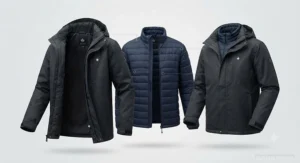
So what is a convertible system jacket? It’s a two-piece outerwear system — a waterproof, windproof outer shell plus a removable insulated or fleece liner — that zips or snaps together. You can wear the shell alone for rain, the liner alone for crisp dry days, or both together for full winter protection. Brands call it “Interchange” (Columbia), “Triclimate” (The North Face) or “CIS” (Helly Hansen), but the idea is the same, and it’s a modern twist on the classic layered clothing principle that mountaineers have relied on for decades.
Here’s the catch, though. Not every convertible system jacket is built equally. Some pair a genuinely good shell with a flimsy liner. Others give you a warm liner inside a shell whose water repellency fades after one season. And the big question — whether a 3-in-1 actually saves money compared with buying pieces separately — has a more nuanced answer than the marketing suggests.
In this guide, I’ve dug into manufacturer spec sheets, independent lab-style reviews and aggregated owner ratings to compare seven real jackets available to Canadian shoppers on amazon.ca. You’ll get a cost comparison vs separate pieces, a no-nonsense breakdown of liner insulation quality, and honest talk about convertible jacket longevity — the stuff the product listing politely skips.
Quick Comparison Table: Top Convertible System Jacket Options at a Glance
| Jacket | Liner Type | Shell | Approx. Price (CAD) | Best For |
|---|---|---|---|---|
| Columbia Bugaboo III Fleece Interchange | Microfleece + Omni-Heat reflective | Omni-Tech nylon | C$200-C$300 | Columbia Bugaboo III Fleece Interchange: budget-minded commuters |
| Columbia Whirlibird V Interchange | Synthetic + Omni-Heat reflective | Omni-Tech nylon | C$300-C$400 | Columbia Whirlibird V Interchange: occasional resort skiers |
| The North Face Carto Triclimate | 100 g Heatseeker synthetic | DryVent 2L | C$335-C$390 | The North Face Carto Triclimate: all-round city winters |
| The North Face Antora Triclimate | 300 g/m² recycled fleece | DryVent 2L ripstop | C$200-C$360 | The North Face Antora Triclimate: rainy coasts, shoulder seasons |
| The North Face ThermoBall Eco Snow Triclimate (Women’s) | ThermoBall synthetic | DryVent 2L | C$450-C$600 | The North Face ThermoBall Eco Snow Triclimate (Women’s): women who ski and commute |
| Helly Hansen Juell 3-in-1 | PrimaLoft Black Eco | Helly Tech Protection 2L | around C$335 | Helly Hansen Juell 3-in-1: wet, windy urban winters |
| Wantdo Men’s 3-in-1 Fleece Interchange (Alpine V) | Insulated fleece | 150D Oxford, 10,000 mm | C$100-C$160 | Wantdo Men’s 3-in-1 Fleece Interchange (Alpine V): tight budgets, backup coat |
Prices are approximate ranges at the time of research and vary with sales, colour and size — check current price before buying.
Looking at the table, the real split isn’t brand versus brand — it’s liner type. Fleece-lined systems like the The North Face Antora Triclimate and Columbia Bugaboo III Fleece Interchange shine in damp, moderate cold, while synthetic-insulated liners in the The North Face Carto Triclimate and Helly Hansen Juell 3-in-1 carry you deeper into a prairie or Ottawa winter. The Wantdo Men’s 3-in-1 Fleece Interchange (Alpine V) is the price floor, but it trades away the brand-backed membrane tech that affects how long the shell stays waterproof.
💬 Just one click — help others make better buying decisions too!😊
Top 7 Convertible System Jacket Picks: Expert Analysis
1. Columbia Bugaboo III Fleece Interchange — best entry point into 3-in-1 layering
The Columbia Bugaboo III Fleece Interchange is the jacket many Canadians picture when they hear “3-in-1,” and the third generation keeps the formula simple and approachable. The shell is 100% nylon with Columbia’s Omni-Tech waterproof-breathable construction, and it’s “critically seam-sealed” — meaning only the most exposed seams (shoulders, hood) are taped, not every seam. In practice, that’s fine for city rain and snow, but prolonged downpours can eventually find untaped seams. The liner is an anti-pill microfleece backed with Omni-Heat reflective silver dots, which bounce body heat back toward you without adding bulk.
Who is it for? Honestly, the commuter who walks 15 minutes to the bus stop and wants one jacket from October to April without spending premium money. The removable hood and zip hand pockets on both layers are genuinely practical touches. It’s less suited to long days outdoors in -20°C, because microfleece plus reflective dots is warm-ish, not deep-winter warm.
An earlier-generation Bugaboo review by OutdoorGearLab praised the comfort and value but noted that pit zips only vent the outer layer and interior pockets become hard to reach once the layers are joined — design traits that carry over conceptually to this version.
Pros:
- ✅ Approachable price for a name-brand 3-in-1
- ✅ Reflective liner adds warmth without bulk
- ✅ Removable storm hood suits city wear
Cons:
- ❌ Only critical seams are taped, not all
- ❌ Microfleece liner runs out of warmth in deep cold
Typically found in the C$200-C$300 range (check current price), the Columbia Bugaboo III Fleece Interchange is a sensible first system for moderate winters.

2. Columbia Whirlibird V Interchange — most ski-ready features for the money
If the Bugaboo is Columbia’s commuter, the Columbia Whirlibird V Interchange is its weekend-at-the-hill sibling. The nylon Omni-Tech shell adds a powder skirt, pit zips and a sleeve pass pocket, while the liner swaps microfleece for Thermarator synthetic insulation lined with Omni-Heat reflective fabric. That combination is meaningfully warmer than a fleece liner, which matters on a chairlift in January at Mont-Tremblant or Sunshine Village.
OutdoorGearLab weighed a size large at 2.92 lb (about 1.32 kg), which tells you something: this is a substantial jacket. The testers there rated it only 52/100 against dedicated ski shells, citing a “boxy, unrefined” fit, limited breathability when fully assembled, non-waterproof zippers, and a DWR finish that “wore off quickly.” But context matters — those ratings compare it with jackets costing two or three times as much.
My read, based on that data: the Columbia Whirlibird V Interchange is ideal for the family skier who hits the slopes six to ten days a season and wants a jacket that also works for shovelling the driveway. It’s not for someone chasing backcountry laps where breathability is everything. Re-applying a DWR treatment once a season will offset the fading water repellency testers noticed.
Pros:
- ✅ Powder skirt and pit zips for real ski days
- ✅ Synthetic liner warmer than fleece alternatives
- ✅ Good feature set at a mid-range price
Cons:
- ❌ Boxy fit and heavy overall weight
- ❌ DWR finish fades faster than premium shells
Expect roughly C$300-C$400 (prices may vary); the Columbia Whirlibird V Interchange delivers solid features-per-dollar for casual skiers.
3. The North Face Carto Triclimate — best all-round warmth for city winters
The The North Face Carto Triclimate is a quietly clever piece of engineering. The shell is a 75D, 116 g/m² DryVent 2L fabric made from 100% recycled polyester, fully seam-sealed, with a non-PFC DWR finish. The liner is a puffy jacket with 100 g of Heatseeker synthetic insulation in the body and 60 g in the sleeves — a body-mapped split that keeps your core warm while letting your arms move without that stuffed-sausage feeling.
What does 100 g of synthetic fill mean in the real world? It’s roughly the warmth of a solid mid-weight puffer, which, under a windproof shell, carries most people comfortably through a typical -15°C Toronto or Montreal commute. Unlike down, Heatseeker keeps insulating when damp, which is exactly what you want when wet snow meets a crowded subway car.
This is my top recommendation for most urban Canadians who want a single jacket for the whole cold season. The three-piece adjustable hood, internal draft flap and zip hand pockets all point to thoughtful, everyday design.
On The North Face Canada’s site, the jacket held a 4.8-out-of-5 average from roughly 300 ratings at the time of research, with owners consistently praising its versatility across changing weather.
Pros:
- ✅ Fully seam-sealed, 2-layer waterproof shell
- ✅ Body-mapped synthetic liner stays warm when damp
- ✅ Liner works as a stand-alone puffer
Cons:
- ❌ No powder skirt or pit zips for skiing
- ❌ Priced above Columbia equivalents
Listed around C$335-C$390 at the time of research, the The North Face Carto Triclimate earns its premium through warmth-to-versatility balance.
4. The North Face Antora Triclimate — best fleece-lined system for wet climates
Think of the The North Face Antora Triclimate as the Vancouver and Halifax specialist. Its shell is a 70D nylon ripstop DryVent 2L fabric (109 g/m²), fully seam-sealed, and the liner is a hefty 300 g/m² recycled polyester fleece. Ripstop weave matters more than it sounds: those tiny reinforced grid lines stop a snag on a branch or a car door from turning into a long tear.
A 300 g/m² fleece is a heavyweight fleece — warmer than the thin microfleece in budget systems, and it breathes far better than a synthetic puffer when you’re walking briskly. The trade-off is wind: fleece alone lets breeze through, so the liner works best on its own for calm, dry days or indoors.
This is the pick for coastal Canadians whose “winter” is mostly 2°C and raining sideways, and for hikers who want a shell for spring and fall and a fleece for campfire evenings. For prairie cold snaps, it simply isn’t insulated enough.
Owners on The North Face Canada’s site gave it about 4.5 out of 5 across more than 300 ratings at the time of research, with the fleece liner’s stand-alone usefulness a recurring positive theme.
Pros:
- ✅ Durable ripstop shell resists snags
- ✅ Breathable heavyweight fleece for active use
- ✅ Frequently discounted below list price
Cons:
- ❌ Not warm enough for deep inland cold
- ❌ Fleece liner alone isn’t windproof
With a list near C$360 but frequent markdowns into the C$200s, the The North Face Antora Triclimate is outstanding value for mild, wet regions.
5. The North Face ThermoBall Eco Snow Triclimate (Women’s) — best premium pick for women who ski
The The North Face ThermoBall Eco Snow Triclimate (Women’s) is the most “complete” system in this lineup. The shell uses a 75D recycled polyester DryVent 2L membrane with seam-sealed construction, and the liner is a ThermoBall synthetic jacket — insulation built from small clusters that mimic down’s loft while keeping warmth when wet. (Newer listings may appear as the ThermoBall Snow Triclimate; check the model name when ordering.)
OutdoorGearLab weighed the system at 2.0 lb (about 0.91 kg) — noticeably lighter than the Columbia Whirlibird V Interchange — and scored it 70/100 among women’s ski jackets, praising its warmth when layered, weather resistance and well-placed pockets. Their main caveats: a slim fit that often requires sizing up for comfortable layering, and limited ventilation when both layers are zipped together.
Here’s what to weigh: if you ski a dozen days a year and also need a stylish, warm city coat, this jacket genuinely replaces two purchases. The ThermoBall liner looks like a regular quilted puffer, so it doesn’t scream “ski gear” at the office. If you run hot or ski aggressively, the ventilation limitation is worth taking seriously.
Pros:
- ✅ Lightest ski-ready system in this comparison
- ✅ ThermoBall liner doubles as a stylish puffer
- ✅ Strong warmth when both layers are combined
Cons:
- ❌ Slim cut — consider sizing up
- ❌ Poor venting with both layers zipped in
Usually in the C$450-C$600 range (check current price), the The North Face ThermoBall Eco Snow Triclimate (Women’s) is premium but justified for dual-purpose use.

6. Helly Hansen Juell 3-in-1 — best liner insulation quality at a mid-range price
The Helly Hansen Juell 3-in-1 is the lesser-known heavyweight in this lineup. Helly Hansen built its reputation dressing North Sea sailors and ski patrollers, and that DNA shows. The shell uses Helly Tech Protection, a 2-layer waterproof-breathable fabric, with YKK zippers and bluesign-certified main material. The liner is insulated with PrimaLoft Black Eco — a recycled synthetic that’s one of the more respected names in the insulation world.
Why does that liner matter? PrimaLoft fibres are engineered to resist the compression and clumping that make cheap polyester fill go flat after a couple of winters. That’s the heart of liner insulation quality: not just how warm a jacket feels on day one, but how warm it still feels in year four. Helly Hansen’s CIS (Clothing Integration System) also lets you zip in other compatible HH layers later, which quietly extends the system’s useful life.
This is the pick for Canadians in wet, windy cities — think Saint John, Victoria or St. John’s — who want a clean, urban silhouette with genuine marine-grade weather protection.
On Helly Hansen Canada’s site, it averaged about 4.6 out of 5 across roughly 50 ratings at the time of research, with reviewers noting it fits true to size.
Pros:
- ✅ PrimaLoft Black Eco liner resists flattening
- ✅ CIS system accepts other Helly Hansen layers
- ✅ YKK zippers and bluesign-certified fabric
Cons:
- ❌ Smaller review pool than Columbia or TNF
- ❌ No ski-specific features like a powder skirt
Listed around C$335 at the time of research, the Helly Hansen Juell 3-in-1 offers excellent long-term value for everyday wear.
7. Wantdo Men’s 3-in-1 Fleece Interchange (Alpine V) — best budget backup or starter system
The Wantdo Men’s 3-in-1 Fleece Interchange (Alpine V) is the Amazon-native option, and it’s refreshingly clear about what it is. The shell is a 150D Oxford polyester with a Teflon-branded water-repellent coating and a stated 10,000 mm waterproof rating; the liner is a detachable insulated fleece. There’s also a detachable hood with drawstring, elastic cuffs and zip pockets.
Let’s translate that 10,000 mm figure. It means the fabric resisted a 10-metre column of water in a lab test — enough for typical rain and snow, though below the 15,000-20,000 mm many premium shells claim. The 150D Oxford weave is thicker and more abrasion-resistant than the 70-75D fabrics on TNF shells, but also heavier and stiffer.
Who is it for? Students, newcomers to Canada facing their first winter on a tight budget, or anyone who wants a spare jacket for the car, the cottage or the kids’ hockey rink. What most buyers overlook: the brand doesn’t publish a membrane name, breathability rating or seam-taping details as clearly as the big names, so expect it to feel clammier during exertion.
Detailed, verifiable review themes for this exact Alpine V version were limited during research, so treat it as a value purchase rather than a proven multi-season performer.
Pros:
- ✅ Lowest price in this comparison by far
- ✅ Thick 150D shell resists everyday abrasion
- ✅ Detachable hood and multiple zip pockets
Cons:
- ❌ Limited transparency on membrane and seam taping
- ❌ Likely less breathable during active use
Typically found around C$100-C$160 (prices may vary), the Wantdo Men’s 3-in-1 Fleece Interchange (Alpine V) is fair value for occasional wear.
Top 7 Convertible System Jacket Specs Compared
| Jacket | Shell Fabric | Liner Insulation | Weight (approx.) | Owner/Expert Rating* | Best For |
|---|---|---|---|---|---|
| Columbia Bugaboo III Fleece Interchange | Nylon, Omni-Tech, critically seam-sealed | Microfleece + Omni-Heat | Not published | Earlier gen: 69/100 (OGL) | Columbia Bugaboo III Fleece Interchange: first-time buyers |
| Columbia Whirlibird V Interchange | Nylon, Omni-Tech | Thermarator synthetic + Omni-Heat | 1.32 kg (L) | 52/100 (OGL) | Columbia Whirlibird V Interchange: casual skiers |
| The North Face Carto Triclimate | 75D recycled polyester DryVent 2L | 100 g / 60 g Heatseeker | Not published | 4.8/5 (TNF Canada) | The North Face Carto Triclimate: urban all-rounders |
| The North Face Antora Triclimate | 70D nylon ripstop DryVent 2L | 300 g/m² fleece | Not published | 4.5/5 (TNF Canada) | The North Face Antora Triclimate: wet coastal climates |
| The North Face ThermoBall Eco Snow Triclimate (Women’s) | 75D recycled polyester DryVent 2L | ThermoBall synthetic | 0.91 kg | 70/100 (OGL) | The North Face ThermoBall Eco Snow Triclimate (Women’s): ski + city |
| Helly Hansen Juell 3-in-1 | Helly Tech Protection 2L | PrimaLoft Black Eco | Not published | 4.6/5 (HH Canada) | Helly Hansen Juell 3-in-1: windy, wet winters |
| Wantdo Men’s 3-in-1 Fleece Interchange (Alpine V) | 150D Oxford, 10,000 mm | Insulated fleece | Not published | Limited verified data | Wantdo Men’s 3-in-1 Fleece Interchange (Alpine V): budget backup |
*OGL = OutdoorGearLab expert score out of 100; star ratings are brand-site owner averages at the time of research. The two scales aren’t directly comparable.
The numbers reveal an interesting pattern: expert scores are harsher than owner ratings, because testers benchmark against specialised single-purpose jackets while owners judge versatility and value. The The North Face Carto Triclimate and Helly Hansen Juell 3-in-1 hit the sweet spot of premium liner fill without premium-ski pricing. Meanwhile, the The North Face ThermoBall Eco Snow Triclimate (Women’s) is the only system here that’s both genuinely ski-capable and notably light.
Cost Comparison vs Separate Pieces: Does a 3-in-1 Actually Save Money?
This is the question every buyer should ask, and the honest answer is: usually yes, but not always by as much as you’d think.
The Basic Math
A convertible system jacket bundles two garments. To replicate it with separate pieces, you’d need a waterproof 2-layer shell and either a fleece or an insulated jacket. At the time of research, a decent brand-name 2L rain shell in Canada commonly sits in the C$180-C$300 range, a synthetic insulated jacket in the C$180-C$300 range, and a quality fleece in the C$80-C$150 range. So a comparable separate-pieces kit often lands somewhere between C$260 and C$600.
| Setup | Typical Cost (CAD) | Flexibility | Warmth Ceiling | Best For |
|---|---|---|---|---|
| Convertible system jacket (synthetic liner) | C$300-C$400 | High — 3 configurations | Moderate-high | Most commuters wanting one purchase |
| Convertible system jacket (fleece liner) | C$200-C$360 | High — 3 configurations | Moderate | Mild, wet regions |
| Separate shell + separate puffer | C$360-C$600 | Very high — mix with any layer | Moderate-high | Outdoor enthusiasts building a kit |
| Single insulated winter parka | C$250-C$800+ | Low — one configuration | High | Extreme inland cold, low activity |
The table shows that a system jacket typically undercuts the separate-pieces route by roughly C$60-C$200 for comparable quality. But separate pieces win on flexibility: a stand-alone shell fits over any layer you own, while a system liner is designed around its own shell. And a dedicated parka still beats both for -30°C mornings in Winnipeg.
Where the Savings Disappear
Cost comparison vs separate pieces gets messier when you factor in failure points. If the shell’s membrane delaminates in year three, a separate-pieces owner replaces only the shell. A system owner may end up replacing the whole bundle — unless the brand’s interchange system lets you mix a new shell with the old liner. That’s where Helly Hansen’s CIS and The North Face’s Triclimate compatibility quietly earn their keep.
My takeaway: if you’ll wear the jacket mostly as one unit through the city winter, a 3-in-1 is the smarter buy. If you already own a good fleece or puffer, buy a quality shell instead.
Liner Insulation Quality: Fleece vs Synthetic vs Reflective
If the shell is a convertible system jacket’s armour, the liner is its engine. And liner insulation quality varies more than any other spec in this category.
Fleece Liners
Found in the The North Face Antora Triclimate, Columbia Bugaboo III Fleece Interchange and Wantdo Men’s 3-in-1 Fleece Interchange (Alpine V). Fleece is breathable, durable and dries fast. Its weakness is warmth-to-weight: to match a thin synthetic puffer, fleece needs to be thick and heavy. Look for a stated fabric weight — 300 g/m² (as on the Antora) is heavyweight, while unlabelled “microfleece” is usually much lighter.
Synthetic Fill Liners
Found in the The North Face Carto Triclimate, Helly Hansen Juell 3-in-1, The North Face ThermoBall Eco Snow Triclimate (Women’s) and Columbia Whirlibird V Interchange. Synthetic fill traps more warm air per gram than fleece and keeps insulating when damp. Quality differences show up over time: premium fibres like PrimaLoft Black Eco and ThermoBall clusters are designed to rebound after compression, while generic polyester batting tends to flatten.
Reflective Linings
Columbia’s Omni-Heat silver dots don’t insulate on their own — they reflect radiant heat back toward your body. Think of them as a boost layered on top of fleece or fill, not a replacement for it.

How to Judge Liner Insulation Quality Without Cutting a Jacket Open
- ✅ Check for a published fill weight (e.g., 100 g body / 60 g sleeves) — transparency is a quality signal
- ✅ Prefer named insulations (PrimaLoft, Heatseeker, ThermoBall) over generic “cotton padding”
- ✅ Squeeze the liner, release it, and watch how fast it rebounds
- ✅ Look for quilting that stops fill from migrating to the hem
Here’s the bottom line: a mediocre shell can be rescued with a DWR spray, but a flattened liner can’t be revived. When budget forces a trade-off, prioritise liner insulation quality over shell bells and whistles.
Convertible Jacket Longevity: How Many Winters Should You Expect?
Convertible jacket longevity depends on three separate clocks ticking at different speeds: the DWR finish, the waterproof membrane, and the liner insulation.
The Three Wear Clocks
DWR finish (months to one season): The water-beading coating fades first. OutdoorGearLab observed exactly this on the Columbia Whirlibird V Interchange. The fix is cheap: wash with a technical cleaner and re-apply a spray-on or wash-in DWR once or twice a season.
Membrane and seam tape (several seasons): 2-layer shells like DryVent 2L and Helly Tech Protection bond the membrane to the face fabric with a hanging liner inside. Seam tape is often the first to peel, especially on cuffs and shoulders where backpack straps rub. Fully seam-sealed shells tend to outlast “critically” sealed ones in constant rain.
Liner loft (varies widely): Premium synthetic fills hold loft longer, while budget fill can compress noticeably after a few seasons of daily wear and tight stuff-sacking.
Zippers and Connection Points
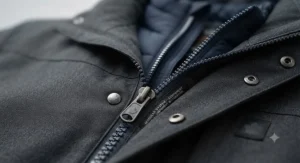
The interchange zip and snap loops are the unique failure points of any convertible system. Cheap zippers split; tired snaps pop loose. YKK zippers (as on the Helly Hansen Juell 3-in-1) and reinforced connection points noted in the The North Face ThermoBall Eco Snow Triclimate (Women’s) review are small details that make a big difference to convertible jacket longevity.
Realistic Expectations
With proper care, well-built systems from established brands commonly serve for many winters of commuting, while budget systems tend to deliver fewer seasons before the shell or liner shows its age. Warranty coverage also varies by brand, so check each manufacturer’s current policy before purchase. The cost-per-wear math favours the better-built option surprisingly quickly: a C$350 jacket worn 120 days a year for five years works out to under 60 cents per wear.
Practical Usage Guide: Setup, Care and Your First 30 Days
A 3-in-1 rewards a little know-how. Most frustrations — twisted liners, cold spots, soggy shells — trace back to setup and care habits, not the jacket itself.
Setting It Up Right
- Zip the liner in with both jackets unzipped and laid flat. Start the interchange zipper at the bottom, keeping the fabric aligned to avoid twisting.
- Snap the cuff loops next. Skipping these lets the liner sleeves ride up inside the shell.
- Adjust the hood with the liner installed. The fit changes once the extra layer is inside.
Your First 30 Days
- ✅ Wear the full system on a mild day first to check sleeve length and shoulder mobility.
- ✅ Test the liner alone indoors to learn its warmth range before relying on it outside.
- ✅ Note which pockets you can reach with layers combined — interior pockets often become inaccessible.
Maintenance Schedule
- Every few weeks of heavy use: Wipe off road salt, which stiffens fabric and degrades DWR.
- Mid-season: Wash the shell with a technical cleaner and refresh the DWR.
- End of season: Wash both pieces separately following the care label, dry the liner fully, and store it hanging — never compressed. If the symbols confuse you, Canada’s guide to apparel and textile care symbols decodes every icon.
Common Early Mistakes
Never use fabric softener — it clogs membrane pores and ruins DWR. And don’t wash with the liner zipped in; the pieces tangle and stress the interchange zipper.
Real-World Scenarios: Matching the Right Jacket to Your Canadian Winter
Specs make sense only when mapped onto a life. Here are three profiles and the systems that suit them best.
Profile 1: The Toronto Transit Commuter
Maya walks 12 minutes to the TTC, rides 35 minutes and walks another eight. Winter mornings hover around -10°C, with slushy afternoons. Budget: around C$400. She’s best served by the The North Face Carto Triclimate — the Heatseeker liner handles the cold walks, the fully seam-sealed shell handles slush, and on March mornings she can wear the liner alone as a light puffer.
Profile 2: The Vancouver Weekend Hiker
Daniel hikes the North Shore trails most weekends from October to May. Temperatures rarely drop below 0°C, but rain is relentless. Budget: under C$300. The The North Face Antora Triclimate fits perfectly: ripstop shell for bushy trails, breathable fleece that won’t cook him on climbs, and frequent markdowns keep it in budget.
Profile 3: The Calgary Family Skier
Priya skis 10 days a season at Sunshine and Lake Louise and spends weekday mornings walking the kids to school through chinooks and cold snaps. Budget: flexible for the right jacket. The The North Face ThermoBall Eco Snow Triclimate (Women’s) handles both jobs — powder-ready shell, stylish ThermoBall liner for school runs. If budget tightens, the Columbia Whirlibird V Interchange covers the ski days for less.
For days when Alberta hits true extreme cold, no jacket replaces good judgment — Health Canada’s extreme cold guidance covers frostbite and hypothermia warning signs worth knowing.
✨ Ready to Upgrade Your Winter? 🔍
Take your cold-weather wardrobe to the next level with these carefully selected jackets. Click on any highlighted product to check current pricing and availability on amazon.ca. The right system will keep you warm, dry and comfortable from first frost to spring thaw! 🧥
How to Choose a Convertible System Jacket
- Start with your coldest regular day. Canada’s wind chill index is a better guide than the thermometer, because wind is what strips heat from you.
- Pick the liner type to match. Fleece for mild, wet climates; synthetic fill for inland cold.
- Check seam sealing. “Fully seam-sealed” beats “critically seam-sealed” for heavy rain.
- Verify the interchange hardware. Look for full-length zip attachment plus cuff snaps, and brand-name zippers.
- Try it on with both layers. Size for the combined system, and consider sizing up if you wear thick sweaters.
- Match features to use. Skiers need a powder skirt and pit zips; commuters benefit more from secure hand pockets and a clean silhouette.
- Factor in longevity, not just price. A better liner and shell stretch your cost-per-wear further.
Getting steps one and two right solves most of the problem. Everything else is refinement.
Common Mistakes When Buying a Convertible System Jacket
Buying for the showroom, not the sidewalk. A jacket that feels toasty in a heated store may disappoint at -18°C with wind. Match the liner to your actual climate.
Ignoring fit with layers combined. The single biggest complaint in expert reviews of slim-cut systems, including the The North Face ThermoBall Eco Snow Triclimate (Women’s), is tightness when both layers are joined. Always size for the full system.
Assuming “waterproof” means forever. Every DWR fades. Budget for a DWR refresh product and plan to use it.
Expecting a 3-in-1 to replace a parka everywhere. In Yellowknife or northern Manitoba, a dedicated expedition parka is still the right tool. A convertible system is a versatile generalist, not an Arctic specialist.
Overlooking liner usability. Many buyers only discover later that their fleece liner looks awkward worn alone. If you plan to wear the liner by itself, pick one that looks like a real jacket — the The North Face Carto Triclimate and Helly Hansen Juell 3-in-1 liners are standouts here.
Features That Actually Matter (And Those That Don’t)
Worth Paying For
- ✅ Fully taped seams — the difference between dry and damp shoulders in a long downpour
- ✅ Named insulation with published fill weights — a direct signal of liner insulation quality
- ✅ Adjustable hood that fits over a toque — essential in wind
- ✅ Cuff snaps linking liner to shell — stops sleeves riding up
- ✅ Pit zips (for active users) — the only real cure for trapped heat
Nice, But Not Essential
- Removable hoods — handy for style, but they add a potential leak point
- Ultra-high waterproof ratings on city jackets — 10,000 mm handles most urban weather
- Excess pockets — more zippers, more weight, more to fail
Mostly Marketing
- Vague “thermal technology” with no specifics — if the brand won’t name the fill or its weight, be cautious
- “Lifetime” claims without warranty details — read the actual policy
The pattern is clear: invest in what protects you from water and cold, and be sceptical of features that exist mainly to fill out a listing.
What to Expect: Real-World Performance
Specs tell you the ingredients; real-world performance is the finished meal.
In the full system: Expect solid warmth for walking commutes and resort skiing. Synthetic-lined systems like the The North Face Carto Triclimate handle typical urban winter days comfortably. Expect some stuffiness during exertion, since two layers zipped together breathe less than either alone — a limitation expert reviewers flagged on both the Columbia Whirlibird V Interchange and The North Face ThermoBall Eco Snow Triclimate (Women’s).
The shell alone: This becomes your spring and fall rain jacket. 2-layer shells feel a touch clammy against bare arms, so a light long-sleeve underneath helps.
The liner alone: Synthetic puffer liners work as everyday light jackets; fleece liners work best on calm days or indoors.
Across seasons: Expect the DWR to need a refresh after a season and road salt to leave marks if you don’t wipe the hem. Treat these as routine maintenance, not defects.

FAQ
❓ Is a convertible system jacket warm enough for a Canadian winter?
❓ Can I buy a replacement liner for my 3-in-1 jacket?
❓ Are Columbia or North Face 3-in-1 jackets better value?
❓ What size should I buy in a 3-in-1 jacket?
❓ Can I put a 3-in-1 jacket in the dryer?
Conclusion
A convertible system jacket won’t solve every weather problem, but it solves most of them with remarkable efficiency. For the majority of urban Canadians, the The North Face Carto Triclimate is the best all-round choice, pairing a fully seam-sealed shell with a body-mapped synthetic liner. Coastal dwellers will get more from the fleece-lined The North Face Antora Triclimate, while those who value premium insulation should shortlist the Helly Hansen Juell 3-in-1.
Skiers have two clear routes: the feature-rich Columbia Whirlibird V Interchange for occasional days, or the lighter, more refined The North Face ThermoBall Eco Snow Triclimate (Women’s) for regular riders. On a tighter budget, the Columbia Bugaboo III Fleece Interchange is a trusted starter, and the Wantdo Men’s 3-in-1 Fleece Interchange (Alpine V) works as an affordable backup.
Remember the big picture: the cost comparison vs separate pieces usually favours a system, liner insulation quality determines how warm you’ll stay in year four, and convertible jacket longevity comes down to care as much as construction.
✨ Don’t Miss These Exclusive Deals! 🔍
Take your winter wardrobe to the next level with these carefully selected jackets. Click on any highlighted item to check current pricing and availability. These systems will help you create comfortable, weather-ready days your whole family will love! 🧥❄️
Recommended for You
- 7 Best 3-in-1 Jackets For Hiking In Canada 2026 (Tested Picks)
- All-Season 3-in-1 Jacket: 7 Best Picks That Work In 2026
- Interchange Jacket For Canadian Winters: 7 Best Picks For 2026
Disclaimer: This article contains affiliate links. As an Amazon Associate, I earn from qualifying purchases. If you purchase products through these links, we may earn a small commission at no additional cost to you.
✨ Found this helpful? Share it with your friends! 💬🤗
