
In This Article
Tall rain boots under $80 CAD are knee-high or near-knee waterproof boots, usually rubber, PVC or neoprene, that keep your calves and socks dry in puddles, runoff and mud. They skip the premium extras and keep the essentials: a sealed shaft, a grippy outsole and enough height to matter.

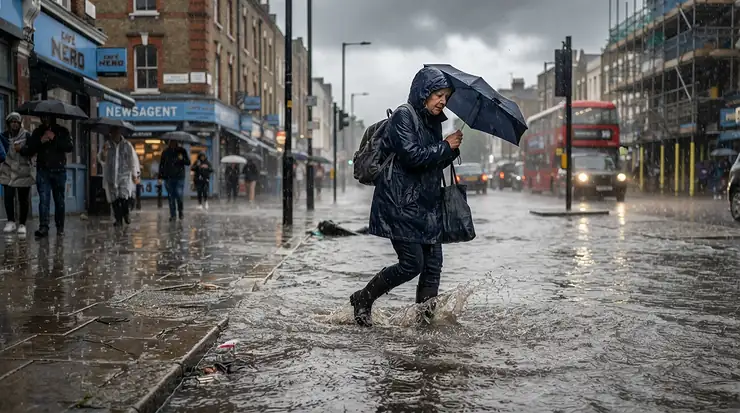
October in Canada has a talent for betrayal. One minute it’s crisp and golden. The next, a Pacific system parks over the coast, or a stalled front dumps a month of rain on Ontario in a weekend. Ankle boots lose that fight. Soggy socks follow, and so does a very short temper.
Here’s the good news. You don’t need a heritage brand or a triple-digit price tag to stay dry. The wellington itself has humble roots: a leather riding boot, later reborn in rubber when manufacturers figured out that waterproof beats fashionable on a wet farm. Today’s budget boots carry that same DNA, with better outsoles.
I’ve spent this article doing the homework so you don’t have to. I compared seven real, widely available pairs on shaft height, materials, sizing quirks and the specs that actually decide whether your feet stay dry. I leaned on published specifications and aggregated review themes. I haven’t worn any of these boots, and I won’t pretend otherwise.
One honest caution first. Amazon.ca pricing moves constantly, and a few picks sit near the cap. Always check current price before you buy. Where a pair can drift above C$80, I’ll flag it.
Quick Comparison: Tall Rain Boots Under $80 CAD at a Glance
Here’s the 30-second version before we dig in. Prices are indicative ranges at the time of research and can change.
| Product | Shaft Height | Key Material / Feature | Price Range (CAD) | Best For |
|---|---|---|---|---|
| Kamik Jennifer | 41 cm (16″) | Lightweight synthetic rubber, Made in Canada | C$50-C$90 (varies by colour/size) | Everyday city and school-run wear |
| Servus by Honeywell 18822 Knee Boot | 41 cm (16″) | Seamless PVC, cleated outsole | C$40-C$75 | Barns, wash-downs, shift work |
| Tingley Badger 87151 | 38 cm (15″) | Slip-resistant (ASTM F3445), steel shank | C$55-C$85 | Agriculture and public works |
| Mountain Warehouse Splash | Tall shaft (check listing) | Printed rubber, easy pull-on | C$40-C$65 | Budget puddle duty |
| Sperry Walker Atlantic | Tall shaft (check listing) | Micro-fleece lining, buckle detail | C$55-C$110 (sale-dependent) | Cooler, damp days |
| Hisea Mid-Calf Neoprene Rain Boots | Mid-calf | Neoprene shaft, rubber sole | C$40-C$65 | Gardening and light farm chores |
| Petrass Quilted Rain Boots | Check listing | Quilted shaft design | C$35-C$55 | Style-first budget buyers |
Read that table sideways and a pattern jumps out. The two work-grade boots, Servus by Honeywell 18822 Knee Boot and Tingley Badger 87151, trade looks for hardware like cleated soles, steel shanks and seamless construction. The Kamik Jennifer leads on design and Canadian manufacturing, though its price swings widely. And Sperry Walker Atlantic is the one to watch carefully on price, because its list price has historically hovered near the cap.
💬 Just one click — help others make better buying decisions too!😊
Top 7 Tall Rain Boots Under $80 CAD: Expert Analysis
1. Kamik Jennifer — lightweight Canadian-made tall boot
The Kamik Jennifer is the lightest boot here, and that’s the headline. Kamik’s published specs list roughly 1.1 kg (about 2.4 lb) per pair, built from a synthetic rubber the company says is about half the weight of natural rubber. In practice, that means less ankle fatigue on a 20-minute walk to the bus. The shaft rises about 41 cm (16″), which is genuinely knee-high rather than “tall” in marketing speak.
Look at the details. The removable EVA insole lets you swap in a thicker or custom one, and the non-marking outsole is built for slick pavement. Kamik also says the boot is seam-sealed, vegan-friendly and made in Canada.
Who is it for? Commuters, parents on playground duty and anyone with slim calves. That last point matters: the shaft circumference is about 37.9 cm (just under 15″) at size 8, so wide calves will feel it.
Reviewer sentiment is mixed on fit. Buyers repeatedly describe the boot as running small, with a snug calf opening that makes pulling it on a workout. Some praise the quality and say they prefer it to pricier British-style wellies. One reviewer reported a seam failing within days, which is a reminder to inspect on arrival.
Pros:
- ✅ Lightest pair in this roundup
- ✅ Genuine 41 cm knee-high coverage
- ✅ Made in Canada, recyclable construction
Cons:
- ❌ Snug calf and small-fitting sizing
- ❌ Price can drift past the C$80 line
Pricing in Canadian retailer listings showed a wide spread, from around C$50 to the high-C$80s depending on colour and timing. Check current price, and treat it as a good value only when it lands under the cap.

2. Servus by Honeywell 18822 Knee Boot — seamless PVC workhorse
If the Kamik Jennifer is the commuter, the Servus by Honeywell 18822 Knee Boot is the shift worker. It’s a one-piece injection-moulded PVC boot, 16″ (41 cm) tall, and “seamless” is the keyword. No stitched seams means no seam to split, so water has far fewer ways in.
Distributor specifications list a cleated Trac10 outsole built to reduce slips, a contour heel cup to limit heel lift, and removable foot-form insoles. Listings also show compliance markings including CAN/CSA Z195-09 for the plain-toe version, which is the Canadian safety footwear standard. That’s rare at this price.
What does that mean in the real world? Wash-downs, barn alleys and dairy parlours are exactly where PVC shines: it shrugs off water and many cleaning chemicals, and it hoses clean in seconds. The trade-off is comfort. PVC is stiffer than rubber, and it doesn’t insulate.
I couldn’t verify a meaningful pool of Amazon.ca reviews for this specific listing, so I won’t summarize sentiment I can’t see. What I can say is that its spec sheet reads like the boot a safety supply catalogue would recommend.
Pros:
- ✅ Seamless construction leaves no stitching to fail
- ✅ Slip-resistant cleated outsole
- ✅ Easy to hose down and disinfect
Cons:
- ❌ Stiff, uninsulated feel in cold weather
- ❌ Plain styling with no flair
Expect roughly the C$40-C$75 range, with size and seller affecting the final number. A strong value for work, an average one for fashion.
3. Tingley Badger 87151 — roomy calf and slip-rated sole
The Tingley Badger 87151 is a 15″ (38 cm) unisex boot built for agriculture, public works and utilities. Its spec sheet highlights ASTM F3445 slip resistance, a shock-absorbing footbed, a steel shank for arch support and, notably, plenty of calf room.
That last detail is the sleeper feature. Many budget tall boots fail on the calf: they squeeze, they pinch, they won’t go over jeans. A roomier shaft solves that, and a steel shank means your arch isn’t flapping through 10 hours on concrete.
Sizing is unisex and runs on a men’s scale. Supplier listings show men’s size 10 equals women’s size 12, so women should size up by two. Don’t order your normal women’s size and hope.
Reviews for this exact model weren’t verifiable in my research. Reviews I found for other Tingley rubber footwear describe tough, stiff rubber that holds up, with fit complaints for the older Pilot G2 style, including difficulty getting a foot in. That’s a pattern worth noting, not a guarantee.
Pros:
- ✅ Roomy calf fits over jeans or work pants
- ✅ ASTM F3445 slip-resistance rating
- ✅ Steel shank for long-shift arch support
Cons:
- ❌ Unisex sizing requires careful conversion
- ❌ Often lands at the top of the price cap
Pricing varies by seller. Expect something like C$55-C$85, so verify current price against the cap before you commit.
4. Mountain Warehouse Splash — bargain puddle pair with personality
The Mountain Warehouse Splash is the “I just need dry feet” boot, and it comes in bold printed patterns. A Yahoo Lifestyle Canada roundup placed it in its under-$50 tier and noted it had more than 500 Amazon reviews, with shoppers calling it comfortable and comparing it favourably to muck-style boots.
Here’s the honest analysis. A bargain boot like this typically prioritizes easy pull-on, light weight and waterproofing over cushioning. That’s perfect for school drop-offs, dog walks and festival fields. It’s less ideal for eight hours of standing.
Because I couldn’t confirm a precise shaft height from the listing material I reviewed, measure before buying. Compare the listed height against the distance from your floor to the crease behind your knee. You want at least 35-38 cm for genuine “tall” coverage.
Aggregated review sentiment from that roundup points to comfort and value as the standout themes. I couldn’t verify negative review themes, so check the lowest-star reviews on the listing for sizing complaints.
Pros:
- ✅ Strong value in the budget tier
- ✅ Fun printed designs
- ✅ Described by reviewers as comfortable
Cons:
- ❌ Shaft height needs confirming per listing
- ❌ Likely light on cushioning for long shifts
Expect roughly C$40-C$65. As budget buys go, it’s easy to justify, especially if puddles are your main enemy.
5. Sperry Walker Atlantic — fleece-lined comfort for cool, damp days
The Sperry Walker Atlantic is a different animal. It has a tall shaft, a buckle accent, a waterproof exterior and a micro-fleece lining. That lining is the point: it’s the only boot here built with warmth and softness in mind.
Why does lining matter? Bare rubber against your skin feels clammy, and it chafes the back of the calf over a long walk. A soft lining reduces both, and it adds a little insulation for fall mornings around 5°C.
Reviewers in a Hip2Save roundup were enthusiastic. Buyers describe the interior as soft and comfortable even without socks, say the shaft height suits shorter wearers, and mention repeat purchases. That’s a good sign of durability, since people don’t buy a third pair of a boot that fails.
Now the catch. The list price in that source was about US$80, with a deep promotional drop mentioned. Canadian pricing varies widely by colour, size and season, and it can easily exceed the C$80 cap. This is the boot where “check current price” isn’t a throwaway line.
Pros:
- ✅ Soft micro-fleece lining for comfort
- ✅ Quick-on design with buckle detail
- ✅ Loyal repeat-buyer reputation
Cons:
- ❌ List price can exceed the cap
- ❌ Lining dries slower than bare rubber
Expect a wide C$55-C$110 range. Buy it only when it lands under the line.

6. Hisea Mid-Calf Neoprene Rain Boots — breathable neoprene for garden duty
The Hisea Mid-Calf Neoprene Rain Boots sit at the lower edge of “tall,” so I’ll be upfront: this is a mid-calf boot. I include it because the neoprene shaft changes the experience. A Wide Open Country farming-boot roundup called these boots breathable, noted their rubber sole and said they come in a range of patterns and colours.
Neoprene stretches. That makes the boot easier to pull on and more forgiving over a thick sock or leggings than a rigid rubber shaft. It also insulates a bit and flexes with your stride. The trade-off: neoprene is not designed for standing in deep water, since the stretchy shaft isn’t a rigid wall.
Who should buy? Gardeners, light farm chores, kids’ sports sidelines and anyone who finds stiff boots miserable. If your priority is wading through serious floodwater, skip to the knee-high options above.
I couldn’t verify a trustworthy sample of Amazon.ca customer reviews, so I’ll leave sentiment out rather than guess.
Pros:
- ✅ Stretchy neoprene shaft is easy to pull on
- ✅ Breathable and comfortable for garden work
- ✅ Multiple patterns and colours
Cons:
- ❌ Mid-calf height limits flood coverage
- ❌ Neoprene isn’t ideal for standing water
Expect roughly C$40-C$65. Fantastic for the yard, wrong for the flood zone.
7. Petrass Quilted Rain Boots — style-forward budget option
The Petrass Quilted Rain Boots earned a “best quilted” label in an In The Know roundup, which listed a very low entry price in US dollars. The quilted shaft is the visual hook, and it looks less like a classic wellie and more like a fashion boot.
Does style cost you function? Sometimes. Quilting and decorative seams add stitching or pattern lines, and each one deserves a quick inspection. For occasional urban use that’s fine. For farm work, I’d choose seamless PVC instead.
This is the pick for someone who wants rain boots they won’t be embarrassed to wear to a café. Measure carefully, though: I couldn’t verify the shaft height for this listing, so compare it with your calf measurement before ordering.
No verified customer-review sample was available in my research, so I’m withholding a sentiment summary rather than inventing one.
Pros:
- ✅ Eye-catching quilted look
- ✅ Very low price point
- ✅ Suits casual city wear
Cons:
- ❌ Shaft height needs verification
- ❌ Decorative detailing may add weak points
Expect roughly C$35-C$55, which makes it the cheapest pair here. Good value for light duty, with less proof of heavy-duty toughness.
How the 7 Compare: Price, Purpose and Practical Winners
| Product | Material | Warmth | Work Rating | Best For |
|---|---|---|---|---|
| Kamik Jennifer | Synthetic rubber | Uninsulated | Light | Commuters with slim calves |
| Servus by Honeywell 18822 Knee Boot | Seamless PVC | Uninsulated | Industrial / CSA Z195 listed | Barn and wash-down work |
| Tingley Badger 87151 | PVC-type waterproof | Uninsulated | ASTM F3445 slip-rated | Roomy-calf work boots |
| Mountain Warehouse Splash | Printed rubber | Uninsulated | Light | Budget puddle duty |
| Sperry Walker Atlantic | Rubber with fleece lining | Light warmth | Light | Cool, damp mornings |
| Hisea Mid-Calf Neoprene Rain Boots | Neoprene | Light warmth | Light | Gardens and sidelines |
| Petrass Quilted Rain Boots | Quilted waterproof | Uninsulated | Light | Café-friendly style |
The pattern is clear. If you need a boot to survive a job, pick Servus by Honeywell 18822 Knee Boot or Tingley Badger 87151. If you need a boot to survive a school run, pick Kamik Jennifer or Mountain Warehouse Splash. Choose Sperry Walker Atlantic when comfort and warmth outrank everything, as long as the price cooperates.
Value-wise, the cheapest per wear isn’t always the cheapest on the shelf. A C$45 boot that lasts two seasons beats a C$35 boot that splits in one.

How to Choose Tall Rain Boots Under $80 CAD
- Measure shaft height, not marketing. A true tall boot reaches 38-41 cm (15-16″) from the floor. Anything under about 30 cm is mid-calf, no matter what the listing says.
- Check calf circumference. Wrap a soft tape around the widest part of your calf. Then compare it to the listed shaft circumference. If the boot is tighter than your calf, it won’t go on.
- Pick the right material. Natural or synthetic rubber is flexible and comfortable. PVC is chemical-resistant and seamless. Neoprene is stretchy and warm but less rigid.
- Inspect the outsole. Deep, widely spaced lugs shed mud. Fine tread belongs on pavement-only boots.
- Look for seamless or sealed construction. Fewer seams mean fewer leaks. Sealed seams matter more than brand names.
- Plan for socks. Thick wool socks need about half a size of extra room.
- Confirm the budget ceiling. Check current price. Anything that drifts over the cap deserves a second look at alternatives.
Notice what’s missing from that list: a brand name. At this price, construction beats prestige almost every time.
Waterproof Rain Boots for Flooding and Puddles: What Canadian Health Officials Say
Here’s where tall boots earn their keep. When flood warnings land, public health guidance across Canada repeatedly lists rubber boots as basic protection. In British Columbia, an Interior Health official told CBC that floodwater mixed with sewage can spread waterborne disease and that wearing rubber boots is a good idea when you must wade in.
That advice shapes how you should judge waterproof rain boots for flooding and puddles. Height is the first defence. Water pours over a short shaft in seconds, so a 38-41 cm boot buys you real margin in a street puddle or a flooded driveway.
Second, look at the seams. A seamless boot like the Servus by Honeywell 18822 Knee Boot removes a leak path entirely, which matters when the water is dirty. Third, consider the opening. A wide, flexible top may be easier to put on, but it also lets water in when you step deeper than your boot.
Be realistic, too. A boot is not a wader. Once the water climbs past the shaft, you’re wet regardless, and floodwater can carry sewage, debris and sharp objects. Avoid wading when you can. If you can’t, choose waterproof rain boots for flooding and puddles with a rigid, tall shaft.
Puddle and Flood Protection Beyond the Boot
A boot is only one layer of puddle and flood protection. The rest is habit.
Pair boots with trouser strategy. Tuck pant legs inside only if the shaft top is snug, otherwise water funnels down. Let waterproof pants fall over the boot top and you create a shingle effect that sheds water outward.
Know your depth rule. If water is above mid-shaft, stop. Your boot becomes a bucket, and the weight of a flooded boot can drag you off balance.
Wash after contact. Public guidance in several provinces stresses rinsing boots and washing hands after any contact with floodwater, and removing boots before leaving a cleanup site. Rinse them, let them dry, and keep them out of living areas.
Mind the sole. Flooded surfaces hide kerbs, pavement edges and debris. A deep-lugged outsole like those on work-grade boots offers better footing than a smooth fashion sole.
This is why puddle and flood protection is really a system, not a purchase. The boot is the foundation.
✨ Don’t Miss These Exclusive Deals!
🔍 Ready to upgrade your rainy-day gear? Click on any highlighted product to check current pricing and availability. A good pair of tall rain boots under $80 CAD could be the cheapest insurance against soggy socks this season!
Tall Rubber Boots for Farm Work: What Actually Holds Up
Farm work is the toughest test for tall rubber boots for farm work, because it combines water, manure, chemicals, mud and long hours. Here’s what to prioritize.
Seamless or sealed construction. The Servus by Honeywell 18822 Knee Boot is built from injection-moulded PVC, and its spec sheet lists resistance to barnyard waste, chemicals and water. That’s the language farmers care about.
Slip resistance. The Tingley Badger 87151 lists ASTM F3445 slip resistance and is marketed for agriculture. Wet concrete and manure-slick floors punish a smooth sole.
A shank for support. Standing all day on a flat sole is brutal. A steel or EVA shank adds arch support, and it’s part of why work-grade boots feel better by hour six.
Safety-toe rules. If your job involves heavy equipment or livestock, a plain-toe boot is not enough. The New Brunswick government’s flood-cleanup guidance recommends watertight boots with a steel toe and insole, not just a steel shank. That advice carries over to many farm tasks. Many steel-toe versions of these styles exist, so shop that variant specifically, and verify the price stays under the cap.
Cold-weather limits. Uninsulated PVC feels brutal below freezing. For winter chores, plan on a thicker sock layer or a separate insulated boot.
For tall rubber boots for farm work, the work-grade pair beats the stylish pair every time.
Rain Boots for Heavy Downpours: Height, Seams and Timing
Heavy rain is a different beast from drizzle. Rain boots for heavy downpours face sheets of water, fast-moving gutter flows and flooded kerbs. Here’s what to look for.
First, rely on forecasts. Environment and Climate Change Canada issues public weather alerts for heavy rainfall, and checking them before you head out is smarter than guessing. If a rainfall warning is active, wear the tallest, most seam-resistant boot you own.
Second, think about the whole outfit. Water runs down your legs from your jacket, so a rain jacket that reaches mid-thigh and pants that cover the boot top keep that runoff off your socks. A taller shaft helps, but it can’t fix a leaking outfit.
Third, test the fit. A boot that’s too loose lets water slosh at the heel, and a boot that’s too tight cuts circulation and gets cold. The sweet spot is a snug heel with a little toe room.
Finally, think about drainage after the storm. Take out the insoles, stuff the boots with newspaper and dry them upright, away from direct heat. Rain boots for heavy downpours that stay wet inside will smell, and they’ll stay clammy for the next outing.

Rubber Boot Sizing: How to Avoid the Most Common Mistake
Sizing is where cheap boots go wrong. Rubber boot sizing is unforgiving because rubber doesn’t give like leather, so a mistake can mean returning a pair.
Start with your foot, not your shoe size. Kamik publishes a size chart: a women’s size 8 corresponds to roughly 9.5″ (about 24 cm) of foot length, and a size 9 to about 9 7/8″ (about 25 cm). Measure your foot on paper, standing, in the afternoon when feet are slightly swollen.
Calf circumference counts. The Kamik Jennifer has a shaft circumference near 37.9 cm at size 8. Reviewers frequently mention a snug calf opening, so wide calves should consider a roomier boot like the Tingley Badger 87151.
Convert unisex sizes carefully. Supplier listings show the Tingley Badger 87151 treats men’s size 10 as women’s size 12. Women should convert, not guess.
Plan for socks. Add half a size if you wear thick wool socks. Skip that and you’ll end up with squeezed toes and cold feet.
The heel test. Walk a few steps indoors. If your heel lifts more than a thumb’s width, the boot is too big and will blister you.
Good rubber boot sizing is the cheapest upgrade you’ll ever make.
Rubber vs PVC vs Neoprene: Which Material Wins?
| Material | Strengths | Weak Spots | Example | Best For |
|---|---|---|---|---|
| Rubber (natural/synthetic) | Flexible, comfortable, quiet | Can split at seams | Kamik Jennifer | Commuting, school runs |
| PVC (seamless) | Chemical-resistant, hoses clean | Stiff, cold underfoot | Servus by Honeywell 18822 Knee Boot | Barns, wash-downs |
| Neoprene | Stretchy, warm, easy on | Not ideal for deep water | Hisea Mid-Calf Neoprene Rain Boots | Garden and light chores |
| Fleece-lined rubber | Soft, warmer | Slow to dry | Sperry Walker Atlantic | Cool, damp days |
The table above explains why there’s no single “best” boot. Rubber wins on comfort, PVC on durability and cleanliness, neoprene on easy fit, and lined rubber on warmth. Match the material to the job rather than chasing a brand.
If you’re on a strict budget, PVC like Servus by Honeywell 18822 Knee Boot is usually the most durable per dollar. If comfort matters more, rubber like Kamik Jennifer pays off every step.
Care Guide: Making Cheap Rubber Boots Last Longer
A C$60 boot can last years or one season, and the difference is care. Here’s a practical routine.
First week. Wear the boots around the house for an hour. Check seams and the sole bond for gaps, and return anything suspect while the return window is open.
After every wear. Rinse off mud with lukewarm water. Pull out the insole and let it dry separately. Dry the boots upright at room temperature, because radiators and sunlit windows crack rubber.
Monthly. Wipe rubber with a damp cloth and a little mild soap. Check the shaft folds for cracking, the most common failure point.
Storage. Keep boots upright and away from sunlight, heat and ozone sources like electric motors. Stuffing the shaft with a rolled towel stops creasing.
Floodwater or farm contact. Rinse thoroughly, disinfect if needed and let dry fully. Guidance from provincial health sources stresses removing and washing boots after contact with flood or barnyard contamination.
Common first-30-day mistakes. Drying near a heater, tugging by the top edge and storing folded. Each one shortens boot life more than any brand choice.
Real-World Scenarios: Which Pair Fits Your Life?
The Vancouver commuter. Eight months of rain, mostly drizzle, a 15-minute walk to transit. You want light, comfortable and presentable. Kamik Jennifer fits, provided your calf isn’t wide, and Mountain Warehouse Splash is the budget alternative.
The Prairie hobby farmer. Weekend chores, manure, wet concrete. Choose Servus by Honeywell 18822 Knee Boot for seamless durability, or Tingley Badger 87151 if you need calf room and slip-rated footing. Budget about C$40-C$85 depending on the pair.
The Maritime homeowner. Basements flood, storms are frequent, and cleanup is real. Pick a tall, rigid boot with a deep-lug sole, and keep a pair near the door. Follow cleanup guidance: boots off before leaving the worksite, then rinse.
The Ontario parent. School drop-offs, soccer fields, cold mornings. Sperry Walker Atlantic wins on comfort if the price lands under the cap. Hisea Mid-Calf Neoprene Rain Boots is the easy pull-on alternative for quick trips.
None of these profiles needs the most expensive boot. They need the right boot.
Common Problems and Easy Solutions
Problem: cold feet in rubber boots. Rubber conducts cold. Use merino or wool-blend socks and a removable insole with some thickness. Fleece-lined pairs like Sperry Walker Atlantic help.
Problem: the boot won’t pull on. Calf too tight. Try a thinner sock, a dab of talc inside the shaft, or move to a roomier pair like Tingley Badger 87151.
Problem: heel blisters. Your boot is too big. Add a thicker insole or switch to a smaller size.
Problem: leaks at the seam. Check for cracks near the ankle fold. A rubber patch kit can fix small leaks, but a split seam usually means replacement. Seamless Servus by Honeywell 18822 Knee Boot avoids that failure entirely.
Problem: sweaty feet. Rubber doesn’t breathe. Choose moisture-wicking socks, remove insoles to dry between wears, and consider neoprene like Hisea Mid-Calf Neoprene Rain Boots for milder days.

FAQ
❓ How tall should rain boots be for deep puddles?
❓ Can I wear tall rain boots all day on a farm?
❓ Do rubber boots run big or small?
❓ Are rain boots under $80 CAD worth buying?
❓ How do I stop rain boots from leaking at the seams?
Conclusion
Here’s the bottom line. Tall rain boots under $80 CAD can absolutely keep you dry through a wet Canadian fall, and the winning move is matching the boot to your life. Need a lightweight everyday boot? Kamik Jennifer is the standout, if your calf fits and the price behaves. Need something that survives a barn? Servus by Honeywell 18822 Knee Boot and Tingley Badger 87151 are the work-grade picks. Want a budget pair for puddles? Mountain Warehouse Splash and Petrass Quilted Rain Boots keep the cost low. And if you crave comfort on cold, damp days, Sperry Walker Atlantic has the lining, as long as the price lands under the line. Hisea Mid-Calf Neoprene Rain Boots rounds out the list for garden duty.
Measure your foot and calf, check shaft heights, confirm current price and read the lowest-star reviews on the listing. That small ritual will save you more money than any sale.
Recommended for You
- Pac Boots For Winter: 7 Best Warm Picks For Canada 2026
- Ice Grip Winter Boots For Icy Sidewalks: 7 Best Picks 2026
- Insulated Winter Boots For Canadian Winters: 7 Best Picks 2026
Disclaimer: This article contains affiliate links. As an Amazon Associate, I earn from qualifying purchases. If you purchase products through these links, we may earn a small commission at no additional cost to you.
✨ Found this helpful? Share it with your friends! 💬🤗
