
In This Article
You know the moment. You step off the porch in your “it’ll be fine” sneakers, slush finds the seam, and by the end of the driveway your toes have filed a formal complaint. Pac boots for winter exist for exactly that moment.
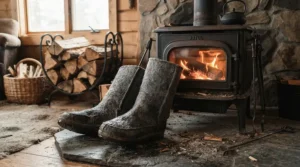
So what are pac boots for winter? They are two-piece cold-weather boots: a waterproof rubber lower shell joined to a leather or nylon upper, plus a removable insulating liner, usually felt. The shell keeps slush out and the liner traps heat. Because the liner pulls out, you can dry it overnight instead of wearing damp insulation all week. ❄️
That removable liner is the whole point. The Canadian Centre for Occupational Health and Safety notes that cold, wet outdoor work puts feet at risk of frostbite, chilblains and trench foot, and that insulated footwear can offer little protection through an uninsulated sole. A boot whose guts you can pull out and dry is a safety feature, not a gimmick. 🧦
This guide covers seven real models, from budget to polar-grade. It weighs removable liner winter boots against one-piece designs. It also covers heavy-duty snow boots for serious cold, the surprisingly rich pac boot history, and boots for rural and outdoor work.
A few honesty notes before we start. Prices below are approximate CAD ranges based on retail figures at the time of research, so check current prices on Amazon.ca. Availability and sizes change often. The review sentiment comes from published tester and reviewer reports, not from star ratings I could verify on Amazon.ca.
Quick Comparison: 7 Pac Boots for Winter Side by Side
| Model | Liner | Shaft Height | Approx. Price (CAD) | Best For |
|---|---|---|---|---|
| Sorel Caribou | 9 mm removable felt | about 23.5 cm (9.25 in) | C$250–C$320 | Daily chores, classic all-rounder |
| Kamik Nation Plus | Removable synthetic | 25–29 cm (10–11.25 in) | C$130–C$170 | Budget-conscious everyday wear |
| Baffin Snow Monster | Multi-layer removable | about 30 cm (11.75 in) | C$330–C$420 | Extreme cold, long outdoor days |
| Sorel 1964 Pac Nylon | 9 mm washable felt | about 26 cm (10.25 in) | C$220–C$280 | Town wear, après-ski |
| Kamik Tundra | Removable felt | about 38 cm (15 in) | C$110–C$150 | Deep snow on a small budget |
| Baffin Impact | Removable multi-layer | about 38 cm (15 in) | C$300–C$400 | Heavy-duty snow boots for extreme cold |
| Vans MTE Standard | Removable felt | about 25 cm (10 in) | C$220–C$280 | Style-first light winter use |
Looking at the table, the Kamik Nation Plus and Kamik Tundra are the value plays, and the Baffin Impact and Baffin Snow Monster are the cold specialists. Everything in the middle trades warmth against weight and fashion. If you spend most of your winter shovelling, commuting short distances and warming up in a car, the cheaper pair will often do the job. If you stand still outdoors for hours, the extra money for a multi-layer liner starts to make sense.
💬 Just one click — help others make better buying decisions too!😊
Top 7 Pac Boots for Winter: Expert Analysis
Each pick below follows the same logic: what the specs mean in practice, who the boot suits, what reviewers keep saying, and whether the price range earns its keep.
1. Sorel Caribou — the classic felt-liner workhorse
The Caribou’s standout feature is its thick felt liner, the cosy inner boot that defines how pacs feel. Sorel began as a boot line from the Kaufman Rubber Company of Kitchener, Ontario, so this is Canadian winter heritage with a Portland address now.
Specs first, then meaning. The Sorel Caribou uses a 9 mm removable felt liner, a sherpa pile cuff, a leather upper and a rubber shell that wraps the toe and heel. Shaft height is about 23.5 cm (9.25 in), and the pair weighs roughly 2.1 kg (4 lb 10 oz). Felt keeps insulating when damp, and the liner pulls out to dry, which matters after a slushy day. The height guards against shin-deep drifts but not knee-deep ones.
Based on the spec comparison, this boot suits shovelling, chores, the school run and general deep-winter use. It is the wrong tool for long distances.
Switchback Travel’s testers praise its comfort and styling and flag the weight. I couldn’t verify Amazon.ca star ratings, so check the live listing.
Pros:
- ✅ Thick felt liner gives cosy, forgiving warmth
- ✅ Rubber shell wraps over toe and heel
- ✅ Liner pulls out for faster drying
Cons:
- ❌ Heavy for long walks
- ❌ Roughly double the price of budget pacs
Expect around C$250–C$320. It’s a fair verdict for daily wearers. If you only need boots a few weeks a year, the Kamik Nation Plus below gets you most of the way for far less.

2. Kamik Nation Plus — best value for everyday winter
Value is the standout feature here. Kamik is a Canadian brand with roots going back to 1898, and The Inertia’s testers named the Kamik Nation Plus their best all-around winter boot at roughly half the price of better-known pacs.
It combines a waterproof suede upper, a rubber lower, a gusseted tongue, seam sealing and a removable liner. Switchback Travel describes the liner as 200 g Thinsulate-type fill. Spec sheets disagree on shaft height, quoting 25 to 29 cm (10 to 11.25 in), so check the listing for your model year. The gusseted tongue means slush can’t sneak in at the lace line, which cheaper boots often skip. Testers stayed comfortable down to about −10°C.
The honest take: this is for commuters, dog walkers and snow-blower operators who want a pac that works without the badge premium.
Reviewers contradict each other on fit. One calls it snug and true to size, another says the removable liner leaves a loose feel. Switchback Travel also reports occasional long-term durability concerns with Kamik boots.
Pros:
- ✅ Strong warmth for the price
- ✅ Gusseted tongue and sealed seams keep slush out
- ✅ Removable liner dries easily
Cons:
- ❌ Materials are not premium, with some durability reports
- ❌ Fit reads loose or snug depending on the reviewer
Plan on C$130–C$170, which is excellent value for anyone shopping for removable liner winter boots on a sensible budget.
3. Baffin Snow Monster — built for the proper cold
Warmth you can tune is the Snow Monster’s standout feature. A multi-layer removable liner system lets you adjust insulation as the temperature swings. Baffin has manufactured in Stoney Creek, Ontario since 1979, and The Inertia notes that these boots are made in Canada.
The upper combines leather and nylon, with lace-and-drawstring closure and a shaft around 30 cm (11.75 in). Each boot weighs about 1.4 kg. Switchback Travel references a rating of −94°F, which is roughly −70°C. That number deserves caution. There is no standardized test behind boot temperature ratings, and how warm you feel depends on activity, socks and circulation. Treat the rating as a ranking of insulation levels, not a promise.
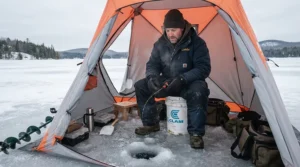
On paper, this boot suits people who stand still in the cold, such as ice fishers, outdoor workers and winter spectators at long hockey tournaments.
Testers call it tough and warm and also heavy and pricey. They also note it is snowshoe-compatible. Again, check live Amazon.ca reviews yourself.
Pros:
- ✅ Layered liner lets you tune insulation
- ✅ Made in Canada with tank-like construction
- ✅ Snowshoe-compatible design
Cons:
- ❌ Heavy and bulky for long walks
- ❌ Premium price for non-extreme use
Expect around C$330–C$420. It’s worth it only if your winters regularly drop well below −25°C and you spend long, low-activity hours outside.
4. Sorel 1964 Pac Nylon — lighter pac for town and après
A nylon upper is the standout feature. It cuts weight compared with leather pacs while keeping the classic rubber shell. The Sorel 1964 Pac Nylon pairs a waterproof nylon upper with a 9 mm washable recycled felt liner, a sherpa snow cuff and a vulcanized rubber shell.
The shaft sits around 26 cm (10.25 in), and each boot weighs about 750 g (26.5 oz). That lightness is the real-world benefit: it feels less like wearing buckets. The herringbone tread, however, is built more for all-season town use than for slippery trails, so winter traction is average.
Testers liked how easily it goes on and off. They also noticed the liner tends to come out with the boot when you pull it off, which becomes a small daily annoyance. Pacs in this style also fit loosely with little support.
This is the pick for errands, ski-hill parking lots and the commute from a heated car to a heated office.
Pros:
- ✅ Lighter than leather-upper pacs
- ✅ Washable felt liner and snow cuff
- ✅ Easy on and off
Cons:
- ❌ Liner can tug out when boots come off
- ❌ Herringbone tread is less grippy on ice
Budget about C$220–C$280. A fair price for the brand, though the Kamik Nation Plus undercuts it for similar everyday use.
5. Kamik Tundra — knee-height rubber for deep snow on a tiny budget
Height is the standout feature. This all-rubber boot rises about 38 cm (15 in) and uses a nylon cuff with a bungee lace-lock to cinch snow out. The Inertia traces the tall-rubber trend to Hokkaido, Japan, where it began as workwear before skiers adopted it.
Inside is a removable felt liner. Reported weights range from about 0.9 to 1.1 kg per boot depending on the source. The all-rubber shell makes it easy to hose off and nearly impossible to soak through. The cinch cuff earned praise from testers trudging through knee-deep drifts.
The trade-off is breathability. A full rubber exterior runs hot in shoulder season, and the sole isn’t the grippiest. Reviewers also call it clunky for longer walks.
Based on those specs, it’s an excellent fit for rural driveways, snow-blowing sessions and kids’ outdoor play. It is a poor choice for a long city commute.
Pros:
- ✅ Tall shaft handles deep drifts
- ✅ Cinch cuff seals snow out
- ✅ Very low price for the coverage
Cons:
- ❌ Not breathable, so it overheats in mild spells
- ❌ Sole isn’t the grippiest on ice
Expect around C$110–C$150, a standout deal for deep-snow coverage.
6. Baffin Impact — polar-rated heavy-duty snow boots
Its standout feature is the extreme-cold rating. Baffin rates the Baffin Impact to −100°C and describes a removable Comfort-Fit multi-layer inner boot with double B-Tek insulation, a vapourized aluminum membrane and a double aluminum insole.
The shell is Arctic rubber with an EVA midsole and a Polar Rubber outsole, topped by a double-buckle closure and a nylon snow collar. Shaft height is about 38 cm (15 in), and the pair weighs over 3.3 kg (7 lb 6.7 oz per Switchback Travel). Baffin sells a replacement liner for these boots at around C$100. That matters because a worn liner is the usual end of life for a pac, and replacing only the liner extends the boot.
This is a specialist tool. Baffin positions it for extended periods in extreme cold at low to moderate activity levels. Switchback Travel agrees, and warns it handles mild winter conditions poorly, isn’t breathable, and is ungainly for covering ground.
Pros:
- ✅ Extreme-cold rating from the brand
- ✅ Replaceable multi-layer liner
- ✅ Buckles and snow collar seal out snow
Cons:
- ❌ Over 3 kg per pair and awkward to walk in
- ❌ Overkill and hot for mild winters
Plan on C$300–C$400. A strong buy for Arctic-grade needs, wasteful for anyone who rarely sees −30°C.
7. Vans MTE Standard — skate-brand style with a felt liner
Familiar sneaker-brand styling is the standout feature. The Vans MTE Standard is a leather-and-synthetic lace-up pac with a removable felt liner, a shaft around 25 cm (10 in) and a weight of about 0.9 kg per boot.
The Inertia’s testers found it warm, solid and dependable for moderate outdoor missions in the snow, though not for big hikes. The main complaint is the lacing: even when cranked, it never locks down a truly snug fit. A good pair of thick socks fills the gap. A side-zip version exists at a higher price, and the DC Reach is a similar alternative that is only water-resistant, not waterproof, above the rubber shell.
This one suits city dwellers who want removable felt liners without looking like they are heading to a logging camp.
Pros:
- ✅ Familiar sneaker-brand styling
- ✅ Removable felt liner dries out
- ✅ Keeps snow out on moderate outings
Cons:
- ❌ Laces don’t lock in a snug fit
- ❌ Not built for big hikes
Budget about C$220–C$280. You pay partly for style, so it isn’t the cheapest route to warmth.
How the Seven Compare on Specs
| Model | Approx. Weight per Boot | Shaft Height | Liner Type | Best For |
|---|---|---|---|---|
| Sorel Caribou | about 1.05 kg | 23.5 cm | 9 mm felt | Everyday chores |
| Kamik Nation Plus | about 0.8–1.0 kg | 25–29 cm | Synthetic removable | Budget winters |
| Baffin Snow Monster | about 1.4 kg | 30 cm | Multi-layer | Extreme cold |
| Sorel 1964 Pac Nylon | about 0.75 kg | 26 cm | Washable felt | Town wear |
| Kamik Tundra | about 0.9–1.1 kg | 38 cm | Removable felt | Deep snow |
| Baffin Impact | about 1.7 kg | 38 cm | Multi-layer | Polar cold |
| Vans MTE Standard | about 0.9 kg | 25 cm | Removable felt | Style-first use |
Weights vary by size and source, so treat these as ballpark figures. The pattern is clear: weight climbs with insulation, and both Baffin models pay for their warmth in kilograms. The Sorel 1964 Pac Nylon is the lightest of the group, while the Kamik Tundra gives the most height for the least money.
✨ Don’t Miss These Exclusive Deals!
🔍 Take your winter footwear to the next level with these carefully selected boots. Click on any highlighted item to check current pricing and availability. These picks will help you build a cold-weather setup your whole family will love! 🧤
Your First 30 Days in Pac Boots for Winter: Fit, Break-In and Liner Care
Buying is half the job. A few habits decide whether your pac boots for winter last two seasons or ten.
Size for the socks you’ll actually wear. Switchback Travel suggests going up half a size for midweight socks and a full size for expedition-weight ones. Pacs already fit loosely, so don’t over-size. Wiggle room for toes keeps blood flowing, and cramped toes are colder toes.
Pull the liners out every night. This is the headline benefit of removable felt liners. Even if your boots seem dry, moisture from sweat builds up. Take the liner out, stand it somewhere airy and let the shell air separately. Follow the brand’s care label before using any heat source, since felt and rubber don’t love hot radiators.
Clean on a schedule. Baffin’s own care guidance for its liners is simple: warm water, mild detergent and a brush. The Sorel 1964 Pac Nylon is sold with a washable felt liner. For leather uppers, apply a leather conditioner early. Switchback Travel notes that this also softens the leather and shortens break-in.
Avoid first-month mistakes:
- Wearing cotton socks, which hold moisture and stop insulating when wet.
- Cinching laces so tight that circulation drops.
- Leaving damp liners inside the boots overnight.
- Wearing extreme-cold boots like the Baffin Impact for mild errands and wondering why your feet sweat.
Spend ten minutes on a short trial walk before the first big freeze. If your heel lifts, add a thicker sock or a cushioned insole.
Cold Feet, Wet Liners, Slippery Ice: Problems and Solutions
Even good removable liner winter boots meet real-world trouble. Here are five common problems and how to handle them.
Problem 1: The liner comes out with the boot
This is a known quirk of the Sorel 1964 Pac Nylon. Loosen the laces fully, hold the cuff and pull the boot off, then press the liner back into place before the next wear.
Problem 2: Cold toes when standing still
Temperature ratings aren’t backed by a standard test, so a boot can feel colder than its label. Add a heavier merino sock without cramming the toe box, and consider a more heavily insulated model like the Baffin Snow Monster if you stand outdoors for hours.
Problem 3: Slipping on ice
Even the best snow soles struggle on glare ice. Switchback Travel recommends pairing winter boots with a traction device such as Yaktrax for everyday ice, or Kahtoola Microspikes for heavier conditions.
Problem 4: Sweaty feet in mild weather
Full-rubber boots like the Kamik Tundra and thick multi-layer boots like the Baffin Impact don’t breathe well. Switch to a lighter sock, and keep a lower-profile boot for shoulder season.
Problem 5: A worn-out liner
When the liner compresses and loses loft, the whole boot gets colder. Baffin sells replacement liners for the Baffin Impact at around C$100, which is far cheaper than replacing a polar-grade boot. Check the maker’s parts availability before buying any pair you hope to keep a decade.
Boots for Rural and Outdoor Work: Which Pac Holds Up
Boots for rural and outdoor work face harder tests than a city sidewalk. The CCOHS notes that outdoor jobs like logging, hydro line work and fishing involve long exposure to cold and wet. That calls for tough shells, replaceable liners and enough height for deep snow. Here are three realistic profiles.
Profile 1: The Prairie farmhand. Pre-dawn chores, long periods standing still, temperatures often below −30°C. Budget is flexible because boots are a tool. The Baffin Impact or Baffin Snow Monster suits this profile best. Use daily, keep a spare liner on hand.
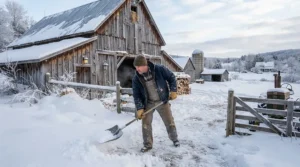
Profile 2: The rural homeowner. Two long driveways, a snow blower, a woodpile and weekend firewood runs. Budget under C$200. The Kamik Tundra handles deep drifts for little money. The Kamik Nation Plus covers general outdoor use.
Profile 3: The seasonal outdoor worker or ice angler. Frequent cold exposure, moderate activity, occasional wet ice. The Sorel Caribou gives the best mix of comfort, build quality and drying speed.
One safety note. Standard pac boots aren’t steel-toe safety boots. If your employer requires CSA-approved protective footwear, look for the CSA marking on the boot and confirm the requirement before buying. Always match boots to the hazard, and ask your supervisor if you’re unsure.
How to Choose Pac Boots for Winter: 7 Steps
- Start with your real coldest day. Ignore brand ratings and think about your actual winter: −10°C and damp, or −35°C and dry.
- Decide your activity level. Standing still demands far more insulation than walking, so chore boots and ice-fishing boots belong in different tiers.
- Pick a shaft height. About 25 cm is enough for sidewalks, while 30 to 38 cm handles drifts.
- Inspect the liner. Felt is warm even when damp, synthetic is lighter, and multi-layer systems offer the most warmth. Check whether replacement liners are sold.
- Fit with winter socks. Try or order with the thickest socks you plan to wear.
- Check traction. Look for a soft rubber compound and deep lugs, and plan for traction cleats on ice.
- Weigh price against use. Daily wearers justify premium pacs, while occasional wearers do better with budget models.
These steps keep the choice simple. If you only follow two, follow steps 2 and 5, since activity level and fit cause most disappointment.
Pac Boot History: From Delaware Moccasins to Modern Shells
The pac boot history is older than most people expect. The word “pac” traces to a Delaware-language term for shoes. According to the Dictionary of American Regional English, it began as a waterproof moccasin and later described heavy waterproof boots worn by loggers and lumber-camp workers.
The rubber-bottom, leather-top idea took its modern shape in the early 1900s. L.L. Bean sold his Maine Hunting Shoe starting in 1912, sewing rubber soles to leather uppers. In Canada, the Kaufman Rubber Company opened in Berlin, Ontario (now Kitchener) around 1907, and the University of Waterloo’s archive of the company records how its Sorel line became its most successful product. Sources place the line’s debut anywhere from 1959 to 1962. Wikipedia adds that rubber-bottom leather-top fleece-lined flight boots from the post-war RCAF carried the Kaufman name.
Kaufman Footwear went bankrupt in 2000, and Columbia Sportswear bought the Sorel trademark. Meanwhile, Kamik (founded in 1898, per The Inertia) and Baffin (manufacturing in Stoney Creek since 1979) kept the Canadian tradition alive.
Why does this pac boot history matter to a buyer? Because the design barely changed in a century. Waterproof bottom, warm removable inner, tall enough to keep snow out. Modern materials improve weight and warmth, but the logic still works.
Features That Actually Matter (And Those That Don’t)
What matters:
- Liner type and replaceability. Removable felt liners are heavy but forgiving, while synthetic and multi-layer liners cut weight or boost warmth. A replaceable liner stretches the boot’s life.
- Rubber shell coverage. The wraparound rubber on the Sorel Caribou is why it handles slush puddles.
- Gusseted tongue and snow collar. Both stop snow entering at the top, which a high shaft alone doesn’t do.
- Closure. The bungee cinch on the Kamik Tundra or the buckles on the Baffin Impact keep snow out better than plain laces.
What matters less:
- Giant temperature numbers. With no standard test, a −100°C label tells you the insulation tier, not your comfort.
- Fashion trim. Sherpa cuffs are pleasant but don’t change warmth much.
- Brand prestige. The Inertia’s testers found a budget pac matched a pricier one for general use.
When choosing removable liner winter boots, ask one question: can I replace or dry the part that wears out? If yes, the boot is a keeper.
Pac Boots for Winter vs One-Piece Insulated Boots
One-piece boots, such as hiking-style designs, trade pac-style protection for precision. Switchback Travel notes that pacs feel sloppy over long distances but are great for short walks, outdoor work and harsh conditions, while one-piece models fit better and weigh less.
| Feature | Pac Boots | One-Piece Insulated Boots | Best For |
|---|---|---|---|
| Drying speed | Fast, because the liner pulls out | Slower, with built-in insulation | Pacs: Sorel Caribou, Kamik Tundra |
| Waterproofing | Rubber shell is very reliable | Membrane is good but less bombproof | Pacs: Baffin Impact |
| Weight | Heavier | Lighter | One-piece: Hoka Kaha 2 Frost GTX |
| Fit precision | Looser | Snug, secure | One-piece: Columbia Fairbanks |
| Warmth standing still | Excellent with thick liners | Moderate | Pacs: Baffin Snow Monster |
The table shows a clear split. Pacs win for chores, standing and wet snow. One-piece boots win for walking distance and hiking. If your winter involves lots of walking, the Hoka Kaha 2 Frost GTX or Columbia Fairbanks are worth a look. If you mostly stand, shovel and slosh, pac boots for winter are the stronger match.
Long-Term Cost and Maintenance of Pac Boots for Winter
Price per winter beats price per pair. Here is an illustrative calculation, not a product claim. A C$150 pair that lasts three winters costs about C$50 per winter. A C$320 pair that lasts eight winters costs about C$40 per winter. Cheap isn’t always cheaper.
Replaceable liners tilt the math. A replacement liner costs around C$100 for Baffin’s polar boots, much less than a new boot. Brand ownership also matters over a decade. The Sorel brand moved to Columbia Sportswear after Kaufman Footwear went bankrupt, so check parts availability for any model you hope to keep long term.
| Model | Approx. Price (CAD) | Tier | Value Verdict | Best For |
|---|---|---|---|---|
| Kamik Tundra | C$110–C$150 | Budget | Best deep-snow value | Rural driveways |
| Kamik Nation Plus | C$130–C$170 | Budget | Best all-round value | Daily commuting |
| Sorel 1964 Pac Nylon | C$220–C$280 | Mid-range | Fair for the brand | Town wear |
| Vans MTE Standard | C$220–C$280 | Mid-range | Pays for style | Casual winters |
| Sorel Caribou | C$250–C$320 | Premium | Durable daily driver | Heavy daily use |
| Baffin Impact | C$300–C$400 | Premium | Worth it only for extreme cold | Polar work |
| Baffin Snow Monster | C$330–C$420 | Premium | Strong for cold regions | Long outdoor days |
Treat the verdicts as guidance, not guarantees. The Kamik Nation Plus offers the best money-for-warmth ratio, while the Baffin Impact only pays off if cold is a daily job requirement.
Common Mistakes When Buying Pac Boots for Winter
Trusting temperature ratings as promises. Testers consistently say ratings aren’t standardized. Use them to rank boots, not to plan survival.
Buying for the coldest day only. An extreme-cold boot like the Baffin Impact overheats on −5°C errands. Match boots to your typical day.
Skipping the sock plan. Fit with the socks you’ll wear. Cotton is a bad idea in any pac.
Ignoring height. A 9 cm-short boot fills with snow the first time you cut across a field. Match shaft height to your snow depth.
Assuming warm equals safe. Pacs aren’t automatically CSA-approved protective footwear. Check requirements for work.
Forgetting replacement parts. Models come and go. CBC covered the boot shortage after Sorel’s original maker collapsed in 2000, a reminder that a favourite model can vanish. Buy from brands that sell liners separately.
Letting liners stay wet. Dry them every night, since damp insulation is a cold-injury risk.
FAQ: Pac Boots for Winter
❓ Are pac boots for winter warmer than regular snow boots?
❓ Can I buy replacement removable felt liners?
❓ What size should I order for thick winter socks?
❓ Are removable liner winter boots machine washable?
❓ Are heavy-duty snow boots overkill for city commuting?
Conclusion
The right pair of pac boots for winter depends on how you spend your cold days. For most Canadians, the Kamik Nation Plus delivers the best balance of warmth, protection and price. If you want the classic felt-liner experience, the Sorel Caribou earns its premium. The Kamik Tundra is hard to beat for deep snow on a small budget, while the Sorel 1964 Pac Nylon and Vans MTE Standard suit town wear. For serious cold, the Baffin Snow Monster and Baffin Impact are the heavy-duty snow boots in this group.
Remember the fundamentals. Fit with your real winter socks, pull the liners out every night, and match boot height to snow depth. Treat temperature ratings as rough guides, and choose boots for rural and outdoor work with replaceable liners and a proper snow seal. Prices and availability change often, so check current prices and stock on Amazon.ca before you decide.
✨ Ready to keep your feet warm all winter?
🔍 Compare the seven boots above, pick the one that matches your coldest real day, and check current pricing and availability today. Your toes will thank you!
Recommended for You
- Ice Grip Winter Boots For Icy Sidewalks: 7 Best Picks 2026
- Insulated Winter Boots For Canadian Winters: 7 Best Picks 2026
- -40°C Rated Winter Boots: 7 Proven Picks For Canada (2026)
Disclaimer: This article contains affiliate links. As an Amazon Associate, I earn from qualifying purchases. If you purchase products through these links, we may earn a small commission at no additional cost to you.
✨ Found this helpful? Share it with your friends! 💬🤗
