

In This Article
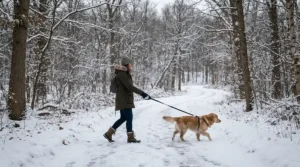
You know the moment. The sidewalk looks wet and harmless, then your front foot goes one way and your stomach goes the other. Canadians don’t get a winter off. Between freeze-thaw cycles, shaded driveways and transit stops that never see a salt truck, the glaze arrives whether you’re ready or not. It’s mid-October 2026, and the first freeze is close enough that now is the smart time to shop.

This guide is built on research, not a personal test lab. I pulled manufacturer specs, published gear tests and aggregated owner reviews, then interpreted what they mean for people who actually walk on ice. Where reviews couldn’t be verified, I say so. Where a spec is only a marketing claim, I flag that too. The goal is simple: help you choose ice grip winter boots for icy sidewalks without paying for hype.
What Are Ice Grip Winter Boots for Icy Sidewalks?
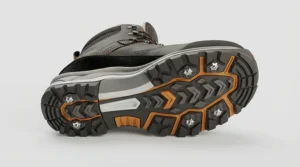
Ice grip winter boots for icy sidewalks are insulated, waterproof boots with cold-weather outsoles. They use soft rubber compounds, wet-ice formulations such as Vibram Arctic Grip, or aggressive lug patterns that stay pliable below freezing and bite into slick surfaces. Some are designed to pair with removable cleats for the glassiest conditions.
The Italian company behind that famous yellow-octagon sole, Vibram, is credited with inventing the first rubber lug sole. Its compounds are now licensed to more than a thousand footwear makers, which is why you’ll see the name on everything from mountaineering boots to Canadian work boots.
Quick Comparison: 7 Ice Grip Picks at a Glance
Prices below are estimated CAD ranges from my research and move constantly, so check current pricing and availability on amazon.ca before you decide.
| Product | Warmth build | Outsole / traction | Price range (CAD) | Best For |
|---|---|---|---|---|
| Muck Arctic Ice Mid | Neoprene + fleece | Vibram Arctic Grip A.T. | C$220–C$330 | Wet-ice commuters |
| Kamik Nationplus | Pac-style insulated liner | Soft, sticky rubber | C$90–C$170 | Budget-conscious walkers |
| Sorel Caribou | 9 mm removable felt liner | AeroTrac vulcanized rubber | C$220–C$320 | Deep-cold standing and shovelling |
| Columbia Bugaboot Plus IV Omni-Heat | 200 g synthetic + reflective lining | Michelin winter compound | C$180–C$280 | Active, mixed-surface walking |
| Kodiak Ice Conqueror | Work-boot build | Vibram Arctic Grip | C$250–C$350 | Job sites and safety-toe needs |
| Kahtoola MICROspikes | Add-on (no insulation) | Stainless spikes on chain | C$100–C$130 | Glare ice and steep, icy paths |
| Yaktrax Walk | Add-on (no insulation) | Steel coils | C$30–C$50 | Patchy snow on city sidewalks |
Read the table as a map of trade-offs, not a ranking. The Kamik Nationplus wins on price, and the Muck Arctic Ice Mid wins on wet-ice-specific rubber. The Sorel Caribou is the warmest of the group on paper, while the Columbia Bugaboot Plus IV Omni-Heat is the lightest and most athletic. The last two entries aren’t boots at all, which matters more than it looks, and I’ll explain why in the cleat sections.
💬 Just one click — help others make better buying decisions too!😊
Top 7 Ice Grip Winter Boots for Icy Sidewalks: Expert Analysis
1. Muck Arctic Ice Mid — Vibram wet-ice grip tuned for deep cold
Start with the sole, because that’s the whole point. The Muck Arctic Ice Mid uses Vibram Arctic Grip A.T. paired with a durable XSTrek Evo compound. Vibram engineered the Arctic Grip rubber specifically for wet ice, the slickest and most common sidewalk surface in a Canadian thaw.
On paper, the 5 mm neoprene inner boot with fleece lining is a warmth-first design, and the extended rubber coverage keeps slush out. Neoprene doesn’t breathe well, so expect sweaty feet on long indoor stretches. This is a boot for people who spend time outside, not people dashing between heated buildings.
Reviewers on the Canadian Muck site repeatedly single out the grip and warmth, and one buyer describes replacing a pair worn for three winters with the same model. A retail listing for a related AGAT variant sat in the high-3s from a small review pool, so sentiment isn’t uniformly glowing. OutdoorGearLab’s testers did note that a comparable Muck Arctic Ice Tall offered stronger weather protection and traction than a Sorel in their comparison.
Pros:
- ✅ Vibram Arctic Grip built specifically for wet ice
- ✅ Waterproof, fleece-lined construction for deep cold
- ✅ Loyal repeat buyers report multi-winter durability
Cons:
- ❌ Neoprene traps moisture during long indoor wear
- ❌ Sits at the premium end of the price band
Expect roughly C$220–C$330. For anyone whose commute is mostly sidewalks and bus shelters, that’s fair value for dedicated ice rubber.
2. Kamik Nationplus — sticky rubber that punches above its price
Here’s the underdog. The Kamik Nationplus is a traditional pac-style boot: an insulated inner liner inside a waterproof outer. That design is warmer and cheaper than most modern hybrids. Its secret weapon is a soft, tacky rubber compound that stays pliable in the cold.
OutdoorGearLab’s testers swapped it onto one foot against other boots again and again and kept finding it among the grippiest on ice, while noting that no boot guarantees you’ll stay upright. The same reviewers called its fit and warmth a step ahead of the Sorel boots it resembles.
The trade-off is heft. An older Reviewed test flagged it as the heaviest boot in their lineup and rated its water resistance high without calling it fully waterproof. Models change, so confirm the current waterproofing claim before you buy.
Reviewer sentiment trends positive on grip and value, with weight as the recurring complaint. I couldn’t verify a current star average on amazon.ca, so treat that as unknown rather than assuming.
Pros:
- ✅ Soft rubber stays grippy on cold ice
- ✅ Warm pac-style liner at a modest price
- ✅ Consistently praised value in published tests
Cons:
- ❌ Noticeably heavy for long walks
- ❌ Waterproofing claims vary by model year
Expect around C$90–C$170 depending on size, colour and season. It’s the best entry point if you want real traction without a premium price tag.
3. Sorel Caribou — the heavyweight classic for serious cold
If boots had a hall of fame, the Sorel Caribou would have a plaque. It pairs a vulcanized rubber shell and waterproof leather upper with a removable 9 mm felt liner, rated by Sorel to -40°F (which is also -40°C). Those liners dry out and can even be replaced, which is how some owners report decades of use.
Here’s the honest bit. Boot makers set temperature ratings without a standard test, and one reviewer felt the felt liner couldn’t plausibly deliver warmth at the extreme end. Another set of testers judged the boots comfortable to at least -20°F (about -29°C). That is still very cold, so the practical takeaway is real warmth with a generous label.
Traction is where reviewers split. OutdoorGearLab gave it one of the highest traction scores in its women’s test, while CleverHiker described its tread as moderate and less robust than a hiking boot. My read: it grips well on snow and slush, and respectably on ice, but it isn’t a specialist. The same testers flagged weight, with one clocking the men’s version at about 4 lb 10 oz (roughly 2.1 kg), and sizing that runs large.
Pros:
- ✅ Removable felt liner dries and replaces easily
- ✅ Very warm for standing, shovelling and waiting
- ✅ Long-lived build; many owners report decades
Cons:
- ❌ Heavy and bulky for daily commuting
- ❌ Traction is good, not ice-specialist level
Expect roughly C$220–C$320. Choose it for warmth first, grip second.
4. Columbia Bugaboot Plus IV Omni-Heat — the lightweight, athletic walker
The Columbia Bugaboot Plus IV Omni-Heat is the boot for people who walk fast. It pairs a seam-sealed waterproof upper with 200 g synthetic insulation, a reflective Omni-Heat lining and Columbia’s -32°C rating. Underneath sits a Michelin winter-compound outsole marketed for firm grip in the cold.
A Switchback Travel reviewer called it the grippiest winter boot they’d worn and praised the lighter, more flexible feel compared with the older Bugaboot III. A separate review site liked the grip and rated the boot highly overall.
The warmth rating is where a spec sheet and reality diverge. One buyer reported numb toes around -14°C, and 200 g of insulation is on the light side for the claimed rating. Pair it with good wool socks, or choose another boot if you’re standing still outdoors.
One more caution. Some retailers list the Plus IV as discontinued or sold out, so verify what’s actually in stock on amazon.ca and whether a successor model has taken its place.
Pros:
- ✅ Michelin winter rubber praised for reliable grip
- ✅ Lighter and more flexible than pac boots
- ✅ Waterproof seam-sealed upper
Cons:
- ❌ Warmth falls short of the claimed rating
- ❌ Availability varies; some listings show discontinued
Expect around C$180–C$280. It offers the best walking comfort in the group, as long as your commute keeps you moving.
5. Kodiak Ice Conqueror — a Vibram Arctic Grip work boot with safety-toe options
The Kodiak Ice Conqueror is the odd one out, deliberately. Canadian retailers list it as a composite-toe work boot with Vibram Arctic Grip, in 6-inch and 8-inch heights and in black and brown. That’s a different personality from the soft, cushy pac boots. It’s built for site work, deliveries and any job where a safety toe is required.
I couldn’t verify an aggregated review average, and I’d rather say so than guess. What the specs do tell you is useful. Vibram describes Arctic Grip as oil-resisting and calibrated for extreme cold down to -40°C, which suits parking lots, loading docks and any surface where a wet ice film hides under grease or salt.
Check whether your specific version is insulated and waterproof before ordering. These boots come in several constructions, and the product name alone doesn’t answer that. If your workplace requires protective footwear, also confirm the CSA marking on the label.
Pros:
- ✅ Vibram Arctic Grip built for wet ice
- ✅ Composite-toe protection for workplace requirements
- ✅ Choice of 6-inch and 8-inch heights
Cons:
- ❌ Work-boot stiffness; less cozy for casual wear
- ❌ Insulation and waterproofing vary by version
Expect roughly C$250–C$350. Similar Vibram Arctic Grip work boots from other brands have listed in the mid-C$300s, so shop and compare.
6. Kahtoola MICROspikes — spikes for glare ice and steep, icy paths
Now for the add-ons, which matter more than most buyers admit. The Kahtoola MICROspikes stretch an elastomer harness over your existing boot and hold stainless steel spikes on short chains against the sole. CleverHiker named them the best all-around ice cleat for their balance of grip, comfort and packability, and they pack small enough for a coat pocket.
Owner reviews mostly describe instant confidence on glare ice and long-lasting durability, with one reviewer noting the chains are less prone to failing than the rubber on coil-style cleats. The caveat is surface. Reviewers say they feel slick on bare pavement and slush, and one critical review calls them better suited to trails than city streets. That matches the physics: spikes need something to bite into.
My analysis: wear them on thick ice and packed trails, and take them off for dry pavement. They lack prominent front points, so they won’t rescue you on very steep ice.
Pros:
- ✅ Aggressive bite on glare ice
- ✅ Packs small and fits many boots
- ✅ Chains hold up better than coil rubber
Cons:
- ❌ Slippery on bare pavement and slush
- ❌ Not ideal for very steep, icy slopes
Expect roughly C$100–C$130. They’re the best pick when conditions are truly glazed.
7. Yaktrax Walk — an easy, lightweight fix for patchy city snow
The Yaktrax Walk is the modest member of the line-up. Outdoor Life listed it as best for patchy snow, with a weight of about 3.9 oz (110 g) and a one-year warranty. Steel coils wrap around a rubber frame under the sole.
Hikers at SectionHiker found that Yaktrax tend to pop off more often than Microspikes and have less bite, so they suit sidewalks better than rough trails. That’s actually good news if your goal is the city commute. They’re light, easy to stash in a bag and kinder to mixed surfaces.
Where do they fall short? On thick, glassy ice, coils don’t penetrate like spikes, so you get a confidence boost rather than a lock-on. On uneven terrain they wear out quickly. Think of them as insurance for the stretch between a clear sidewalk and a treacherous driveway.
Pros:
- ✅ Very light and quick to pull on
- ✅ Handles mixed pavement and patchy snow
- ✅ Budget-friendly way to improve any boot
Cons:
- ❌ Less bite than spikes on thick ice
- ❌ Can slip off or wear fast on rough ground
Expect around C$30–C$50. For occasional commuters, that’s an easy value win.
Specs Head-to-Head
| Product | Insulation / warmth claim | Outsole | Notable trade-off | Best For |
|---|---|---|---|---|
| Muck Arctic Ice Mid | 5 mm neoprene, fleece lining | Vibram Arctic Grip A.T. | Less breathable | Wet-ice commuters |
| Kamik Nationplus | Insulated pac liner | Soft rubber compound | Heavy | Budget buyers |
| Sorel Caribou | 9 mm felt, rated -40°C | AeroTrac rubber | Heavy; runs large | Standing in deep cold |
| Columbia Bugaboot Plus IV Omni-Heat | 200 g synthetic, rated -32°C | Michelin winter compound | Warmth below claim | Active walkers |
| Kodiak Ice Conqueror | Varies by version | Vibram Arctic Grip | Stiff work-boot feel | Safety-toe jobs |
| Kahtoola MICROspikes | None (add-on) | Stainless spikes | Poor on bare pavement | Glare ice |
| Yaktrax Walk | None (add-on) | Steel coils | Less bite | Patchy city snow |
The table shows the real division: five footwear choices versus two accessories. The Kodiak Ice Conqueror is the only boot here that targets safety-toe requirements, while the Sorel Caribou is the only one with a removable liner that doubles as a repair path. If you pick a boot for warmth, the Kahtoola MICROspikes or Yaktrax Walk can cover its grip gaps.
Outsole Traction Technology Explained
Outsole traction technology is where the marketing gets loud, so let’s cut through it. Three things decide how a sole performs on ice: the rubber compound, the tread pattern and the surface contact.
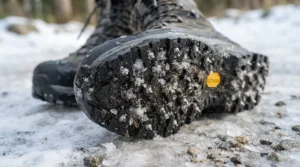
The compound matters most. Hard rubber stiffens in the cold and slides on ice like a hockey puck, while soft or specially formulated rubber stays flexible and grips microscopic surface texture. That’s the idea behind Vibram’s Arctic Grip, which Vibram describes as a polymer blend with an advanced filler system tuned for wet ice. It’s also why the Kamik Nationplus earns praise for its sticky rubber.
Tread depth works differently. Deep lugs shed snow and slush, which helps on fresh snow and soft surfaces. They don’t help on bare ice, where the contact area and compound matter more. So a boot with a monster tread can still slide on glaze.
The practical lesson: look for a compound designed for cold and wet ice, plus a lug pattern that sheds slush. Be wary of any sole that advertises depth but says nothing about the rubber. And remember that even the best outsole can’t beat physics on glare ice, which is why the cleat sections below matter.

How to Choose Ice Grip Winter Boots for Icy Sidewalks
- Prioritize the outsole. A slip happens when there isn’t enough traction between footwear and surface, as Manitoba’s workplace safety guidance puts it. Look for a cold-rated rubber compound, not just a deep tread.
- Match warmth to activity. Standing at a bus stop needs more insulation than a brisk 20-minute walk. Brands set temperature ratings without a standard test, so treat the number as a rough guide.
- Check waterproofing. Wet feet get cold fast. Look for seam-sealed or fully rubber construction and confirm the claim for your exact model.
- Mind the weight. Heavy boots tire your legs and change your stride, which matters on slick surfaces. Pac boots such as the Sorel Caribou are warm, but you’ll feel them by day’s end.
- Get the fit right. Size for winter socks, and read size notes. Reviewers say the Sorel Caribou runs large while liner-heavy boots can feel tight.
- Plan for add-ons. If your route includes glare ice, pick a boot that accepts cleats such as the Kahtoola MICROspikes or Yaktrax Walk.
- Check availability and returns. Models rotate; confirm current stock on amazon.ca and keep the return window in mind.
Winter Boots with Ice Cleats: Do You Need Both?
Short answer: it depends on your route. A good ice-rated outsole handles most winter sidewalks, but winter boots with ice cleats are the answer when your path includes thick, polished ice. Think shaded driveways, hills, school pick-up zones and parking lots after freezing rain.
Here’s how I’d reason it through. If most of your walk is cleared pavement with patches of glaze, a grippy boot like the Muck Arctic Ice Mid or Kamik Nationplus is probably enough. If you face long stretches of packed, glassy ice, winter boots with ice cleats make a dramatic difference, because spikes physically penetrate the surface.
Two cautions. Cleats can be slick on bare pavement and indoor floors, so remove them at the door. And a loose-fitting boot will let the cleat harness shift, so match the cleat size to the boot. A cleat on the wrong boot can fail at the worst moment.
Reviewers of the Kahtoola MICROspikes praise the confidence they give on glare ice, while Yaktrax Walk users and testers describe them as better for sidewalks than rough terrain. Pairing the right boot with the right cleat is where winter boots with ice cleats shine.
✨ Don’t Miss These Exclusive Deals!
🔍 Take your winter walking to the next level with these carefully selected boots and cleats. Click on any highlighted item to check current pricing and availability. These picks will help you stay steady, warm and confident on every icy block this season!
Ice Cleats and Traction Devices: Types Compared
Ice cleats and traction devices come in three main styles. Spikes on chains, like the Kahtoola MICROspikes, give maximum bite. Coil or wire styles, like the Yaktrax Walk, give lighter traction and handle mixed surfaces. Rigid-plate or “nub” styles sit in the middle and suit longer runs on patchy ice.
Choosing among ice cleats and traction devices comes down to surface, durability and effort. Spikes excel on glare ice and hard-packed snow but are poor on bare pavement. Coils are friendlier to city surfaces but have less bite. Both pack down small, so one kept in your bag is cheap insurance.
| Option | Ice grip | Convenience | Price range (CAD) | Best For |
|---|---|---|---|---|
| Ice-rated boots alone | Good on wet ice and snow | Highest; nothing to carry | C$90–C$330 | Everyday cleared sidewalks |
| Boots + Yaktrax Walk | Better on patchy snow | Easy; light to pack | C$120–C$380 | City commuters with mixed surfaces |
| Boots + Kahtoola MICROspikes | Best on glare ice | Remove on pavement | C$190–C$460 | Hills, driveways, polished ice |
The pattern is clear. Add-ons cost far less than upgrading to a more expensive boot and deliver bigger gains on thick ice. A mid-priced boot plus a pair of cleats beats a premium boot alone for people who face serious glaze.
Boots for Icy Commutes: Real-World Scenarios
Boots for icy commutes need to do three jobs: grip, stay warm in short bursts and survive the transition from outdoors to heated spaces. Here are three profiles matched to the research, with budget, environment and frequency spelled out.
The transit commuter (budget C$100–C$200, daily, 15–25 minutes outside). Your day is a series of short outdoor sprints with long indoor stretches. A lighter, more breathable boot like the Columbia Bugaboot Plus IV Omni-Heat suits this rhythm, with a Yaktrax Walk in your bag for the icy stretch outside the station. Neoprene can run warm indoors, so I’d skip the heaviest options.
The student walking campus (budget under C$180, daily). Value matters most. The Kamik Nationplus has the strongest case on price and grip. Pair it with the cheapest cleats you can find for exam week, and take them off before entering buildings.
The outdoor worker (budget C$250–C$350, 8-hour shifts). Warm feet and workplace compliance matter. The Kodiak Ice Conqueror is built for this job, and for longer standing in deep cold, the Sorel Caribou is a warm alternative if safety-toe protection isn’t required.
The common thread: match the boot to how long you’re actually outside, not to the coldest day of the year. Most people over-buy warmth and under-buy grip.
How to Break In, Maintain and Use Your Boots Safely
Buying is half the job. A few habits make ice grip winter boots for icy sidewalks last longer and perform better.
First-week setup. Wear new boots indoors for an hour or two to catch pressure points. Pac-style boots with removable liners, like the Sorel Caribou, need a few days for the felt to mould to your foot.
Daily care. Pull removable liners out each night to dry. Clean salt residue from leather and rubber with a damp cloth, since salt dries out materials and can make soles stiffer. Check the outsole for worn lugs or hardened rubber.
Walking technique. Winter walking tips from UBC Safety & Risk Services recommend small steps, a slow pace and keeping your hands free rather than in your pockets. Walk flat-footed on ice, point your feet slightly outward and keep your centre of gravity over your feet.
Common mistakes in the first 30 days:
- Wearing cleats indoors on hard floors
- Skipping the sizing check and ending up with heel slip
- Trusting a temperature rating without testing it on a short outing
Treat the first month as a calibration period. If your boots slip on a surface you expected them to handle, you’ve learned something valuable before it costs you.
Common Mistakes When Buying Ice Grip Winter Boots
Most mistakes come from trusting the label over the physics. Here are the big ones, with my commentary.
Buying on temperature rating alone. Ratings come from the brand, not a standard test. One reviewer found the Sorel’s claimed warmth hard to believe, and another reported numb toes in a boot rated far colder. Use ratings to compare within a brand, not across them.
Assuming deep tread equals ice grip. Lugs shed slush, but the rubber compound decides traction on ice. A boot with a monster tread and a hard compound can still skate.
Ignoring weight. Heavy boots feel fine in the shop and brutal at kilometre three. If you walk a lot, weight matters as much as insulation.
Forgetting about availability. The Columbia Bugaboot Plus IV Omni-Heat shows up as discontinued at some retailers. Always confirm the current model and sizing before committing.
Skipping cleats on a hilly route. The cheapest upgrade you can make is a pair of cleats. Don’t let a pricey boot do a job that a C$40 accessory does better.
Slip-Resistant Winter Boots Canada: Safety, Standards and Workplace Rules
Searching for slip-resistant winter boots Canada usually leads to workwear, and for good reason. Falls on the same level, caused by slips and trips, make up the majority of fall incidents, according to the Canadian Centre for Occupational Health and Safety. Winter conditions raise those risks.
For workplaces, the key is matching footwear to the hazard. CCOHS advises considering whether the sole uses appropriate anti-slip material for the conditions. In British Columbia, a provincial guideline asks employers to assess what footwear protection each job requires. Protective footwear in Canada is commonly certified to CSA standards, and the label will show the mark. If your employer requires it, check before you buy.
For everyday use, no regulation tells you which slip-resistant winter boots Canada shoppers must choose. That’s where the Kodiak Ice Conqueror helps if you need a safety toe, while the Muck Arctic Ice Mid and Kamik Nationplus serve everyday walkers. Whichever you pick, remember that slip resistance is a spectrum, not a switch. Even the best slip-resistant winter boots Canada offers won’t beat ice that’s thick enough to need spikes.
Fall Prevention for Seniors: Choosing Ice Grip Boots Safely
Fall prevention for seniors deserves its own section, because the stakes are higher. The Public Health Agency of Canada reports that falls remain the leading cause of injury-related hospitalizations among Canadian seniors, and between 20% and 30% of seniors fall each year. Its summary also notes that over one-third of fall-related hospitalizations involve a hip fracture. These falls are largely preventable, which is why footwear matters.
Based on the research above, here’s how I’d weigh boots for older walkers:
- Weight and balance. Heavy boots can disrupt stride, so a lighter option like the Columbia Bugaboot Plus IV Omni-Heat may feel safer, though warmth is a trade-off.
- Secure fit. A snug heel and easy closure reduce shifting. Reviewers say the Sorel Caribou runs large, so sizing carefully matters.
- Grip first. The soft rubber of the Kamik Nationplus or the Vibram Arctic Grip of the Muck Arctic Ice Mid are sensible starting points.
- Cleats with care. Add Yaktrax Walk for patchy ice, and remove them indoors. Spiked options like the Kahtoola MICROspikes are powerful on glare ice but can feel awkward if balance is a concern.
This is general information, not medical advice. For fall prevention for seniors, a physiotherapist or occupational therapist can assess gait and recommend footwear that suits your needs.
Long-Term Cost & Maintenance
The cheapest boot isn’t always the cheapest to own. Cost per winter is the honest metric. A C$150 boot that lasts five winters costs far less per season than a C$80 pair that hardens and loses grip in two.
| Product | Price range (CAD) | Value verdict |
|---|---|---|
| Muck Arctic Ice Mid | C$220–C$330 | Strong value for wet-ice-focused buyers |
| Kamik Nationplus | C$90–C$170 | Best price-to-grip ratio in the group |
| Sorel Caribou | C$220–C$320 | Pays off over many winters if warmth matters |
| Columbia Bugaboot Plus IV Omni-Heat | C$180–C$280 | Great for active use if stock is available |
| Kodiak Ice Conqueror | C$250–C$350 | Worth it when safety-toe compliance is required |
| Kahtoola MICROspikes | C$100–C$130 | Costly but durable for glare-ice routes |
| Yaktrax Walk | C$30–C$50 | Cheapest grip upgrade available |
These ranges are estimates from my research, so check current prices on amazon.ca. The key insight is the pairing: a Kamik Nationplus plus a Yaktrax Walk costs less than most single premium boots and covers more conditions. Meanwhile, the Sorel Caribou earns its premium through longevity, since its removable liner can be replaced instead of discarding the whole boot.
Maintenance extends all of this. Dry liners nightly, rinse salt off soles, store boots away from direct heat and replace cleats when spikes dull or coils fray.

FAQs
❓ How do ice grip winter boots perform on black ice?
❓ Can I wear ice cleats on bare pavement?
❓ Do slip-resistant winter boots in Canada need a CSA mark?
❓ When should I replace winter boots with worn treads?
❓ Which winter boots suit seniors with balance concerns?
Conclusion
Here’s the short version. If your walk is mostly cleared sidewalks with slick patches, the Muck Arctic Ice Mid and Kamik Nationplus give you ice-focused rubber at very different prices. If you need warmth for standing outside, the Sorel Caribou is the classic choice, accepting its weight. For active walkers, the Columbia Bugaboot Plus IV Omni-Heat is lighter, if you can find it in stock. Workers who need a safety toe should look at the Kodiak Ice Conqueror.
The smartest upgrade, though, may not be a boot at all. A pair of Yaktrax Walk for patchy snow or Kahtoola MICROspikes for glare ice turns almost any decent boot into a better one. Pair that with slow, short steps and you’ve covered most of what the research says matters.
The right ice grip winter boots for icy sidewalks won’t make you invincible, but they’ll tilt the odds in your favour every single morning. Confirm sizes, check current prices and availability on amazon.ca, and get set before the first freezing rain.
Recommended for You
- Insulated Winter Boots For Canadian Winters: 7 Best Picks 2026
- -40°C Rated Winter Boots: 7 Proven Picks For Canada (2026)
- Waterproof Winter Boots For Slush And Snow: 7 Proven Picks 2026
Disclaimer: This article contains affiliate links. As an Amazon Associate, I earn from qualifying purchases. If you purchase products through these links, we may earn a small commission at no additional cost to you.
✨ Found this helpful? Share it with your friends! 💬🤗
