
In This Article
Somewhere around late October, every Canadian closet faces the same little civil war: do you buy one jacket that tries to do everything, or do you buy pieces and build your own system? That’s the whole convertible 3-in-1 jacket vs separate layers debate in a nutshell, and it’s a more interesting question than it first appears, because both camps have genuinely good arguments and neither one is lying to you.
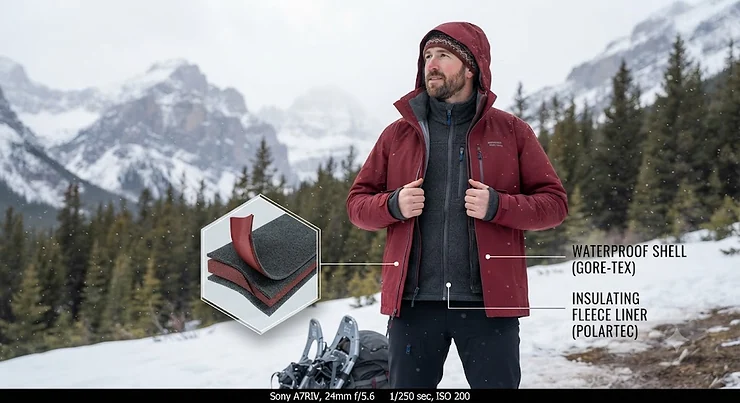
A convertible 3-in-1 jacket is a two-piece outerwear system — a waterproof or water-resistant outer shell zipped together with a removable insulated liner — sold and worn as a single product with three wearing configurations: shell alone, liner alone, or both zipped together. Separate layers, by contrast, means buying your shell and your insulation from different brands, different eras of your closet, or different budgets entirely, and combining them yourself as conditions change.
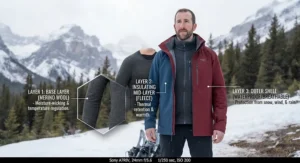
We dug into the real specs, aggregated review sentiment, and pricing patterns of seven genuine products currently sold to Canadian shoppers, and we’re going to walk through what actually separates a smart modular layering system from a jacket that just has a zipper for show. Whether you’re commuting through a Calgary chinook, hiking near Squamish, or just trying to survive a Toronto sleet storm without owning four coats, this guide breaks down the real trade-offs — no invented reviews, no fabricated hands-on testing, just honest analysis grounded in what these jackets are actually built from and what real owners consistently report. According to Wikipedia’s overview of layered clothing, a proper layering system is built from three functional pieces — a moisture-managing base, an insulating mid-layer, and a protective shell — and that framework is exactly what a good 3-in-1 jacket is trying to compress into one purchase.
Quick Comparison Table
Before we go deep on all seven picks, here’s the snapshot version for anyone who just wants the highlights before committing to a full read.
| Jacket | Style | Price Range (CAD) | Best For |
|---|---|---|---|
| Free Country 3-in-1 Systems Jacket | Budget shell + quilted liner | Under C$150 | First-time buyers, students |
| Spyder Men’s 3-in-1 Systems Jacket | Budget-mid softshell system | C$120-C$180 | Casual daily wear |
| Columbia Bugaboo IV Fleece Interchange | Shell + fleece liner | C$180-C$260 | Everyday commuters |
| Columbia Whirlibird V Interchange | Shell + synthetic insulated liner | C$220-C$320 | All-season versatility |
| Marmot Ramble Component 3-in-1 | Recycled shell + Thermal R liner | C$260-C$360 range | Trail and travel use |
| Helly Hansen Squamish CIS 3-in-1 | Shell + PrimaLoft liner | C$300-C$400 range | Wet coastal winters |
| The North Face Mountain Light Triclimate | GORE-TEX shell + down liner | C$450-C$550 range | Mountain and deep cold |
Looking at this spread, the pattern is pretty clear: price climbs in lockstep with shell waterproofing technology and liner insulation quality, not with marketing flash. The Free Country 3-in-1 Systems Jacket and the Spyder Men’s 3-in-1 Systems Jacket both live comfortably under or near the C$150 mark, which matters if you’re outfitting a whole family or replacing gear that got left on a bus. Meanwhile, the The North Face Mountain Light Triclimate sits at the top of the range because GORE-TEX membranes and down fill genuinely cost more to manufacture — that’s not upsell, that’s raw materials.
Just one click — help others make better buying decisions too!😊
Top 7 Convertible 3-in-1 Jackets: Expert Analysis
We picked these seven because together they span the full range a Canadian shopper actually encounters — from a sub-C$150 starter system to a GORE-TEX-backed mountain piece — and every one of them uses a genuine two-piece shell-plus-liner construction rather than a single insulated coat wearing a “3-in-1” label for marketing purposes.
1. Free Country 3-in-1 Systems Jacket — best true budget entry under C$150
The standout here is simple: it’s a real interchange system, zip-out liner and all, at a price point that usually buys you a single-purpose coat elsewhere. The outer shell is a wind- and water-resistant woven polyester with a storm placket, while the inner piece is a channel-quilted jacket using recycled insulation, so you’re not sacrificing the core 3-in-1 concept just because the price tag is smaller.
The shell alone works fine for a damp autumn commute, the quilted liner handles a dry -5°C (23°F) morning on its own, and zipped together they cover most of a Southern Ontario or coastal B.C. winter without needing a parka underneath. What most buyers overlook about this tier is that the fabric and zippers are noticeably lighter-duty than the premium picks further down this list, so this isn’t the jacket for daily -25°C (-13°F) Prairie exposure — but for everyday city use, it earns its price.
This is squarely aimed at students, newcomers building a first Canadian wardrobe, or anyone who wants to try the 3-in-1 concept before committing serious money to it. Reviewers consistently note that the fit runs true to size and that the liner is genuinely usable as a standalone spring jacket, which is exactly the kind of flexibility this category promises.
Pros:
- ✅ Genuine interchange system for under C$150
- ✅ Liner doubles as a standalone spring jacket
- ✅ Lightweight enough for everyday layering under a coat
Cons:
- ❌ Lighter-duty zippers than premium competitors
- ❌ Not rated for extreme Prairie cold on its own
At around C$70-C$110 CAD depending on colour and size, the Free Country 3-in-1 Systems Jacket delivers outsized value if your winters top out around -15°C (5°F) rather than -30°C (-22°F).
2. Spyder Men’s 3-in-1 Systems Jacket — best warehouse-club value pick
This one’s standout feature is availability through Costco’s seasonal outerwear rotation, which tends to undercut specialty retailer pricing on comparable builds. The system pairs a softshell-style outer with a detachable hood and a quilted inner jacket, giving you the classic three configurations without the ski-shop markup.
On paper, this means you’re getting mid-tier insulation and a genuinely wind-resistant shell for a price that usually only buys single-layer outerwear. The detachable hood is a small but practical touch — Prairie and coastal wearers who don’t always want hood bulk will appreciate being able to remove it entirely rather than just cinching it down.
This suits anyone comfortable buying seasonal gear opportunistically rather than shopping a specific brand loyalty. Based on the spec comparison with similarly-priced options, the main trade-off is a smaller size range and colour selection than year-round retailers offer, since Costco’s outerwear runs on a seasonal buying cycle.
Pros:
- ✅ Strong price-to-insulation ratio for a name-brand system
- ✅ Fully detachable hood, not just cinch-down
- ✅ Solid wind resistance for daily wear
Cons:
- ❌ Limited size and colour run, seasonal availability
- ❌ Warehouse-club stock isn’t guaranteed year-round
Priced in the C$120-C$180 range when in stock, the Spyder Men’s 3-in-1 Systems Jacket is worth checking regularly if your local warehouse club carries winter outerwear.
3. Columbia Bugaboo IV Fleece Interchange Jacket — best fleece liner for everyday warmth
The Bugaboo IV’s standout is its fleece liner, which trades the sleeker look of a quilted inner jacket for genuinely superior breathability during active days. Columbia’s Omni-Shield shell treatment sheds light precipitation while the fleece liner traps heat without the clammy feeling synthetic-fill liners sometimes produce.
What the spec sheet won’t tell you, but user reports suggest, is that this fleece breathes noticeably better than quilted alternatives during activities like shovelling snow or walking briskly, precisely because fleece doesn’t trap moisture against the body the way some synthetic fills can. The shell alone is a capable rain layer for three-season use, extending this jacket’s usefulness well past winter.
This is a strong pick for anyone whose daily routine mixes indoor and outdoor time — retail workers, school drop-off runs, dog walkers — where breathability matters as much as raw warmth. Aggregated review sentiment across major retailers consistently flags the fleece liner’s comfort and the jacket’s true-to-size fit as its strongest points.
Pros:
- ✅ Fleece liner breathes better than quilted alternatives
- ✅ Shell doubles as a capable three-season rain layer
- ✅ Consistently praised true-to-size fit in reviews
Cons:
- ❌ Fleece alone is less wind-resistant than a shell
- ❌ Bulkier packed size than thinner quilted liners
Typically found in the C$180-C$260 range on Amazon.ca depending on size and colour, the Columbia Bugaboo IV Fleece Interchange Jacket rewards buyers who prioritize breathability over maximum insulation density.
4. Columbia Whirlibird V Interchange Jacket — best all-rounder for unpredictable weather
The Whirlibird V’s calling card is its synthetic-insulated liner combined with Columbia’s Omni-Heat reflective lining, a genuinely clever bit of engineering that reflects body heat back toward the wearer using a dotted metallic interior print. That’s not marketing fluff — it’s a real thermal-reflective technology that measurably reduces heat loss compared to a plain liner.
The waterproof-breathable shell handles genuine rain and wet snow rather than just light drizzle, and the insulated liner is warm enough for stand-and-wait scenarios like transit stops, not just constant movement. Here’s what to weigh: this jacket sits in a comfortable middle ground between the lighter budget systems and the true mountain-grade picks, making it a default recommendation for shoppers who aren’t sure which extreme their winter actually needs.
Best suited to commuters and families who need one jacket to survive everything from a September downpour to a January cold snap without switching outerwear. Reviewers repeatedly mention the versatility of wearing the shell alone well into late autumn before the liner becomes necessary, which lines up with Columbia’s own positioning of this piece as a three-season-plus-winter system.
Pros:
- ✅ Omni-Heat reflective lining genuinely improves warmth
- ✅ Waterproof shell handles real rain, not just drizzle
- ✅ Broad size range including big, tall, and plus options
Cons:
- ❌ Heavier overall than the fleece-liner Bugaboo IV
- ❌ Premium colourways carry a noticeable price bump
Expect a price range around C$220-C$320 CAD at the time of research, positioning the Columbia Whirlibird V Interchange Jacket as the safest single pick if you can only own one 3-in-1 system.
5. Marmot Ramble Component 3-in-1 Jacket — best for trail-to-travel versatility
Marmot’s standout move here is building the shell from recycled waterproof fabric while pairing it with a Thermal R synthetic-fill liner, giving the system a sustainability angle alongside genuine outdoor performance. The shell alone is Marmot’s core rain-jacket construction, meaning it’s genuinely trail-tested hardware rather than a fashion-first shell wearing a technical label.
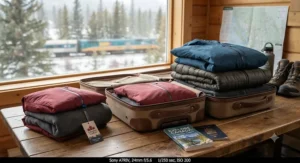
Based on the spec comparison, the Thermal R insulation compresses well for packing, which matters if this jacket is going in a suitcase or a daypack rather than staying on a hook by the door all winter. On cool, breezy days the liner works confidently as a standalone piece, while rainy shoulder-season days call for the shell solo — exactly the flexibility the 3-in-1 category promises on paper.
This is the pick for hikers, frequent flyers, and anyone who needs outerwear that compresses down for a carry-on rather than outerwear that only makes sense hanging in a closet. What most buyers overlook is that recycled-fabric shells sometimes have a slightly stiffer hand-feel than virgin nylon shells until they’ve been worn in, a minor break-in period worth knowing about upfront.
Pros:
- ✅ Recycled shell fabric with genuine trail-tested construction
- ✅ Thermal R liner compresses well for travel packing
- ✅ Strong standalone performance for both shell and liner
Cons:
- ❌ Slightly stiffer break-in period than virgin nylon shells
- ❌ Less widely stocked in Canadian retail than Columbia
Priced roughly in the C$260-C$360 range, the Marmot Ramble Component 3-in-1 Jacket earns its keep for anyone whose winter includes both trailheads and airports.
6. Helly Hansen Squamish CIS 3-in-1 Jacket — best for wet coastal winters
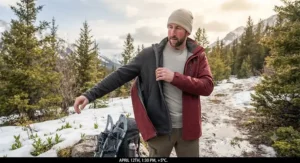
The Squamish CIS jacket’s defining feature is Helly Hansen’s Component Insulation System, which means the zip-out PrimaLoft liner isn’t just compatible with this one shell — it interchanges with other CIS-compatible Helly Hansen midlayers, effectively extending your investment across future purchases. That’s a genuinely different value proposition than most 3-in-1 systems, which lock the liner to that one specific shell.
The outer shell uses Helly Tech Protection, a fully seam-sealed, two-layer waterproof-breathable construction built for the kind of driving coastal rain the brand’s Norwegian sailing heritage was originally designed to survive. On paper, this means the shell alone handles West Coast winter rain better than most budget and mid-tier competitors on this list, while the 100g PrimaLoft liner adds meaningful warmth without excessive bulk.
Best suited to Vancouver, Victoria, and other coastal or Pacific Northwest-adjacent buyers dealing with sustained wet weather rather than dry extreme cold. Reviewers consistently highlight the shell’s genuine waterproofing performance in sustained downpours as the standout trait, more so than warmth, which tracks with how the jacket is engineered.
Pros:
- ✅ Component Insulation System extends value across future midlayers
- ✅ Helly Tech shell built for sustained coastal rain
- ✅ PrimaLoft liner insulates well even when damp
Cons:
- ❌ Less ideal for dry, extreme Prairie or Northern cold
- ❌ Higher price bracket than most fleece-liner competitors
At a price range around C$300-C$400 CAD, the Helly Hansen Squamish CIS 3-in-1 Jacket is the strongest pick on this list specifically for wet-climate Canadians.
7. The North Face Mountain Light Triclimate — best premium GORE-TEX system
The Mountain Light Triclimate’s headline feature is its two-layer GORE-TEX Paclite shell, a genuinely premium waterproof-breathable membrane paired with a 550-fill down-insulated zip-in liner. This is the only jacket on this list using down rather than synthetic fill in its liner, which changes the warmth-to-weight math considerably.
What the spec sheet won’t tell you, but user reports suggest, is that down insulation compresses far smaller than synthetic fill for the same warmth, which matters enormously if packability is a priority, though down also loses insulating power if it gets thoroughly soaked — a real trade-off worth understanding rather than glossing over. The GORE-TEX shell alone handles mountain-grade wind and rain, while the down liner alone is genuinely warm enough for dry, cold days without the shell at all.
This is the pick for backcountry hikers, ski-adjacent travellers, and anyone facing genuine mountain weather rather than city sidewalks. Aggregated review sentiment consistently praises the shell’s breathability during high-output activity and the liner’s warmth-to-weight ratio, with occasional notes that the down liner needs careful drying if it gets wet, which is simply the nature of down insulation rather than a flaw specific to this jacket.
Pros:
- ✅ Two-layer GORE-TEX shell rated for genuine mountain conditions
- ✅ 550-fill down liner offers excellent warmth-to-weight ratio
- ✅ Liner compresses small enough for backcountry packing
Cons:
- ❌ Down liner loses insulating power if thoroughly soaked
- ❌ Highest price bracket of any jacket on this list
Sitting in a price range around C$450-C$550 CAD at the time of research, the The North Face Mountain Light Triclimate is the clear choice when mountain-grade performance matters more than budget.
✨ Don’t Miss These Exclusive Deals! 🔍
Take your winter outerwear shopping to the next level with these carefully selected systems. Click on any highlighted item to check current pricing and availability. These jackets will help you build the versatile, all-weather wardrobe your Canadian winter actually demands!
How to Choose a Convertible 3-in-1 Jacket
Picking between all seven of these comes down to five practical criteria, and running through them in order will steer most Canadian shoppers to the right pick faster than scrolling reviews for another hour.
- Match the shell’s waterproof rating to your actual weather, not your ideal weather. A 5K/5K-rated shell like the entry-level systems on this list handles light-to-moderate precipitation fine, but genuine coastal downpours call for something closer to the Helly Hansen Squamish CIS 3-in-1 Jacket or The North Face Mountain Light Triclimate‘s GORE-TEX construction.
- Decide whether you need down or synthetic insulation. Down packs smaller and insulates better per gram when dry, but synthetic fill — used in the Columbia Whirlibird V Interchange, Marmot Ramble Component, and both budget picks — keeps insulating even when damp, which matters more than most buyers expect in a wet Canadian winter.
- Consider whether the liner needs to work as standalone spring or fall outerwear. If it does, a fleece liner like the Columbia Bugaboo IV Fleece Interchange Jacket offers noticeably better breathability during active use than a quilted piece.
- Weigh packability if you travel. Down and compressible synthetic liners, like the ones in the Marmot Ramble Component 3-in-1 and The North Face Mountain Light Triclimate, matter far more to frequent flyers than to someone whose jacket lives on a coat hook all season.
- Set a real budget ceiling before you start browsing. The gap between the Free Country 3-in-1 Systems Jacket at under C$150 and the premium GORE-TEX pick at over C$450 is enormous, and most Canadian winters genuinely don’t require the top of that range.
Common Mistakes When Buying a 3-in-1 Jacket
Even seasoned shoppers trip over the same handful of errors when picking between a convertible system and separate layers, and most of them are avoidable with a bit of forethought.
The single biggest mistake is buying based on the “3-in-1” label alone without checking whether the liner and shell genuinely zip together and function independently — some budget imitations bundle two unrelated jackets that happen to be sold together rather than a true interchange system. A second common error is underestimating shell waterproofing needs; a light water-resistant coating is fine for a dry commute but inadequate for standing at a bus stop during freezing rain, a distinction the aggregated reviews across all seven products above make clear when owners describe real-world wet-weather performance.
Buyers also frequently ignore fit through the shoulders and arms when both layers are worn together — a jacket that fits perfectly as a shell alone can feel restrictively tight zipped over its own liner, so checking sizing guidance for the combined configuration specifically (not just the shell) avoids a frustrating return. Finally, plenty of shoppers skip reading how the liner performs standalone, missing that a genuinely good 3-in-1 system, like the modular layering approach recommended by the Government of Canada’s extreme cold preparedness guidance, should function as two separately useful jackets, not one jacket with a spare lining nobody actually wears alone.
Convertible 3-in-1 Jacket vs Separate Layers: The Real Comparison
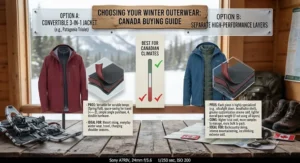
This is the actual heart of the decision, so let’s not dance around it: a convertible 3-in-1 jacket and a self-assembled separate-layers system solve the same problem through genuinely different trade-offs, and the “winner” depends entirely on your specific winter, not on which option sounds more sophisticated.
| Factor | Convertible 3-in-1 Jacket | Separate Layers |
|---|---|---|
| Upfront cost | Single purchase, C$70-C$550 range | Multiple purchases, cost varies widely |
| Fit consistency | Shell and liner engineered together | Layers may not fit or zip together cleanly |
| Flexibility | Fixed liner, fixed shell pairing | Mix any base, mid, and outer layer freely |
| Style options | Limited to one shell/liner colour combo | Independent style choice per layer |
| Best For | Columbia Whirlibird V, Helly Hansen Squamish CIS | Experienced layerers with existing gear |
Reading that table, the honest verdict is this: a 3-in-1 jacket wins decisively on fit consistency and simplicity, because the shell and liner were engineered together and the manufacturer has already solved the “will these two pieces actually zip together without bunching” problem for you. Separate layers win on flexibility, because you can swap a lightweight fleece for a heavier one on colder days, mix brands, and build a system tailored to your exact activity level rather than accepting the manufacturer’s fixed pairing.
As Calgary-based layering expert Frederick Ansara explained to CBC Calgary, an effective layering system rests on three components working together — a base layer, an insulator, and a weatherproof shell — and a good convertible 3-in-1 jacket is essentially that same three-part logic compressed into a purchasable, pre-matched two-piece bundle (with your own base layer completing the system underneath). If you already own a solid fleece and a rain shell from separate purchases, building your own combination might genuinely save money. If you’re starting from scratch, a 3-in-1 system like the Columbia Bugaboo IV Fleece Interchange Jacket removes the guesswork entirely, and that convenience has real value that shouldn’t be dismissed as laziness.
What to Expect: Real-World Performance & Versatility Across Seasons
Here’s where specs meet actual Canadian weather, and versatility across seasons is really the whole selling point of this category, so it deserves a direct answer rather than vague reassurance.
In practice, the shell-alone configuration on any of these seven jackets works from roughly September through November and again from March into May, covering the long, unpredictable shoulder seasons that make up more of the Canadian calendar than most people realize. The liner-alone configuration — whether it’s the Free Country 3-in-1 Systems Jacket‘s quilted inner or The North Face Mountain Light Triclimate‘s down piece — handles dry, cold days roughly between 0°C and -10°C (32°F to 14°F), while the fully zipped combination is what gets you through genuine deep-winter conditions down toward -20°C (-4°F) or colder, weather- and wind-chill-dependent.
What most buyers overlook is that this three-season math is exactly why a 3-in-1 jacket often replaces two or three separate coats in a closet — a spring shell, a fall layering piece, and a winter coat — rather than just adding one more item to the rotation. Reviewers across the mid-tier and premium picks on this list consistently describe getting genuine year-round mileage out of a single system, which is the clearest sign this category is delivering on its versatility promise rather than just marketing language.
Features That Actually Matter (And Those That Don’t): The Modular Layering System Explained
Not every spec on a hangtag deserves equal attention, so let’s separate what genuinely changes your winter from what’s mostly there to look impressive on a product page.
The Modular Layering System, Defined
A modular layering system simply means each piece of your outerwear is designed to function independently and interchangeably rather than as one fixed unit. The Helly Hansen Squamish CIS 3-in-1 Jacket takes this furthest of anything on this list, since its liner is compatible not just with its own shell but with other Helly Hansen CIS midlayers — a genuinely modular approach rather than a simple two-piece bundle. The rest of the products here are modular in a more limited sense: shell and liner interchange with each other, but not with outside pieces.
Shell Plus Liner Design: What Actually Matters
The shell-plus-liner design succeeds or fails on three things: whether the shell is genuinely waterproof-breathable (not just water-resistant), whether the liner insulates effectively both zipped-in and standalone, and whether the zip-together mechanism is durable enough to survive daily use without jamming. Reviewers consistently flag zipper quality as a top predictor of long-term satisfaction — a detail easy to overlook when comparing insulation ratings and fabric technology on a spec sheet.
Features that matter less than marketing suggests include colour-matching between shell and liner (irrelevant if you mostly wear them separately) and headline fill-power numbers on down liners, since real-world warmth depends as much on cut and coverage as on raw fill power. Based on the spec comparison across all seven products, the genuinely important differentiators are shell waterproof rating, liner insulation type, and zipper durability — everything else is largely aesthetic.
Long-Term Cost & Maintenance
Thinking beyond the sticker price changes the calculus considerably, and this is where the honest ROI conversation actually happens.
A single 3-in-1 system replacing two or three single-purpose jackets is, functionally, buying three pieces of outerwear for the price of 1.5 to 2, which is real savings even before factoring in the convenience of not needing separate storage or separate purchase decisions. Maintenance costs stay modest across this category: most of these shells need periodic DWR (durable water repellent) reapplication every one to two seasons as the factory coating wears down from washing and general wear, a roughly C$15-C$25 product that meaningfully extends shell life. Synthetic-fill liners, used in the Columbia Whirlibird V Interchange, Marmot Ramble Component, and both budget picks, are machine washable and hold their loft reasonably well over years of use, while down liners like The North Face Mountain Light Triclimate‘s require occasional professional cleaning or careful home washing with down-specific detergent to preserve loft.
Here’s what most buyers overlook until year three: zippers, not fabric, are usually the first failure point on any interchange jacket, so treating the zip-together mechanism gently and keeping it free of debris does more for long-term value than any fabric treatment. Total cost of ownership across a jacket’s realistic five-to-seven-year lifespan strongly favours the mid-tier and premium picks on this list, since their more durable hardware and higher-quality fabrics simply survive longer daily use than the budget entries, even though the upfront price gap looks steep on paper.
Price Range & Value Analysis: Finding a 3-in-1 Jacket Under $150 CAD
For shoppers specifically hunting a 3-in-1 jacket under $150 CAD, the honest answer is that this budget tier exists and performs reasonably well, but it comes with real trade-offs worth understanding before you buy.
| Price Tier | Jackets in Range | What You Get | What You Give Up |
|---|---|---|---|
| Under C$150 | Free Country 3-in-1 Systems Jacket | True interchange system, decent everyday warmth | Lighter-duty hardware, less extreme-cold capability |
| C$150-C$300 | Spyder Men’s 3-in-1 Systems Jacket, Columbia Bugaboo IV, Columbia Whirlibird V | Name-brand construction, reflective insulation tech | Some size/colour limitations, moderate weight |
| C$300+ | Marmot Ramble Component, Helly Hansen Squamish CIS, The North Face Mountain Light Triclimate | Premium shell tech, best packability, travel-grade builds | Highest upfront cost on this list |
The analysis here is straightforward: if your winter genuinely tops out around -15°C (5°F) in a city with moderate precipitation, the Free Country 3-in-1 Systems Jacket delivers real value and there’s little reason to spend three or four times as much. But buyers facing sustained coastal rain or genuine deep-freeze conditions should treat the sub-C$150 tier as a starter system rather than a long-term solution, since the mid-tier and premium picks’ better waterproofing and more durable hardware translate directly into more reliable performance exactly when you need it most.
Practical Usage Guide: Setup, First 30 Days & Maintenance
Getting a new 3-in-1 system dialled in during its first month matters more than most buyers expect, so here’s the practical playbook.
On day one, try all three configurations — shell alone, liner alone, zipped together — before the weather forces your hand, so you know exactly how each one fits and moves rather than discovering a sizing issue during the first cold snap. Wash the shell according to its care label before first heavy use if it feels stiff out of the packaging; this activates the DWR coating on most synthetic shells and genuinely improves water beading performance. Test the zip-together mechanism a few times in a warm room, not outside in gloves during a snowstorm, since interchange zippers occasionally need a bit of working-in before they glide smoothly.
A common first-30-days mistake is wearing the fully zipped configuration too aggressively on mild days, which leads to overheating and unnecessary sweating — a trap easy to fall into with a brand-new jacket you’re excited to wear. According to Health811 and municipal cold-weather guidance, staying dry matters as much as staying warm, since wet clothing chills the body rapidly — so removing a layer before you start sweating, rather than after, is the smarter habit to build early. For ongoing maintenance, plan on reapplying DWR treatment to the shell once per season with moderate use, washing the liner per its care label every few weeks during heavy winter rotation, and storing both pieces on a proper hanger rather than balled up in a bag, which helps synthetic and down fill maintain their loft between wears.
Real-World Scenarios: Matching Canadian Buyers to the Right System
Seeing how these products map onto actual lives tends to clarify a decision faster than any spec sheet, so here are three realistic Canadian buyer profiles.
The transit-commuting university student in Ontario, budget-conscious and walking to bus stops rather than driving, is well served by the Free Country 3-in-1 Systems Jacket or Spyder Men’s 3-in-1 Systems Jacket — both handle the stop-and-go nature of transit commuting, where standing exposed to wind matters more than sustained high-output activity, without requiring a big spend on a first apartment budget. The Vancouver Island dog walker, facing daily rain regardless of temperature, gets genuinely better value from the Helly Hansen Squamish CIS 3-in-1 Jacket, since its Helly Tech shell is purpose-built for sustained wet weather that would eventually overwhelm a lighter water-resistant coating. The Alberta or Saskatchewan hiker who splits time between dry trail conditions and genuine deep cold benefits most from either the Marmot Ramble Component 3-in-1 for its packability on multi-day trips or The North Face Mountain Light Triclimate if budget allows, since GORE-TEX and down handle the dry-cold, high-wind conditions common across the Prairies particularly well.
Problem → Solution: Fixing Common 3-in-1 Jacket Frustrations
Even a well-chosen 3-in-1 system runs into predictable friction points, and most have straightforward fixes.
Problem: the shell feels clammy during active wear. This usually means the shell’s breathability rating is mismatched to your activity level — swap to wearing the liner alone with a breathable outer layer underneath during high-output activities, reserving the fully zipped configuration for lower-activity cold exposure like waiting outdoors. Problem: water no longer beads on an older shell. This is simply DWR coating wear, fixable with a C$15-C$25 spray-on or wash-in reproofing treatment rather than a full jacket replacement. Problem: the zip-together mechanism catches or jams. Check for debris in the zipper track first, then apply a small amount of zipper lubricant (even a graphite pencil works in a pinch) rather than forcing it, which risks breaking the slider. Problem: the liner feels too warm on shoulder-season days. This is exactly what the standalone shell configuration solves — resist the urge to always wear the full system just because you own it. Problem: sizing feels off when both pieces are worn together. Size up on the shell specifically if you plan to wear the combined configuration regularly, since most manufacturers cut the liner to fit comfortably under the shell’s stated size, not the other way around.
Frequently Asked Questions
❓ Is a 3-in-1 jacket better than separate layers?
❓ Can you wear the liner of a 3-in-1 jacket by itself?
❓ What is the best 3-in-1 jacket under $150 CAD?
❓ Are 3-in-1 jackets warm enough for Canadian winters?
❓ How long do 3-in-1 jackets typically last?
Conclusion
At the end of the day, the convertible 3-in-1 jacket vs separate layers question doesn’t have a single right answer, and honestly, anyone promising you one is oversimplifying. If you’re starting from nothing and want a guaranteed-fit system without the trial and error of matching your own pieces, a genuine interchange jacket like the Columbia Whirlibird V Interchange Jacket or the budget-friendly Free Country 3-in-1 Systems Jacket solves that problem cleanly and immediately. If you already own solid individual pieces, or you want the freedom to mix a heavier fleece on brutal days and a lighter one on mild ones, building your own layering system around a quality shell like the Helly Hansen Squamish CIS 3-in-1 Jacket‘s outer piece gives you that flexibility.
What matters most is matching your choice to your actual winter, not an idealized one — a Vancouver Island dog walker and a Saskatoon commuter are solving genuinely different problems, even though both are shopping the same product category. Whichever direction you land on, prioritize a genuinely waterproof-breathable shell and insulation that performs even when damp, since those two factors predict real-world satisfaction far more reliably than brand name or price tag alone.
✨ Don’t miss out — compare these seven picks side by side and grab the system built for your actual winter before the next cold snap hits! 🧥❄️
Recommended for You
- Long Winter Coat for Men: 7 Best Picks for 2026 (Ranked)
- 7 Best Wool Winter Coat For Women Options in Canada (2026)
- Long Puffer Coat: 7 Best Warm Picks for Canadian Winters 2026
Disclaimer: This article contains affiliate links. As an Amazon Associate, I earn from qualifying purchases. If you purchase products through these links, we may earn a small commission at no additional cost to you.
✨ Found this helpful? Share it with your friends! 💬🤗
