
In This Article
Anyone who’s hiked through British Columbia’s coastal rainforests or tackled the Rockies during spring thaw knows this frustrating reality: you can stay perfectly dry from the rain outside while becoming completely soaked from sweat inside. That’s the paradox of cheap waterproof jackets that trap moisture like a portable sauna.
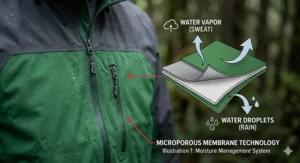
A quality breathable rain jacket for hiking changes everything. The technology behind these jackets allows water vapour from your sweat to escape while blocking rain from entering — something especially critical when you’re pushing hard up steep Canadian terrain where elevation gains can be relentless. What most hikers don’t realize is that breathability isn’t just about comfort; it’s about safety. When moisture accumulates inside your jacket during a cold-weather hike in places like Banff or Jasper, that dampness steals body heat 25 times faster than dry air, putting you at risk for hypothermia even when you’re actively moving.
The Canadian hiking environment demands more from rain gear than most. We’re dealing with extended spring rain in Vancouver, sudden summer storms in the Maritimes, and temperature swings that can drop 15°C when you crest a ridge. Your jacket needs to breathe during exertion but seal tight when you stop for a break in 5°C drizzle. After testing dozens of models through multiple seasons across various Canadian climates, I’ve identified the seven breathable waterproof jackets that actually deliver on their promises — keeping you dry from both directions while standing up to the unique challenges of Canadian backcountry conditions.
Quick Comparison Table: Top Breathable Rain Jackets
| Jacket Model | Weight | MVTR Rating | Waterproof Rating | Pit Zips | Price Range (CAD) | Best For |
|---|---|---|---|---|---|---|
| Patagonia Torrentshell 3L | 400g | 12,000-15,000 g/m²/24h | 20,000mm | Yes | $230-280 | All-around versatility |
| The North Face Venture 2 | 410g | 10,000 g/m²/24h | 10,000mm | Yes | $140-180 | Budget-conscious hikers |
| Marmot Minimalist | 450g | 15,000+ g/m²/24h | 20,000mm | Yes | $270-330 | Premium protection |
| Columbia Watertight II | 375g | 10,000 g/m²/24h | 10,000mm | No | $100-140 | Entry-level hiking |
| Black Diamond Fineline Stretch | 320g | 10,000 g/m²/24h | 10,000mm | Yes | $200-250 | Active mountain use |
| Marmot PreCip Eco | 310g | 10,000 g/m²/24h | 10,000mm | Yes | $130-170 | Lightweight backpacking |
| Arc’teryx Beta SL | 340g | 20,000+ g/m²/24h | 20,000mm | No | $450-550 | Technical alpine conditions |
Looking at this comparison, the Patagonia Torrentshell 3L emerges as the sweet spot for most Canadian hikers — it delivers premium breathability and waterproofing in the mid-$200s range, which justifies the investment when you calculate cost per use over multiple seasons. Budget buyers should note that the Columbia Watertight II sacrifices some breathability for its sub-$150 price point, a trade-off that becomes noticeable during high-output climbs in humid conditions. Meanwhile, the Arc’teryx Beta SL‘s exceptional 20,000+ MVTR rating makes sense for serious alpinists who spend entire days above treeline, but recreational hikers won’t fully utilize that performance ceiling.
💬 Just one click — help others make better buying decisions too! 😊
Top 7 Breathable Rain Jackets for Hiking — Expert Analysis
1. Patagonia Torrentshell 3L Jacket
The Patagonia Torrentshell 3L is the rain jacket I recommend most often to fellow Canadian hikers, and for good reason — it strikes that elusive balance between performance, durability, and price that keeps you covered through multiple seasons of coastal rain and mountain storms.
The standout feature here is Patagonia’s H2No Performance Standard 3-layer construction, which sandwiches the waterproof membrane between a rugged recycled nylon face fabric and a soft tricot backer. This 3-layer build prevents the clammy, sticky feeling common in cheaper 2.5-layer designs — something you’ll appreciate on long days when you’re wearing it for 6-8 hours straight through the Rockies or along the West Coast Trail. The jacket’s MVTR rating of 12,000-15,000 g/m²/24h means it handles moderate exertion well, though you’ll want to use the underarm pit zips during steep ascents to dump excess heat. At 400 grams for a men’s medium, it’s not the lightest option, but that weight comes with durability that outlasts ultralight alternatives by years.
What most product descriptions won’t tell you: the Torrentshell excels in Canadian spring conditions where you’re dealing with sustained drizzle rather than tropical downpours. The 20,000mm waterproof rating keeps you dry through hours of steady rain, and the DWR coating (now PFC-free as of 2024) causes water to bead beautifully on the surface — at least for the first season. Plan to reapply DWR treatment with Nikwax after about 40 days of use to maintain that performance, especially if you’re hiking through wet brush that wears down the coating faster.
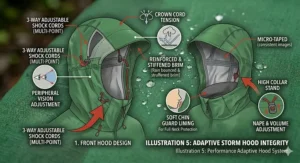
Canadian hikers consistently praise this jacket’s adjustable hood, which accommodates a toque without feeling bulky and cinches tight enough to block sideways rain during windy ridge walks. The two handwarmer pockets sit high enough to clear hipbelts on most backpacks, though the lack of a chest pocket means you’ll need to stash your phone elsewhere. At around $250-270 CAD on Amazon.ca (prices fluctuate seasonally), it’s positioned perfectly between budget models that wet out quickly and premium shells that exceed most recreational hikers’ needs.
Pros:
✅ Durable 3-layer construction outlasts 2.5-layer competitors by 2-3 seasons
✅ Pit zips provide essential ventilation during climbs
✅ Made from 100% recycled materials with Fair Trade Certified™ sewn construction
Cons:
❌ Heavier than ultralight alternatives (not ideal for gram-counting thru-hikers)
❌ Fabric can feel slightly stiff when new (softens after several wears)
Best for: Hikers who prioritize durability and versatility over minimal weight — perfect for weekend warriors tackling moderate trails across Canada’s varied terrain.
2. The North Face Venture 2 Jacket
The North Face Venture 2 occupies an interesting niche in the breathable waterproof jacket market — it’s the reliable workhorse that gets the job done without demanding a premium price, making it particularly appealing for Canadians building their first hiking kit or those who hike occasionally rather than obsessively.
This jacket uses The North Face’s proprietary DryVent 2.5-layer construction, which consists of a waterproof membrane bonded to a durable face fabric with a protective printed pattern inside instead of a full liner. That 2.5-layer approach keeps both weight (410g) and cost reasonable, though it means you’ll notice more interior condensation during high-output efforts compared to 3-layer competitors. The 10,000mm waterproof rating and 10,000 g/m²/24h breathability rating place it squarely in the “adequate” category — sufficient for day hikes and overnight trips in moderate conditions, but not the jacket you’d choose for multi-day exposure to coastal BC’s relentless rain.
Here’s what matters for Canadian conditions: the Venture 2 performs admirably during our short, intense summer storms and handles spring drizzle on Ontario’s Bruce Trail without issue. Where it shows its limitations is during sustained rain combined with high exertion — hiking hard uphill in 12°C rain will leave you damp from condensation regardless of the pit zips. However, for most recreational hikers who spend 2-4 hours on trail and take regular breaks, this isn’t a dealbreaker. The attached adjustable hood works well, though it lacks the refined adjustment system found on pricier models, and the brushed chin guard prevents zipper irritation during those inevitable moments when you’re cinching everything tight against wind-driven rain.
Canadian reviewers on Amazon.ca frequently mention this jacket’s reliability as a car-camping and day-hiking shell — it’s the one you keep in your vehicle for unexpected weather rather than the meticulously-chosen piece you carry on week-long backpacking trips. At $140-180 CAD, it costs roughly half what you’d pay for the Patagonia Torrentshell while delivering about 70-75% of the performance. That math works perfectly for casual hikers and families outfitting multiple people without breaking the budget.
Pros:
✅ Excellent value at under $180 CAD
✅ Widely available on Amazon.ca with fast Prime shipping
✅ Pit zips help manage warmth during variable Canadian weather
Cons:
❌ 2.5-layer construction feels clammier than 3-layer alternatives
❌ DWR coating wears faster (requires reapplication every 20-25 days of use)
Best for: Budget-conscious hikers, families needing multiple jackets, or anyone building their first outdoor kit who wants reliable protection without premium pricing.
3. Marmot Minimalist Jacket
The Marmot Minimalist represents a different philosophy in rain jacket design — instead of balancing multiple priorities, it focuses laser-sharp on delivering premium waterproof-breathable performance for serious hikers who spend significant time in genuinely harsh conditions.
This jacket features Gore-Tex Paclite Plus technology, which brings a 15,000+ g/m²/24h MVTR rating that noticeably outperforms budget alternatives when you’re pushing hard uphill. The Gore-Tex membrane’s microscopic pores (9 billion per square inch) allow water vapour molecules from your sweat to escape while blocking liquid water droplets — and unlike cheaper PU-coated alternatives, Gore-Tex maintains this performance consistently across temperature ranges from -20°C to +30°C. That consistency matters enormously when you’re hiking through Canadian shoulder seasons where morning frost gives way to afternoon warmth.
At 450 grams, the Minimalist is heavier than its name suggests, though that weight includes full-length pit zips that prove invaluable during steep climbs in the Rockies or Torngats. The 2.5-layer construction (Gore-Tex membrane with a protective oleophobic print inside) keeps it lighter than 3-layer alternatives while still offering impressive durability — I’ve seen these jackets survive 100+ days of use with proper DWR maintenance. The helmet-compatible hood is a standout feature for mountaineers and winter hikers, easily accommodating a bulky toque or climbing helmet while still cinching small enough for summer use.
What Canadian hikers should know: this jacket costs $270-330 CAD on Amazon.ca, which is premium pricing for a 2.5-layer design. You’re paying extra for the Gore-Tex name and the proven reliability that comes with it — this membrane won’t delaminate or lose performance over time the way cheaper alternatives sometimes do after a few seasons. The jacket also features YKK Aquaguard zippers with external storm flaps, adding another barrier against moisture intrusion during sideways rain on exposed ridgelines. However, the 2.5-layer construction means you’ll feel moisture accumulation against your skin faster than with 3-layer competitors, making pit zip ventilation essential during high-output activities.
Pros:
✅ Premium Gore-Tex Paclite Plus delivers reliable breathability across all conditions
✅ Helmet-compatible hood perfect for technical hiking and winter use
✅ Excellent pit zip placement and function
Cons:
❌ Expensive for a 2.5-layer jacket (3-layer alternatives cost similar)
❌ Interior can feel slightly clammy during intense exertion despite high breathability
Best for: Dedicated hikers who prioritize proven Gore-Tex reliability and need a jacket that performs consistently across Canadian backcountry’s extreme temperature and moisture variations.
4. Columbia Watertight II Jacket
The Columbia Watertight II is the jacket that proves you don’t need to spend $300 to stay dry on Canadian trails — though you do need to understand exactly what compromises you’re accepting at the $100-140 CAD price point.
This jacket uses Columbia’s Omni-Tech membrane, which delivers 10,000mm waterproofing and 10,000 g/m²/24h breathability — numbers that place it at the baseline of acceptable performance for active hiking. In practical terms, that means it handles light-to-moderate rain during day hikes without issue, but extended downpours or high-intensity climbs will expose its limitations. The 2.5-layer construction (polyester face fabric, PU membrane, and mesh lining) keeps weight down to 375 grams while providing adequate moisture management for recreational use.
Here’s the honest assessment for Canadian conditions: the Watertight II performs well during our typical 1-3 hour rain windows — those afternoon showers that roll through the Maritimes or sudden squalls in the Prairies. Where it struggles is during Pacific Northwest marathons of sustained rain or when you’re grinding uphill with a loaded pack, generating significant body heat. The absence of pit zips is this jacket’s biggest shortcoming; you’re limited to adjusting the main zipper for ventilation, which means choosing between overheating with it fully zipped or getting soaked with it partially open.
Canadian buyers on Amazon.ca frequently purchase this as a secondary jacket — something to keep at the cottage, in the RV, or for casual walks rather than serious backpacking. At this price point, that approach makes perfect sense. You’re getting a jacket that will last 2-3 seasons of occasional use (40-60 days total) before the DWR coating degrades and the membrane begins showing its age. The attached hood provides basic coverage, and the zippered hand pockets sit reasonably high, though not quite high enough to fully clear heavier backpack hipbelts.
Pros:
✅ Excellent entry-level price under $140 CAD
✅ Adequate for casual hiking and day trips
✅ Available in extended sizes on Amazon.ca
Cons:
❌ No pit zips severely limits breathability options
❌ Lower MVTR rating means more internal condensation during exertion
Best for: Casual hikers, dog walkers, cottage owners, or anyone needing basic rain protection for low-intensity outdoor activities where performance isn’t paramount.
5. Black Diamond Fineline Stretch Rain Jacket
Black Diamond Fineline Stretch approaches the breathable rain jacket for hiking challenge from a completely different angle — instead of maximizing waterproofing, it prioritizes mobility and comfort, creating a shell that moves with you rather than against you.
The standout feature is right in the name: this jacket uses BD.dry 2.5-layer fabric with mechanical stretch that allows genuine range of motion during technical movement. That stretch becomes immediately apparent when you’re scrambling over boulders, reaching high for handholds, or simply walking with trekking poles — the fabric gives rather than restricting. The printed interior features a subtle dot pattern that increases surface area for moisture wicking, reducing that clammy feeling common in non-stretch 2.5-layer designs. At 320 grams for a men’s medium, it’s among the lighter options that still include pit zips, making it particularly attractive for hikers counting grams during long-distance trips.
What the spec sheet won’t tell you: the 10,000mm waterproofing and 10,000 g/m²/24h MVTR place this jacket firmly in the “good enough” category rather than the premium tier. Canadian hikers tackling the West Coast Trail or spending days in coastal BC rain should understand they’re trading absolute weatherproofing for exceptional comfort and packability. The jacket stuffs into its own hand pocket down to roughly grapefruit-size, which is impressive for something with pit zips and a full feature set. The helmet-compatible hood and raglan sleeve construction (seams run from collar to underarm rather than across shoulders) further enhance mobility during technical terrain.
For Canadian conditions, this jacket excels during active mountain days where you’re moving continuously and generating significant body heat — think scrambling routes in the Rockies, fast-paced hiking in shoulder-season cold, or any activity where you’re wearing the jacket for warmth as much as rain protection. The fabric’s slight stretch makes it comfortable against skin, allowing you to skip mid-layers on warmer days without that plastic-bag feeling. However, the relatively thin 7-denier face fabric requires care around abrasive surfaces; bushwhacking through dense brush or rubbing against sharp rock will show wear faster than burlier jackets.
Pros:
✅ Mechanical stretch provides exceptional range of motion
✅ Lightweight and highly packable (stuffs into hand pocket)
✅ Pit zips and breathable fabric work well together during high-output activities
Cons:
❌ Thinner face fabric less durable than heavier-duty alternatives
❌ Waterproofing adequate but not exceptional for sustained downpours
Best for: Active mountain hikers, scramblers, and anyone who prioritizes mobility and comfort over maximum weatherproofing — ideal for fast-and-light trips in variable Canadian mountain conditions.
6. Marmot PreCip Eco Jacket
The Marmot PreCip Eco has earned cult status among budget-conscious hikers by answering a simple question: what’s the minimum you need to spend to get genuinely functional waterproof-breathable protection? At $130-170 CAD, it proves that minimum is lower than most people think.
This jacket uses Marmot’s proprietary NanoPro Eco membrane (now made from recycled materials) bonded to a recycled nylon face fabric in a 2.5-layer construction that tips the scales at just 310 grams. That light weight combined with full pit zips and a stuff sac makes it a backpacker’s favourite — it compresses small, adds minimal pack weight, and delivers adequate protection for the vast majority of hiking conditions. The 10,000mm waterproofing handles everything short of tropical downpours, while the 10,000 g/m²/24h MVTR rating provides sufficient breathability for moderate-intensity hiking.
Here’s what Canadian hikers need to understand: the PreCip Eco succeeds by narrowly focusing on its core mission rather than trying to be everything to everyone. The hood is simple and lacks the sophisticated adjustment systems of premium jackets. The hand pockets work but sit low enough that backpack hipbelts can block access. The DWR coating requires vigilant maintenance — expect to reapply treatment every 20-30 days of use to maintain water-beading performance. These aren’t flaws; they’re conscious trade-offs that keep the price reasonable.
Where this jacket shines is as a packable emergency shell during Canadian summer hiking when rain is possible but not guaranteed. It’s light enough to stuff in your pack “just in case” on Quebec’s Sentier des Caps or Alberta’s Kananaskis trails, yet functional enough to actually keep you dry when those afternoon thunderstorms roll through. The angel-wing movement system (gussets under the arms) helps with mobility despite the non-stretch fabric. Canadian reviewers consistently mention using this jacket for 3-4 seasons before replacing it — not because it fails catastrophically, but because the membrane gradually loses performance as the DWR coating degrades and the PU layer begins delaminating.
Pros:
✅ Excellent price-to-performance ratio at under $170 CAD
✅ Lightweight and packable (includes stuff sac)
✅ Full pit zips at this price point is impressive
Cons:
❌ DWR coating requires frequent maintenance to maintain performance
❌ Durability lower than premium alternatives (expect 40-80 days before replacement)
Best for: Budget-conscious backpackers, weekend hikers, or anyone needing a packable rain layer who prioritizes low weight and cost over long-term durability.
7. Arc’teryx Beta SL Hybrid Jacket
The Arc’teryx Beta SL represents the pinnacle of breathable waterproof jacket technology — it’s what happens when a company pursues performance without compromise, accepting that most recreational hikers won’t fully utilize or appreciate the engineering refinement.
This jacket uses Gore-Tex Paclite Plus membrane paired with Arc’teryx’s proprietary Hadron™ face fabric — a combination that delivers 20,000+ g/m²/24h MVTR (among the highest available) while maintaining 20,000mm+ waterproofing. At 340 grams, it achieves near-ultralight weight despite including technical features like WaterTight™ external zippers, a StormHood™ that rotates with your head, and articulated patterning that provides mobility without excess fabric. The minimalist design eliminates pit zips entirely, relying instead on the membrane’s exceptional vapour transmission to manage moisture — a bold choice that works better than expected during active use.
For Canadian conditions, this jacket makes sense primarily for alpinists and serious mountaineers who spend extended periods above treeline where weather changes rapidly and harshly. The helmet-compatible hood is designed specifically for technical climbing rather than casual hiking. The slim athletic cut assumes you’re wearing technical base layers rather than bulky fleeces. Every detail — from the single chest pocket to the precisely placed seams — reflects Arc’teryx’s relentless focus on alpine performance. The jacket’s 20,000+ MVTR rating noticeably outperforms lower-rated alternatives during high-intensity climbing in temperatures from -10°C to +20°C, maintaining consistent breathability where cheaper membranes struggle.
However, let’s address the elephant on the trail: at $450-550 CAD on Amazon.ca, this jacket costs double what most hikers should spend unless they’re regularly tackling technical alpine objectives. Recreational day hikers will see minimal benefit over a $250 Torrentshell or $170 PreCip Eco — the performance ceiling exists, but most hiking activities don’t push hard enough to reach it. You’re also paying for Arc’teryx’s legendary build quality and attention to detail; these jackets routinely survive 200+ days of hard use with proper care. The lack of pit zips is controversial — some experienced users appreciate the cleaner design and reduced failure points, while others miss the mechanical ventilation option during steep climbs.
Pros:
✅ Exceptional 20,000+ MVTR delivers best-in-class breathability
✅ Refined technical features perfect for alpine and mountaineering use
✅ Outstanding durability justifies premium price for heavy users
Cons:
❌ Premium pricing ($450-550 CAD) exceeds most recreational hikers’ needs
❌ No pit zips — relies entirely on membrane breathability
Best for: Serious alpinists, mountaineers, and dedicated technical hikers who regularly face harsh Canadian alpine conditions and will use this jacket 50+ days annually.
How Moisture Vapor Transmission Rate Actually Works
Understanding vapor transmission rate technology transforms how you evaluate breathable rain jacket for hiking performance. The term “MVTR” appears on every product specification sheet, but most hikers don’t know what those numbers actually mean for trail performance.
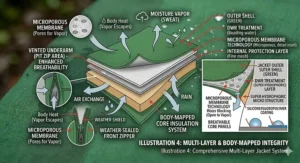
MVTR measures how many grams of water vapour can pass through one square metre of fabric over 24 hours. A measurement above 10,000 g/m²/24h qualifies as highly breathable, though that rating reflects ideal laboratory conditions rather than real-world hiking scenarios. Here’s what matters: when you’re hiking hard uphill, your body generates roughly 200-400 grams of sweat per hour depending on intensity and temperature. A jacket rated at 15,000 MVTR can theoretically handle 625 grams per hour (15,000 ÷ 24), but that maximum capacity drops significantly when external humidity climbs above 70% — which is exactly the condition you face during rain.
When humidity exceeds 70%, membrane performance decreases by 40-60% because breathable fabrics depend on vapour pressure differential between inside and outside the jacket. This explains why even premium breathable waterproof jackets feel clammy during humid Pacific Northwest rain — the physics work against you when the air outside is already saturated with moisture. The solution isn’t a higher MVTR rating; it’s mechanical ventilation through pit zips, which allow bulk air exchange regardless of humidity levels.
Different membrane technologies achieve breathability through distinct mechanisms. Microporous membranes like Gore-Tex use physical pores roughly 20,000 times smaller than water droplets but 700 times larger than water vapour molecules. Hydrophilic membranes (often polyurethane-based) lack pores entirely, instead absorbing moisture on the inside surface and releasing it on the outside through chemical attraction. Neither approach is inherently superior — microporous membranes generally breathe better in cold, dry conditions, while hydrophilic membranes excel during temperature extremes.
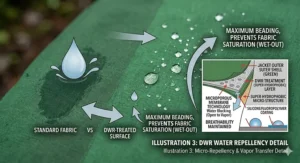
For Canadian hiking conditions, focus less on maximum MVTR numbers and more on the jacket’s complete moisture management system. A jacket rated 12,000 MVTR with excellent pit zips will keep you drier during climbs than a 20,000 MVTR jacket without vents. The DWR (Durable Water Repellent) coating on the face fabric is equally critical — once that coating fails and the fabric “wets out” (becomes saturated), breathability plummets regardless of membrane quality. Water droplets sitting on the fabric surface block vapour transmission, effectively sealing you inside a moisture trap.
Active Ventilation Systems: Why Pit Zips Beat Pure Breathability
Here’s a truth that membrane technology marketing doesn’t want you to hear: mechanical ventilation through pit zips moves more moisture than even the most breathable membranes during high-output activities. Strategic ventilation can improve comfort by 35-40% in temperatures above 75°F (24°C) compared to relying solely on membrane breathability.
The physics are straightforward. Your breathable waterproof jacket might move 15,000 grams of vapour per square metre daily under ideal conditions, but that rate assumes consistent temperature and humidity gradients. When you’re climbing steeply in rain, generating intense body heat while external conditions are cool and humid, the vapour pressure differential collapses — and so does effective moisture transmission. Opening pit zips creates instant bulk air exchange, allowing warm, humid air to escape and cooler, drier air to enter regardless of membrane capabilities.
Quality pit zip design matters enormously. The best implementations (like those on the Patagonia Torrentshell and Marmot Minimalist) use long zips that extend from armpit to near the waist, covered by storm flaps to prevent water intrusion. You can partially unzip them for moderate ventilation or fully open them when you’re working hard, creating a chimney effect that pulls moisture out. Cheaper jackets often use short pit zips that barely open enough to matter, or place them too far forward where backpack straps block access.
Canadian hikers should prioritize pit zips over maximum MVTR ratings for most hiking scenarios. A jacket rated 10,000 MVTR with excellent pit zips will outperform a 20,000 MVTR jacket without vents during steep climbs up British Columbia peaks or intense hiking across Ontario’s challenging terrain. The only exception is true alpine use above treeline, where temperatures stay cold enough and exertion levels vary enough that high-MVTR membranes maintain their performance advantage.
Testing ventilation systems is simple: before buying, check if you can unzip pit zips while wearing a backpack with waist belt. Try reaching across your body with your opposite hand — that’s often how you’ll access them on trail. Confirm the zips are long enough to create meaningful airflow, not just token 15-centimetre openings. These practical details matter far more than theoretical breathability numbers when you’re three hours into a climb and overheating despite steady rain.
Waterproof Performance in Canadian Climate Conditions
Canadian weather tests rain jackets differently than other regions — we’re not dealing with brief tropical downpours but rather sustained drizzle that lasts hours or days, combined with temperature swings that stress waterproof membranes in unique ways.
Parks Canada recommends packing wind and water resistant clothing even during summer hiking, as coastal weather can be unpredictable with unexpected changes. That advice reflects the reality of hiking across Canada’s diverse terrain. A jacket that performs flawlessly during Vermont’s summer storms might fail during week-long rain on Vancouver Island, where moisture is relentless and humidity stays above 80% continuously.
Waterproof ratings use hydrostatic head testing — a column of water pressed against the fabric until it leaks. A 10,000mm rating means the fabric withstands 10 metres of water pressure before failing. For context, light rain exerts roughly 1,000mm of pressure, moderate rain reaches 5,000mm, and heavy rain tops out around 10,000mm. However, these numbers don’t account for fabric wear, DWR coating condition, or seam integrity — factors that matter more than the membrane’s initial rating after your jacket has seen 30-40 days of use.
Canadian hikers face specific challenges that impact waterproof performance over time. Spring hiking through brush and over granite slabs in places like Killarney Provincial Park abrades the face fabric and DWR coating faster than trail walking. Winter storage in heated homes can damage PU-coated membranes if they’re not completely dry. Salt spray along coastal trails like the East Coast Trail accelerates fabric deterioration. These real-world factors mean a jacket rated 20,000mm might perform like 12,000mm after one season of heavy use.
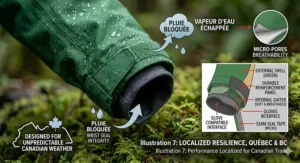
Maintenance dramatically extends waterproof performance. Washing your jacket every 20-30 days of use (yes, washing — dirt clogs membrane pores) with technical soap restores breathability. Reapplying DWR coating when water no longer beads on the surface prevents “wetting out,” which occurs when the face fabric becomes saturated and blocks vapour transmission. Many hikers never perform this maintenance, then blame the jacket when it fails prematurely.
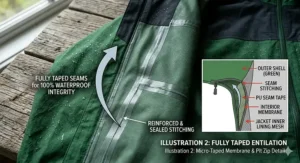
For Canadian conditions, prioritize jackets with full seam taping rather than critical-seam taping, which only seals major seams. Water will find unsealed seams during sustained rain. Check that hoods seal properly around your face — gaps near the chin let rain trickle down your neck during wind-driven storms. Test zipper storm flaps by holding the jacket up to light; you shouldn’t see daylight through closed zippers.
Choosing the Right Breathable Rain Jacket for Your Hiking Style
Not every hiker needs the same jacket — your ideal breathable rain jacket for hiking depends on where you hike, how intensely you move, and whether you’re out for three hours or three days.
For Day Hikers (2-5 hours on trail): Focus on comfort and price over extreme durability. Jackets like the Columbia Watertight II or Marmot PreCip Eco provide adequate protection for shorter outings without demanding premium investment. You won’t accumulate enough wear to justify expensive Gore-Tex models, and you can always return to your vehicle if weather turns severe. Prioritize good pit zips over maximum MVTR ratings, as you’ll generate significant heat during climbs even on short hikes.
For Weekend Backpackers (1-3 nights): Balance weight, packability, and performance with models like the Black Diamond Fineline Stretch or Patagonia Torrentshell 3L. You need genuine weatherproofing since you can’t retreat quickly, but you’re not carrying the jacket long enough to obsess over every gram. Three-layer construction prevents the clammy feeling that develops during extended wear with 2.5-layer alternatives. Ensure the jacket stuff small enough to fit inside your pack when not needed — you’ll wear it intermittently rather than constantly.
For Long-Distance Hikers (multi-week trips): Durability becomes paramount. The Marmot Minimalist or Arc’teryx Beta SL justify their premium pricing through superior construction that survives 80-100+ days of continuous use. At this intensity, you’ll notice quality differences that recreational hikers miss — how well zippers function after thousands of cycles, whether seams remain waterproof after prolonged exposure, how the DWR coating holds up to constant pack abrasion. Lightweight options like the PreCip Eco might save money initially but require replacement mid-trip.
For Technical Mountaineers: Prioritize helmet-compatible hoods, minimal weight, and proven reliability in severe conditions. The Arc’teryx Beta SL represents this category’s gold standard — refined details like the rotating hood and streamlined design matter when you’re moving fast in technical terrain. The absence of pit zips is acceptable since alpine environments maintain temperature and humidity gradients that allow high-MVTR membranes to function effectively.
For Canadian Winter Hikers: Choose jackets that accommodate bulky layers underneath and seal completely against wind-driven snow. Look for longer torso cuts that prevent riding up when reaching overhead, high collars that protect your neck, and hem cinches that seal against snow infiltration. The Marmot Minimalist‘s helmet-compatible hood works perfectly over winter toques, while the Patagonia Torrentshell‘s generous cut layers over thick fleece without restricting movement.
Consider your typical hiking environment’s humidity levels. Pacific Northwest hikers benefit from jackets with aggressive pit zip ventilation since membrane breathability struggles in 85%+ humidity. Prairie and eastern Canadian hikers can rely more on MVTR ratings since humidity typically stays lower during rain. Alpine hikers in the Rockies need jackets that function across extreme temperature swings — wet snow at dawn transitioning to warm rain by afternoon.
Common Mistakes When Buying Breathable Rain Jackets
After helping dozens of Canadian hikers select rain jackets, I’ve seen the same purchasing mistakes repeatedly. Avoiding these errors saves both money and frustration on trail.
Mistake #1: Obsessing Over Maximum MVTR Numbers
Higher breathability ratings don’t guarantee superior comfort. A jacket rated 20,000 MVTR without pit zips will leave you sweatier during climbs than a 12,000 MVTR jacket with excellent ventilation. Properly ventilated jackets can maintain 8-12°F (4-7°C) cooler internal temperatures regardless of membrane ratings during active use. Focus on the complete moisture management system rather than one specification.
Mistake #2: Buying Too Small “To Save Weight”
A properly fitting rain jacket needs room for mid-layers underneath. That bulky fleece or puffy jacket you wear during rest breaks must fit comfortably beneath your shell. Tight-fitting rain jackets look sleek but become useless in Canadian shoulder-season conditions when you need insulation underneath. When trying jackets, wear a thick fleece and raise your arms overhead — if the hem rides up excessively or you feel restricted across shoulders, size up.
Mistake #3: Ignoring DWR Maintenance
The waterproof membrane is only half the story — the DWR coating on the face fabric is equally critical. When DWR fails and fabric “wets out,” even premium membranes stop breathing effectively. Plan to reapply DWR treatment every 20-40 days of use depending on conditions. Nikwax TX.Direct or Granger’s Performance Repel cost $15-20 CAD and extend jacket life by multiple seasons. Washing your jacket before reapplying DWR is essential; dirt prevents new coating from bonding properly.
Mistake #4: Choosing Fashion Over Function
Urban-styled rain jackets with short cuts and low pockets don’t work with backpacks. The hem needs to extend below your hipbelt to prevent rain from soaking your waist and upper legs. Pockets must sit high enough that hipbelt doesn’t block access. Hood design matters more than colour — it should accommodate a hat without obstructing peripheral vision. Choose function first; modern technical jackets look good anyway.
Mistake #5: Expecting Waterproof-Breathable Magic
No jacket keeps you completely dry inside during intense exertion in rain. Physics limits what any membrane can achieve — if you’re generating 300 grams of sweat per hour while external humidity sits at 90%, some moisture will accumulate regardless of MVTR rating. Understanding this limitation prevents disappointment and helps you use pit zips effectively rather than blaming the jacket for “not breathing.”
Mistake #6: Skipping Canadian-Specific Considerations
Jackets designed for mild European conditions or desert mountaineering don’t address Canadian weather realities. We need shells that function across 40°C temperature ranges (from summer heat to spring snow), handle sustained multi-day rain, and accommodate layering for cold conditions. International brands sometimes offer “Canada versions” with longer cuts and better insulation — prioritize these over standard models.
Breaking In Your New Rain Jacket: First 30 Days
Your breathable waterproof jacket performs best after proper break-in. Here’s how to optimize performance during those critical first weeks:
Days 1-3: Initial Wash and DWR Treatment
New jackets often have excess oils from manufacturing that reduce breathability. Wash once with technical cleaner (Nikwax Tech Wash or Grangers Performance Wash) before first use, then tumble dry on low heat to reactivate the DWR coating. This single wash can improve breathability by 20-30% compared to wearing the jacket straight from the package.
Days 4-10: Short Test Hikes
Take 1-2 hour hikes in various conditions to learn how your jacket behaves. Test pit zips at different intensities — walking, moderate climb, steep climb. Note when you overheat versus when you’re comfortable. Each membrane responds slightly differently to body heat and external temperature, so understanding your specific jacket’s sweet spot prevents discomfort on longer hikes.
Days 11-20: Adjustment and Layering Practice
Experiment with different base and mid-layer combinations. Learn which layers work best at various temperatures. Practice adjusting hood, hem, and cuffs while wearing gloves — you’ll need this skill during actual storms. Test how the jacket interacts with your backpack’s shoulder straps and hipbelt. Make note of any pressure points or areas where pack straps cause abrasion.
Days 21-30: First DWR Refresh
After 20-30 days (or sooner if water stops beading on the surface), reapply DWR coating. Wash thoroughly first to remove dirt and oils, then apply spray-on or wash-in DWR according to product instructions. Tumble dry on low heat for 15-20 minutes to cure the coating. This maintenance establishes the habit that keeps your jacket performing optimally for years.
Canadian Winter Preparation
Before storing your jacket for winter, wash thoroughly and hang dry completely. Moisture trapped during storage damages PU-coated membranes and promotes mildew growth. Store in a breathable garment bag rather than compressed in a stuff sack — prolonged compression can damage the waterproof membrane. When retrieving the jacket in spring, check seams and zippers for damage and reapply DWR before the season’s first hikes.
Breathable Rain Jacket Maintenance for Canadian Conditions
Proper maintenance dramatically extends jacket lifespan — most “failed” rain jackets simply need proper cleaning and DWR reapplication rather than replacement.
Washing Schedule:
Wash your jacket every 15-25 days of use, or sooner if visibly dirty. Dirt clogs membrane pores and reduces breathability by 40-50%. Use technical cleaners specifically designed for waterproof-breathable fabrics — regular detergents leave residues that damage membranes and DWR coatings. Nikwax Tech Wash and Grangers Performance Wash are widely available on Amazon.ca in the $15-20 CAD range. Use front-loading washers when possible; top-loading agitators can damage delicate membranes.
DWR Reapplication:
When water stops beading on the surface and fabric looks “wet” rather than shedding droplets, reapply DWR coating. This typically occurs every 20-40 days depending on conditions — brush contact and pack abrasion accelerate DWR loss. Wash the jacket first, then apply either spray-on (Nikwax TX.Direct Spray) or wash-in (Nikwax TX.Direct Wash-In) DWR. Tumble dry on low heat for 15-20 minutes to cure the coating. Properly maintained DWR keeps your jacket breathing effectively and looking newer longer.
Seam Maintenance:
Check taped seams every 30-40 days for lifting or damage. Small sections of lifted tape can be repaired with Aquaseal or McNett Seam Grip (available on Amazon.ca for around $15-18 CAD). Apply thin beads along the damaged seam, working the sealer under lifted tape edges. Allow 12-24 hours to cure completely. Preventative inspection prevents small problems from becoming trail emergencies.
Storage:
Never store rain jackets compressed in stuff sacks long-term. Prolonged compression damages waterproof membranes and causes permanent creasing that creates weak points. Hang jackets in closets or fold loosely in drawers. Store in breathable garment bags rather than plastic, which traps residual moisture. Ensure jackets are completely dry before storage — even slight dampness promotes mildew growth that ruins fabric.
Repair Rather Than Replace:
Small tears or punctures are easily repairable with patch kits. Tenacious Tape or Gore-Tex repair patches (available on Amazon.ca) handle holes up to 5cm diameter effectively. Clean the damaged area with isopropyl alcohol, cut a rounded patch extending 2.5cm beyond the damage, and apply firmly, smoothing from centre outward to eliminate bubbles. These patches maintain waterproofing and often last the jacket’s remaining lifetime.
Canadian hikers should perform maintenance checks before and after each season. Spring: wash, inspect seams, reapply DWR, check zippers. Fall: wash thoroughly, dry completely, inspect for damage, store properly. This bi-annual maintenance routine keeps jackets performing optimally across multiple seasons.
FAQ: Your Breathable Rain Jacket Questions Answered
❓ What MVTR rating do I need for hiking in Canadian conditions?
❓ Can I use my breathable rain jacket in Canadian winter conditions?
❓ How long does a rain jacket last with proper maintenance?
❓ Will breathable rain jackets keep me dry during intense climbs?
❓ Are expensive rain jackets worth the extra cost for casual hikers?
Conclusion: Finding Your Perfect Rain Jacket Match
Choosing the right breathable rain jacket for hiking transforms wet-weather hiking from miserable endurance to comfortable adventure. After examining seven top performers available on Amazon.ca, several clear winners emerge for different Canadian hiking styles.
The Patagonia Torrentshell 3L remains my top recommendation for most hikers — it balances durability, breathability, and price in that sweet spot where value and performance intersect. At $250-270 CAD, it costs twice what budget options demand but lasts three times longer while keeping you significantly more comfortable. The 3-layer construction prevents clamminess during long days, pit zips handle heat management effectively, and Patagonia’s repair program means this jacket stays functional for years. For weekend warriors tackling everything from Ontario’s Bruce Trail to British Columbia’s coastal rainforests, this jacket delivers consistent performance across Canada’s diverse conditions.
Budget-conscious hikers should seriously consider the Marmot PreCip Eco at $130-170 CAD — it’s light enough for backpacking, functional enough for day hiking, and affordable enough to replace every 2-3 seasons without guilt. Accept that DWR maintenance becomes more critical and durability trails premium alternatives, but for recreational use this jacket punches well above its price point. The Columbia Watertight II serves casual hikers adequately at under $140 CAD, though the absence of pit zips limits its usefulness during steep climbs.
Serious mountaineers and alpine enthusiasts will appreciate the Arc’teryx Beta SL‘s refined technical features and exceptional 20,000+ MVTR breathability, but that performance costs $450-550 CAD — justified only if you’re logging 50+ trail days annually in demanding conditions. The Marmot Minimalist offers Gore-Tex reliability in the mid-$300s, making it a solid middle ground for dedicated hikers who want proven performance without Arc’teryx pricing.
What matters most isn’t finding the “best” jacket objectively, but rather the best match for how you actually hike. A lightweight model perfect for fast-paced alpine scrambles becomes uncomfortable during leisurely day hikes with heavy packs. A durable all-weather shell ideal for week-long backpacking trips adds unnecessary weight for afternoon walks. Honestly assess your hiking intensity, frequency, and environment before purchasing — the jacket that keeps your hiking partner dry might leave you soaked, and vice versa.
Remember that even premium waterproof-breathable technology has physical limitations. No jacket eliminates internal moisture during intense exertion in rain — manage expectations appropriately. Learn to use pit zips aggressively, layer thoughtfully underneath, and maintain DWR coating regularly. These skills matter more than the jacket’s brand name.
The breathable rain jacket for hiking market continues evolving rapidly. New membrane technologies promise improved breathability, recycled materials reduce environmental impact, and refined designs enhance comfort. Yet the fundamentals remain unchanged: waterproofing blocks rain, breathability manages sweat, and pit zips dump heat. Master these basics, maintain your jacket properly, and you’ll stay dry through years of Canadian trail adventures regardless of which model you choose.
Recommended for You
- 7 Best Waterproof Rain Jacket for Hiking Canada 2026
- 7 Best Most Waterproof Rain Jacket 20000mm Canada 2026
- 7 Best Gore-Tex Rain Jackets Canada 2026
Disclaimer: This article contains affiliate links. As an Amazon Associate, I earn from qualifying purchases. If you purchase products through these links, we may earn a small commission at no additional cost to you.
✨ Found this helpful? Share it with your friends! 💬🤗
