
In This Article
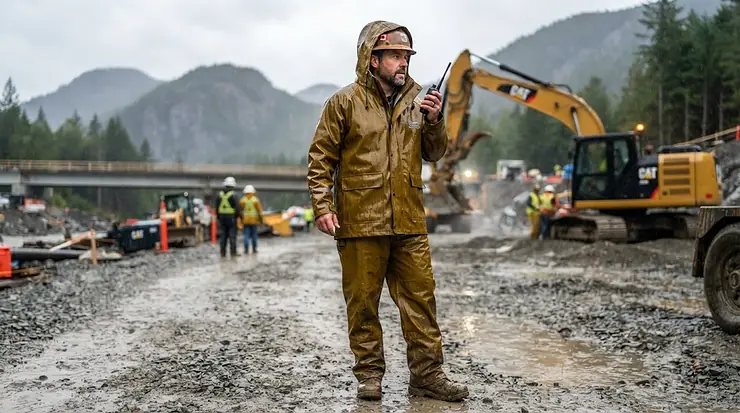
Somewhere around the third time your “waterproof” jacket soaks through at the shoulder seams, you start to understand why tradespeople swear by PVC. It isn’t glamorous. It doesn’t breathe like a $400 shell jacket, and it will never win a fashion show. But when the forecast turns ugly and you still have eight hours of work ahead of you, a genuinely heavy duty PVC rain suit is the difference between a miserable, soggy shift and one where you barely notice it’s raining at all. This guide digs into seven real, currently sold PVC-coated rain gear options — from budget three-piece sets to industrial chemical-resistant rain suits — and explains, in plain language, what the specs actually mean once you’re standing in a downpour.
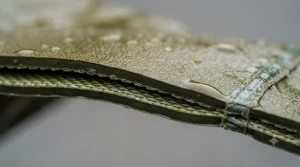
We looked at real product listings, aggregated review themes, and material science rather than marketing copy, because a rain suit’s job is simple and unforgiving: keep water, wind, and in some cases chemicals off your body for hours at a stretch. What is a PVC rain suit, heavy duty version? In short, it’s outerwear made from polyvinyl chloride bonded to a polyester or nylon backing, typically 0.30mm-0.60mm thick, with electronically welded (not stitched) seams that eliminate needle holes as leak points. That construction is what separates a suit that survives a decade of jobsite abuse from the flimsy poncho-style gear sold at the corner hardware store.
Whether you’re outfitting a road crew for a Canadian spring melt or just tired of buying a new rain jacket every season, this breakdown covers budget, mid-range, and premium picks, plus the practical knowledge — setup, maintenance, common failure points — that most Amazon listings never mention.
Quick Comparison Table
Before the deep dive, here’s a snapshot to help you triage by use case. Prices are shown as ranges in Canadian dollars since exact figures shift constantly — always check current pricing before buying.
| Product | Best For | PVC Thickness | Price Range (CAD) |
|---|---|---|---|
| West Chester 44035 3-Piece Rainsuit | Budget occasional use | 0.35mm | Around C$50-C$75 |
| Neese Economy 1600S Rain Suit | Lightest budget welded-seam pick | 0.35mm | Around C$45-C$70 |
| Galeton Repel Rainwear 60″ Jacket | Extra torso/leg coverage | 0.35mm | Around C$55-C$85 |
| Tingley Comfort-Tuff S63219 | Daily jobsite workhorse | 0.35mm | Around C$80-C$115 |
| Viking Journeyman 4125 Series | Chemical/oil splash protection | 0.45mm | Around C$90-C$130 |
| Tingley DuraScrim S56307 | Heaviest-gauge durability | 0.35mm scrim-reinforced | Around C$100-C$140 |
| Neese Dura Quilt Ribbed Raincoat/Bib | Coldest, harshest conditions | 0.60mm ribbed | Around C$140-C$190 mid-C$100s to upper-C$100s range |
Looking at this table, the pattern is clear: thickness and reinforcement climb steadily from the West Chester 44035 at the budget end to the Neese Dura Quilt setup at the premium end, and price generally tracks that same curve. What the table can’t show is where each suit earns its keep — a 0.35mm suit is genuinely fine for occasional yard work or a rainy commute, but the moment you’re kneeling on gravel, splashing solvents, or working twelve-hour shifts in November sleet, the thicker, scrim-reinforced options stop being overkill and start being the only sensible choice.
💬 Just one click — help other Canadian parents make safer buying decisions too!😊
Top 7 Heavy Duty PVC Rain Suits: Expert Analysis
Below are seven real products spanning budget to premium, each evaluated on construction, real-world performance, and aggregated review sentiment. Every product name stays bolded throughout the article so you can scan and compare at a glance.
1. West Chester 44035 3-Piece Rainsuit — best budget entry point for occasional wear
The standout here is simple: full-coverage, three-piece protection at a price that doesn’t sting if it sits in your truck unused for weeks between rainstorms. The West Chester 44035 is built from 0.35mm PVC bonded to a polyester backing, with a five-snap storm-flap front closure, adjustable non-conductive suspenders, and a vented cape back that helps dump some heat during warmer spring downpours. In practice, that 0.35mm gauge is on the lighter end of “heavy duty” — it’ll shrug off a full day of steady rain but isn’t the suit you want for kneeling on rough concrete or brushing against exposed rebar.
Based on the spec sheet, this suit is aimed squarely at homeowners, gardeners, dog walkers, and workers who need rain protection a handful of days a month rather than daily. Reviewers consistently mention that sizing runs generously — enough to layer a hoodie underneath in cooler weather — and that the detachable hood is a genuine convenience rather than a gimmick. A recurring complaint in user reviews is that the vinyl coating can crack at fold lines after a couple of seasons of being crammed into a small stuff sack, which is a fair trade-off for the price point.
Pros:
- ✅ Genuinely low cost of entry for occasional rain protection
- ✅ Roomy fit accommodates layering underneath
- ✅ Vented cape back reduces overheating in mild rain
Cons:
- ❌ Thinner 0.35mm gauge shows wear faster under daily abrasion
- ❌ Coating can crack at fold lines with long-term storage
At around C$50-C$75, the West Chester 44035 delivers solid value for light-duty and weekend use, though anyone facing daily jobsite conditions should look further down this list.
2. Neese Economy 1600S Rain Suit — lightest economy welded-seam pick
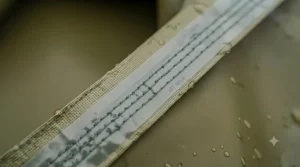
What most buyers overlook about the Neese Economy 1600S is that “economy” in the name refers to price, not construction shortcuts — it still uses electronically welded seams rather than stitching, which is the single feature that most separates a real rain suit from a disposable poncho. Made from water-resistant 0.35mm PVC over polyester, the 1600S ships as a genuine three-piece set: jacket, bib overalls, and a snap-on hood, giving full-body coverage for around the same footprint as suits costing considerably more.
The safety-fly front on the bib pants and the welded seam construction mean this suit holds up reasonably well for warehouse staff, landscapers, and part-time outdoor crews who need dependable coverage without committing to an industrial-grade price tag. Aggregated review sentiment points to strong satisfaction with the value proposition specifically — people expecting a bargain-bin suit are pleasantly surprised by how dry they stay — though some reviewers note the polyester backing feels noticeably stiffer in cold weather than pricier alternatives.
Pros:
- ✅ True welded seams despite the economy price point
- ✅ Full 3-piece set (jacket, bib, detachable hood)
- ✅ Safety-fly closure adds practical convenience
Cons:
- ❌ Fabric stiffens more noticeably in cold temperatures
- ❌ Fewer pocket and ventilation features than mid-tier suits
Priced in the C$45-C$70 range, the Neese Economy 1600S is arguably the best pure value play on this list for buyers who mainly need dry protection, not chemical resistance or extreme abrasion durability.
3. Galeton Repel Rainwear 60″ Jacket — best lesser-known alternative with extra coverage
The Galeton Repel Rainwear line solves a specific, underrated problem: standard-length rain jackets that ride up and expose a gap at the lower back or thighs when you bend, crouch, or climb a ladder. At 60 inches, this jacket runs longer than most competitors while still using the familiar 0.35mm PVC/polyester construction with a detachable hood, giving taller workers or anyone who spends the day bending over equipment noticeably better coverage.
Here’s what the spec sheet won’t tell you, but reviewers note: the extra length matters most for utility workers, roofers accessing ladders, and anyone doing repetitive bending motions, since a standard-length jacket tends to expose the lower back precisely when you’re most vulnerable to a soaked waistband. Galeton isn’t a household name the way Tingley or Viking is, which is exactly why it’s worth flagging here — the construction quality is comparable to bigger-name mid-tier suits, just without the brand premium. Review sentiment is generally positive on coverage and fit, with occasional notes that the extended length takes a size or two of adjustment to get used to.
Pros:
- ✅ Extended 60-inch length covers lower back and thighs
- ✅ Comparable PVC/polyester build quality to name-brand suits
- ✅ Detachable hood adds versatility for mild-rain days
Cons:
- ❌ Less brand recognition may mean fewer size options in stock
- ❌ Extra length can feel cumbersome in tight workspaces
At roughly C$55-C$85, the Galeton Repel Rainwear jacket is worth a look for anyone whose main complaint about rain gear has always been “it doesn’t cover enough.”
4. Tingley Comfort-Tuff S63219 2-Piece Rain Suit — best all-around welded-seam workhorse
The Tingley Comfort-Tuff S63219 earns its “workhorse” reputation through balance rather than any single standout spec: 0.35mm PVC on polyester, fully electronically welded seams, a vented cape back, easy-access cargo pockets with snap flaps, and dual inside/outside storm flaps secured with heavy-duty non-corrosive metal snaps. That last detail matters more than it sounds — non-corrosive hardware means the snaps won’t seize or rust after repeated exposure to rain and humidity, which is a common failure point on cheaper suits.
Based on the spec comparison with the budget options above, the Comfort-Tuff line sits in a sweet spot for daily-use tradespeople: construction crews, utility workers, and anyone who needs a suit that survives five days a week of on-and-off use rather than a handful of rainy weekends. Reviewers consistently report that the roomy cut fits comfortably over work clothes and that the dual storm-flap design genuinely keeps wind-driven rain out better than single-flap competitors. A recurring theme in feedback is that sizing runs slightly large, so most buyers size down if they want a trimmer fit.
Pros:
- ✅ Dual storm flaps block wind-driven rain effectively
- ✅ Non-corrosive snap hardware resists seizing over time
- ✅ Cargo pockets with secure flap closures for tools
Cons:
- ❌ Roomy cut runs large, requiring a sizing adjustment
- ❌ Cape-back venting alone isn’t enough for high-exertion tasks
Sitting in the C$80-C$115 range, the Tingley Comfort-Tuff S63219 offers the best cost-per-wear ratio on this list for anyone using their rain suit multiple times a week.
5. Viking Journeyman 4125 Series — best oil- and chemical-splash protection
Where the previous four suits are built primarily for keeping rain out, the Viking Journeyman 4125 Series is engineered for a tougher job: chemical-resistant rain suit performance against acids, animal fats, and motor oils, not just water. Built from a premium 0.45mm PVC/polyester blend with welded and stitched seams for extra durability, it includes heavy-duty chrome-plated brass snaps, cooling vents, and a cotton corduroy collar for comfort — details that matter when a suit is worn for full shifts rather than a quick errand in the rain.
What most buyers overlook about oil-resistant material like this is that hydrostatic pressure resistance and chemical resistance are related but separate properties — PVC’s chemistry gives it strong resistance to hydrocarbon oils, organic acids, salts, and alkalis, but it’s not universally chemical-proof (ketones and certain solvents will degrade it faster). That distinction matters enormously for fish processing plants, commercial fishing crews, agricultural operations, and petrochemical sites, where the wrong assumption about chemical compatibility can mean a ruined suit or worse, skin exposure. Aggregated reviews consistently praise the suit’s flexibility despite its added thickness and note that the welded-plus-stitched seam approach holds up unusually well over repeated industrial laundering.
Pros:
- ✅ Genuine resistance to oils, acids, and animal fats
- ✅ Welded-and-stitched seams add extra long-term durability
- ✅ Corduroy collar improves all-day wearing comfort
Cons:
- ❌ Not effective against ketones or certain aggressive solvents
- ❌ Heavier gauge trades some flexibility for protection
In the C$90-C$130 range, the Viking Journeyman 4125 Series is the clear pick for anyone whose rain gear also needs to survive contact with grease, oil, or mild industrial chemicals.
6. Tingley DuraScrim S56307 — heaviest-gauge durability for extreme abrasion
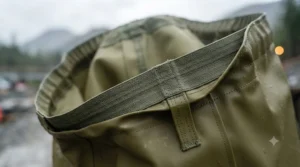
The Tingley DuraScrim S56307 takes the welded-seam formula and reinforces it with a scrim-backed 0.35mm PVC laminate, which sounds like a small change but has an outsized real-world effect: scrim reinforcement dramatically improves tear and puncture resistance compared to standard PVC/polyester of the same thickness. That means this suit tolerates the kind of abrasion — scraping against rebar, rough lumber, or gravel — that would eventually shred a standard-backed suit.
On paper this means the DuraScrim trades a small amount of flexibility for a large gain in longevity, and that’s exactly the trade reviewers describe: forestry workers, demolition crews, and heavy construction teams report the suit surviving conditions that destroyed previous rain gear within weeks. The 3-piece configuration (jacket, bib, hood) mirrors the economy suits in layout but with meaningfully tougher materials throughout. A common complaint in user reviews is that the reinforced fabric is noticeably heavier to wear over a full shift, which matters most in warm, humid conditions.
Pros:
- ✅ Scrim reinforcement dramatically boosts tear resistance
- ✅ Full 3-piece coverage matches heavy-duty job demands
- ✅ Holds up well against rebar, lumber, and gravel abrasion
Cons:
- ❌ Noticeably heavier than standard-backed PVC suits
- ❌ Reduced breathability in warm, humid conditions
At C$100-C$140, the Tingley DuraScrim S56307 earns its price through raw durability rather than comfort extras, making it the pragmatic choice for the roughest jobsites.
7. Neese Dura Quilt Ribbed PVC Polyester Raincoat/Bib — thickest, most cold-weather-flexible option
At 0.60mm ribbed PVC over a non-woven polyester-blend lining, the Neese Dura Quilt is the heaviest-gauge PVC on this list, and the ribbing is the clever part: it lets a genuinely thick material stay flexible in cold weather instead of turning stiff and crackly the way flat heavy PVC often does. The lining also wicks perspiration, which partially offsets the reduced breathability you’d expect from the thickest coating here.
Here’s what the spec sheet won’t tell you, but reviewers note: this raincoat is disproportionately popular with workers in Canadian winter-adjacent conditions — sleet, freezing rain, and near-zero temperatures — precisely because most heavy PVC becomes brittle in the cold while this ribbed construction doesn’t. The storm-fly front, fabric-tip collar, and batwing ventilation design round out a suit built for people who are outside in the worst weather of the year, not just a passing shower. Review sentiment is strongly positive on cold-weather performance specifically, with the main pushback being the higher price relative to lighter suits.
Pros:
- ✅ Ribbed 0.60mm PVC stays flexible in freezing temperatures
- ✅ Wicking lining reduces cold-weather clamminess
- ✅ Heaviest-duty electronically welded seam construction here
Cons:
- ❌ Premium price compared to lighter-gauge alternatives
- ❌ Overkill for mild or occasional rain use
Priced around C$140-C$190, the Neese Dura Quilt setup is the specialist’s choice — expensive relative to entry suits, but arguably the best value per hour worn for anyone facing a genuine Canadian winter jobsite.
Practical Usage Guide: Setup, Break-In & Maintenance
A heavy duty PVC rain suit doesn’t need much babying, but a few first-30-days habits determine whether it lasts three years or three months. Start by trying the full suit on over your typical work layers before the first wet day — PVC doesn’t stretch the way woven fabrics do, so sizing issues show up immediately, not gradually. Snap every closure and check that the hood (if detachable) seats properly against the jacket collar; a gap here is the single most common source of “it’s not actually waterproof” complaints.
For maintenance, rinse mud, oil, and grit off the suit with lukewarm water and a mild detergent after heavy use rather than letting contaminants sit in seam folds, where they slowly abrade the PVC coating from the inside. Avoid high heat when drying — hang the suit rather than tumble drying it, since PVC softens and can permanently warp above roughly 60°C (140°F). Store it loosely folded or hung, not crushed into a tight ball at the bottom of a toolbox, since sharp creases are where cracking starts. A common first-30-days mistake is stuffing a brand-new suit into its original small packaging repeatedly; that packaging is for shipping, not daily storage.
Real-World Scenarios: Matching the Suit to the Job
Picture three different people standing in the same downpour. The first is a college-aged landscaping crew member working two or three rainy shifts a month on a modest budget — for them, the West Chester 44035 or Neese Economy 1600S delivers everything needed without tying up cash in features they’ll rarely use. The second is a municipal road-maintenance worker putting in five days a week, rain or shine, for eight months of the year — daily wear-and-tear favours the Tingley Comfort-Tuff S63219, whose non-corrosive hardware and dual storm flaps hold up to that frequency far better than economy suits.
The third scenario is a commercial fish-processing employee who’s regularly splashed with fish oils, brine, and cleaning chemicals in addition to plain water — for that person, the chemical-resistant rain suit properties of the Viking Journeyman 4125 Series aren’t a luxury, they’re the actual job requirement, since a standard PVC/polyester suit will degrade far faster under repeated oil exposure. A fourth, less obvious case: a utility line worker in rural Alberta or Northern Ontario working through freezing rain in January, for whom the Neese Dura Quilt‘s cold-flexible ribbed PVC is worth every extra dollar, because a stiff, cracking suit at -10°C isn’t just uncomfortable, it’s a safety issue.
Problem → Solution: Common PVC Rain Suit Issues
Even a well-chosen suit runs into predictable problems, and most have straightforward fixes. If water is seeping in at the seams despite a “waterproof” rating, check whether the suit uses electronically welded seam construction or traditional stitching — stitched seams create needle holes that leak over time, while welded seams shouldn’t, so a leaking welded seam usually points to a factory defect worth an exchange, not a design flaw.
If the suit feels unbearably sweaty during physical work, the issue is PVC’s zero-breathability nature rather than a defective product — the fix is choosing a suit with cape-back venting and underarm vents (like the Tingley Comfort-Tuff or Viking Journeyman) and layering moisture-wicking base layers underneath rather than expecting the shell itself to breathe. If the coating is cracking at fold lines after a season or two, the culprit is almost always storage habits — tight folding and cold storage accelerate cracking, so switch to hanging storage and you’ll usually see the problem stop. And if snaps or hardware are seizing or corroding, look specifically for suits advertising non-corrosive brass or chrome-plated snaps on your next purchase, since standard steel hardware is the recurring weak point reviewers complain about most.
✨ Don’t Miss These Exclusive Deals!
🔍 Take your wet-weather work gear to the next level with these carefully selected picks. Click on any highlighted suit above to check current pricing and availability — these are the details that keep you genuinely dry, not just marketing claims.
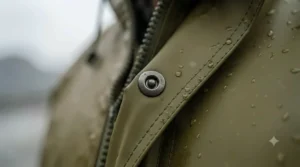
How to Choose a Heavy Duty PVC Rain Suit
What is heavy duty PVC rain suit thickness, and how much do you actually need? As a quick answer: 0.35mm suits handle occasional to daily rain exposure well, while 0.45mm-0.60mm suits are worth the extra cost for chemical exposure, extreme abrasion, or genuinely harsh winter conditions.
- Match thickness to frequency of use. Occasional wearers rarely need more than 0.35mm; daily industrial users benefit from 0.45mm and up.
- Prioritize welded seams over stitched. This single feature predicts long-term waterproofness more than almost any other spec.
- Check hardware material. Non-corrosive brass or chrome-plated snaps outlast standard steel by a wide margin in wet conditions.
- Consider chemical exposure honestly. If oils, acids, or solvents are part of your job, a chemical-resistant rain suit like the Journeyman line isn’t optional.
- Factor in temperature range. Cold-climate workers should weigh ribbed or lined PVC options that resist stiffening below freezing.
- Don’t ignore ventilation. Cape-back and underarm vents make a real comfort difference during physically demanding work.
- Size up slightly for layering. PVC doesn’t stretch, so account for base layers or a sweatshirt underneath when choosing a size.
Chemical-Resistant Rain Suits & Oil-Resistant Materials for Industrial Sites
Industrial PVC rain wear serves a fundamentally different purpose than consumer rain gear, and understanding why changes how you shop. Standard PVC/polyester suits are engineered primarily around hydrostatic pressure resistance to water — PVC’s non-porous structure gives it roughly double the water pressure resistance of many woven alternatives, generally exceeding 10,000mm water column, which is why it’s the default choice for extreme-weather workwear. But oil-resistant material properties are a separate consideration: PVC’s chemical resistance profile is genuinely strong against hydrocarbon oils, organic acids, salts, and alkalis, yet notably weaker against ketones, alcohols, and certain solvents, which can soften or degrade the coating faster than plain water exposure ever would.
For food processing, meat packing, petrochemical, and agricultural sites, that distinction directly affects which product line makes sense. Suits explicitly rated for chemical splash — like the Viking Journeyman 4125 Series — typically use a heavier 0.45mm gauge specifically because thickness increases chemical resistance, not just abrasion resistance. According to the Canadian Centre for Occupational Health and Safety, selecting personal protective equipment appropriately means matching the gear to the specific hazard present, not just assuming any waterproof suit covers every wet-workplace risk — a principle that applies directly here, since a suit rated for rain alone may not hold up against workplace chemicals even if it looks identical on the shelf.
Welded Seam Construction: Why It Matters
If there’s one spec worth obsessing over when shopping for a PVC rain suit heavy duty enough for real work, it’s seam construction. Electronically welded seams are created by fusing PVC layers together under heat and pressure, forming a continuous, non-porous bond rather than a row of needle holes. Stitched seams, by contrast, puncture both fabric layers to sew them together — and every one of those puncture points is a potential leak path once the thread’s own coating wears down.
What most buyers overlook about welded seam construction is that it’s not just about initial waterproofness; it’s about how the suit ages. A stitched seam degrades gradually as thread frays and needle holes widen with repeated flexing, while a properly welded seam tends to fail all-or-nothing (a manufacturing defect resulting in a bad weld) rather than slowly. That’s precisely why every suit in this roundup — from the budget West Chester 44035 to the premium Neese Dura Quilt — relies on welded seams as the baseline construction method, with some, like the Viking Journeyman, adding reinforcing stitching on top for extra structural durability rather than as the primary waterproofing method.
Heavy-Gauge PVC vs Standard PVC Rain Gear
| Factor | Standard PVC (0.30-0.35mm) | Heavy-Gauge PVC (0.45-0.60mm) |
|---|---|---|
| Best For | Occasional to daily light rain | Industrial, chemical, or extreme weather use |
| Flexibility | High, especially when new | Moderate; ribbed designs improve cold flexibility |
| Abrasion Resistance | Adequate for light tasks | Notably higher, especially scrim-reinforced options |
| Typical Lifespan | 1-2 seasons of regular use | 3+ seasons with proper care |
Looking at this comparison, the jump from standard to heavy-gauge PVC isn’t just about durability bragging rights — it directly affects total cost of ownership. A worker replacing a 0.35mm suit every season spends roughly the same over three years as someone buying one 0.60mm suit upfront, but with far more downtime and inconvenience along the way. That said, heavy-gauge PVC is genuine overkill for someone who only needs rain protection a few days a year, which is why matching gauge to actual use frequency (see the “How to Choose” section above) matters more than simply buying the thickest available option.
PVC Rain Suits vs Breathable Rain Gear
The alternative to PVC that comes up constantly in buyer research is breathable, membrane-based rain gear (think Gore-Tex-style shells), and the honest answer is that neither is universally “better” — they solve different problems. Breathable membranes allow water vapour (sweat) to escape while blocking liquid water from entering, which makes them far more comfortable during high-exertion activity like hiking or cycling. PVC, by contrast, offers zero breathability but dramatically higher hydrostatic pressure resistance, tougher abrasion resistance, easier cleaning (a wipe-down versus specialized washing), and meaningfully better chemical resistance.
For jobs involving standing water, chemical splash, or sustained heavy rain over long shifts — construction, fishing, forestry, utility work — PVC’s downsides (heat, lack of breathability) are outweighed by its durability and near-total waterproofness. Breathable shells make more sense for lighter, movement-intensive activities where comfort and packability matter more than industrial-grade toughness. Put simply: if you’re doing physical labour in a downpour for eight hours, PVC’s basic plastic-barrier approach – blunt but reliable – still tends to outperform in the categories that matter most for that specific job.
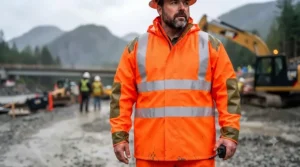
Common Mistakes When Buying PVC Rain Gear
The most frequent mistake is buying based on price alone without checking seam construction — a stitched-seam suit at a similar price to a welded-seam competitor will leak sooner, full stop. A second common error is ignoring sizing charts and assuming standard clothing sizes translate directly; PVC’s lack of stretch means an ill-fitting suit is uncomfortable and prone to snagging, not just aesthetically off. Buyers also frequently underestimate ventilation needs, choosing a fully sealed suit for high-exertion work and then being surprised by how hot and sweaty it becomes.
Another recurring pitfall is treating all “chemical resistant” claims as equivalent — as covered above, PVC’s resistance varies significantly by chemical type, so buyers working around solvents or ketones specifically need to verify compatibility rather than trusting a generic “chemical resistant” label. Finally, many buyers skip storage and care instructions entirely, then blame the product when cracking or hardware corrosion shows up within a year — proper hanging storage and prompt rinsing after heavy use meaningfully extend any suit’s working life.
Long-Term Cost & Maintenance
Total cost of ownership for a heavy duty PVC rain suit depends heavily on use frequency and care habits, not just sticker price. A C$50 budget suit used two or three times a month might last two to three years with reasonable care, working out to a modest per-use cost. That same suit used daily on an industrial site might last only a single season before seams or hardware fail, making a C$100-C$140 mid-to-premium suit like the Tingley Comfort-Tuff or Tingley DuraScrim the better long-term value despite the higher upfront cost.
Maintenance costs are minimal by design — PVC needs no specialized cleaning products, just mild soap and water — but replacement parts (detachable hoods, in particular) are worth checking before purchase, since some economy suits price these separately if lost or damaged. Factoring in reduced downtime, fewer mid-season replacements, and better resale or hand-me-down condition, the premium suits on this list generally win the cost-per-wear calculation for anyone using their rain gear more than once a week.
Safety, Certification & Regulations in Canada
Workwear regulation in Canada operates differently than in some jurisdictions — PVC rain suits themselves aren’t typically subject to mandatory certification the way protective footwear or hard hats are, but the CSA Group does maintain broader workplace personal protective equipment standards that employers reference when specifying safety gear for wet-condition jobsites, particularly where chemical or high-visibility requirements overlap with rainwear. Provincially, occupational health and safety regulators generally require that employers provide “acceptable” rain gear where wet conditions are a routine hazard, though the specific standard referenced varies by province and industry.
For workers choosing gear on their own behalf — landscapers, independent contractors, weekend anglers — there’s no regulatory requirement to buy CSA-referenced gear, but the underlying safety logic still applies: match the suit’s rated protection (water only versus chemical-resistant) to the actual hazards present on the job, rather than assuming any PVC suit covers every scenario. Anyone working near moving equipment should also confirm that a bulky rain suit’s cut doesn’t create a snag hazard, a consideration that applies regardless of certification status.
Featured Snippet: 5-Row Comparison at a Glance
| Product | Thickness | Chemical Resistant? | Best Season |
|---|---|---|---|
| West Chester 44035 | 0.35mm | No | Spring/Fall |
| Tingley Comfort-Tuff S63219 | 0.35mm | No | Year-round daily use |
| Viking Journeyman 4125 Series | 0.45mm | Yes (oils, acids) | Year-round industrial |
| Tingley DuraScrim S56307 | 0.35mm scrim | No | Heavy abrasion jobs |
| Neese Dura Quilt | 0.60mm ribbed | No | Winter/extreme cold |
This condensed view makes the trade-offs obvious at a glance: only the Viking Journeyman 4125 Series on this list is purpose-built for chemical exposure, while the Neese Dura Quilt stands alone for cold-weather flexibility. Everyone else on the list is optimizing primarily for water resistance, abrasion durability, or price, so matching your specific hazard to the right column here saves a lot of second-guessing at checkout.
🛒 Ready to Gear Up Before the Next Downpour?
⚡ Don’t wait until you’re already soaked through to make a decision. Check current pricing and availability on the picks above, and get a suit in hand before the next forecast turns grey.
Frequently Asked Questions
❓ What thickness of PVC counts as heavy duty for a rain suit?
❓ Can a PVC rain suit be washed in a washing machine?
❓ Is a PVC rain suit chemical resistant rain suit safe for all workplace chemicals?
❓ How long does welded seam construction typically last compared to stitched seams?
❓ Do heavy-gauge PVC rain suits work in freezing temperatures?
Conclusion
A heavy duty PVC rain suit isn’t a single product — it’s a spectrum, from the budget-friendly West Chester 44035 for occasional wear all the way to the chemical-resistant Viking Journeyman 4125 Series and the cold-weather-ready Neese Dura Quilt for genuinely harsh Canadian conditions. The right choice comes down to an honest read of how often you’ll wear it, what you’ll be exposed to beyond plain rain, and whether welded seam construction, hardware quality, and gauge thickness match the actual demands of your job rather than just the lowest price tag on the shelf.
Whichever suit ends up in your cart, the fundamentals from this guide travel with you: check for welded seams, match thickness to frequency and hazard exposure, store it properly, and don’t assume “chemical resistant” means resistant to every chemical you’ll encounter. Get those basics right, and a genuinely heavy duty PVC rain suit will outlast several seasons of Canadian weather without complaint.
✨ Found Your Match? Check Current Pricing Now!
🌧️ Stop letting rainy forecasts dictate your workday. Click through to any of the picks above to check current availability and pricing before the next system rolls in.
Recommended for You
- Heavy Duty Rain Suit for Construction: 7 Top Picks (2026)
- 2 Piece Rain Suit Men’s: 7 Top Picks Tested for 2026
- Motorcycle Rain Suit 2026: 7 Picks That Actually Keep You Dry
Disclaimer: This article contains affiliate links. As an Amazon Associate, I earn from qualifying purchases. If you purchase products through these links, we may earn a small commission at no additional cost to you.
✨ Found this helpful? Share it with your friends! 💬🤗
