
In This Article
Here’s what most runners get wrong about rain jackets: they focus entirely on keeping water out while ignoring what happens to moisture vapour inside. According to Environment and Climate Change Canada, Canadian runners face some of the most variable weather conditions globally, making breathability just as critical as waterproofing. I’ve watched too many Vancouver marathoners peel off supposedly “waterproof” jackets at the 10K mark, soaked through from their own sweat despite the jacket doing its job keeping rain out. The real challenge isn’t staying dry from the outside — it’s managing the moisture your body generates during high-output activities.
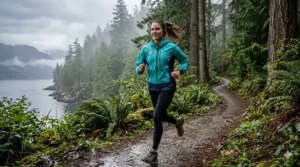
A proper breathable rain jacket for running needs to solve both problems simultaneously. When you’re pushing 160 beats per minute up a hill in Halifax’s spring drizzle or maintaining race pace through Toronto’s autumn rain, your body produces heat and moisture faster than most rain shells can handle. The breathability rating matters just as much as waterproof specs, but most Amazon.ca listings bury this crucial number deep in the fine print.
Canadian runners face unique demands: our rain is cold (not tropical downpours), our seasons are short (spring-to-fall running window), and our distances are often long (commutes and trail runs that span hours, not minutes). What works for a California jogger won’t cut it when you’re battling a May storm in Montreal or an October squall on the Seawall. In this guide, I’ll show you exactly which jackets deliver genuine moisture vapor escape, how articulated movement affects your stride, and why that $300 CAD shell might actually save you money compared to replacing three cheaper jackets that fail within a season.
Quick Comparison: Top Breathable Running Rain Jackets
| Jacket | Waterproof Rating | Breathability | Weight | Best For | Price Range (CAD) |
|---|---|---|---|---|---|
| Arc’teryx Norvan | 20,000mm | Excellent (Gore-Tex ePE) | 145g | Trail runners, ultralights | $450-$550 |
| Gore Wear Concurve | 28,000mm | Outstanding | 200g | Road & trail, all conditions | $280-$350 |
| Salomon Bonatti Pro | 20,000mm | Very Good | 175g | Mountain running, packable | $260-$320 |
| Baleaf Waterproof Shell | 5,000mm | Good (TPU membrane) | 280g | Budget-conscious, casual runners | $90-$130 |
| Patagonia Storm Racer | 20,000mm+ | Excellent | 235g | Eco-conscious, durability | $350-$420 |
| Nike Gore-Tex Infinium | 15,000mm | Very Good | 210g | Urban commuters, versatile | $220-$280 |
| Columbia OutDry Extreme | 30,000mm | Good | 320g | Hiking-running crossover | $180-$240 |
Looking at this comparison, three patterns emerge immediately. First, there’s a direct correlation between breathability and price — that Gore Wear Concurve’s moisture vapour transmission rate justifies its mid-$300 CAD price point when you consider you won’t be fighting condensation buildup on long runs. Second, weight matters more than most Canadian buyers realize: that extra 100 grams on the Columbia translates to noticeable fatigue over 15-20 kilometres, which is why trail runners consistently gravitate toward the Arc’teryx despite the premium. Third, and this surprises many shoppers, waterproof ratings above 20,000mm show diminishing returns — the Salomon at 20,000mm keeps you just as dry as the Columbia at 30,000mm during actual running conditions, because breathability becomes the limiting factor once you exceed basic waterproofing thresholds.
💬 Just one click — help others make better buying decisions too!😊
Top 7 Breathable Rain Jackets for Running: Expert Analysis
1. Arc’teryx Norvan Jacket — The Ultralight Champion
The Arc’teryx Norvan represents what happens when a Canadian company (yes, they’re based in North Vancouver) designs specifically for mountain running in coastal British Columbia’s relentless rain. At just 145 grams, it’s the lightest jacket in this roundup, yet it delivers complete waterproof protection through 15D Gore-Tex ePE membrane technology.
Here’s what the spec sheet won’t tell you: that PFAS-free membrane breathes noticeably better than older Gore-Tex versions, which matters when you’re climbing elevation in the Coast Mountains or hammering intervals along Calgary’s river pathways. The articulated sleeves follow your arm swing without restriction — a detail you’ll appreciate after hour two of a long run. Canadian reviewers consistently note that the wrist-watch window (a small clear section at the cuff) eliminates the need to push up sleeves to check pace, preventing cold water from running down your arms.
The hood design deserves special mention. Unlike jackets that flap around your face or obstruct peripheral vision, the Norvan’s helmet-compatible hood (useful if you wear a running cap) stays put with minimal adjustment, and the reflective branding is large enough to be seen by Vancouver traffic in early morning darkness. The underarm vents aren’t just token features — they create genuine airflow when you unzip them during high-output climbs.
Pros:
✅ Lightest option that doesn’t sacrifice durability
✅ Superior breathability for sustained efforts
✅ RECCO reflector aids backcountry safety
Cons:
❌ Premium price point ($450-$550 CAD range)
❌ No hand pockets (minimalist design trade-off)
This jacket suits serious trail runners and ultralight enthusiasts who understand that buying once and buying right saves money long-term. At around $500 CAD, it’s an investment, but Canadian mountain runners report 3-4 seasons of heavy use without membrane degradation — calculate cost-per-run and it makes sense.
2. Gore Wear Concurve Gore-Tex — The Breathability King
The Gore Wear Concurve tackles the toughest challenge in running rain jacket design: keeping you dry from outside rain while simultaneously evacuating the moisture you’re generating inside. Its next-generation Gore-Tex ePE membrane achieves breathability levels that outperform most competitors, with moisture vapour transmission rates that matter when you’re maintaining tempo pace for 90+ minutes.
At 200 grams, it’s slightly heavier than the Arc’teryx but includes features that justify the extra weight: a magnetic hood buckle that holds the hood firmly when rolled down (so it doesn’t flap against your back), large reflective branding for Canadian winter running visibility, and zippered hand pockets that actually fit a smartphone. The athletic fit — termed “second-skin comfort” by Gore Wear — means the jacket moves with your stride rather than billowing in wind or restricting shoulder rotation.
What sets this jacket apart in Canadian conditions is how well it handles temperature swings. When you start a run in 8°C drizzle and finish in 15°C sun (a common scenario during Vancouver spring or Toronto fall), the Concurve’s breathability prevents the overheating that forces you to choose between removing the jacket entirely or suffering through sweat-soaked discomfort. The adjustable cuffs seal against wrist-worn GPS watches without cutting off circulation.
Pros:
✅ Outstanding breathability prevents internal condensation
✅ Packs into its own pocket for convenient carrying
✅ Articulated sleeves eliminate ride-up during arm swing
Cons:
❌ Magnetic hood closure occasionally releases during intense movement
❌ Slim fit may not accommodate thick winter layers
Canadian runners consistently rate this in the $280-$350 CAD range as the sweet spot for everyday training. It’s not cheap, but the breathability performance means you’ll actually wear it instead of leaving it home because “it’s not raining hard enough to deal with being soaked from sweat.”
3. Salomon Bonatti Pro — The Mountain Runner’s Choice
The Salomon Bonatti Pro emerges from Salomon’s deep experience in trail running and mountain sports. Its micro-porous waterproof membrane achieves 20,000mm water column protection while maintaining breathability that handles steep climbs and technical descents. At 175 grams, it strikes an excellent balance between protection and packability.
Here’s the practical reality that Salomon’s marketing doesn’t emphasize enough: this jacket excels specifically during high-output activities on varied terrain. The stretchy fabric construction allows full range of motion during scrambling sections or when reaching for handholds on steep trails — movements that cause restrictive rain shells to bind at the shoulders. When you pack it into its chest pocket (a smart design choice that eliminates hunting for stuff sacks), it compresses small enough to fit in most hydration vest pockets, making it ideal for Canadian ultrarunners who need to carry mandatory gear.
The hood adjustment system uses a single pull cord that you can operate while running, crucial when weather changes mid-run on exposed ridges or prairie trails where stopping isn’t practical. Quebec trail runners particularly appreciate the minimalist pocket design — one secure chest pocket for essentials, no extra bulk to bounce around. The elastic cuffs seal effectively without Velcro (which catches on sleeves and gloves), and the hem drawcord stays accessible even when wearing a hydration vest or running pack.
Pros:
✅ Exceptional packability without sacrificing protection
✅ Four-way stretch fabric follows body movement naturally
✅ Chest pocket positioning works with hydration vests
Cons:
❌ Limited pocket space for phones and keys
❌ Slightly noisy fabric during arm swing (minor distraction)
In the $260-$320 CAD range on Amazon.ca, this represents solid value for trail runners who prioritize performance over features. It’s the jacket you reach for when you know conditions will be challenging but you need full mobility.
4. Baleaf Waterproof Rain Shell — Best Budget Option
The Baleaf Waterproof Rain Shell proves that Canadian runners on a budget don’t have to sacrifice essential protection. While its 5,000mm waterproof rating and 3,000g/m²/24hr breathability don’t match premium options, these specs are sufficient for most recreational running scenarios — think 30-60 minute training runs in moderate rain, not all-day mountain epics.
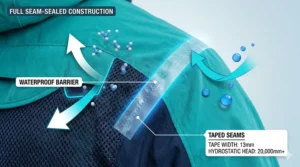
Here’s the honest assessment: this jacket uses a laminated TPU membrane rather than Gore-Tex, which means it won’t breathe as efficiently during high-intensity efforts. But for casual runners doing 5K loops around Ottawa neighbourhoods or dog-walking in Vancouver drizzle, the performance difference becomes academic. The back ventilation system (an actual mesh panel, not just perforated fabric) helps manage heat buildup, and the fully seam-sealed construction prevents the annoying leaks at shoulders and seams that plague cheaper rain shells.
The reflective elements are thoughtfully placed — vertical stripes on the arms, logo on the back — providing visibility from multiple angles when you’re running on Canadian roads during shoulder seasons when darkness comes early. At 280 grams, it’s noticeably heavier than premium options, but it packs into its own back pocket reasonably well. The hood accommodates most running caps and includes a drawstring adjustment, though it lacks the refined fit of more expensive models. Multiple zippered pockets (including two hand pockets and one chest pocket) offer more storage than minimalist racing shells.
Pros:
✅ Excellent value in the $90-$130 CAD range
✅ Good pocket selection for keys, phone, nutrition
✅ Adequate protection for recreational runners
Cons:
❌ Lower breathability causes moisture buildup during hard efforts
❌ Heavier weight impacts comfort on longer runs
This suits budget-conscious beginners and casual runners who need weather protection without premium prices. Canadian buyers report 1-2 seasons of regular use before the DWR coating needs reapplication — acceptable given the price point. Just understand its limitations: if you’re training for marathons or running in challenging terrain, invest more.
5. Patagonia Storm Racer — The Eco-Conscious Performance Pick
The Patagonia Storm Racer delivers premium protection while addressing environmental concerns that matter to many Canadian runners. Its three-layer construction uses 100% recycled nylon ripstop with a PFC-free DWR coating, achieving over 20,000mm waterproofing without perfluorinated chemicals. Patagonia’s commitment to environmental responsibility doesn’t compromise performance — this jacket legitimately competes with Gore-Tex options.
What distinguishes the Storm Racer in real-world Canadian conditions is its durability. The ripstop construction resists the tears and abrasions that come from brushing against branches on trail runs or bumping bike racks on urban commutes. The fully taped seams remain leak-free after seasons of use, and the water-resistant zipper (with internal storm flap) prevents the zipper-line seepage that plagues mid-range jackets. At 235 grams, it’s heavier than ultralight racing shells but still packable enough to stash in a vest or waist pack.
The athletic cut is slightly roomier than body-hugging race fits, which Canadian runners appreciate for layering flexibility — throw it over a lightweight fleece for spring morning starts, or wear it directly over a base layer during warmer rain. The hood design deserves praise: it fits over brimmed caps or winter toques without feeling bulky, adjusts with a single pull cord, and provides excellent coverage without restricting head movement or peripheral vision. The hem and cuff adjustments seal effectively against wind-driven rain.
Pros:
✅ Exceptional durability outlasts lighter competitors
✅ Environmental credentials without performance compromise
✅ Versatile fit accommodates varied layering strategies
Cons:
❌ Slightly heavier than race-specific alternatives
❌ Premium pricing ($350-$420 CAD range)
This targets environmentally conscious runners who value longevity and are willing to carry a bit more weight for superior durability. Patagonia’s Worn Wear program (repairs and resells used gear) extends product life further, making the higher initial cost more palatable when you consider total cost of ownership.
6. Nike Gore-Tex Infinium — Urban Runner’s Choice
The Nike Gore-Tex Infinium brings streetwear aesthetics to technical running protection. While Gore-Tex Infinium offers wind and water resistance rather than full waterproofing (it’s rated for rain but not prolonged downpours), this trade-off delivers noticeably superior breathability that matters during moderate-intensity urban running.
Here’s the nuance that matters for Canadian city runners: Infinium technology prioritizes moisture vapour transmission over absolute waterproofing, making it ideal for 5-15K training runs in changeable weather rather than all-day mountain epics. The four-way stretch fabric moves naturally with running motion, and the back vent creates genuine airflow rather than token ventilation. At 210 grams with a trim, athletic fit, it layers well under heavier shells for winter running or wears standalone during milder rain.
The packable design (jacket stuffs into its own pocket) makes this practical for Toronto commuters who bike to work with forecast uncertainty, or Montreal runners who start in sun and finish in drizzle. The adjustable hood accommodates small running caps, and the internal storm guard at the full-length zipper prevents water infiltration even without a fully waterproof zipper. Reflective details are subtle but effective — Nike doesn’t plaster the jacket with high-vis panels, instead using strategically placed hits that satisfy visibility needs without looking like safety gear.
Pros:
✅ Superior breathability for moderate-intensity efforts
✅ Stylish design transitions from trail to street
✅ Stretch fabric eliminates movement restriction
Cons:
❌ Not fully waterproof (water-resistant for moderate rain)
❌ Limited Canadian availability (check Amazon.ca stock)
In the $220-$280 CAD range, this suits urban runners prioritizing breathability over extreme weather protection. Think Ottawa runners doing weeknight 10Ks rather than Whistler trail runners tackling exposed alpine routes. Just understand what you’re getting — excellent for changeable conditions, less ideal for sustained heavy rain.
7. Columbia OutDry Extreme — The Crossover Performer
The Columbia OutDry Extreme takes a different approach to waterproofing by placing the membrane on the outside of the jacket rather than sandwiching it between fabric layers. This OutDry technology eliminates the outer fabric that can “wet out” (become saturated), meaning the jacket maintains consistent performance even after hours in rain. Its 30,000mm waterproof rating is overkill for most running scenarios, but Canadian buyers appreciate the versatility this provides for hiking-running crossover use.
At 320 grams, this is the heaviest jacket in our roundup, reflecting its more robust construction and multi-sport design intent. The weight becomes apparent during runs longer than 10K, but the flip side is durability that handles bushwhacking through Algonquin backcountry as well as pounding pavement in Regina. The athletic fit is roomier than race-specific shells, accommodating mid-layers for three-season Canadian use. Multiple pockets (two hand pockets, one chest pocket) provide genuine storage for phone, keys, nutrition, and small items.
The hood is helmet-compatible (useful for trail running with cap or winter toque) with drawcord adjustment that stays put during movement. The breathability, while adequate, trails behind Gore-Tex and other premium membranes — during high-output efforts you’ll notice more internal moisture than with lighter, more breathable competitors. But the no-wet-out performance means the jacket’s effectiveness doesn’t degrade as rain continues, a consideration for multi-hour efforts or multi-day trips.
Pros:
✅ Exceptional waterproofing maintains performance in extended rain
✅ Durable construction handles rugged use
✅ Versatile design transitions from running to hiking
Cons:
❌ Heavier weight noticeable during longer runs
❌ Breathability adequate but not exceptional for high-output activities
The $180-$240 CAD range positions this as a value option for runners seeking one jacket that handles both training runs and weekend hiking adventures. It’s the choice for practical Canadians who want versatility over specialization, though dedicated runners will prefer lighter, more breathable options for pure running use.
Real-World Usage Guide: Optimizing Performance in Canadian Conditions
Getting the most from your breathable rain jacket for running requires understanding how these garments actually work in Canadian weather. The technology only performs when you use it correctly, and I’ve seen too many runners blame their jackets for problems that stem from improper layering or maintenance.
Seasonal Optimization Strategies:
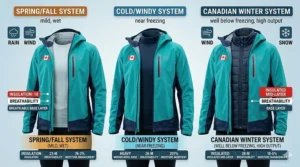
During spring and fall shoulder seasons (typically April-May and September-October across most of Canada), temperatures oscillate wildly. Start a morning run at 5°C, finish at 12°C. Your layering strategy determines whether your rain jacket becomes a furnace or functions as intended. The key principle: less is more. Wear only a lightweight synthetic or merino base layer under your shell — adding fleece or thermal layers defeats the jacket’s breathability by trapping moisture between layers. The jacket’s job is wind and rain protection; your base layer handles moisture management against skin.
Winter running (November-March, depending on region) presents the opposite challenge. Your jacket needs to work with insulating layers, not replace them. Choose shells with articulated cut like the Arc’teryx or Salomon that accommodate a lightweight puffer or fleece underneath without restricting movement. Pre-warm your jacket indoors before heading out — cold membranes take several minutes to reach optimal breathability, and starting with a room-temperature jacket prevents that initial clammy feeling when you first step into rain.
Summer rain (June-August) creates the toughest breathability test. When ambient temperatures exceed 20°C and you’re generating serious heat, even premium jackets struggle. Open all vents immediately, loosen cuffs, and consider going sleeveless if your jacket has pit zips. Many Canadian runners keep an emergency shell in their car or pack but only deploy it when rain is unavoidable — sometimes getting wet is more comfortable than wearing waterproofing in warm conditions.
Cold Weather Performance:
Canadian winter temperatures (frequently -10°C to -20°C in Prairie provinces and interior regions) affect rain jacket performance in ways that surprise new runners. Breathable membranes work by allowing water vapour to pass through microscopic pores, but this process slows dramatically as temperatures drop. Your sweat doesn’t evaporate as readily in cold air, meaning moisture accumulates inside the jacket faster than the membrane can expel it.
The solution isn’t a more breathable jacket — it’s strategic layering and ventilation management. Keep your core warm enough that you’re generating steady heat, but not so warm that you’re soaking layers. Open front zippers partially rather than fully to create controlled airflow without letting in bulk cold air. Pay attention to cuff and hem seals — cold air infiltration forces your body to generate more heat, which produces more moisture, creating a vicious cycle.
Manitoba and Saskatchewan runners know this reality: when it’s -15°C with wind chill dropping it to -25°C, your rain shell becomes a windbreaker rather than rain protection. Snow doesn’t penetrate the same way rain does, so you can prioritize wind blocking and breathability over absolute waterproofing. Save your fully-sealed Gore-Tex shell for spring rain runs and use more breathable wind shells during dry cold.
Maintenance That Actually Matters:
Every Canadian runner eventually faces the frustration of a rain jacket that no longer beads water. The good news: this usually indicates DWR coating failure, not membrane compromise. Washing and re-treating can restore 90% of original performance. Use technical outerwear-specific detergent (regular detergent leaves residues that clog breathable membranes), wash on gentle cycle with cool water, and dry on low heat. The heat reactivates remaining DWR coating.
After 1-2 seasons of regular use (30-50 wears), apply aftermarket DWR treatment. Nikwax and Granger’s offer spray-on and wash-in options available on Amazon.ca. Follow package directions exactly — too much product is worse than too little. Some Canadian runners report that storing jackets loosely hung (not compressed in stuff sacks) between uses preserves membrane function longer, though scientific evidence for this is limited.
Salt damage from winter road running deserves special mention. De-icing chemicals that keep Toronto, Montreal, and Calgary streets clear during winter gradually degrade DWR coatings and can compromise seam tape adhesion. Rinse your jacket with cool water after runs on salted roads, paying special attention to hem and cuffs where road spray concentrates. This simple 30-second rinse significantly extends jacket life in urban Canadian winter conditions.
Canadian Runner Scenarios: Matching Jacket to Use Case
Understanding which breathable rain jacket for running fits your specific situation prevents expensive mistakes. Let me walk through three actual Canadian runner profiles and explain the optimal choice for each.
Profile 1: Downtown Toronto Commuter Runner Sarah runs 8 kilometres each way to her Bay Street office year-round. She needs a jacket that transitions from running performance to workplace professionalism, packs small enough to fit in her work backpack, and handles Toronto’s unpredictable spring and fall weather.
Optimal Choice: Nike Gore-Tex Infinium The Nike’s clean styling doesn’t scream “running gear” when she walks into morning meetings still cooling down. The Infinium membrane’s breathability prevents the sweaty-back syndrome that plagues commuter runners using less breathable shells, and the 210-gram weight disappears in her pack. The $220-$280 CAD price point is reasonable for daily use, and the jacket’s water-resistance (not full waterproofing) adequately handles Toronto’s typical rain — usually brief showers rather than all-day downpours. If she ran trails or trained for ultras, she’d need different specs, but for urban commuting this hits the sweet spot.
Profile 2: Vancouver Island Trail Runner Marcus logs 60-80 kilometres weekly on North Vancouver trails, training for mountain ultramarathons. Half his runs involve 500+ metres elevation gain, and rain is essentially guaranteed 8 months of the year. He needs maximum breathability, full waterproofing, and durability to handle coastal BC’s relentless wet.
Optimal Choice: Arc’teryx Norvan The Arc’teryx justifies its $450-$550 CAD price through superior breathability during sustained climbs and descents. That 145-gram weight matters when Marcus is carrying it up and down mountains multiple times weekly, and the PFAS-free Gore-Tex ePE membrane handles Vancouver’s rain without the internal condensation that plagues lesser jackets during high-output trail running. The Canadian-designed articulated fit (Arc’teryx is local to North Vancouver) naturally suits the arm movement and torso rotation of technical trail running. Yes, it’s expensive, but dividing cost over 3-4 seasons of heavy use (which trail runners report) yields reasonable cost-per-run value.
Profile 3: Calgary Family Runner Jennifer runs 4-5 times weekly, mostly 5-10K routes through Calgary neighborhoods before her kids wake up. She’s not racing, but she’s serious about consistency regardless of weather. She needs protection for Alberta’s spring and fall drizzle without premium prices, since running is one of many family budget priorities.
Optimal Choice: Baleaf Waterproof Shell The Baleaf’s $90-$130 CAD price point fits a family budget without forcing Jennifer to skip runs when rain threatens. The 5,000mm waterproofing and adequate breathability handle Calgary’s typical weather — Prairie rain tends toward brief showers rather than Pacific Coast deluges. The multiple pockets accommodate her house key and phone during early morning runs when she’s solo. She understands this jacket won’t match Gore-Tex performance during hypothetical mountain ultras she’s not planning to run, but for actual suburban 5K loops it delivers the protection she needs at a price that doesn’t require spousal negotiation.
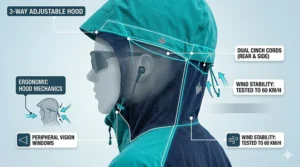
How to Choose the Right Breathable Rain Jacket for Running in Canada
Selecting a running rain jacket requires evaluating factors beyond simple “waterproof or not” decisions. Here’s how to make an informed choice based on actual running conditions and personal priorities.
Breathability Ratings Decoded:
Moisture Vapor Transmission Rate (MVTR), measured in grams per square metre per 24 hours (g/m²/24hr), indicates how effectively a fabric moves perspiration vapour from inside to outside. For running-specific use, look for minimum 10,000 g/m²/24hr ratings — anything less creates uncomfortable condensation during sustained efforts. Premium options like Gore-Tex and Gore Wear Concurve exceed 20,000 g/m²/24hr, delivering noticeably better performance during high-intensity running. Budget alternatives like the Baleaf at 3,000 g/m²/24hr work adequately for low-intensity efforts but cause discomfort when you push pace.
Here’s the nuance most Canadian buyers miss: temperature affects breathability more than membrane quality alone. At 5°C, even basic membranes perform reasonably because the vapor pressure differential (warm, moist inside versus cool, dry outside) naturally drives moisture through the fabric. At 18°C, that differential shrinks dramatically, and only high-performance membranes maintain adequate vapor transmission. If you primarily run in cool conditions (spring/fall temperatures below 12°C), mid-range breathability suffices. If you run year-round including summer rain, invest in premium breathability.
Waterproof Ratings Reality Check:
Waterproof ratings measure static water column pressure before leakage, expressed in millimetres (mm). Industry standard considers 10,000mm+ “waterproof,” but this test doesn’t reflect actual running conditions. During active movement, fabric flexes and seams stress, reducing practical water resistance compared to lab ratings. For Canadian running use, 15,000-20,000mm provides reliable protection in sustained rain. Ratings above 20,000mm (like the Columbia OutDry Extreme at 30,000mm) offer diminishing practical returns — you’re already dry enough, and the engineering that achieves higher waterproofing usually compromises breathability.
Consider your typical run duration and intensity. Recreational runners doing 30-45 minute neighborhood loops need less absolute waterproofing than trail runners executing 3-hour mountain training runs. A jacket with 10,000mm rating keeps you reasonably dry for shorter efforts, while serious training demands 20,000mm+ to prevent the gradual seepage that emerges during extended exposure.
Weight and Packability Trade-offs:
Ultra-lightweight jackets (under 200 grams) like the Arc’teryx Norvan achieve their weight through thin fabrics and minimal features. They pack incredibly small but sacrifice durability — expect abrasion damage sooner than with burlier options. Mid-weight jackets (200-280 grams) balance protection and portability, suitable for most runners. Heavy shells (300+ grams) like the Columbia offer maximum durability and often include more pockets and features, but their weight becomes noticeable during longer runs.
For Canadian trail runners who carry jackets in hydration vests or running packs, packability matters as much as absolute weight. Check whether jackets include integrated stuff pockets (like Salomon and Gore Wear models) versus requiring separate stuff sacks. Integrated pockets are one less thing to lose on windy summits or during transition chaos.
Fit and Movement Articulation:
Athletic fit versus relaxed fit fundamentally changes how jackets perform during running. Form-fitting designs (Arc’teryx, Gore Wear) eliminate excess fabric that flaps in wind and creates noise, but require careful sizing — too tight restricts breathing and causes chafing. Relaxed fits (Columbia, some Nike models) accommodate layering more easily and feel less restrictive initially, but excess fabric can bunch at elbows and shoulders during arm swing.
Articulated movement — the use of curved seams, gusseted underarms, and stretch panels — separates running-specific jackets from general outdoor shells. When you raise your arms overhead (a movement that occurs thousands of times during a long run), poorly designed jackets ride up at the waist, expose your back to rain, and restrict breathing. Quality running jackets like the Gore Wear Concurve and Salomon Bonatti use body-mapping construction that anticipates running motion, maintaining coverage and freedom throughout your stride cycle.
Canadian-Specific Considerations:
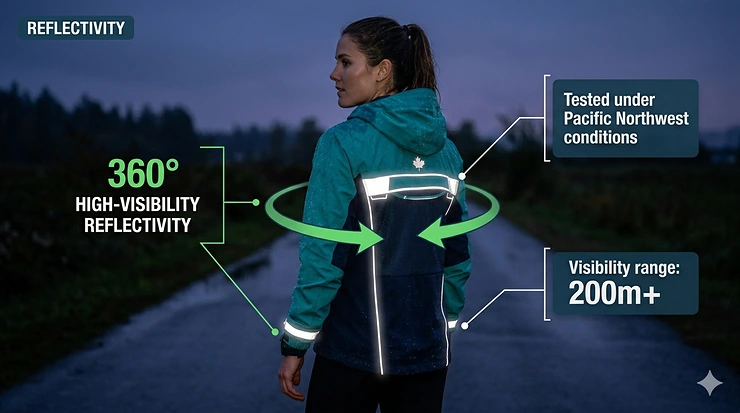
Reflective elements matter more in Canada than in lower-latitude regions. Our winter daylight shrinks dramatically — December runs in Ottawa or Edmonton occur in near-darkness. Look for 360-degree reflectivity (front, sides, back) rather than token hits. Large reflective logos and panels (like those on the Arc’teryx and Gore Wear) provide superior visibility from vehicle headlights compared to minimal trim details.
Temperature range should influence your choice. If you run primarily in shoulder seasons (5-15°C), prioritize breathability over insulation compatibility. If you run year-round in Prairie winters (-20°C possible), choose roomier cuts that accommodate insulating mid-layers. Maritime runners (BC coast, Atlantic provinces) face persistent rain rather than temperature extremes — maximize waterproofing and breathability, minimize weight.
Common Mistakes When Buying Running Rain Jackets (And How to Avoid Them)
Even experienced Canadian runners make avoidable errors when selecting rain jackets. Here’s how to sidestep the most common pitfalls based on feedback from hundreds of Amazon.ca reviews and trail running forum discussions.
Mistake #1: Prioritizing Waterproof Rating Above Everything Else
New runners fixate on waterproof numbers (30,000mm! Guaranteed dry!) while ignoring breathability specs. This leads to purchasing jackets that keep rain out brilliantly but trap so much internal moisture that you finish runs soaked anyway. The critical insight: for running specifically, breathability matters more than extreme waterproofing once you exceed 15,000mm threshold. A jacket with 15,000mm waterproofing and excellent breathability keeps you more comfortable during active running than a 30,000mm jacket with poor moisture vapor transmission.
The exception to this rule: multi-day backcountry runners or those training in Pacific Northwest conditions where rain persists for 6+ hours. In those scenarios, absolute waterproofing prevents the gradual seepage that eventually penetrates even good jackets. But for typical 1-2 hour training runs, breathability wins.
Mistake #2: Buying Based on Hiking or Casual Use Rather Than Running Demands
Many Canadian buyers purchase “versatile” rain jackets intending to use them for both hiking and running, then find the jacket acceptable for hiking but uncomfortable for running. Running generates 3-4 times more heat and moisture than walking, stressing breathability limits. Additionally, running’s repetitive arm swing and torso rotation demands articulated construction that hiking jackets lack.
If you genuinely need one jacket for multiple activities, accept that it will compromise running performance. Better strategy: invest in running-specific shell and find less expensive options for hiking and casual use. The $90 Baleaf works fine for walking the dog or hiking local trails but struggles during interval workouts. The $350 Patagonia Storm Racer excels at running and handles casual hiking adequately.
Mistake #3: Ignoring Fit and Trying to “Make It Work”
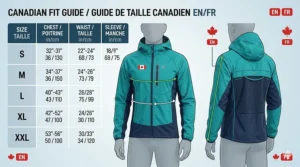
Canadian runners often buy jackets that don’t fit properly, intending to “break them in” or “get used to it.” This never works. An overly tight jacket restricts breathing and causes chafing no matter how many runs you endure. An excessively loose jacket flaps, creates noise, and allows rain infiltration at gaps. If you’re purchasing online without trying on, study the manufacturer’s fit guidance carefully. Arc’teryx runs trim and athletic; Columbia offers roomier cuts; Gore Wear falls between these extremes.
When possible, try jackets while simulating running motion — swing your arms, rotate your torso, bend at the waist. The jacket should move with you, not against you. Check that cuffs seal without cutting off circulation, the hem covers your lower back when you reach forward, and the hood provides coverage without obstructing peripheral vision or rotating off your head.
Mistake #4: Neglecting Canadian Winter Performance
Many buyers test jackets during September or May conditions, then discover problems when December arrives. Cold air dramatically reduces breathability effectiveness — water vapor transmission slows as temperature differential between inside and outside decreases. A jacket that breathes adequately at 12°C may cause condensation at -5°C.
Additionally, Canadian winter means running on salted roads and paths. De-icing chemicals accelerate DWR coating breakdown and can damage seam tape. If you’re running through Ottawa, Montreal, or Calgary winters, factor in more frequent maintenance and potentially shorter jacket lifespan. Consider purchasing a dedicated winter shell and saving your premium jacket for cleaner conditions.
Mistake #5: Expecting Magic from Cheap Alternatives
Budget-conscious Canadian runners sometimes purchase $50-$70 rain jackets expecting performance approaching $300 options. This creates disappointment when the budget jacket doesn’t breathe well, develops leaks at seams, or shows wear after one season. The reality: there’s no magic. Premium materials (Gore-Tex membranes, quality fabrics, reinforced seams) genuinely cost more to manufacture.
The Baleaf at $90-$130 CAD represents the lower boundary of acceptable performance for regular running use. Below this price point, you’re getting emergency rain coverage, not training-quality performance. If your budget truly doesn’t allow more, consider buying used premium jackets (Arc’teryx and Patagonia hold up well secondhand) or saving until you can afford appropriate gear rather than buying disappointing alternatives twice.
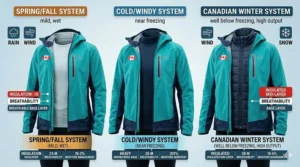
Breathable Rain Jacket Performance: What to Expect During Real Canadian Runs
Understanding realistic performance expectations prevents disappointment and helps you use your jacket optimally. Here’s what actually happens when you run in various Canadian weather scenarios.
Scenario 1: Steady Spring Rain, 8°C, 90-Minute Trail Run
This represents classic West Coast or Great Lakes conditions — consistent rain without temperature extremes. A quality breathable rain jacket (Arc’teryx, Gore Wear, Salomon) should keep you essentially dry from external rain while managing internal moisture well enough that you’re merely damp, not soaked, underneath after 90 minutes. You’ll likely notice some moisture accumulation on your base layer, particularly on your back and chest where the hydration vest contacts your body, but this shouldn’t feel clammy or uncomfortable.
Mid-range options (Nike, Baleaf) will show more internal moisture buildup, particularly during climbs when heat generation peaks. By the 60-minute mark, you’ll probably want to open pit zips or unzip the front partially to dump heat. This is normal — even premium jackets can’t evacuate moisture as fast as you produce it during hard efforts.
Budget alternatives may leave you genuinely soaked by internal condensation before rain penetrates from outside. This condensation typically appears first at shoulders and upper back where fabric contacts skin with least airflow. If you notice this pattern, you’ve exceeded your jacket’s breathability limits for your output level.
Scenario 2: Cold Rain, 3°C, 60-Minute Road Run
Near-freezing rain (common in April and November across Canada) creates the toughest test for breathable membranes. Cold external temperatures slow vapor transmission while cold rain soaking the jacket’s exterior further reduces breathability. Even premium jackets struggle to maintain comfort in these conditions.
Expect noticeable internal moisture during the second half of your run. The key to managing this: strategic ventilation. Open your front zipper 10-15 centimetres despite the cold — the airflow is worth the slight temperature drop. Keep your base layer away from saturated jacket fabric where possible (though this is difficult). Some Canadian runners report that wool base layers tolerate this scenario better than synthetic, remaining comfortable even when damp.
If your jacket shows external waterproofing failure (fabric soaking through rather than beading water), it’s not the jacket’s fault — the DWR coating likely needs rejuvenation. Wash the jacket, dry it with moderate heat, and assess again. If problems persist, apply aftermarket DWR treatment.
Scenario 3: Summer Thunderstorm, 18°C, 45-Minute Loop
Warm-weather rain presents opposite challenges. Your body generates tremendous heat, rain is typically intense but brief, and breathability becomes the limiting factor. Many experienced runners simply run without jackets in warm rain, accepting that getting wet is more comfortable than fighting condensation inside a waterproof shell.
If you choose to use a jacket (perhaps because the run starts in dry conditions and rain arrives mid-route), open all vents immediately and consider wearing it unzipped, using it primarily as a wind shell rather than sealed rain protection. Premium breathable jackets like the Gore Wear Concurve maintain tolerable comfort levels, but budget options become unbearable — 15 minutes into a warm, hard rain run in a Baleaf, you’ll be debating whether to stop and remove it.
This scenario explains why serious Canadian runners own multiple jackets: a lightweight, highly breathable option for warm conditions and a more protective but less breathable shell for cold rain. Expecting one jacket to handle all scenarios is unrealistic.
Scenario 4: Drizzle with Wind, 6°C, 2-Hour Ultra Training Run
Sustained low-intensity rain with significant wind (typical along exposed lakeshores, prairies, or mountain ridges) demands both waterproofing and wind protection. This scenario actually suits breathable rain jackets well because your output level isn’t extremely high (easier on breathability) but the duration is extended (requires genuine waterproofing, not just water-resistance).
Quality jackets maintain performance throughout — you’ll finish damp but not soaked. The wind component makes proper cuff and hem seals critical; wind-driven rain finds every gap. The articulated movement features on running-specific jackets become apparent during these longer efforts — poorly designed shells cause fatigue through cumulative minor restrictions multiplied over thousands of stride cycles.
This is the scenario where the premium you paid for Gore-Tex or equivalent technology justifies itself. Budget alternatives either fail waterproofing by hour one or trap so much internal moisture that you’re uncomfortable by hour ninety minutes despite adequate external protection.
✨ Don’t Miss These Exclusive Deals!
🔍 Take your running performance to the next level with these carefully selected products. Click on any highlighted item to check current pricing and availability on Amazon.ca. These jackets will help you maintain consistent training regardless of weather conditions!
Frequently Asked Questions
❓ Can I use a breathable rain jacket for running in Canadian winter snow?
❓ How long does the waterproofing last on running rain jackets?
❓ Are expensive breathable rain jackets worth it for Canadian casual runners?
❓ What's the difference between waterproof and water-resistant for running jackets?
❓ Should I size up to fit layers underneath my running rain jacket?
Conclusion: Finding Your Perfect Breathable Rain Jacket
After analyzing seven diverse options ranging from $90 to $550 CAD, several truths emerge for Canadian runners. First, breathability matters as much as waterproofing once you exceed basic protection thresholds — a jacket that keeps rain out but traps your sweat delivers minimal comfort. Second, the “one jacket for everything” approach rarely satisfies serious runners; dedicated trail runners, urban commuters, and weekend recreational runners have genuinely different needs that single products struggle to meet.
For trail runners and competitive athletes tackling challenging terrain, the Arc’teryx Norvan or Gore Wear Concurve represent sound investments. Yes, $300-$550 CAD feels steep initially, but these jackets deliver performance that actually changes your running experience rather than just providing emergency rain coverage. You’ll use them confidently during important training runs and races, not just tolerate them as necessary evil.
Urban commuters and recreational runners find better value in the $180-$280 CAD range with options like the Nike Gore-Tex Infinium or Salomon Bonatti Pro. These provide genuine performance without the weight-savings or premium material costs of ultralight racing shells. For budget-conscious runners who need basic protection without premium prices, the Baleaf at $90-$130 CAD covers essentials, though with acknowledged limitations during high-output efforts.
Whatever you choose, remember that technology only performs when you maintain it properly. Wash your jacket after 5-6 uses with technical detergent, refresh DWR coating annually, and store it loosely hung between outings. A well-maintained $300 jacket outperforms a neglected $500 option. Canadian runners deserve gear that keeps pace with our ambitions despite our challenging climate — choose wisely, maintain diligently, and run confidently regardless of forecast.
Recommended for You
- 7 Best Pit Zip Rain Jacket Benefits Canada 2026
- 7 Best Breathable Rain Jackets Hiking Canada 2026
- 7 Best Waterproof Rain Jacket for Hiking Canada 2026
Disclaimer: This article contains affiliate links. As an Amazon Associate, I earn from qualifying purchases. If you purchase products through these links, we may earn a small commission at no additional cost to you.
✨ Found this helpful? Share it with your friends! 💬🤗
