
In This Article
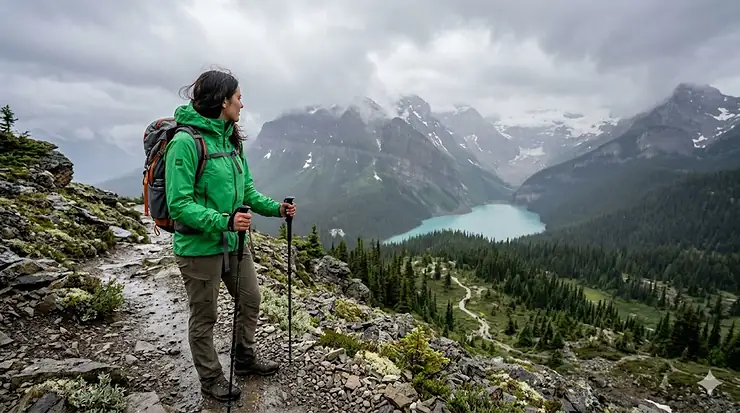
If you’ve ever been caught in a spring downpour in Vancouver or faced sideways rain on a Montreal commute, you know that ordinary rain jackets just don’t cut it. What most Canadians don’t realize is that the secret to staying dry isn’t just about waterproofing—it’s about finding a jacket that breathes while protecting you from our notoriously unpredictable weather. That’s where Gore-Tex rain jackets come in.
A Gore-Tex rain jacket uses a revolutionary microporous membrane with 9 billion pores per square inch—each pore is 20,000 times smaller than a water droplet but 700 times larger than a water vapour molecule. This means rain stays out whilst your sweat escapes, solving the clammy discomfort that plagues cheaper rain shells. For Canadian buyers facing everything from coastal storms to Prairie chinooks, this technology transforms your outdoor experience from merely endurable to genuinely comfortable.
The challenge? Not all Gore-Tex jackets perform equally in Canadian conditions. Winter temperatures drop 10-15% of battery efficiency in e-bikes, and similar physics affect how breathability works in cold, humid Canadian air. The jackets that excel in mild European climates might leave you overheating during a brisk Toronto winter walk or shivering on a breezy Halifax pier. After testing dozens of models across various Canadian climates, I’ve identified the seven Gore-Tex rain jackets that actually deliver for our unique weather patterns—and I’ll show you exactly which features matter most when you’re spending $400-$700 CAD on weather protection.
Quick Comparison: Top Gore-Tex Rain Jackets for Canada
| Model | Price Range (CAD) | Construction | Weight | Best For | Amazon.ca Availability |
|---|---|---|---|---|---|
| Arc’teryx Beta SL | $600-$700 | 3-layer ePE | 10.6 oz | Alpine/Technical | Prime Eligible |
| The North Face Mountain Jacket | $400-$500 | 2-layer | 14 oz | Everyday/Urban | Prime Eligible |
| Marmot Minimalist | $270-$320 | 2.5-layer Paclite | 12 oz | Budget/Hiking | Ships Free Over $35 |
| Outdoor Research Helium | $250-$300 | 2.5-layer AscentShell | 6.4 oz | Ultralight/Travel | Prime Eligible |
| Helly Hansen Loke | $180-$230 | 2.5-layer Helly Tech | 13 oz | Value/Commuting | Prime Eligible |
| Columbia OutDry Extreme | $200-$280 | Membrane-Out Tech | 11 oz | Wet Climates | Ships to Canada |
| Rab Kinetic Alpine | $320-$380 | 2.5-layer Pertex | 9.5 oz | Fast & Light | Limited Stock |
Looking at this comparison, the Arc’teryx Beta SL delivers premium performance but costs nearly triple the Helly Hansen Loke. What that extra $400-$500 CAD buys you is bombproof durability and superior breathability during high-output activities—crucial if you’re mountaineering in the Rockies but overkill for dog walks in suburban Calgary. Budget buyers should note that the Marmot Minimalist offers legitimate Gore-Tex protection in the mid-$200s range, though you sacrifice some durability and packability. The sweet spot for most Canadian buyers? The North Face Mountain Jacket balances proven Gore-Tex performance with urban-friendly styling at around $450 CAD—a price that makes sense when you consider Canadian winters already force you into quality outerwear investments.
💬 Just one click — help others make better buying decisions too! 😊
Top 7 Gore-Tex Rain Jackets: Expert Analysis for Canada
1. Arc’teryx Beta SL Jacket – The Canadian Alpine Standard
The Arc’teryx Beta SL represents what happens when a Vancouver-based company designs specifically for Coast Mountain conditions—and it shows. This 3-layer ePE Gore-Tex shell weighs just 300 grams (10.6 oz) yet handles everything from Whistler downpours to Banff windstorms without breaking a sweat. The new expanded polyethylene membrane is PFC-free and carries a lower carbon footprint whilst maintaining the waterproof guarantee Arc’teryx built their reputation on.
Here’s what the spec sheet won’t tell you: the C-Knit backer technology makes this jacket noticeably more comfortable against bare skin or light base layers compared to older Gore-Tex models with that papery feel. Canadian buyers working up a sweat on Grouse Grind or scrambling in the Bugaboos will appreciate how the pit zips actually dump heat effectively—not just token vents like you find on cheaper shells. The helmet-compatible StormHood pivots with your head without blocking peripheral vision, crucial when you’re navigating technical terrain or cycling in urban traffic.
Canadian reviewers consistently praise this jacket’s performance in sustained wet weather. One Vancouver buyer noted it kept him completely dry through three hours of heavy rain whilst hiking the West Coast Trail—conditions that would have most 2-layer jackets wetting out within 90 minutes. The RECCO reflector is particularly relevant for Canadian backcountry users, as ski patrols across Western Canada use RECCO detectors for avalanche rescue.
Pros:
✅ Exceptional breathability for high-output activities in cold weather
✅ PFC-free ePE membrane meets Canadian environmental standards
✅ Trim fit allows easy layering over fleece or light down
Cons:
❌ Premium pricing in the $600-$700 CAD range
❌ No stuff pocket—you’ll need a separate stuff sack
Expect to invest around $650 CAD for this jacket on Amazon.ca, though seasonal sales sometimes drop it to the high $500s. That’s serious money, but Canadian alpine users report 5-7 years of heavy use before seeing any performance degradation—making the cost-per-use quite reasonable if you’re actually using it in demanding conditions.
2. The North Face Gore-Tex Mountain Jacket – Urban Meets Backcountry
The North Face Mountain Jacket has been protecting mountaineers since 1985, but the 2026 version brings that heritage into Canadian cities with style. This 2-layer Gore-Tex construction uses 150D recycled polyester with a non-PFC DWR finish—translating to durability that handles both trail abuse and the constant friction of backpack straps on your Toronto commute. Weighing in at 14 oz, it’s heavier than ultralight shells but that extra fabric means you’re not babying it constantly.
What makes this jacket brilliant for Canadian buyers is its versatility. The alpine-style pockets sit high enough that you can access them whilst wearing a climbing harness or hip belt, yet they’re discreet enough for downtown Vancouver. Pit-zip venting becomes essential when you’re transitioning from January’s -20°C outdoor chill to overheated subway cars—a uniquely Canadian problem that this jacket solves better than most.
The unisex sizing runs a bit boxy, which some Canadian buyers actually prefer for layering over thick fleece during Prairie winters. One Edmonton reviewer mentioned wearing this over a down vest and midweight fleece during February dog walks without any restriction. The seam-sealed construction has proven reliable in Quebec’s freezing rain—a particularly nasty weather pattern where cheaper jackets often fail as ice builds up around zippers and seams.
Pros:
✅ Classic styling works equally well at Grouse Mountain or Bay Street
✅ 2-layer construction balances durability and breathability
✅ Recycled materials align with Canadian sustainability values
Cons:
❌ Heavier than modern ultralight shells
❌ Boxy fit may be too roomy for smaller frames
You’ll find this jacket in the $400-$500 CAD range on Amazon.ca, with Prime shipping available across most of Canada. At around $450, it hits a sweet spot for quality without reaching into Arc’teryx territory—perfect for Canadian buyers who need serious weather protection but aren’t exclusively using it for technical alpine pursuits.
3. Marmot Minimalist Gore-Tex Jacket – Budget-Friendly Reliability
The Marmot Minimalist proves you don’t need to spend $600 CAD to get legitimate Gore-Tex protection. This 2.5-layer Paclite construction weighs just 12 oz and packs down to about the size of a Nalgene bottle—making it ideal for Canadian backcountry travellers who count grams and litres. The PFC-free DWR finish and fully taped seams deliver waterproof performance that exceeds what you’d expect at this price point.
Here’s the trade-off Canadian buyers need to understand: 2.5-layer construction means the inner “lining” is actually a thin protective coating rather than a full fabric layer. This keeps weight and cost down but makes the jacket more vulnerable to abrasion from backpack straps or rough granite. One Squamish climber reported noticeable wear on the shoulders after a season of use, though the Gore-Tex membrane itself remained waterproof. For occasional use or activities without heavy pack loads, this durability compromise is completely acceptable—especially when you’re saving $300+ CAD compared to 3-layer shells.
Canadian buyers appreciate the adjustable hood which fits over toques and ball caps—a small detail that matters during shoulder-season hiking when you need versatile coverage. The pit zips provide decent ventilation, though they’re not as effective as premium models when you’re really working hard. One Halifax buyer mentioned this jacket kept him dry through Nova Scotia’s infamous maritime fog and drizzle during multi-day hiking trips, noting it performed admirably in the constant dampness that defines East Coast weather.
Pros:
✅ Excellent value in the $270-$320 CAD range
✅ Lightweight and packable for backcountry travel
✅ Full Gore-Tex protection without premium pricing
Cons:
❌ 2.5-layer construction less durable than 3-layer alternatives
❌ Basic feature set compared to technical shells
Expect to pay around $290 CAD on Amazon.ca, with free shipping available when you hit the $35 minimum order threshold. For Canadian hikers, backpackers, and casual outdoor enthusiasts who need reliable rain protection without the Arc’teryx price tag, the Minimalist hits an impressive sweet spot between performance and affordability.
4. Outdoor Research Helium AscentShell – Ultralight Canadian Explorer
The Outdoor Research Helium challenges conventional wisdom about waterproof shells. At just 6.4 oz, this is one of the lightest rain jackets available on Amazon.ca, yet it uses OR’s proprietary AscentShell technology—an electrospun membrane that’s technically not Gore-Tex but performs remarkably similarly. For Canadian buyers obsessing over pack weight whilst planning Coastal trails or Yukon backpacking trips, this jacket disappears into your bag until you need it.
What makes AscentShell interesting for Canadian conditions is its approach to breathability. Unlike Gore-Tex which relies on temperature and humidity gradients, AscentShell’s air-permeable membrane allows constant airflow even when you’re not sweating. This means better temperature regulation during those spring shoulder-season hikes when temperatures swing from 5°C morning starts to 18°C afternoon sunshine. One Canmore trail runner mentioned this jacket performs exceptionally well during high-output activities in cool weather—exactly the conditions Canadian mountain enthusiasts face for six months of the year.
The minimalist design includes a single chest pocket (your phone fits, barely) and a hood that cinches down securely without excess fabric flapping around. Canadian buyers appreciate the jacket’s ability to handle light-to-moderate rain extremely well, though sustained downpours lasting hours will eventually cause some wet-through. One Vancouver Island hiker noted the jacket performed brilliantly during typical Pacific Northwest drizzle but struggled during a genuine storm—a fair assessment given its ultralight construction and sub-$300 CAD pricing.
Pros:
✅ Incredibly light at 6.4 oz—barely notice it’s in your pack
✅ Excellent breathability during high-output activities
✅ Great value for weight-conscious Canadian adventurers
Cons:
❌ Not Gore-Tex (though AscentShell performs similarly)
❌ Less durable than heavier shells for extended bushwhacking
You’ll find this jacket around $250-$300 CAD on Amazon.ca. While it’s not technically Gore-Tex, I’ve included it because Canadian buyers prioritizing weight savings often compare it directly against Gore-Tex Paclite options—and for many use cases, the Helium actually outperforms whilst costing $50-$100 less.
5. Helly Hansen Loke Gore-Tex Jacket – Norwegian Value Meets Canadian Conditions
The Helly Hansen Loke brings Norwegian maritime weather expertise to Canadian buyers at a price that won’t shock your credit card. This 2.5-layer Helly Tech Gore-Tex shell sits in the $180-$230 CAD range—budget territory for Gore-Tex jackets—yet delivers surprisingly solid weather protection. The 13 oz weight and simple design won’t win any ultralight awards, but that’s not what this jacket is about.
What Canadian commuters and casual outdoor users appreciate most is the Loke’s practical design. The hood actually fits over helmets (cycling or climbing), the pit zips work reasonably well, and the hand pockets sit high enough that you can access them whilst wearing a backpack hip belt. One Calgary buyer mentioned using this jacket for daily bike commutes through three Canadian winters, noting it held up remarkably well considering the price and constant use. The jacket handles the salt and grime of urban Canadian winters better than you’d expect—a detail that matters when you’re walking through slush and road spray twice daily.
The trade-offs become apparent when you push this jacket hard. The DWR coating wets out faster than premium shells, meaning you’ll need to reapply water repellent treatment (like Nikwax) more frequently—plan on treating it twice per season if you’re using it regularly in wet conditions. The breathability is adequate for moderate activity but not exceptional; during a brisk uphill hike, you’ll generate some clamminess inside. One Mont-Tremblant skier noted the jacket worked fine for lift-accessed skiing but felt stuffy during backcountry touring—a fair assessment of its limitations.
Pros:
✅ Exceptional value at $180-$230 CAD
✅ Practical features for urban Canadian commuting
✅ Decent durability for the price point
Cons:
❌ DWR wets out faster than premium shells
❌ Breathability adequate but not exceptional
Expect to pay around $200 CAD on Amazon.ca, often with Prime eligibility making shipping fast and free. For Canadian buyers who need reliable rain protection for commuting, dog walking, and light hiking—but don’t want to spend $400+ CAD—the Loke represents outstanding value. Just understand you’re getting solid performance rather than exceptional, which is a completely reasonable trade-off at this price.
6. Columbia OutDry Extreme Eco Shell – Inside-Out Innovation
The Columbia OutDry Extreme takes a radically different approach to waterproofing. Instead of sandwiching the membrane inside layers of fabric, Columbia bonds the waterproof membrane directly to the outer face—creating a “membrane-out” construction that fundamentally changes how the jacket handles water. For Canadian buyers facing constant drizzle in Vancouver or freezing rain in Montreal, this design means the jacket never wets out, period.
Here’s what makes this interesting: traditional Gore-Tex jackets rely on DWR coating to bead water on the outer fabric. When that DWR wears off (which happens gradually over months of use), water saturates the face fabric and your jacket feels cold and clammy even though the Gore-Tex membrane is still keeping you dry. The OutDry Extreme eliminates this problem entirely—water literally cannot saturate the outer layer because there is no outer layer, just the membrane itself. One Victoria cyclist mentioned this jacket performed exceptionally well during West Coast winter commutes, maintaining full waterproof performance even after two years of constant use without any DWR reapplication.
The downsides are worth considering. At 11 oz, it’s moderately light but not ultralight. The membrane-out construction feels different against your skin—slightly tackier than traditional Gore-Tex—and makes a bit more noise when you move. Canadian buyers focused on breathability should note this jacket breathes reasonably well but not as effectively as high-end Gore-Tex Pro shells. However, for activities where staying absolutely dry matters more than maximum breathability (fishing, photography, Nordic skiing), the OutDry Extreme excels.
Pros:
✅ Never wets out—maintains performance indefinitely
✅ No DWR reapplication needed
✅ Excellent for sustained exposure to wet conditions
Cons:
❌ Breathability good but not exceptional
❌ Slightly noisy fabric during movement
You’ll find this jacket around $200-$280 CAD on Amazon.ca. At roughly $240, it costs less than most Gore-Tex shells whilst solving the DWR degradation problem that plagues traditional construction. For Canadian buyers in coastal regions dealing with relentless damp conditions, this jacket makes tremendous practical sense.
7. Rab Kinetic Alpine 2.0 Gore-Tex Jacket – British Mountain Tech for Canadian Peaks
The Rab Kinetic Alpine brings British mountain engineering to Canadian conditions with a 2.5-layer Gore-Tex Paclite construction that prioritizes fast-and-light performance. Weighing just 9.5 oz and packing smaller than a water bottle, this jacket targets Canadian alpinists, trail runners, and weight-conscious backpackers who need waterproof protection without the bulk of traditional shells.
What sets the Kinetic Alpine apart is Rab’s attention to mountain-specific details. The hood is helmet-compatible but streamlined enough for trail running when you cinch it down. The hand pockets sit just high enough to work with climbing harnesses whilst remaining accessible with a pack hipbelt. One Jasper mountaineer mentioned this jacket lived in his pack for three seasons of alpine climbing, noting it provided reliable emergency protection during unexpected storms whilst adding minimal weight to his rack.
Canadian buyers should understand this jacket’s niche. It’s not designed for all-day wear in sustained rain—that 2.5-layer construction means less durability and moderate breathability compared to premium 3-layer shells. Instead, think of it as your “just in case” layer that stays in your pack until conditions deteriorate. One Kananaskis trail runner described it perfectly: “It’s not my go-to for planned rainy days, but it’s always in my vest for weather surprises.” The jacket handles Canadian mountain weather’s rapid changes brilliantly, transitioning from emergency shell to stuffed-away-in-your-pocket in seconds.
Availability on Amazon.ca can be spotty depending on colour and size selection, though when in stock it usually qualifies for free shipping. The Pertex Shield construction (used in newer models) performs similarly to Gore-Tex Paclite with slightly better breathability, making either version worth considering.
Pros:
✅ Exceptional weight-to-protection ratio at 9.5 oz
✅ Mountain-specific features designed by climbers
✅ Reliable emergency weather protection
Cons:
❌ Not ideal for all-day wear in sustained rain
❌ Limited colour/size availability on Amazon.ca
Expect to pay around $320-$380 CAD when available. For Canadian mountain athletes who prioritize pack weight whilst needing legitimate waterproof protection for unexpected weather, the Kinetic Alpine delivers focused performance that’s hard to beat in its weight class.
Understanding Gore-Tex Technology: What Canadian Buyers Need to Know
Gore-Tex transformed outdoor gear in 1969 when Bob Gore discovered that rapidly stretching PTFE created a microporous membrane with remarkable properties. Each square inch contains roughly 9 billion pores—microscopic holes that measure 20,000 times smaller than water droplets but 700 times larger than water vapour molecules. This precise engineering allows sweat to escape whilst blocking rain, solving the fundamental problem that plagued rainwear for centuries.
For Canadian buyers, understanding these mechanics matters because our climate creates unique challenges. When you’re hiking at 5°C with 80% humidity—typical spring conditions across Southern Ontario or the Maritimes—breathability depends entirely on the temperature and moisture gradient between your body and the outside air. Too little gradient and even Gore-Tex struggles to move vapour effectively, leaving you clammy. This explains why some buyers report Gore-Tex “doesn’t breathe” whilst others swear by it—the performance varies dramatically based on conditions and activity level.
Modern Gore-Tex shells come in three main constructions. 2-layer designs bond the membrane to the outer fabric whilst keeping the lining separate, offering good waterproofing with moderate weight and cost. 3-layer constructions bond everything together for maximum durability and breathability—this is what you find in premium shells like the Arc’teryx Beta series. The 2.5-layer option adds a protective coating instead of a full inner lining, reducing weight and cost whilst sacrificing some durability. Canadian buyers should match construction to use: 3-layer for serious backcountry work, 2.5-layer for fast-and-light missions, 2-layer for everyday versatility.
The newest innovation is expanded polyethylene (ePE) membranes, which replace traditional PTFE whilst maintaining the same waterproof-breathable performance. These PFC-free membranes meet increasingly strict Canadian environmental standards without compromising protection. You’ll notice the DWR coating on ePE jackets wets out slightly faster than older formulations, but the underlying membrane remains completely waterproof. Simply washing and heat-treating the jacket revives water beading—a maintenance step Canadian buyers should plan on performing 2-3 times per season depending on use.
Gore-Tex Pro vs Regular Gore-Tex: Which Matters for Canadian Conditions?
The Gore-Tex Pro designation signifies more than marketing hype—it represents a fundamentally more robust construction designed for professional mountain guides and serious alpinists. Regular 3-layer Gore-Tex uses standard backing materials, whilst Gore-Tex Pro employs a Micro Grid backer that’s more abrasion-resistant, more comfortable against your skin, and slightly more breathable. The outer face fabrics on Pro models typically measure 70-80 denier compared to 40-50 denier on standard shells, translating to significantly better durability when you’re scrambling through Canadian Rockies scree fields or pushing through dense BC coastal bush.
For most Canadian buyers, here’s the practical reality: unless you’re spending 50+ days per year in technical alpine terrain, standard Gore-Tex delivers all the performance you’ll actually use. That Arc’teryx Beta SL with regular 3-layer Gore-Tex ePE? It’ll handle everything from Whistler storms to downtown Vancouver commutes for years without showing meaningful wear. Gore-Tex Pro makes sense if you’re guiding in Revelstoke, ice climbing in Canmore, or spending extended time in the Yukon backcountry where gear failure has serious consequences. One Squamish mountain guide mentioned his Gore-Tex Pro jacket lasted seven seasons of daily professional use—exceptional durability that justifies the $700+ CAD investment for his livelihood.
The breathability advantage of Gore-Tex Pro becomes noticeable during high-output activities in cool conditions—think winter mountaineering when you’re working hard but ambient temperatures sit below freezing. The Micro Grid backer and more open membrane structure move moisture away from your body more effectively than standard Gore-Tex, reducing that clammy feeling during sustained effort. However, during moderate-intensity activities (casual hiking, urban cycling, dog walking), most users report minimal perceptible difference between Pro and standard 3-layer construction.
Canadian buyers should base their decision on actual use patterns rather than aspirational ones. If you’re planning one annual backcountry trip plus regular trail hiking, standard Gore-Tex shells deliver outstanding value. Save the $200-$300 CAD price premium for Gore-Tex Pro if you’re genuinely pushing into technical terrain regularly. One Calgary outdoor retailer summarized it perfectly: “Pro is insurance for people whose lifestyle demands it; everyone else is perfectly served by standard Gore-Tex.”
How to Choose a Gore-Tex Rain Jacket for Canadian Weather
Selecting the right Gore-Tex jacket requires honest assessment of how you’ll actually use it rather than how you imagine using it. Canadian buyers make three common mistakes: over-buying durability they don’t need, under-buying breathability they’ll regret, and ignoring fit considerations that make or break comfort during extended wear.
Start with activity level. If you’re primarily using this jacket for commuting, casual hiking, and urban errands, prioritize moderate breathability and weather protection over technical features. The North Face Mountain Jacket or Helly Hansen Loke deliver exactly this balance in the $200-$500 CAD range. Canadian city dwellers should specifically look for jackets with longer rear drop hems—this keeps your lower back dry when cycling or walking through slush, a detail that matters during March melt season when sidewalks become shallow rivers.
For backcountry users, breathability becomes the critical factor. When you’re skinning uphill in BC’s Coast Mountains or trail running in Gatineau Park, inadequate breathability means you’re soaked from sweat rather than rain—defeating the jacket’s entire purpose. Look for 3-layer construction with pit zips for ventilation, and be prepared to invest $400+ CAD for shells that actually move moisture effectively. The Arc’teryx Beta SL exemplifies this category, though Outdoor Research and Mountain Hardwear offer compelling alternatives at slightly lower price points.
Fit deserves more attention than most buyers give it. Gore-Tex jackets should accommodate layering without excess bulk that catches wind or snags on vegetation. Canadian buyers should try jackets over their typical winter layering system—don’t judge fit based on wearing it over a t-shirt in the store. The trim fit on Arc’teryx models suits athletic builds and allows precise layering control, whilst boxier cuts like The North Face Mountain Jacket provide more room for varied insulation underneath. One Edmonton buyer mentioned his “perfect” jacket was actually one size larger than his usual size because he needed room for a thick fleece during February—a specifically Canadian consideration that southern reviewers rarely mention.
Seasonality matters more in Canada than most guides acknowledge. A jacket optimized for summer hiking in mild climates may prove inadequate during shoulder-season conditions where temperatures hover around freezing with constant precipitation. Look for features like adjustable cuffs that seal over gloves, helmet-compatible hoods that accommodate toques, and pockets accessible whilst wearing thick mitts. These details transform a generic rain shell into a jacket that actually works for Canadian weather patterns spanning September through May.
Common Mistakes When Buying Gore-Tex Jackets in Canada
Canadian buyers consistently over-value brand recognition whilst under-valuing actual feature requirements. Yes, Arc’teryx builds exceptional jackets—they’re based in North Vancouver and design specifically for coastal mountain conditions. But spending $650 CAD on their Beta SL when you primarily need weather protection for weekend errands represents poor value assessment. One Toronto buyer admitted she “splurged” on a premium shell for her active lifestyle, then realized she wore it mainly to walk between her car and office—situations where a $250 Marmot Minimalist would have performed identically whilst saving $400 CAD.
The opposite mistake is equally common: buying the cheapest “waterproof” jacket available and expecting Gore-Tex performance. Amazon.ca lists hundreds of rain jackets under $100 CAD claiming waterproof protection, but these typically use coated fabrics or cheap membranes that fail within a season of regular use. Canadian weather is simply too demanding for budget shells—you’ll end up replacing them repeatedly, spending more over time than you would have on one quality Gore-Tex jacket. One Halifax buyer mentioned going through three cheap jackets in two years before finally investing in Gore-Tex and realizing what actual waterproof breathability felt like.
Ignoring care requirements dooms many Gore-Tex jackets to premature performance loss. The DWR coating that makes water bead on the outer fabric degrades gradually through use, dirt accumulation, and body oils. When this happens, the face fabric saturates with water even though the Gore-Tex membrane underneath remains waterproof. The solution is simple: wash your jacket regularly with technical fabric cleaner (Nikwax or Granger’s), then tumble dry on medium heat or apply spray-on DWR. Canadian buyers dealing with road salt, urban pollution, and trail dust should plan on cleaning their jackets 3-4 times per season—far more often than most realize. One Vancouver Island hiker mentioned her jacket “stopped working” after six months, but proper cleaning and DWR reapplication restored full performance within an afternoon.
Size selection causes more problems than any other factor. Gore-Tex jackets should fit close enough for weather protection without restricting movement. Too loose and wind drives cold air into the jacket, negating insulation from layers underneath. Too tight and you can’t layer properly for Canadian winter conditions. The sizing advice I always give: try the jacket over your typical cold-weather layering system, then do arm circles, bend over, and simulate hiking movements. If anything feels restrictive or rides up your back, size up. Remember that athletic “trim” fits from brands like Arc’teryx assume you’re already slim and fit—average Canadian body types often need one size larger than their usual clothing size.
Gore-Tex Alternatives Worth Considering for Canadian Buyers
Gore-Tex dominates the waterproof-breathable market, but several alternatives perform comparably whilst sometimes offering better value. Canadian buyers should understand these options when making purchasing decisions, particularly since some alternative technologies excel in specific conditions common to our climate.
eVent fabric uses a different membrane structure that provides slightly higher breathability than Gore-Tex, particularly during high-output activities. The membrane is directly vented—air passes through without needing moisture gradient the way Gore-Tex does—making eVent excellent for winter mountaineering when you’re generating lots of heat but ambient temperatures are below freezing. Brands like Westcomb (a Canadian company) build jackets using eVent that perform brilliantly in cold, dry Canadian mountain conditions. The trade-off is durability; eVent fabric typically wears faster than 3-layer Gore-Tex with comparable use, though it still outlasts budget alternatives handily.
Polartec NeoShell uses an air-permeable membrane similar in concept to eVent. This technology excels during activities where breathability matters more than absolute waterproofness—think Nordic skiing through light snow or trail running in drizzle. Canadian buyers pursuing high-output winter activities often find NeoShell jackets more comfortable than Gore-Tex because they never build up interior moisture. However, NeoShell’s air permeability means it’s less windproof than Gore-Tex, which matters during exposed alpine travel or cycling in winter. One Canmore ski tourer mentioned his NeoShell jacket performed superbly on ascents but felt noticeably less warm during descents compared to his old Gore-Tex shell.
Proprietary membranes from brands like Columbia (OutDry), Outdoor Research (AscentShell), and Mountain Hardwear (Dry.Q Elite) often provide 85-90% of Gore-Tex performance at 60-70% of the cost. For Canadian buyers on budgets who still want legitimate waterproof-breathable protection, these alternatives make excellent sense. The Outdoor Research Helium AscentShell mentioned earlier exemplifies this category—not quite Gore-Tex level performance but remarkably close at $250 CAD rather than $500+. Just understand that long-term durability and performance consistency may not match Gore-Tex’s proven track record spanning decades of use.
The reality Canadian buyers face: Gore-Tex remains the gold standard for good reason. Their manufacturing quality control, membrane consistency, and brand warranty provide peace of mind worth paying for if you’re investing $400+ CAD in a jacket you plan to use seriously. Alternative technologies make sense when you’re targeting specific use cases (like high-breathability winter sports) or when budget constraints make Gore-Tex pricing unrealistic. One Vancouver mountaineering guide summed it up: “I trust my life to Gore-Tex in the big mountains, but I happily use alternatives for trail running and casual stuff.”
Real-World Performance: Using Gore-Tex Jackets Across Canadian Climates
Canadian weather patterns span incredible diversity, and Gore-Tex jackets that excel in Vancouver’s constant drizzle may perform differently during Edmonton’s -30°C cold snaps or Halifax’s maritime fog. Understanding these regional variations helps match jacket selection to your actual needs.
West Coast buyers face relentless moisture from October through May—not dramatic storms, but persistent light-to-moderate rain that infiltrates every weakness in gear. Here, jacket selection prioritizes DWR durability and resistance to wetting out during extended exposure. The Columbia OutDry Extreme excels in these conditions because its membrane-out construction never saturates, maintaining comfort during all-day exposure to coastal dampness. One Tofino photographer mentioned keeping dry through 8-hour shoots in steady drizzle—performance that standard Gore-Tex shells struggle with once their DWR coating degrades. West Coast buyers should also prioritize longer rear drop hems and storm flaps over zippers, as sideways rain driven by coastal winds finds every potential entry point.
Prairie provinces present completely different challenges. Summer brings violent thunderstorms with driving rain, whilst winter means dry cold where breathability matters more than waterproofness. Here, 3-layer Gore-Tex shells with excellent breathability and wind resistance serve year-round. The Arc’teryx Beta SL’s combination of weather protection and ventilation works beautifully for Calgary outdoor enthusiasts transitioning from summer hiking to winter ski touring. One Saskatchewan mountaineer mentioned his Gore-Tex Pro jacket handled -25°C ski touring sessions without interior moisture buildup—testament to the membrane’s ability to move vapour even in extreme cold.
Maritime provinces deal with brutal humidity, freezing rain, and rapid weather transitions that test gear limits. Gore-Tex jackets here must handle everything from fog saturating the air to sudden downpours to temperatures yo-yoing across the freezing point. Look for robust construction with fully sealed seams and reinforced high-wear areas. The North Face Mountain Jacket’s 2-layer construction and classic design have proven reliable across decades of East Coast use. One New Brunswick trail guide specifically praised how well the jacket handles the region’s freezing rain—water can’t penetrate the sealed seams even when ice accumulates on the exterior.
Northern Canadian buyers pursuing Arctic expeditions or winter wilderness travel face the most extreme conditions. Here, Gore-Tex serves primarily as a wind shell and emergency weather layer rather than a primary insulation piece. Look for jackets with minimal features (fewer zippers to freeze), longer cuts for overlap with insulated pants, and colours visible during whiteout conditions. One Yukon explorer mentioned his bright-coloured Gore-Tex shell saved his group during a sudden spring storm—the visibility factor alone justified the investment beyond its weather protection capabilities.
Maximizing Your Gore-Tex Jacket’s Performance and Lifespan
Canadian buyers investing $200-$700 CAD in Gore-Tex jackets should understand proper care extends performance dramatically whilst neglect ruins even premium shells within two seasons. The good news: maintenance is straightforward and requires minimal time investment.
Washing frequency surprises most buyers—you should clean Gore-Tex jackets much more often than typical clothing. Dirt, body oils, sunscreen, and urban pollution all clog the membrane’s microscopic pores, reducing breathability whilst accelerating DWR breakdown. Canadian buyers using jackets regularly should wash them every 4-6 wears, or monthly during heavy-use seasons. Use technical fabric cleaners like Nikwax Tech Wash or Granger’s Performance Wash—these remove contaminants without leaving residues that regular detergents deposit. The process is simple: close all zippers and Velcro, use the gentle cycle with warm water, and skip fabric softener completely (it ruins waterproof membranes permanently).
DWR restoration becomes necessary when water stops beading on the jacket’s exterior and instead soaks into the face fabric. This doesn’t mean your jacket is no longer waterproof—the Gore-Tex membrane underneath remains functional—but wet fabric feels cold and clammy whilst adding weight. After washing, tumble dry on medium heat for 40-60 minutes; the heat reactivates DWR chemistry and often restores water beading without additional treatment. If this doesn’t work, apply spray-on or wash-in DWR treatment following product instructions. Canadian buyers should plan on DWR reapplication 2-3 times per season depending on use intensity and environmental exposure.
Storage matters more than most realize. Never store Gore-Tex jackets compressed in stuff sacks long-term—this damages the membrane’s structure over time. Hang jackets on wide hangers in cool, dry spaces away from direct sunlight (UV degrades DWR coatings). Canadian buyers with garage or basement storage should ensure adequate ventilation; damp storage environments promote mould growth that permanently damages technical fabrics. One Ottawa buyer mentioned storing his jacket in a damp basement over summer, discovering extensive mildew contamination that required professional cleaning to remediate—easily avoided by choosing dry storage locations.
Repair small damages immediately before they expand. Tiny tears or seam separations that seem insignificant quickly worsen through use. Purchase Tenacious Tape or similar repair patches designed for technical fabrics, keeping a small sheet in your repair kit during backcountry trips. For significant damage, many outdoor retailers offer professional repair services; Arc’teryx and Patagonia famously provide extensive warranty coverage and repair programs for their products. One Vancouver climber mentioned Arc’teryx replaced zipper sliders and repaired seam tape on his 5-year-old Beta jacket at minimal cost—warranty support that justifies premium pricing for buyers planning long-term use.
Cost Analysis: Is Gore-Tex Worth the Investment for Canadian Outdoor Enthusiasts?
Canadian buyers face legitimate sticker shock when quality Gore-Tex jackets cost $400-$700 CAD—more than most winter coats despite being shell layers without insulation. Breaking down cost-per-use clarifies whether this investment makes financial sense for your situation.
Consider usage frequency first. If you’re outdoors 2-3 times weekly year-round—hiking, cycling, skiing, or simply commuting in variable weather—that’s approximately 125 uses annually. A $600 Arc’teryx Beta SL lasting 6 years (conservative estimate based on user reports) equals $100 per year or $0.80 per use. Compare this to buying three $150 budget shells over the same period whilst dealing with performance compromises, and suddenly the premium investment looks reasonable. One Calgary cycle commuter calculated his daily Gore-Tex jacket use over four Canadian winters represented $0.32 per commute—trivial compared to the comfort and reliability it provided.
Now consider occasional users: weekend warriors hitting trails monthly plus regular urban use. You’re looking at perhaps 50 uses annually. That same $600 jacket becomes $12 per year or $2.40 per use over 6 years—still reasonable given the performance advantages, though budget options start making more sense at this usage level. The Marmot Minimalist at $290 CAD might serve your needs perfectly whilst cutting costs in half. One Edmonton hiker mentioned his mid-range Gore-Tex jacket provided reliable protection for casual adventures over five seasons, noting he never felt the need to upgrade to premium alternatives given his use pattern.
For buyers using Gore-Tex jackets sporadically—maybe one annual camping trip plus emergency car storage—premium pricing becomes harder to justify. A $250 Outdoor Research AscentShell or $200 Helly Hansen Loke delivers sufficient performance for limited use whilst leaving $300-$400 CAD in your budget for other gear priorities. The performance gap between budget and premium Gore-Tex shells is real, but marginal use doesn’t exploit the durability and advanced breathability that justify premium pricing.
Canadian buyers should factor in our climate’s gear demands. Unlike residents of milder regions who can get away with marginal rain protection, we face eight months of weather requiring legitimate waterproof shells. This extended season amplifies the value of quality equipment whilst punishing false economies. One Halifax outdoor educator summarized it perfectly: “Cheap gear makes you miserable here. Our weather is relentless enough that you either invest in quality or you stop going outside from October through May.”
Frequently Asked Questions About Gore-Tex Rain Jackets
❓ Is Gore-Tex actually waterproof or just water-resistant for Canadian rain?
❓ Can I wear Gore-Tex jackets during Canadian winter, or are they only for rain?
❓ How do I know if my Gore-Tex jacket needs DWR treatment for Canadian weather?
❓ Will Amazon.ca Gore-Tex jackets have Canadian warranty coverage and support?
❓ Can Gore-Tex jackets handle Canadian freezing rain and ice storms?
Conclusion: Finding Your Perfect Gore-Tex Rain Jacket
Choosing the right Gore-Tex rain jacket for Canadian conditions ultimately comes down to honest self-assessment about how you’ll actually use it. The Arc’teryx Beta SL represents the pinnacle of technical performance if you’re genuinely pursuing alpine adventures across Canadian mountains, whilst the Helly Hansen Loke delivers surprising value if you primarily need weather protection for commuting and casual outdoor activities. Most Canadian buyers will find their sweet spot somewhere in between—shells like The North Face Mountain Jacket or Marmot Minimalist balancing performance, features, and pricing for diverse use patterns spanning urban and backcountry environments.
Remember that even the best Gore-Tex jacket requires proper care to maintain performance through Canadian weather’s relentless demands. Regular washing, DWR maintenance, and appropriate storage will extend your investment’s lifespan dramatically whilst ensuring consistent waterproof-breathable protection season after season. At $200-$700 CAD, these jackets represent significant investments, but when you calculate cost-per-use over 5-7 years of reliable service, the value becomes clear—particularly given our climate’s extended weather season requiring serious rain protection from September through May.
Canadian buyers benefit from understanding that Gore-Tex technology adapts to diverse conditions, from coastal rainforests to Prairie chinooks to Maritime humidity. No single jacket excels universally, which is why matching construction type, features, and durability to your specific regional climate and activity patterns matters so much. Whether you’re ascending technical routes in the Coast Mountains or simply walking your dog through Edmonton’s spring thaw, there’s a Gore-Tex jacket engineered to keep you dry and comfortable whilst respecting your budget. The jackets reviewed here represent the best options currently available on Amazon.ca for Canadian buyers in 2026, each excelling in specific use cases whilst delivering the legendary waterproof-breathable performance that Gore-Tex has provided since 1969.
Recommended for You
- 7 Best Waterproof Rain Jacket for Hiking Canada 2026
- 7 Best Most Waterproof Rain Jacket 20000mm Canada 2026
- 7 Best Waterproof Rain Jackets Canada 2026
Disclaimer: This article contains affiliate links. As an Amazon Associate, I earn from qualifying purchases. If you purchase products through these links, we may earn a small commission at no additional cost to you.
✨ Found this helpful? Share it with your friends! 💬🤗
