In This Article
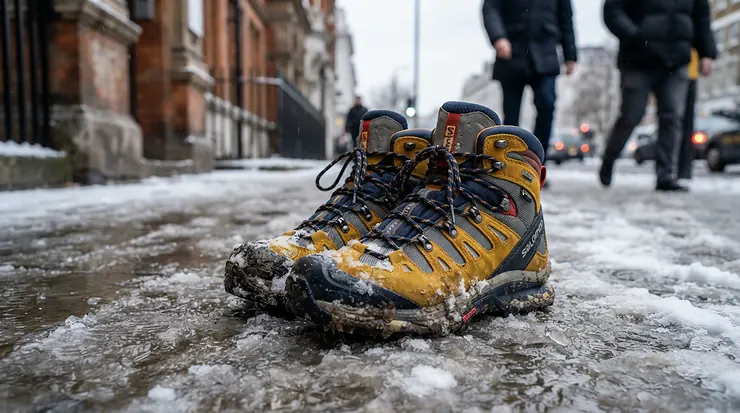
Winter boots for toddlers are insulated, waterproof (or water-resistant) boots sized for children roughly 12 to 36 months old. They have a wide opening, a flexible grippy sole and a temperature rating suited to cold Canadian conditions. Unlike fashion boots, they prioritize easy on-and-off, warmth for kids who sit still in strollers, and traction for tiny, wobbly steps.
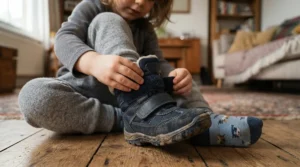
Picture it: it’s -18°C, your toddler has the balance of a newborn giraffe on a frozen pond, and one boot is on the wrong foot. The right winter boots for toddlers turn that daily wrestling match into a quick, almost graceful exit. Cold also isn’t just a comfort issue. Health Canada’s extreme cold guidance lists infants and young children among the higher-risk groups. The risk of frostbite and hypothermia climbs once wind chill drops below -27°C.
So I researched seven real, currently sold options, from budget-friendly Kamik Snobuster to polar-rated Baffin Young Snogoose. I weighed their spec sheets against what parent reviewers actually report. One honest note: I haven’t worn-tested these on anyone’s toddler, so everything here is spec analysis plus aggregated review sentiment.
Along the way you’ll get a practical winter boot sizing guide, a plain-English take on waterproof vs water-resistant snow boots, and a reality check on any snow boot traction rating claim. You’ll also find a regional guide to kids snow boots Canada families can actually use.
Quick Comparison: Winter Boots for Toddlers at a Glance
Short on time? This table puts the seven picks side by side, using the makers’ own cold ratings. Ratings are manufacturer figures for active kids, not guarantees for a toddler snoozing in a stroller.
| Product | Maker’s Cold Rating | Waterproof Level | Best For |
|---|---|---|---|
| Stonz Trek Toddler | -30°C | Waterproof base, water-resistant upper | Dry cold, lightweight fit |
| Kamik Snobuster | -32°C | Fully waterproof shell | Budget, slush, wet coasts |
| Bogs Classic II | -34°C (-30°F) | Fully waterproof | Wet snow, self-dressers |
| Sorel Snow Commander | -25°C | Waterproof rubber shell | Heavy-snow cities |
| Columbia Powderbug Plus II | -32°C (-25°F) | Waterproof, seam-sealed | Mid-range warmth |
| Merrell Snow Bank JR | -32°C (-25°F) | Waterproof leather/mesh | Slim-footed new walkers |
| Baffin Young Snogoose | Polar rated (-45°C and below) | Waterproof base | Deep-freeze regions |
Looking at the table, the Kamik Snobuster has the lowest entry price and a -32°C rating, which makes it the sensible default for budget-minded kids snow boots Canada shoppers. If your winters regularly sink into the -30s, the Baffin Young Snogoose is the only boot here rated for polar-level cold, though it costs roughly double. Note that the Stonz Trek Toddler trades a fully waterproof upper for lightness, so it suits dry cold better than slush.
💬 Just one click — help others make better buying decisions too!😊
Top 7 Winter Boots for Toddlers: Expert Analysis
Every pick below is a real product, with specs cross-checked against maker and retailer pages. Prices are ranges in Canadian dollars at the time of research, so check current price before buying.
1. Stonz Trek Toddler Winter Boot — lightest pick with a roomy toe box
The redesigned Stonz Trek Toddler is built around foot development, with a zero-drop sole and a wider toe and heel.
Its fully waterproof EVA bottom pairs with a water-resistant, insulated upper and plush faux fur lining for a -30°C rating. The EVA is feather-light, which matters because heavy boots make early walkers shuffle and trip. A hook-and-loop ankle strap and wide opening speed up the daily dressing battle.
On paper, this is the boot for toddlers still finding their feet in cold, mostly dry places. The trade-off is the upper, which isn’t fully waterproof, so deep slush can find its way over the rim. Some older Trek listings advertise a -50°C rating, while the current toddler version states -30°C, so confirm which version you’re buying.
I couldn’t verify a large pool of independent parent reviews for the redesigned version, so treat the maker’s claims as claims until review volume grows.
Pros:
- ✅ Light EVA build suits new walkers
- ✅ Wide toe box and heel room
- ✅ Easy hook-and-loop on-and-off
Cons:
- ❌ Upper is water-resistant, not waterproof
- ❌ Thin independent review data so far
Price range: roughly C$65–C$85, which is good value for dry-cold regions and less so on wet coasts.
2. Kamik Snobuster Toddler Winter Boot — made-in-Canada value champion
Injection-moulded and pulled on in seconds, the Kamik Snobuster is what parents grab when budgets are tight and slush is deep.
A 100% waterproof RubberHe shell means puddles bounce off, while the removable 6 mm Thermal Guard liner carries a -32°C comfort rating. An adjustable snow collar cinches out drifts, which helps because this is a pull-on, not a Velcro design. And since the liner comes out, it can dry overnight, a small feature that decides whether tomorrow starts with warm socks or a sulk.
For kids snow boots Canada families can buy without a second mortgage, this is the baseline everything else gets measured against. Based on the spec comparison, you give up a strap closure and fine-tuned fit. In return you get genuine waterproofing and a rating most mid-priced rivals only match. One independent roundup notes Kamik sizing runs a bit small, so size up if you’re between sizes.
Reviewers on a Canadian retailer’s page consistently describe the toddler version as truly waterproof, warm and light enough for running around. One notes it dries less quickly than they’d like.
Pros:
- ✅ 100% waterproof shell handles slush
- ✅ Removable liner dries overnight
- ✅ Lowest cost of the seven
Cons:
- ❌ Pull-on style needs an adult to cinch the collar
- ❌ Sizing reportedly runs small
Price range: roughly C$40–C$70, the best value in this round-up.
3. Bogs Classic II Kids’ Winter Boot — fully waterproof with grab-and-go handles
The Bogs Classic II wraps a stretchy inner bootie in hand-lasted rubber, so the whole boot behaves like a waterproof sock.
Its 7 mm Neo-Tech insulation gives a -34°C (-30°F) comfort rating, and the boot is 100% waterproof top to bottom. Side handles let a toddler yank them on solo, a genuine independence win at the daycare cubby. A reflective rating mark on the heel helps at dusk, which in a Canadian December arrives around 4:30 p.m.
This is the boot for the toddler who treats every puddle as a mission. Heavy insulation and full waterproofing favour slush and wet snow over powder. The listings I reviewed show no cinch collar, so deep drifts can slide in over the top. Confirm your retailer carries the toddler size run.
Parent reviewers on a major outdoor retailer’s site frequently praise warmth, waterproofing and durability, and some report buying them for years. Recurring complaints are slightly narrow calves and liner wear at the heel.
Pros:
- ✅ Strong -34°C comfort rating
- ✅ Fully waterproof from top to bottom
- ✅ Pull handles encourage independence
Cons:
- ❌ Narrow calf fit reported
- ❌ Heel-liner wear reported
Price range: around C$85–C$110, pricey but proven for wet winters.
4. Sorel Snow Commander Toddler Boot — warmth heavyweight for heavy snow
The Sorel Snow Commander is built for sledding hills, playground snowbanks and long winter walks.
A waterproof textile upper sits over an injected thermal rubber shell. Inside you get 200 g insulation, fleece lining and a 2.5 mm bonded felt frost plug beneath the foot. Retailer listings rate it to -25°C, and the multi-directional lug outsole is shaped for snow grip.
The frost plug is the unsung hero. Cold creeps up through the sole first, and extra felt there helps when a toddler stands still at a bus stop. A caution: the sibling Sorel Whitney II drew repeated “not waterproof” complaints on retailer pages. If you want Sorel, the rubber-shell Snow Commander is the safer bet.
Reviewers call the Sorel Snow Commander very warm and easy enough for a 22-month-old to pull on alone. They also call it heavy, and one parent joked it builds strong legs.
Pros:
- ✅ 200 g insulation plus felt frost plug
- ✅ Rubber shell keeps slush out
- ✅ Quick hook-and-loop closure
Cons:
- ❌ Noticeably heavy for small legs
- ❌ Lower rating than the top picks
Price range: roughly C$80–C$110, fair value in snow-heavy cities.
5. Columbia Powderbug Plus II Toddler Boot — seam-sealed warmth with a cinchable cuff
The Columbia Powderbug Plus II pairs a waterproof, seam-sealed build with a -25°F/-32°C rating.
It adds 200 g insulation and a washable 6 mm recycled felt liner. A one-piece moulded TPR shell and outsole keeps seams to a minimum. Hook-and-loop plus a draw-cord cuff seal out snow and slush.
On paper, it’s the best-specced mid-range option. Real-world dressing is the weak spot, though. Some parents report the liner makes it hard to get a foot in, and the rubber feels stiff without the liner, so you can’t skip it. Sizing comments vary, and some advise sizing up for thick socks, so buy where returns are easy.
Retailer review sentiment is mixed. Parents praise warmth and quality feel. Others cite sizing, an overly long Velcro strap and difficulty with wiggly toddlers.
Pros:
- ✅ -32°C rating at mid-range cost
- ✅ Seam-sealed waterproof construction
- ✅ Draw-cord cuff blocks snow
Cons:
- ❌ Reportedly tricky on wiggly toddlers
- ❌ Mixed sizing feedback
Price range: about C$75–C$100, good on paper, so try before you commit.
6. Merrell Snow Bank JR Waterproof Boot — slimmest profile for new walkers
The Merrell Snow Bank JR is the sleek one, flat and slim where most winter boots for toddlers are chunky.
It has a waterproof leather-and-mesh upper with fleece lining, 200 g insulation and hook-and-loop closures. The maker rates it to -32°C (-25°F), and the non-marking outsole adds extra grip. The slim profile means less boot to trip over, a real advantage for cautious first-winter walkers.
The cost of that streamlined shape is fit. Reviewers describe a narrow cut, which punishes wide feet and chunky calves. Leather-and-mesh also isn’t a moulded rubber shell, so watch seams and tongue areas on properly wet days. This is the pick for slim-footed toddlers in cold, moderately wet climates.
Parents praise the lightness and low profile. Others report a narrow fit, Velcro that won’t close over sturdy calves and, in one case, a leak.
Pros:
- ✅ Slim, light, trip-resistant profile
- ✅ -32°C rating with 200 g insulation
- ✅ Easy hook-and-loop closure
Cons:
- ❌ Narrow cut limits wide feet
- ❌ One reviewer reported leaks
Price range: roughly C$80–C$100, good value if the fit suits your toddler.
7. Baffin Young Snogoose Toddler Boot — polar-rated warmth for deep-freeze regions
The Baffin Young Snogoose brings the maker’s polar-cold engineering down to toddler sizes (US 5–10 on Baffin’s child chart).
Baffin rates it “Polar Rated” for comfort during moderate activity from -45°C to -60°C. It has a removable multi-layer inner boot, a B-TEK dry waterproof base, a nylon snow collar and a lace-and-toggle drawstring. The Polar Rubber outsole is meant to stay grippy and flexible in extreme cold.
This is overkill for Victoria and sensible for Yellowknife or the Prairies’ coldest weeks. One caution: a toddler riding in a stroller isn’t doing “moderate activity,” so the real comfort limit sits higher than the headline number. Laces also take longer than Velcro, and listings sometimes show pre-order or sold-out status, so check stock early.
I couldn’t verify a solid set of independent toddler-specific reviews for the Baffin Young Snogoose. Treat its comfort claims as manufacturer-rated.
Pros:
- ✅ Polar-rated warmth for extreme cold
- ✅ Removable multi-layer liner dries faster
- ✅ Snow collar and cold-flexible outsole
Cons:
- ❌ Highest price of the seven
- ❌ Laces and toggle slow down dressing
Price range: roughly C$125–C$150, worth it only where cold is relentless.
Side-by-Side Specs and Price Ranges
| Product | Insulation / Liner | Closure | Price Range (CAD) | Best For |
|---|---|---|---|---|
| Stonz Trek Toddler | Insulated upper, faux fur lining | Ankle strap | C$65–C$85 | Light, dry-cold days |
| Kamik Snobuster | 6 mm removable liner | Pull-on, snow collar | C$40–C$70 | Best overall value |
| Bogs Classic II | 7 mm Neo-Tech | Pull-on handles | C$85–C$110 | Wet snow and slush |
| Sorel Snow Commander | 200 g, felt frost plug | Hook-and-loop | C$80–C$110 | Heavy snowfall |
| Columbia Powderbug Plus II | 200 g, 6 mm felt liner | Strap plus draw-cord | C$75–C$100 | Mid-range warmth |
| Merrell Snow Bank JR | 200 g, fleece lining | Hook-and-loop | C$80–C$100 | Slim feet |
| Baffin Young Snogoose | Multi-layer inner boot | Laces, drawstring, toggle | C$125–C$150 | Extreme cold |
The value story is clear: the Kamik Snobuster costs less than half of the Baffin Young Snogoose while offering a rating that covers most Canadian cities. Paying the premium makes sense only if your toddler spends long, still stretches outside below -35°C. For everyone else, the C$80–C$110 tier (Bogs Classic II, Sorel Snow Commander) buys durability and handles rather than extra degrees.
Winter Boot Sizing Guide: How to Measure Toddler Feet Without Guessing
A good winter boot sizing guide starts with one fact: toddlers outgrow things fast. The Canadian Paediatric Society notes a toddler’s feet grow about half a size every three months. It also says shoes with higher ankles don’t necessarily give better support, so winter boots are for warmth, not correction.
Follow this winter boot sizing guide at home:
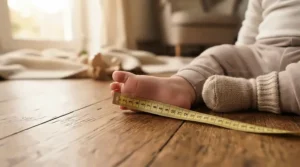
- Trace the foot. Stand your toddler on paper with their winter-weight socks on, then trace.
- Measure the longest toe in centimetres, heel to tip.
- Add roughly 1.25 cm (half an inch) of toe room, which the CPS has advised for growing feet.
- Compare to the maker’s chart, not a generic shoe size.
- Check the heel when they stand: it shouldn’t slide up and down.
Brand charts really do differ. Kamik’s chart puts a size 10T at about 16.7 cm of foot length, while Stonz lists a 10T at 17.4 cm. That’s a 7 mm gap, roughly a full size. Reviewers say the Kamik Snobuster and Bogs Classic II can run small, the Merrell Snow Bank JR runs narrow, and the Columbia Powderbug Plus II draws mixed sizing comments. Baffin says its boots fit true, and to size up for a half size. Stonz suggests dropping to its Scout boot if the Trek runs big.
Skip the “buy two sizes up” trick. Oversized boots cause heel slip, tripping and cold air pockets.
Care, Drying and Long-Term Cost: Your First 30 Days
A boot is only as good as its maintenance. A few habits keep winter boots for toddlers performing all season.
- Do an indoor fit test. Ten minutes at home reveals red marks and heel lift before the tags come off.
- Pull liners nightly. Removable liners (Kamik Snobuster, Baffin Young Snogoose, Columbia Powderbug Plus II) dry fastest when separated from the shell.
- Dry gently. Air-dry at room temperature. Radiators and direct heat can warp foam and glue.
- Brush off road salt. Stonz advises cleaning outers with a soft brush or damp cloth and hand-washing liners, then air-drying.
- Re-check the soles midseason. Traction fades with wear.
Now the long-term cost maths. A C$80 pair worn about 90 days a winter works out to under a loonie per outing. But since toddler feet grow half a size every three months, expect to repurchase each year. Hand-me-downs only work if the next child’s feet fit the same boot shape. The cheapest boot isn’t the best value if it leaks by January, and the priciest isn’t either if it’s outgrown by March.
Real-World Scenarios: Matching Winter Boots for Toddlers to Your Life
These are hypothetical profiles, not real families, but they reflect common situations.
The Lower Mainland daycare family. Mild temperatures, constant rain and slush, four days a week outdoors. Budget: under C$70. The Kamik Snobuster fits: it’s fully waterproof, its liner dries overnight, and it holds up to splashing. Cold ratings matter less here than keeping socks dry.
The Prairie stroller-walker. Daily outings at -25°C to -35°C, with long stretches sitting in a stroller. Budget flexible. The Baffin Young Snogoose earns its price here, and the Bogs Classic II is a strong second. A toddler sitting still needs a rating well below local lows, because the maker’s number assumes some movement.
The downtown Toronto or Ottawa parent. Freeze-thaw cycles, icy sidewalks, transit rides, and a toddler just learning to walk. The Merrell Snow Bank JR (if the fit works) or Sorel Snow Commander gives grip and warmth. The Sorel’s weight is a trade-off for toddlers who tire quickly. Pair either with the grip habits in the sidewalks section below.
Problem → Solution: Fixing the Five Most Common Toddler Boot Headaches
Cold toes in the stroller. Choose a rating well below your coldest regular day, add a moisture-wicking sock layer, and use a boot with a frost plug or thick footbed (Sorel Snow Commander). Check Environment Canada’s alerts before a long outing.
Wet socks by lunchtime. Pick a truly waterproof shell, such as the Kamik Snobuster or Bogs Classic II. Tuck snowpants over the boot top, not into it.
The dressing wrestling match. Wide openings and handles help (Stonz Trek Toddler, Bogs Classic II). One Columbia Powderbug Plus II reviewer suggested sliding the liner on like a sock first, then guiding it into the shell.
Slipping on hard-packed snow. Replace boots with worn-smooth soles, and clear snow clumps from the tread before walking.
Boots that never dry. Choose removable liners, and rotate two sets if you can.
How to Choose Winter Boots for Toddlers: 7 Steps
To choose winter boots for toddlers, match the cold rating to your coldest regular day, confirm real waterproof construction, prioritize easy dressing, check the outsole, and fit with winter socks.
- Match the rating to your coldest weeks. Treat maker ratings as best-case numbers, especially for stroller-bound kids.
- Decide how wet your winter is. Slush-heavy regions favour full waterproof shells; dry-cold regions can use lighter, water-resistant uppers.
- Prioritize easy on-and-off. Wide openings, handles or hook-and-loop closures save you minutes and tantrums daily.
- Inspect the outsole. Look for deep, multi-directional lugs in flexible rubber, not hard plastic.
- Size with winter socks. Follow the winter boot sizing guide above, with half a size of growth room at most.
- Weigh the boot. Lightness helps new walkers; heavy boots tire little legs.
- Look for removable liners. They dry faster and can be replaced.
Waterproof vs Water-Resistant Snow Boots: What the Labels Really Mean
The waterproof vs water-resistant snow boots question trips up many shoppers. Waterproof boots use sealed seams, membranes or moulded rubber shells to stop water entering. Water-resistant boots use treated fabric that sheds light moisture but eventually soaks through.
| Feature | Waterproof | Water-Resistant |
|---|---|---|
| Construction | Moulded shell, sealed seams or membrane | Treated nylon or fabric |
| Slush and puddles | Handles well | Eventually leaks |
| Breathability | Often lower | Usually higher |
| Best For | Wet snow, slush, rain | Dry, cold prairie days |
| Example | Kamik Snobuster, Bogs Classic II | Stonz Trek Toddler upper |
The Stonz Trek Toddler shows how the split can work in practice: a waterproof bottom with a water-resistant upper. Water only rises as high as the waterproof base, so shallow puddles are fine and deep slush is risky. Remember that “waterproof” can still fail at the cuff, as seen in complaints about the Sorel Whitney II. A rubber shell with a snow collar is the most reliable setup for slushy winters.
Snow Boot Traction Rating: Why Grip Is Hard to Judge
Shoppers love a clear snow boot traction rating, but kids’ boots rarely carry one. Standard bench tests (ASTM F2913 and ISO 13287) measure friction mechanically, and researchers have shown they don’t capture real winter performance. Toronto Rehab’s KITE team built a human-centred test instead, tilting ice until people slip. Boots earn up to three snowflakes, and anything below a 7-degree incline gets none. In their testing of 98 winter boots, only about 8% met the minimum. The McGill summary adds that slip resistance can drop noticeably with use.
Two honest caveats. That testing covered adult boots, and I couldn’t verify a published snowflake rating for any of these seven toddler models. Check ratemytreads.com for any updates. Some claims, like Stonz’s “2x the industry standard” for skid resistance, are manufacturer statements without a named standard.
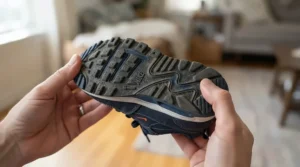
Without a label, judge outsoles by shape and material: deep multi-directional lugs (Kamik Snobuster, Sorel Snow Commander), cold-flexible rubber (Baffin Young Snogoose) and clean tread. Replace boots when the soles go smooth.
Snow Boots for Slippery Sidewalks: A City Parent’s Playbook
Urban winters are slick: salted, melted, refrozen and polished by a thousand strollers. Snow boots for slippery sidewalks need flexible rubber soles, because hard plastic stiffens in the cold and loses grip. Choose deep, widely spaced lugs that shed slush.
Use these habits too:
- Knock tread clear before walking, since packed snow turns lugs into smooth plastic.
- Hold a hand on ice, and let toddlers walk on snow beside the path where grip is better.
- Skip boots with worn soles, even if they still fit.
- Watch your own footwear. A parent who slips drops the toddler’s balance too.
No boot guarantees grip on wet ice. But for snow boots for slippery sidewalks, I’d shortlist the Sorel Snow Commander and Kamik Snobuster for their lugged outsoles. The Merrell Snow Bank JR is also worth a look for its extra-grip, non-marking sole.
Kids Snow Boots Canada: Match the Rating to Your Region
Kids snow boots Canada shoppers face a huge climate range. Vancouver’s slush isn’t Winnipeg’s deep freeze. Environment Canada issues Extreme Cold Warnings when temperature or wind chill is expected to hit -30°C for at least two hours. One health unit advises shortening children’s outdoor play at -20°C to -25°C and keeping them indoors at -27°C or below.
- Mild, wet coasts: prioritize waterproof shells. The Kamik Snobuster or Bogs Classic II will do.
- Freeze-thaw cities (Toronto, Montréal, Ottawa): balance waterproofing and grip. The Sorel Snow Commander and Columbia Powderbug Plus II fit.
- Prairies and North: go for the highest rating. The Baffin Young Snogoose leads, with the Bogs Classic II as a mid-priced option.
Retailer listings show the Kamik Snobuster as made in Canada, and the Stonz Scout boot as Canadian-made too. As far as my research showed, there’s no mandatory Canadian winter-performance label for kids’ boots, so ratings stay a manufacturer promise.
Common Mistakes When Buying Winter Boots for Toddlers
- Trusting the headline rating. Ratings assume activity. Toddlers in strollers need more margin.
- Assuming “water-resistant” is enough. It’s fine for dry cold and a gamble in slush.
- Buying two sizes up. Heel slip and tripping outweigh the savings.
- Ignoring the wide-foot or chunky-calf question. The Merrell Snow Bank JR and Bogs Classic II draw narrow-fit comments.
- Forgetting dressing time. Beautiful boots that take five minutes to put on get worn less.
- Drying near heat. Radiators can damage foam, glue and liners.
- Skipping the outsole check. Smooth soles on icy sidewalks are a slip waiting to happen.
Frequently Asked Questions
❓ What is the best temperature rating for winter boots for toddlers in Canada?
❓ Are water-resistant snow boots enough for dry, prairie-style cold?
❓ Is it worth buying winter boots for toddlers a size up to last two winters?
❓ Can winter boots for toddlers be washed?
❓ Where can I find a snow boot traction rating for toddler boots?
Conclusion: Choosing Winter Boots for Toddlers With Confidence
The best winter boots for toddlers are the ones that match your climate, fit your child’s actual foot, and get on without a fight. For most Canadian families, the Kamik Snobuster is the smart value pick, with a -32°C rating, a waterproof shell and a removable liner. If you’re in a slushy, wet region, the Bogs Classic II adds handles and a -34°C comfort rating. The Sorel Snow Commander suits snowy cities, while the Merrell Snow Bank JR and Columbia Powderbug Plus II work well if their fit suits your toddler. The Stonz Trek Toddler is the lightweight option for dry cold, and the Baffin Young Snogoose is for places where winter means business.
Whatever you choose, apply the winter boot sizing guide, treat ratings as best-case, and check the waterproof level honestly. Remember that no snow boot traction rating exists for most kids’ boots, so inspect outsoles and replace them when worn. With the right pair, winter boots for toddlers stop being a chore and start being the best part of getting out the door.
Recommended for You
- Top Rated 3-in-1 Jackets For Kids: 7 Proven Picks 2026
- 7 Best Convertible System Jacket Picks For 2026 (Smart Buys)
- 7 Best 3-in-1 Jackets For Hiking In Canada 2026 (Tested Picks)
Disclaimer: This article contains affiliate links. As an Amazon Associate, I earn from qualifying purchases. If you purchase products through these links, we may earn a small commission at no additional cost to you.
✨ Found this helpful? Share it with your friends! 💬🤗
