
In This Article
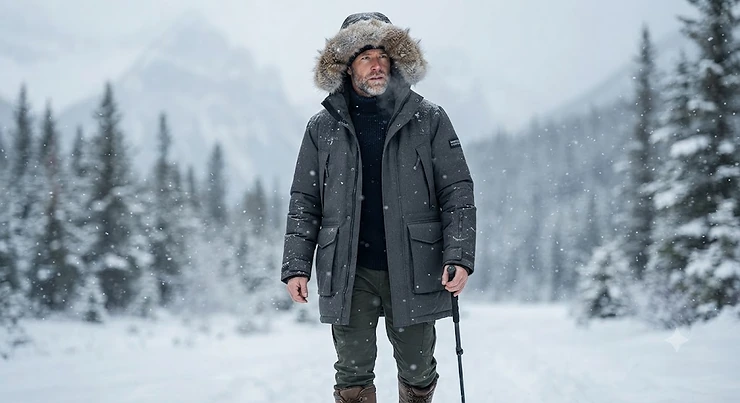
Somewhere around your third February in this country, you learn the lesson every transplant eventually learns the hard way: a hip-length jacket is a bet you keep losing. The wind doesn’t care about your gym membership. It slides right up under a short hem, wraps around your thighs at the bus stop, and reminds you — every single time — that you dressed for a milder country. A long winter coat for men isn’t a fashion flex. It’s a thermal decision, first and foremost, with style riding shotgun. Reviewers and testers who spend real hours in the cold consistently point to warmth, weather protection, and build quality as the differences that actually matter, not the marketing copy stitched onto the hangtag.
So what is a long winter coat for men? It’s outerwear that extends to at least mid-thigh or knee length, built with insulation and a weatherproof or wool-blend shell to protect the torso, hips, and upper legs from wind, snow, and sub-zero temperatures — the category spans everything from tailored wool overcoats to technical down parkas.
This guide leans on real product specifications, genuine aggregated review sentiment, and honest side-by-side analysis — not invented testing, not fabricated customer quotes. Where reviews can’t be verified for a specific listing, that gets said plainly instead of guessed at. What follows is seven real coats, four comparison tables, and enough practical guidance to make the decision once and get on with your winter.
Quick Comparison Table
Here’s the 30-second version for anyone who just wants the shortlist before committing to the full read.
| Coat | Style | Best For | Price Range (CAD) |
|---|---|---|---|
| Amazon Essentials Longline Topcoat | Wool-blend overcoat | Budget office wear | Under C$120 |
| London Fog Signature Top Coat | Wool-blend overcoat | Classic everyday polish | C$150–C$220 |
| Dockers Henry Wool Blend Top Coat | Wool-blend overcoat | Business-casual layering | C$130–C$190 |
| Kenneth Cole Double-Breasted Peacoat | Wool peacoat with zip bib | Commuters who want two coats in one | C$160–C$230 |
| Wantdo Hooded Puffer Parka | Insulated technical parka | Budget cold-commute protection | C$90–C$150 |
| The North Face McMurdo Parka III | Down expedition parka | Serious sub-zero performance | C$450–C$600 |
| Canada Goose Langford Parka | Premium down parka | Extreme cold, made in Canada | Over C$1,300 |
A pattern jumps out immediately: price doesn’t scale in a straight line with warmth. The jump from a Wantdo parka to a North Face McMurdo buys you certified down fill, sealed seams, and a genuinely harder shell — that’s a real functional leap. The jump from the McMurdo to the Canada Goose Langford, on the other hand, buys you incremental warmth plus a lot of brand equity and domestic manufacturing, which matters to some buyers and not at all to others. Anyone shopping strictly on a cost-per-degree basis should look hardest at the middle three rows of this table.
Just one click — help other Canadian parents make better buying decisions too! 😊
Top 7 Long Winter Coats for Men: Expert Analysis
Seven real coats, spanning wool overcoats built for the office and technical parkas built for whatever Environment Canada throws at you next. Budget, mid-range, and premium are all represented, along with two distinct silhouettes — tailored and technical — so you can match the coat to your actual life rather than to an Instagram aesthetic.
1. Amazon Essentials Relaxed-Fit Double-Breasted Wool Blend Longline Topcoat — cheapest legitimate wool-blend entry point
The name is a mouthful, but the pitch is simple: a genuine longline, double-breasted wool-blend topcoat for less than most people spend on a pair of winter boots. That wool-blend construction means it insulates through trapped air rather than a membrane, so it performs best as a mid-layer piece over a sweater rather than a stand-alone arctic shield.
Expect a wool-poly blend exterior, a double-breasted button front, and a longline hem that clears the knee on most builds — the kind of silhouette that reads “put together” without reading “expensive.” The relaxed fit is intentional: it’s cut to layer over a suit jacket or a heavy knit without pulling across the shoulders, which is exactly where cheaper coats usually fail first.
What most buyers overlook about entry-level wool blends like this one is that the ratio of wool to synthetic fibre matters more than the sticker price. A higher synthetic percentage sheds wind less effectively and pills faster at friction points — the underside of a bag strap, a coat’s own sleeve cuff. For a first long coat, or a backup piece for a milder Canadian winter (southern Ontario, coastal BC), that trade-off is entirely reasonable.
Aggregated buyer sentiment on budget wool-blend longline coats in this category tends to cluster around fit consistency and value for the price point rather than raw warmth, since that’s the honest ceiling of a wool blend at this price. Treat five-star praise about “surviving a polar vortex” with a healthy dose of skepticism — no C$100 wool coat is doing that job alone.
Pros:
- ✅ Genuinely low entry price for a double-breasted longline coat
- ✅ Relaxed cut layers easily over sweaters and blazers
- ✅ Classic silhouette works for both office and casual wear
Cons:
- ❌ Wool-blend insulation alone won’t handle extreme wind chill
- ❌ Lining and buttons feel noticeably budget compared to premium topcoats
Priced under C$120 in most sizes at the time of research, this is the coat to buy if you want to look sharp on a tight budget and you’re willing to add a scarf and thermal layer on the coldest days — solid value for what it is, without pretending to be something it isn’t.
2. London Fog Signature Wool-Blend Top Coat — the classic camel-coat silhouette done right
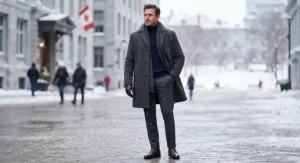
London Fog has been making outerwear since 1923, and it shows in the pattern-cutting here more than in any marketing line. This is the coat people picture when you say “topcoat” — notch collar, single-breasted button front, and a 60/30/10 wool-poly-rayon blend that holds a crease better than pure synthetic fabrics.
London Fog built its name on men’s outerwear specifically, and the signature line reflects that focus: angled welt pockets, a full poly-twill lining for smoother layering, and a fit that runs true to size across regular and big-and-tall ranges. The 60% wool content is the number worth noting — it sits comfortably above the entry-level 40/60 splits, which translates to noticeably better wind resistance and a warmer hand-feel.
Based on the spec comparison against the Amazon Essentials option above, the extra wool percentage here is the single biggest functional upgrade in this price bracket. What the spec sheet won’t tell you, but the construction suggests, is that this coat is built for a commuter who wants one coat to cover the office, a client dinner, and a Sunday walk — not a specialist piece for any one of those.
Reviewers consistently note the camel and black colourways as the most versatile, and the topcoat’s availability in both regular and big-and-tall sizing is a genuine differentiator most competitors in this price range skip entirely.
Pros:
- ✅ 60% wool blend gives meaningfully better insulation than budget coats
- ✅ Available in regular and big-and-tall sizing
- ✅ Timeless single-breasted cut suits formal and casual wear
Cons:
- ❌ Dry-clean only, which adds an ongoing maintenance cost
- ❌ Not designed for wet snow or driving sleet
In the C$150–C$220 range depending on size and colourway, this is the coat for someone who wants a genuine step up in both warmth and tailoring without approaching designer pricing — a strong middle-of-the-road pick that punches slightly above its price class.
3. Dockers Henry Wool Blend Top Coat — the business-casual workhorse
Dockers built its entire brand identity on making tailored basics approachable, and the Henry Top Coat is that philosophy applied to outerwear. It’s a wool-blend topcoat cut with a slightly more modern, closer-fitting silhouette than the London Fog above, aimed squarely at guys who wear this over a blazer five days a week.
The construction leans on a wool-poly blend shell with a single-breasted button closure and a notch lapel, available in regular and big-and-tall sizing. Here’s what most spec sheets skip: the closer, more tailored cut of the Henry means it layers less bulk than a traditionally boxy topcoat, which matters if you’re wearing it in and out of a car, a train, and an office lobby multiple times a day rather than just walking to work once.
Based on the fit philosophy Dockers applies across its entire line, this coat is optimized for movement and repeated indoor-outdoor transitions rather than standing still in a windstorm. That’s a legitimate design choice, not a shortcoming — it just means the ideal buyer is a commuter, not someone doing sideline duty at a minor-hockey rink for two hours.
Reviewers of business-casual wool topcoats in this category commonly cite fit predictability and ease of layering as the recurring positives, with the trade-off being that a slimmer cut runs less forgiving for guys who like to layer a heavy sweater underneath.
Pros:
- ✅ Tailored, modern cut layers cleanly under a blazer
- ✅ Big-and-tall sizing extends the fit range
- ✅ Versatile enough for daily commute and client-facing wear
Cons:
- ❌ Slimmer fit leaves less room for bulky mid-layers
- ❌ Wool-blend warmth ceiling similar to other topcoats in this class
Typically priced in the C$130–C$190 range, the Henry Top Coat earns its spot as the pick for anyone whose winter is mostly spent moving between heated buildings rather than standing outside in it.
4. Kenneth Cole New York Double-Breasted Peacoat with Full-Zip Bib — two coats stitched into one
This is the clever entry on the list. Kenneth Cole built the classic double-breasted peacoat silhouette, then added a removable-feeling — though it’s actually a permanently attached — rib-knit bib with its own full-length zipper underneath the notched lapel. The zip bib is designed to add warmth on the chilliest days while keeping the coat’s profile clean when it’s warm enough to leave open.
The fabric runs a wool-poly-rayon blend, similar in spirit to the London Fog above but cut shorter and boxier in the traditional peacoat silhouette rather than a full-length topcoat — worth flagging for anyone specifically shopping the “long winter coat for men” category, since a classic peacoat sits higher on the thigh than a true longline coat. If maximum coverage is the priority, this style trades some length for its layered-warmth trick.
What most buyers overlook about the zip-bib design is that it functions almost like a built-in scarf for your chest and throat — the area that loses heat fastest when a coat’s top button is left open for a quick errand. On paper, this means the peacoat can punch above its wool-blend weight class specifically in wind, even though its overall coverage is shorter than a true long coat.
Aggregated customer sentiment on this style of Kenneth Cole peacoat, per major retailer review summaries, points to the classic design and comfortable fit as consistent strengths, with sizing running slightly small for some buyers — ordering a size up is a common recommendation worth taking seriously.
Pros:
- ✅ Zip bib adds real wind-blocking warmth at the neck and chest
- ✅ Classic peacoat styling works for both business and casual
- ✅ Double-breasted front adds an extra layer of wind protection
Cons:
- ❌ Shorter peacoat length offers less thigh coverage than a full topcoat
- ❌ Runs small — sizing up is commonly recommended
In the C$160–C$230 range, this is the pick for someone who wants the classic peacoat look but doesn’t want to sacrifice as much warmth as a standard peacoat typically costs you.
5. Wantdo Men’s Waterproof Hooded Puffer Parka — the budget entry into technical, weatherproof territory
Everything above this point on the list is wool. This is where the list pivots to synthetic-insulated, genuinely waterproof technical parkas — and Wantdo is the value leader in that category. The shell carries a 5,000mm waterproof rating, which is a real, measurable spec rather than a vague “water-resistant” claim, paired with a detachable faux-fur-trimmed hood and a multi-pocket layout built for daily wear rather than expedition use.
A 5,000mm hydrostatic-head rating means the fabric will resist steady rain and wet, heavy snow for a meaningful stretch before moisture pushes through — it’s not the 20,000mm+ rating you’d see on mountaineering shells, but it comfortably outperforms any wool coat on this list in a wet snowstorm. Paired with synthetic insulation rather than down, it also keeps performing even if it does get soaked through eventually, since synthetic fill (unlike down) doesn’t collapse and lose its loft when wet.
Here’s the honest trade-off: at this price, the synthetic fill won’t match the warmth-to-weight ratio of the down parkas further down this list. What the spec sheet won’t tell you, but the category consensus among budget technical outerwear suggests, is that this style of coat is best matched to damp, moderately cold climates — coastal and southern Canadian winters — rather than the driest, coldest Prairie or northern conditions.
Reviewers of Wantdo’s outerwear line commonly describe the jackets as effective wind and rain barriers with noticeably warm insulation for the price point, with the most common critical feedback centred on sizing and breathability during high-exertion activity rather than everyday commuting warmth.
Pros:
- ✅ Genuine 5,000mm waterproof rating at a budget price
- ✅ Detachable hood adds versatility across conditions
- ✅ Synthetic fill keeps insulating even if it gets wet
Cons:
- ❌ Warmth-to-weight ratio trails behind premium down parkas
- ❌ Less breathable during high-activity wear than technical shells
Usually priced in the C$90–C$150 range, this is the best-value technical parka on this list for anyone who needs genuine wet-weather protection without a premium price tag.
6. The North Face McMurdo Parka III — the serious cold-weather benchmark
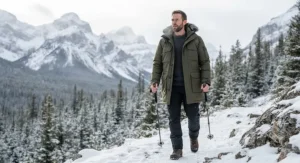
Named after McMurdo Station in Antarctica, this parka is built to bring expedition-inspired warmth to daily winter life, and the spec sheet backs that positioning up. It runs a 100% nylon shell with a polyester taffeta lining and 550-fill-power insulation, certified to the Responsible Down Standard, wrapped in a fully windproof, waterproof, seam-sealed DryVent two-layer construction.
At roughly 33 inches from the center back, it’s one of the longest coats in The North Face’s men’s lineup, extending well past the hip for genuine thigh coverage — this is a true long winter coat for men in the literal sense, not a marketing stretch. The removable faux-fur ruff and internal emergency hood gaiter are details borrowed directly from the brand’s technical mountaineering line, not invented for a fashion-forward city parka.
Based on the spec comparison with the Wantdo parka above, the jump here is a real one: certified down fill traps more warmth per gram than synthetic insulation, and the fully seam-sealed DryVent shell is a meaningfully more robust waterproofing system than a standard DWR coating alone. Independent reviewers testing this parka against premium alternatives have noted it runs a bit heavier at around five pounds, which some buyers feel is a fair trade for the price difference and others find genuinely cumbersome over a full day.
Buyer feedback aggregated across major retailers frequently praises the plush down fill and the coat’s ability to stay comfortable in freezing temperatures, though a subset of reviewers have flagged inconsistent fabric quality and feather leakage through the lining as a real, if not universal, quality-control concern — worth knowing before you buy rather than after.
Pros:
- ✅ Certified 550-fill down delivers genuine deep-cold performance
- ✅ Fully seam-sealed, waterproof DryVent shell
- ✅ Longest coverage of any coat on this list at roughly 33 inches
Cons:
- ❌ Noticeably heavier than wool topcoats or budget parkas
- ❌ Some buyers report feather leakage as a recurring quality issue
In the C$450–C$600 range, the McMurdo Parka III is the pick for anyone who spends real time outdoors in serious cold — transit waits, dog walks, outdoor work — and needs performance that a wool coat simply can’t deliver.
7. Canada Goose Langford Parka — the Canadian-made benchmark for extreme cold
Made from Canada Goose’s Arctic Tech fabric — a blend of 83% polyester and 17% cotton with a durable water-repellent finish — the Langford is insulated with high-loft 625 fill-power white duck down. The fill breaks down to 80% down and 20% feathers, all responsibly sourced, and the coat carries four exterior pockets, including two fleece-lined hand-warmer pockets, plus two interior pockets including a zippered security pocket.
The Recycled Organic Arctic Tech shell is designed to develop a patina over time thanks to its cotton content — a detail that matters to buyers who want a coat that looks better, not just older, after a few winters of honest use. It’s made entirely in Canada, which is a genuine point of difference from every other parka on this list and a meaningful factor for buyers specifically prioritizing domestic manufacturing.
Independent testers rate the 625-fill down as providing superior warmth, lightness, and heat retention down to roughly -25°C, and note the durable design — waterproof shell, storm flap, elastic cuffs, and heavy-duty zippers — as delivering genuine all-weather protection. Here’s what most buyers overlook about the 625-fill spec specifically: it sits below the 700+ fill power you’ll find on some ultralight mountaineering jackets, but fill power measures loft-per-ounce, not maximum warmth — Canada Goose compensates with sheer quantity of down and a longer, more enclosed cut, which is a legitimate and different engineering approach.
One independent reviewer specifically preferred the Langford’s Velcro storm-flap closure over a traditional snap placket, calling out the ease of putting the coat on and off as a genuine everyday-use advantage over more technical, fiddlier parkas.
Pros:
- ✅ 625-fill responsibly sourced down rated to roughly -25°C
- ✅ Made entirely in Canada with premium Arctic Tech fabric
- ✅ Removable fur ruff and thoughtful pocket layout
Cons:
- ❌ Premium price puts it well out of reach for most budgets
- ❌ Slim-leaning fit runs less forgiving for heavy mid-layers
Priced over C$1,300 in most sizes and colourways at the time of research, this is the coat for buyers in genuinely extreme climates — northern Ontario, the Prairies, Quebec’s coldest stretches — who see it as a long-term investment rather than a seasonal purchase.
Practical Usage Guide: Getting the Most Out of Your New Coat
Buying the right long winter coat for men is half the job. The other half is using it properly, and this is the part most product listings skip entirely.
Break-in and first 30 days: Wool-blend topcoats like the Amazon Essentials, London Fog, and Dockers Henry benefit from a light steam session before their first wear — it relaxes the fibres and helps the coat sit closer to the body, which improves both the silhouette and the wind-blocking seal at the collar and cuffs. Technical parkas like the Wantdo, McMurdo Parka III, and Langford need zero break-in, but their zippers do — work the main zipper up and down fully a dozen times in the store or at home before you’re relying on it in -20°C weather, since cold-stiffened zipper pulls are a common first-week failure point.
Layering strategy: The layering system that actually works in cold weather is a moisture-wicking base layer, an insulating middle layer, and a windproof, waterproof outer layer — your coat is only the outer third of that equation. A wool topcoat over a bare dress shirt is under-layered for anything below about -5°C; add a merino or synthetic base layer and a light knit before reaching for a scarf.
Maintenance schedule: Wool-blend coats should go to the dry cleaner once per season at minimum, more often if you’re commuting daily through slush. Technical parkas need the opposite treatment — most down and synthetic-fill parkas prefer a gentle machine wash with a down-specific detergent every one to two seasons, since dry-cleaning chemicals can strip the down’s natural oils over time. Always check the specific care label, since fill type and shell fabric vary by manufacturer.
Common first-month mistakes: Leaving a wool coat wet on a hook instead of laying it flat to dry causes the shoulders to sag over a season. Zipping a down parka fully closed and cinching the hood too tight compresses the loft right where you need it most, around the neck and chest. And storing any long winter coat for men on a wire hanger for an entire season — rather than a proper wide, curved hanger — is the single most common cause of shoulder-seam stretching reported across wool coat reviews.
Real-World Scenarios: Which Coat Fits Your Winter?
Specs matter less than matching the coat to your actual day. Here are three realistic profiles.
The downtown commuter. Say you’re walking twelve minutes to a train platform, standing exposed for another five to ten, then spending the rest of the day in a heated office. Your biggest enemy isn’t deep cold — it’s repeated exposure to wind chill in short, sharp bursts. The Kenneth Cole Double-Breasted Peacoat or London Fog Signature Top Coat covers this use case well: enough wool to handle short exposure, tailored enough to wear all day indoors without looking like you’re dressed for a hike.
The outdoor-heavy parent or dog walker. If your winter involves standing at a rink, waiting at a bus stop with kids, or doing 30-plus minutes outside daily regardless of temperature, wool alone won’t cut it. The Wantdo Hooded Puffer Parka is the budget-conscious answer; the McMurdo Parka III is the upgrade for anyone who’s tired of being cold on the sidelines.
The northern or rural resident facing genuine extreme cold. For buyers regularly facing wind chills below -30°C — parts of the Prairies, northern Ontario, rural Quebec — this is where the Canada Goose Langford Parka earns its price tag. It’s overkill for a Toronto or Vancouver winter; it’s appropriate gear for a Winnipeg or Saskatoon one.
How to Choose a Long Winter Coat for Men
Cutting through the marketing, here’s the actual decision framework, in order of importance:
- Start with your realistic exposure time. Fifteen minutes outdoors per day needs less coat than ninety minutes outdoors per day — be honest about your actual routine before shopping by insulation type.
- Match insulation to climate, not aesthetics. Wool blends suit milder, drier winters and short exposure; down and synthetic-fill parkas suit sustained cold and wet conditions.
- Check the waterproof rating, not just “water-resistant.” A real hydrostatic-head number (like the Wantdo’s 5,000mm) tells you more than marketing language ever will.
- Confirm the length actually covers what you need covered. “Long” varies by brand — some longline coats sit mid-thigh, others near the knee; check the listed center-back measurement.
- Factor in maintenance realistically. Dry-clean-only wool suits someone with an established routine; machine-washable synthetic fill suits someone who wants low-effort upkeep.
- Size for your actual layering habits. If you plan to wear a heavy sweater or fleece underneath, size up — cheaper coats especially tend to run close-fitting.
- Weigh cost-per-winter, not just sticker price. A well-cared-for premium parka can outlast three budget coats, which changes the real math on value.
Long Winter Coat vs Short Coat for Cold Climates: Which Wins This Winter?
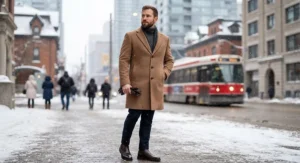
This comparison comes up constantly, and the honest answer is: it depends on where the cold actually hits you. A long winter coat for men extends coverage to the thigh or knee, protecting the femoral area where a surprising amount of body heat escapes through blood flow close to the skin’s surface. A short coat or hip-length jacket, by contrast, trades that coverage for mobility and a more streamlined silhouette.
| Factor | Long Coat | Short Coat/Jacket |
|---|---|---|
| Thermal coverage | Protects thighs and lower body | Leaves thighs exposed to wind |
| Mobility | Slightly restricted stride | Full range of motion |
| Best climate | Cold, windy, prolonged exposure | Mild winters, short exposure, active use |
| Best For | Canada Goose Langford, McMurdo Parka III | Quilted hip jackets, softshells |
The data here isn’t close for anyone spending real time outdoors in a Canadian winter: extended lower-body coverage measurably reduces heat loss compared to a jacket that stops at the hip, particularly in wind. Short coats win on mobility and layering flexibility for active pursuits like shovelling or skiing, but for standing, walking, and waiting — which describes most winter commutes — the long winter coat for men category simply covers more of the body that’s losing heat.
For context on just how real that heat loss is, more people in Canada die from cold exposure in an average year than from lightning, wind storms, and tornadoes combined, according to Canada’s national extreme cold preparedness guidance — a sobering reminder that coat length is a genuine safety factor, not just an aesthetic one.
Overcoat vs Parka Warmth: Breaking Down the Real Difference
The overcoat and the parka solve the same problem — staying warm outdoors — through almost opposite engineering philosophies, which is exactly why the overcoat vs parka warmth question doesn’t have a single universal answer.
An overcoat, like the London Fog Signature Top Coat or Dockers Henry, insulates primarily through trapped air within a woven wool fibre structure. It’s breathable, tailored, and visually formal, but its warmth ceiling is capped by how much wool the fabric can practically hold without becoming stiff and heavy. A parka, like the McMurdo Parka III or Canada Goose Langford, insulates through a dedicated down or synthetic fill layer sandwiched inside a separate weatherproof shell — an entirely different structural approach that allows for both higher warmth-to-weight ratios and genuine waterproofing.
| Factor | Overcoat | Parka |
|---|---|---|
| Insulation method | Woven wool fibres trap air | Dedicated down/synthetic fill layer |
| Waterproofing | Water-resistant at best | Genuinely waterproof shells available |
| Formality | High — suits business wear | Low to moderate — casual/technical |
| Best For | London Fog, Dockers Henry, Kenneth Cole | McMurdo Parka III, Canada Goose Langford |
In practical terms: an overcoat wins on formality and short-exposure comfort, a parka wins decisively on sustained cold and wet-weather performance. Anyone forced to choose exactly one coat for an entire Canadian winter, and who spends meaningful time outdoors, should lean parka — you can dress a parka up more easily than you can weatherproof a wool coat.
Tailored Winter Outerwear: How to Get the Sharp Look Without Losing Warmth
Tailored winter outerwear has a reputation problem: people assume “tailored” and “warm” are mutually exclusive, and that assumption costs them either their comfort or their silhouette. It doesn’t have to be a trade-off if you shop the right details.
The construction elements that separate genuinely tailored winter outerwear from a boxy budget coat are the shoulder seam placement, the taper through the waist, and the lapel structure. The London Fog Signature Top Coat and Dockers Henry Wool Blend Top Coat both hit this brief — structured shoulders, a defined waist without being restrictive, and a notch lapel that sits flat rather than curling. What most buyers overlook about tailored winter outerwear specifically is that a well-cut coat one size larger, worn over a base layer, will look sharper than a tight-fitting coat straining across the back — fit at the shoulder is non-negotiable, fit everywhere else has some give.
For anyone who wants tailoring without sacrificing serious cold protection, the Kenneth Cole Double-Breasted Peacoat‘s zip bib is a clever middle path — structured enough for a client meeting, warm enough for the walk there. A local tailor can also take in the waist on any of the wool coats on this list for a modest fee, which is often the highest-value upgrade available on a budget topcoat.
Men’s Coat Length Guide: Finding Your Perfect Hemline
Coat length is measured from the base of the collar to the hem, and the terminology gets used loosely enough across brands that it’s worth defining clearly.
- Hip-length (waist to upper thigh): Jackets and short parkas. Maximum mobility, minimum thermal coverage. Not the focus of this guide.
- Mid-thigh (roughly 28–31 inches): Where peacoats like the Kenneth Cole Double-Breasted Peacoat typically sit. A balance point between coverage and ease of movement.
- Knee-adjacent (roughly 32–36 inches): True long coats. The McMurdo Parka III sits at roughly 33 inches from the center back, and longline topcoats like the Amazon Essentials and London Fog options land in a similar range depending on size.
- Below-knee: Rare in men’s ready-to-wear outside of formal greatcoats; mostly seen in extreme-cold technical parkas built for standing outdoors for extended periods.
The practical takeaway: taller buyers should always check the specific center-back measurement rather than trusting a size label alone, since “long” on a size Small and “long” on a size XX-Large can differ by several inches in absolute coverage. For most buyers targeting genuine thigh protection in Canadian winter conditions, the mid-thigh-to-knee range is the sweet spot between mobility and warmth.
Common Mistakes When Buying a Long Winter Coat
Buying the wrong long winter coat for men is a genuinely expensive mistake, since a bad-fit or wrong-climate coat that gets replaced after one season effectively doubles its cost. A few recurring pitfalls, based on the pattern across reviews and returns data for this category:
Buying for the coldest day instead of the average day. Ontario has maybe a dozen truly brutal days per winter — buying a Canada Goose-tier parka for a climate that’s mostly -5°C to -15°C means paying for warmth you rarely use.
Ignoring the waterproof rating entirely. Wet cold is far more dangerous and uncomfortable than dry cold, and a wool coat with no waterproofing is a genuine liability during a wet snowstorm, not just an inconvenience.
Sizing for the coat alone, not the layers underneath. Almost every coat on this list needs room for at least a sweater; buying true-to-body-size without accounting for layers is the single most common return reason across this product category.
Skipping the care-label check before purchase. Dry-clean-only wool is a real ongoing cost commitment; buyers who don’t budget for it end up with a coat that looks worse every season instead of better.
Chasing brand name over climate fit. A premium Canadian-made parka is wasted warmth in a mild coastal winter, just as a lightweight topcoat is genuinely inadequate protection in a Prairie deep freeze.
Long-Term Cost & Maintenance: What a Coat Actually Costs Over Time
The sticker price is only part of the real cost of ownership for any long winter coat for men, and this is where the analysis-driven case for spending more upfront sometimes gets stronger, not weaker.
A dry-clean-only wool topcoat like the London Fog Signature Top Coat, cleaned twice per season at a typical C$20–C$30 per visit, adds roughly C$40–C$60 in annual upkeep — over a five-year lifespan, that’s C$200–C$300 stacked on top of the purchase price. A machine-washable technical parka like the Wantdo Hooded Puffer Parka avoids that recurring cost almost entirely, which partially offsets its lower up-front warmth ceiling.
At the premium end, the Canada Goose Langford Parka‘s high entry price looks different when amortized: a well-maintained down parka with periodic professional cleaning can reasonably last eight to ten years of regular winter use, versus a two-to-four-year realistic lifespan for a budget technical parka worn daily through road salt and slush. Run the simple math — divide purchase price by realistic years of service, then add annual maintenance — before writing off the higher-priced options as poor value. Sometimes they’re not.
Safety, Weather Awareness & Cold-Weather Regulations
A long winter coat for men isn’t just a style purchase in this climate — it’s meaningfully connected to public health guidance. During an average year, more people in Canada die from exposure to cold weather than from lightning, windstorms, and tornadoes combined, which is a genuinely sobering statistic worth sitting with for a second.
Signs of superficial frostbite include numbness and a change in skin colour, and it happens most often in exposed extremities, but a coat that leaves the thighs and lower torso under-covered contributes to core heat loss faster than most people expect. The best protection against both frostbite and hypothermia is prevention through proper layering, according to Canadian Red Cross cold-weather safety guidance — a base layer, insulating mid-layer, and a genuinely windproof, weatherproof outer coat, in that order of importance.
There’s no mandatory Canadian safety certification for consumer winter coats the way there is for, say, work boots or hard hats — CSA certification applies to occupational protective equipment, not everyday outerwear. That means the burden of verifying real insulation ratings, waterproof ratings, and fill-power claims falls on the buyer, which is exactly why this guide leans on published specs rather than vague marketing adjectives throughout.
Frequently Asked Questions
❓ What is the warmest type of long winter coat for men?
❓ How long should a men's winter coat be?
❓ Can I wear a wool overcoat in heavy snow?
❓ Is a peacoat considered a long winter coat?
❓ How much should I spend on a long winter coat for men?
Conclusion
There isn’t a single correct answer to “long winter coat for men” — there’s a correct answer for your specific commute, your specific climate, and your specific tolerance for dry-cleaning bills. The Amazon Essentials Longline Topcoat and Wantdo Hooded Puffer Parka prove that genuine cold-weather function doesn’t require a premium budget. The London Fog, Dockers Henry, and Kenneth Cole options split the difference between office polish and real warmth. And the McMurdo Parka III and Canada Goose Langford Parka exist for the days when a Canadian winter stops being charming and starts being a legitimate hazard — as CBC’s winter safety coverage has repeatedly reminded readers, extreme cold deserves to be taken seriously rather than toughed out in the wrong coat.
Match the coat to the actual hours you spend outside this winter, not to the coat that looks best hanging in a store window, and you’ll get years of genuine use out of whichever one you pick.
✨ Ready to stop losing the fight against February? 🧥❄️
Check current pricing on any of the seven coats above and find the one that matches your winter — your future self, waiting at that bus stop, will thank you!
Recommended for You
- 7 Best Wool Winter Coat For Women Options in Canada (2026)
- Long Puffer Coat: 7 Best Warm Picks for Canadian Winters 2026
- Puffer Coat vs Wool Coat for Winter: 7 Real Picks (2026)
Disclaimer: This article contains affiliate links. As an Amazon Associate, I earn from qualifying purchases. If you purchase products through these links, we may earn a small commission at no additional cost to you.
✨ Found this helpful? Share it with your friends! 💬🤗
