

In This Article
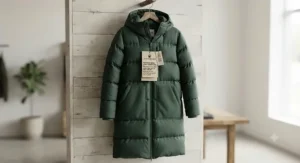
Let’s be honest: nobody falls in love with a long puffer coat. You fall into one, usually in late November, usually while standing at a bus stop wondering why your “warm enough” jacket from three winters ago suddenly isn’t. A long puffer coat is a knee-length or longer quilted outer layer filled with down or synthetic insulation, designed to trap body heat while covering more of your legs and hips than a standard hip-length puffer — which matters a lot more than it sounds like when the wind chill hits -25°C in Winnipeg or Ottawa. Canadians don’t buy these things for fashion points, though plenty of them look great; we buy them because Environment and Climate Change Canada is not exaggerating when it warns that winter conditions can turn dangerous fast, with little notice.

This guide skips the vague “stay cozy!” fluff you’ll find on most retail pages. We researched seven real, currently available long puffer coats spanning budget, mid-range, and splurge territory, pulling actual specs, aggregated review sentiment, and honest trade-off analysis rather than recycled marketing copy. You’ll find a breakdown of what “quilted insulation” actually does, why packable puffer coats solve a very specific problem (and create another), and what separates real budget outerwear durability from a coat that quietly falls apart by February. Whether you’re commuting through a Toronto slush storm or shovelling a Calgary driveway at -30°C, there’s a puffer coat for women on this list built for it — you just need to know which features are marketing noise and which ones actually earn their keep.
Quick Comparison Table
| Coat | Insulation Type | Best For | Price Range (CAD) |
|---|---|---|---|
| Amazon Essentials Packable Hooded Puffer Coat | Synthetic, lightweight | Packable budget travel layer | C$85-C$115 |
| 32 Degrees Shield Tech Maxi Coat | 600 fill power recycled Cloudfill | Budget durability | C$55-C$85 |
| Wantdo Long Warm Hooded Puffer Winter Coat | Synthetic, high-density shell | Toughest budget shell | C$95-C$135 |
| Levi’s Megan Hooded Quilted Puffer Jacket | Down-alternative | Everyday fashion mid-ranger | C$150-C$190 |
| Orolay Winter Long Maxi Down Puffer Coat | 700 fill power duck down, RDS certified | Overall balance of warmth and price | C$190-C$230 |
| Columbia Amaze Puff Long Hooded Jacket | 650 fill power down, RDS certified | Splurge-worthy true down warmth | C$370-C$420 |
| The North Face Arctic Parka | 600 fill recycled down, DryVent shell | Extreme, sustained cold | C$400-C$450 |
Looking at the spread here, the gap between the cheapest and most expensive coat isn’t just about brand names — it’s a real difference in fill power, water resistance, and how the coat behaves after 50-plus wears. The three budget options rely on synthetic fill or lower-grade down and win on price and packability, while the two premium picks use RDS-certified down rated for genuinely brutal temperatures. The middle of the table, Levi’s Megan Hooded Quilted Puffer Jacket and Orolay Winter Long Maxi Down Puffer Coat, is where most Canadian shoppers will actually land, because it balances real insulation with a price that doesn’t require a financial planning session.
Just one click — help others make better buying decisions too!😊
Top 7 Long Puffer Coats for Women: Expert Analysis
We narrowed this down to seven real products after digging through specs, brand materials, and aggregated customer feedback. Every coat here is a genuine, purchasable puffer coat for women, not a filler pick — and every entry below tells you who it’s actually for, not just what it’s made of.
1. Amazon Essentials Packable Hooded Puffer Coat — best packable pick under C$150
This one exists to solve exactly one problem: bulk. The Amazon Essentials Packable Hooded Puffer Coat compresses into its own carrying pouch small enough to toss in a backpack, which is the entire appeal of packable puffer coats as a category. The lightweight synthetic fill and water-resistant quilted shell won’t outperform a true down long puffer coat in a prairie deep-freeze, but for shoulder-season commutes, road trips, or layering under a heavier shell on genuinely cold days, it does its job without weighing you down. The 2-way front zipper is a small but practical touch — it lets you loosen the hem for sitting in a car without fully unzipping the coat.
Based on the spec comparison, this coat trades peak warmth for versatility, and that’s a fair trade for a huge chunk of buyers who don’t face sustained sub-zero temperatures every day. Reviewers consistently report that sizing runs slightly generous through the body, with several noting they sized down for a more tailored silhouette, while others flagged that the two-way zipper mechanism can be fiddly until you get the hang of aligning the pin correctly.
Pros:
- ✅ Packs into its own pouch for easy travel storage
- ✅ Budget-friendly entry point into long puffer coats
- ✅ Lightweight enough for layering under heavier coats
Cons:
- ❌ Sizing runs inconsistent across colours and batches
- ❌ Two-way zipper can jam if not aligned carefully
At around C$85-C$115, this is the coat to grab if your winter is more “commute and errands” than “extended time outdoors in a windstorm” — check current price before buying since Amazon adjusts these often.

2. 32 Degrees Shield Tech Maxi Coat — best budget durability for the price
Here’s what most buyers overlook about ultra-cheap outerwear: it’s rarely durable. The 32 Degrees Shield Tech Maxi Coat is the exception that argues against the stereotype. Built with 100% recycled Cloudfill insulation rated at 600 fill power equivalent, a water-repellent shell, and a genuine YKK two-way zipper — a detail that matters more than it sounds, since cheap zippers are the number-one failure point on inexpensive coats — this jacket punches well above its price tag on the budget outerwear durability front.
What most buyers overlook is that “fill power” numbers on synthetic-fill coats are marketing shorthand for warmth-to-weight ratio, not a guarantee of real-world performance; on paper this means the Shield Tech Maxi Coat should perform close to a mid-tier down coat, and aggregated reviewer sentiment mostly backs that up, with buyers frequently mentioning surprise at how warm it feels for the price. A recurring complaint in user reviews is the absence of an interior pocket, which is a genuine inconvenience if you like to travel light without a bag.
Pros:
- ✅ Genuine YKK zipper outlasts typical budget hardware
- ✅ Recycled fill offers real warmth for the price point
- ✅ Detachable hood adds versatility across conditions
Cons:
- ❌ No interior pocket for phone or keys
- ❌ Extra-long length runs large on shorter frames
Priced in the mid-C$60s to C$85 range at the time of research, this is arguably the single best value long puffer coat on this entire list.
3. Wantdo Long Warm Hooded Puffer Winter Coat — toughest budget shell we found
If your priority is a coat that survives repeated snow shovelling, dog walks, and the occasional scrape against a car door, the Wantdo Long Warm Hooded Puffer Winter Coat deserves a serious look. Its outer shell uses a higher-denier nylon than most coats in its price bracket, paired with a 3000mm to 5000mm waterproof rating depending on the specific listing, plus reinforced heavy-duty buttons and zippers. That waterproof rating means the shell can handle sustained wet snow before moisture works through — a real advantage over shells rated closer to 1000mm, which start wetting out in under an hour of steady snowfall.
Here’s what the spec sheet won’t tell you, but reviewer patterns suggest: the detachable faux fur hood and waist buckle give this coat a more tailored silhouette than most budget long puffer coats, which tend to look boxy. Reviewers consistently note the durable, tear-resistant shell as the standout feature, while a recurring theme in feedback is that the sizing chart runs slightly generous, so shoppers sizing between two options are usually advised to size down.
Pros:
- ✅ Higher-denier shell resists tears and abrasion
- ✅ Genuinely waterproof rating for wet snow conditions
- ✅ Waist buckle creates a flattering, less boxy shape
Cons:
- ❌ Sizing runs generous, requiring careful chart-checking
- ❌ Heavier than comparable synthetic-fill competitors
Expect to pay somewhere in the C$95-C$135 range, making this one of the strongest budget outerwear durability plays on the market right now.
4. Levi’s Megan Hooded Quilted Puffer Jacket — best fashion-forward mid-ranger
Levi’s built its outerwear reputation on denim, not down, but the Levi’s Megan Hooded Quilted Puffer Jacket shows the brand knows how to make a long puffer coat that doesn’t scream “utility gear.” The cinch waist and adjustable drawstring hood give it a shaped, flattering profile that a lot of purely functional coats skip entirely, while the down-alternative fill keeps the price reasonable without sacrificing everyday warmth for city winters.
What most buyers overlook about this model is that the quilted insulation pattern isn’t just cosmetic — the smaller, tighter box-quilting reduces the empty pockets where insulation can shift and bunch over time, which is a common failure mode in cheaper puffers after a season or two of wear. Based on the spec comparison, this places the Megan jacket a notch above pure fast-fashion puffers in longevity, even though it’s priced closer to that category than to true technical outerwear. Aggregated customer sentiment trends positive on the flattering cut and snap-and-zip closure, with a recurring note that the down-alternative fill, while cozy, isn’t rated for extended time in truly severe cold.
Pros:
- ✅ Cinch waist gives a shaped, non-boxy silhouette
- ✅ Tight box-quilting resists insulation shifting over time
- ✅ Adjustable hood drawstring improves wind protection
Cons:
- ❌ Down-alternative fill underperforms in extreme cold
- ❌ Snap placket adds a step to fast dressing
At a price typically landing between C$150 and C$190, this is a strong pick for anyone who wants their coat to double as an outfit, not just insulation.
5. Orolay Winter Long Maxi Down Puffer Coat — the viral Amazon coat, still worth it
You’ve probably seen this coat before you ever searched for it. The Orolay Winter Long Maxi Down Puffer Coat became an internet phenomenon years ago under the nickname “the Amazon coat,” and unlike most viral products, the substance largely holds up. It uses 700 fill power duck down that’s RDS certified — meaning the down is sourced under the Responsible Down Standard, which verifies humane treatment of the birds involved, a detail worth knowing given how opaque down sourcing can be industry-wide.
On paper this means genuinely serious warmth: 700 fill power is a meaningfully higher number than the 600 fill power synthetic alternatives found in budget coats on this list, translating to more loft and heat retention per gram of material. What the spec sheet won’t tell you, but years of aggregated reviews consistently mention, is the deep, oversized pockets (often six or more) and a fit that runs true to size or slightly large, so most buyers are advised to check the brand’s size chart rather than defaulting to their usual size. A recurring complaint in user reviews is the loose-fitting hood, which some reviewers say blows off in high wind since there’s no drawstring to cinch it.
Pros:
- ✅ RDS-certified 700 fill power down for real warmth
- ✅ Six-plus pockets offer genuinely useful storage
- ✅ Machine washable, unusual for a down coat this warm
Cons:
- ❌ Loose hood lacks a drawstring in high wind
- ❌ Runs large, requiring careful size-chart checking
Priced around C$190-C$230 depending on colour and size availability, this remains one of the best all-around values in genuine down long puffer coats.

6. Columbia Amaze Puff Long Hooded Jacket — best splurge for true down warmth
Columbia’s bestselling puffer earns that title honestly. The Columbia Amaze Puff Long Hooded Jacket uses 650 fill power RDS-certified down combined with Columbia’s Omni-Shield finish, a coating designed to repel light rain and resist staining by keeping moisture from soaking into the yarn itself rather than just sitting on the surface. That distinction matters: a lot of “water-resistant” coats only resist light drizzle before saturating, while Omni-Shield-treated fabric keeps performing through a longer wet-weather exposure.
Here’s what most buyers overlook about this jacket: the removable interior shoulder straps aren’t a gimmick — they let you sling the coat over one shoulder hands-free when you’re carrying groceries or wrangling a stroller, which is a small but genuinely useful detail absent from most competitors. Reviewers consistently report the coat feels noticeably fluffier and softer than expected for the price, and the fleece-lined zippered hand pockets get specific praise for actual warmth rather than just being decorative. A common thread in feedback is that the true-to-size fit runs slightly boxy through the torso, which some buyers appreciate for layering and others find less flattering.
Pros:
- ✅ RDS-certified 650 fill power down for serious cold
- ✅ Omni-Shield finish resists both rain and stains
- ✅ Removable straps enable hands-free carrying
Cons:
- ❌ Boxy torso fit isn’t universally flattering
- ❌ Premium price puts it out of reach for casual buyers
At roughly C$370-C$420, this sits firmly in splurge territory, but the fill power and RDS certification justify it for anyone facing genuinely harsh winters.
7. The North Face Arctic Parka — best for brutal, sustained cold
When outdoor gear testers rank winter coats, the The North Face Arctic Parka consistently lands near the top, and the reasoning holds up under scrutiny. It combines 600 fill power recycled goose down with a DryVent waterproof-breathable shell, a two-layer construction that outperforms most water-resistant (but not waterproof) puffers when you’re dealing with wet, heavy snow rather than light flurries. Independent outdoor gear testing has clocked this parka lasting well over two hours in below-freezing conditions before the wearer’s skin temperature dropped meaningfully, a genuinely strong result in comparative testing against competing winter jackets.
What the spec sheet won’t tell you, but multiple independent reviewers note, is that the fabric itself is stiffer and less pliable than down-alternative competitors, meaning mobility takes a slight hit — this isn’t the coat for an active commute involving a lot of bending and reaching. Reviewers consistently praise the double-zipper storm flap and detachable faux fur ruff for genuinely blocking wind at the face, while a recurring critique is that the coat runs heavy and isn’t especially packable, so it’s a poor fit if portability matters to you.
Pros:
- ✅ DryVent shell handles wet snow better than most rivals
- ✅ 600 fill recycled down tested for sustained cold
- ✅ Storm flap and ruff genuinely block wind at the face
Cons:
- ❌ Stiffer fabric restricts mobility versus softer competitors
- ❌ Heavy and not practical for packable travel use
Expect to pay in the C$400-C$450 range, making this the priciest pick here — reserved for buyers who spend real time outdoors in serious cold rather than commuting between heated spaces.
Full Spec Comparison: Top 7 Long Puffer Coats
| Coat | Fill Power / Type | Water Resistance | Best For |
|---|---|---|---|
| Amazon Essentials Packable Hooded Puffer Coat | Synthetic, lightweight | Water-resistant | Travel and layering |
| 32 Degrees Shield Tech Maxi Coat | 600 fill power recycled Cloudfill | Water-repellent | Budget durability |
| Wantdo Long Warm Hooded Puffer Winter Coat | Synthetic, high-density | 3000-5000mm waterproof | Wet, heavy snow on a budget |
| Levi’s Megan Hooded Quilted Puffer Jacket | Down-alternative | Water-resistant | Everyday city style |
| Orolay Winter Long Maxi Down Puffer Coat | 700 fill power duck down (RDS) | Water-resistant | Balanced warmth and value |
| Columbia Amaze Puff Long Hooded Jacket | 650 fill power down (RDS) | Omni-Shield rain/stain resistant | Cold with occasional wet weather |
| The North Face Arctic Parka | 600 fill power recycled down | DryVent waterproof-breathable | Sustained extreme cold |
The pattern here is straightforward once you see it side by side: waterproof rating and fill power both climb as price climbs, but not in lockstep — Wantdo Long Warm Hooded Puffer Winter Coat actually posts a higher waterproof rating than several pricier competitors, proving that shell technology and down quality are two separate purchases, not one bundled feature. If your winters involve more slush and wet snow than dry deep-freeze, prioritize the waterproof number over fill power; if you’re dealing with prolonged dry cold, flip that priority.
How to Maintain and Style Your Long Puffer Coat
Nobody tells you this on the product page, but the way you store a long puffer coat matters almost as much as the coat itself. Down and synthetic fill both lose loft — and therefore warmth — when compressed for long periods, so hanging your coat on a wide hanger during the off-season beats stuffing it into a bin. In the first 30 days of ownership, the most common mistake is over-washing; most quilted insulation only needs a wash when visibly soiled, since frequent laundering breaks down the down clusters or synthetic fibres faster than normal wear does.
For actual cleaning, check the care label before tossing it in with regular laundry — many down-filled coats need a front-load machine on a gentle cycle with a down-specific detergent, followed by a low-heat tumble dry with a few clean tennis balls to redistribute clumped fill. Skipping the tennis-ball step is the single biggest reason people end up with a puffer that looks lumpy and uneven after its first wash. Styling-wise, a long puffer coat pairs surprisingly well with slim-leg pants and ankle boots since the volume stays up top; pairing it with equally bulky bottoms just doubles the bulk. For an optimization trick most people miss: zip the coat only partway and cinch any waist drawstring before you head outside — it traps a layer of warm air at your core far more effectively than a fully open or fully sealed coat.
Real-World Scenarios: Which Long Puffer Coat Fits Your Life
If you’re a university student commuting across an open, wind-exposed campus between classes, packability and layering flexibility usually matter more than maximum warmth, which points toward the Amazon Essentials Packable Hooded Puffer Coat or 32 Degrees Shield Tech Maxi Coat — both let you layer a sweater underneath without feeling like a sleeping bag, and both survive being stuffed into a locker between classes.
If you’re someone who works outdoors for extended stretches — construction, delivery driving, or dog walking in a genuinely cold climate like Winnipeg or Edmonton — the calculus flips entirely toward fill power and waterproofing. The Columbia Amaze Puff Long Hooded Jacket or The North Face Arctic Parka justify their higher price here because the cost of being under-dressed in that scenario isn’t discomfort, it’s a real safety issue. A parent managing school drop-offs, errands, and short bursts of outdoor time in a milder climate like Vancouver or southern Ontario sits comfortably in the middle: the Orolay Winter Long Maxi Down Puffer Coat or Levi’s Megan Hooded Quilted Puffer Jacket deliver enough warmth for those shorter exposures without the premium price tag of true expedition-grade gear.

How to Choose a Long Puffer Coat for Women
Picking the right long puffer coat for women comes down to matching a handful of specific factors to your actual winter, not the winter you wish you had. Here’s the reasoning we’d walk a friend through:
- Start with your climate, not the coat. A -10°C average winter with occasional cold snaps needs far less insulation than a -25°C prairie winter — over-buying warmth just means sweating indoors all day.
- Match fill power to your actual exposure time. Short bursts outdoors (commuting, errands) can lean on 600 fill power or synthetic alternatives; hours outdoors need 650-700+ fill power.
- Weigh waterproof rating against your local precipitation. Wet coastal snow needs a genuinely waterproof shell; dry prairie cold can get away with water-resistant.
- Check the length against your actual activities. A knee-length or longer coat traps more heat but restricts stride length — a real consideration if you’re walking long distances daily.
- Consider packability only if you actually need it. Packable puffer coats trade some warmth for compressibility, which is a real cost if you don’t need the portability.
- Read the size chart, not just the size label. Nearly every coat on this list runs slightly differently, and reviewer feedback consistently flags this as the top source of returns.
- Decide your budget ceiling before you shop, not after. Long puffer coats span roughly C$60 to C$450 in this guide alone — knowing your ceiling first prevents scope creep toward features you don’t need.
Quilted Insulation Explained: What Actually Keeps You Warm
The quilted stitching pattern you see on every puffer coat isn’t decorative — it’s structural. Quilted insulation works by dividing the fill (down or synthetic) into individual pockets or baffles, which stops the material from shifting, bunching, or sliding to the bottom of the coat over time. Without those stitched channels, even the highest fill power down would eventually pool at the hemline, leaving your shoulders and chest thinly insulated after a season of wear and movement.
This is also where fill power terminology gets misused in marketing. Fill power measures how much space one ounce of down occupies when it fully lofts — higher numbers mean the down traps more warm air per gram, which is why a 700 fill power coat can be lighter than a 600 fill power coat while staying just as warm. Canada’s Competition Bureau maintains labelling guidance for down and feather products specifically because fill claims have historically been a source of misleading advertising — worth knowing if a listing’s fill power number seems suspiciously high for its price. Synthetic quilted insulation, by contrast, doesn’t use fill power at all; it’s rated more by denier and loft, and while it can’t quite match top-tier down’s warmth-to-weight ratio, it holds up better in wet conditions since synthetic fibres don’t clump and lose loft when damp the way down does.
Packable Puffer Coats: When Compressibility Matters
Packable puffer coats solve a genuinely narrow but real problem: needing serious warmth without permanent bulk. If you’re flying somewhere cold for a weekend, keeping a spare coat in your car, or simply don’t have closet space for a full winter wardrobe, a packable puffer coat that compresses into its own pouch is worth the trade-off. That trade-off is real, though — packable puffer coats almost always use synthetic or lower fill power down, meaning they prioritize compressibility over the sustained warmth you’d get from a heavier, non-packable coat.
What most buyers overlook about packable puffer coats is that the packing process itself, done repeatedly, gradually reduces loft over the life of the coat — the fill simply doesn’t spring back to full volume indefinitely after thousands of compression cycles. If you’re only packing the coat occasionally for travel, this is a non-issue; if you’re compressing and unpacking it daily as your only coat, you’ll notice reduced warmth well before a similarly priced non-packable coat would show wear. The practical takeaway: treat packable puffer coats as a secondary or travel coat rather than your only long puffer coat if you live somewhere with a genuinely harsh winter.
Budget Outerwear Durability: What Actually Lasts
Budget outerwear durability isn’t really about price — it’s about which specific components a manufacturer cut corners on to hit that price. The two components that fail first on cheap coats are zippers and seam stitching, which is exactly why the 32 Degrees Shield Tech Maxi Coat‘s genuine YKK zipper is worth calling out specifically; off-brand zippers are the single most common reason budget coats get returned or discarded within a year.
The second factor in budget outerwear durability is shell fabric denier — essentially the thickness and tightness of the weave. A higher-denier nylon shell, like the one used on the Wantdo Long Warm Hooded Puffer Winter Coat, resists snagging and abrasion far better than the thin, almost papery shells found on the cheapest puffers sold online. Reinforced stress points (pocket corners, cuffs, the base of the zipper) are the third tell — pull gently on these spots before buying in person, or check close-up product photos when buying online, since that’s where budget coats fail first regardless of overall build quality.

Long Puffer Coat vs Traditional Wool Coat
A wool coat has real advantages a long puffer coat can’t match: it looks more formal, layers well over blazers, and often lasts a decade or more with basic care. But wool insulates through density and thickness alone, without the trapped-air mechanism that makes down or synthetic quilted insulation so efficient — meaning a wool coat warm enough for -20°C would need to be dramatically heavier and bulkier than an equivalently warm puffer.
| Factor | Long Puffer Coat | Traditional Wool Coat |
|---|---|---|
| Warmth-to-weight ratio | High (trapped air insulation) | Lower (relies on density) |
| Water resistance | Often built-in shell treatment | Usually needs separate treatment |
| Formality | Casual to smart-casual | Business to formal |
| Packability | Some models compress fully | Doesn’t compress |
| Typical lifespan with care | 3-7 years depending on quality | 8-15+ years |
The honest takeaway from this comparison is that a long puffer coat wins decisively for pure cold-weather function, especially in genuinely harsh Canadian winters, while a wool coat wins for longevity and formal versatility if your winters are milder or your dress code demands it. Plenty of Canadians end up owning both and choosing based on the day’s forecast rather than treating it as a permanent either-or decision.
Common Mistakes When Buying a Long Puffer Coat
The most frequent mistake, based on the reviewer patterns across every coat in this guide, is buying based on the size label rather than the brand’s actual size chart — nearly every product here has reviewer feedback flagging inconsistent sizing, and that pattern holds industry-wide. A second common mistake is chasing the highest fill power number without considering your actual exposure time; paying premium prices for 700+ fill power when you spend ten minutes outside per day is money spent on warmth you’ll never use.
A third mistake is ignoring the waterproof rating entirely and assuming “water-resistant” and “waterproof” mean the same thing — they don’t, and the difference becomes very obvious the first time you’re caught in wet, heavy snow rather than light flurries. Finally, many buyers skip checking the fill sourcing and RDS certification status, which matters both ethically and practically, since RDS-certified down tends to come from more consistent, higher-quality supply chains than uncertified alternatives.
Long-Term Cost & Maintenance
| Coat | Approx. Price Range (CAD) | Estimated Cost-Per-Wear (3 winters, ~80 wears/season) |
|---|---|---|
| 32 Degrees Shield Tech Maxi Coat | C$55-C$85 | Under C$0.30 |
| Amazon Essentials Packable Hooded Puffer Coat | C$85-C$115 | Around C$0.40 |
| Wantdo Long Warm Hooded Puffer Winter Coat | C$95-C$135 | Around C$0.45 |
| Levi’s Megan Hooded Quilted Puffer Jacket | C$150-C$190 | Around C$0.65 |
| Orolay Winter Long Maxi Down Puffer Coat | C$190-C$230 | Around C$0.80 |
| Columbia Amaze Puff Long Hooded Jacket | C$370-C$420 | Around C$1.50 |
| The North Face Arctic Parka | C$400-C$450 | Around C$1.60 |
Cost-per-wear tells a different story than sticker price alone: the budget coats look cheapest upfront but may need replacing sooner if the shell or zipper fails, while the premium coats spread their higher cost across a genuinely longer expected lifespan given their more durable materials. The real long-term cost consideration isn’t just the purchase price — it’s factoring in occasional professional down cleaning (roughly C$25-C$40 per visit) for the down-filled options, which extends their usable life considerably compared to neglecting care entirely.
✨ Don’t Miss These Exclusive Deals! 🔍
Take your winter wardrobe to the next level with a coat that actually matches your climate. Click on any highlighted pick above to check current pricing and availability before the cold snap hits!
Staying Safe in Canadian Winters: What Your Coat Can’t Do Alone
Even the warmest long puffer coat on this list isn’t a complete cold-weather safety plan on its own. Health Canada’s guidance on extreme cold is clear that layering, covering extremities, and staying dry all matter as much as the outer coat itself — a top-tier parka with bare hands and no hat still leaves you exposed to frostbite risk. Pairing your coat with a proper base layer, insulated gloves, and a hat isn’t optional in genuinely cold conditions; it’s the difference between a coat doing its job and a coat working against gaps in the rest of your outfit.
This also matters for choosing between water-resistant and fully waterproof coats. If you’re regularly out in wet snow or freezing rain, a coat that only resists light moisture will eventually soak through, and wet insulation loses effectiveness fast — both down and synthetic fill perform worse when damp, which compounds cold exposure risk rather than solving it. When in doubt, prioritize a genuinely waterproof shell over a slightly warmer but less weather-resistant option if your local winter includes a lot of wet precipitation rather than dry cold.
FAQ
❓ What is the warmest long puffer coat for extreme cold?
❓ Are packable puffer coats as warm as regular puffer coats?
❓ How much should I pay for a long puffer coat in Canada?
❓ Can you machine wash a long puffer coat with down insulation?
❓ What is the difference between quilted insulation and regular puffer fill?
Conclusion
Buying a long puffer coat in Canada isn’t about finding the single “best” one — it’s about matching real specs to your actual winter and your actual budget. Someone commuting short distances in a milder climate is genuinely better served by the 32 Degrees Shield Tech Maxi Coat than by an expensive parka they’ll never fully need, while someone facing hours outdoors in a prairie winter is under-prepared without the fill power and waterproofing found in the Columbia Amaze Puff Long Hooded Jacket or The North Face Arctic Parka. The middle-ground picks, Orolay Winter Long Maxi Down Puffer Coat and Levi’s Megan Hooded Quilted Puffer Jacket, cover the widest range of realistic Canadian winter scenarios without asking you to spend like you’re heading to the Arctic.
Whatever you choose, check the current price and size chart before buying, since both shift often across retailers, and remember that even the warmest coat works best paired with proper layering underneath. A long puffer coat is an investment in genuinely staying warm and safe through a Canadian winter — treat the decision with the research it deserves, not a five-minute scroll.
Recommended for You
- Puffer Coat vs Wool Coat for Winter: 7 Real Picks (2026)
- Canadian-Made Winter Parka Review: 7 Honest Picks for 2026
- Urban Winter Parka: 7 Best Picks for Canadian Men in 2026
Disclaimer: This article contains affiliate links. As an Amazon Associate, I earn from qualifying purchases. If you purchase products through these links, we may earn a small commission at no additional cost to you.
✨ Found this helpful? Share it with your friends! 💬🤗
