
In This Article
In This Article
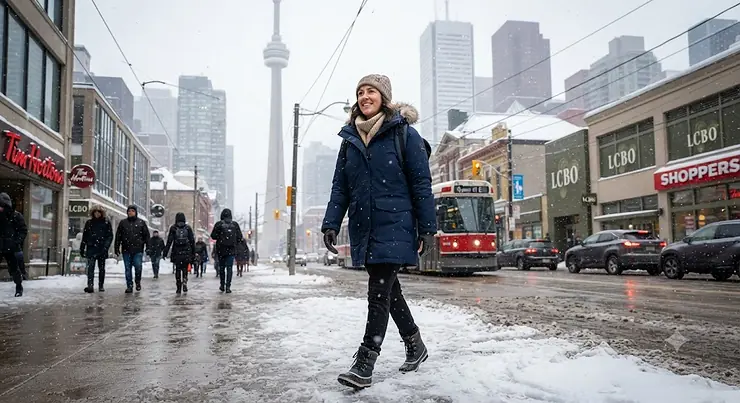
Picture this: it’s minus 18°C (0°F) on a Tuesday morning in Toronto, the wind is cutting sideways off the lake, and you’ve got an 800-metre walk to the subway followed by eight hours in a heated office. That’s not an expedition. That’s just Tuesday. And it’s exactly the scenario an urban winter parka is built for.
An urban winter parka is a warm, insulated, hip-to-thigh-length coat engineered for everyday city life — walking, transit, cycling, and short bursts of outdoor exposure — rather than sustained hours in the backcountry. The silhouette traces back to the amauti and other Arctic Indigenous garments (as the parka’s own history shows), long before it became a downtown wardrobe staple from Halifax to Calgary.
Here’s the part most buying guides skip: an urban winter parka isn’t just a smaller expedition parka. It solves a different problem entirely. City cold is intermittent — you’re warm indoors, then blasted by wind for ten minutes, then warm again. Expedition cold is sustained, with no building to duck into for hours at a stretch. Buy for the wrong scenario and you’ll either sweat through your shirt on the streetcar or freeze waiting for the bus.
This guide walks through seven real, currently available urban winter parka options sold on Amazon.ca, spanning roughly C$80 to well over C$1,500, and digs into what actually separates a genuinely commuter-friendly design from a jacket that just looks the part. Because secondary keywords like men’s winter parka for city commuting keep surfacing in reader questions, we’ll also cover fit, insulation type, and exactly how an urban winter parka differs from an expedition parka — plus how much warmth city life actually demands versus what outdoor gear marketing implies you need.
Quick Comparison Table
| Parka | Insulation Type | Best For | Price Range (CAD) |
|---|---|---|---|
| Rokka&Rolla Men’s Warm Parka Jacket | Quilted synthetic | Tight budgets, backup coat | Under C$130 |
| Levi’s Arctic Cloth City Parka | Quilted synthetic | Casual streetwear commuters | C$90–C$180 |
| Orolay Men’s Warm Parka Jacket | Down-alternative fill | All-around daily warmth | C$150–C$210 |
| Columbia South Canyon Long Down Parka | 650-fill down | City-to-ski-hill versatility | C$250–C$380 |
| The North Face McMurdo Parka III | 550-fill down | Brutal cold on a budget | C$430–C$580 |
| Arc’teryx Therme Parka | 750-fill down + Gore-Tex | Slim technical commuting | C$950–C$1,150 |
| Canada Goose Langford Parka | 625-fill down | Status-symbol city warmth | C$1,500–C$1,800 |
Prices reflect general market ranges at the time of research and change frequently — always check current pricing before buying.
Looking at the spread, there’s a real inflection point between the first four picks and the last three: the Rokka&Rolla Men’s Warm Parka Jacket, Levi’s Arctic Cloth City Parka, Orolay Men’s Warm Parka Jacket, and Columbia South Canyon Long Down Parka all sit under C$400 and lean on synthetic or mid-grade down fill, while the North Face McMurdo Parka III, Arc’teryx Therme Parka, and Canada Goose Langford Parka trade up for higher fill power, technical shells, and — frankly — brand cachet. Neither tier is objectively “correct.” Your commute length, how many minutes you actually spend outside, and how much you care about a tailored silhouette should decide which half of this table you’re shopping in.
💬 Just one click — help others make better buying decisions too!😊
Top 7 Urban Winter Parkas: Expert Analysis
Before the individual breakdowns, here’s the detailed spec comparison — the kind of table Amazon’s own listings won’t put side by side for you.
| Parka | Fill / Insulation | Shell & Weather Protection | Hood | Ideal Commute Style |
|---|---|---|---|---|
| Rokka&Rolla Men’s Warm Parka Jacket | Quilted synthetic | Water-resistant polyester | Detachable faux fur trim | Short walks, transit |
| Levi’s Arctic Cloth City Parka | Quilted synthetic | Water-resistant Arctic Cloth | Adjustable drawcord | Short-to-mid walks |
| Orolay Men’s Warm Parka Jacket | Down-alternative fill | Water-resistant, wind-blocking | Sherpa-lined, detachable | Mid-length walks, transit |
| Columbia South Canyon Long Down Parka | 650-fill down | Omni-Tech waterproof/breathable | Adjustable, removable fur trim | City plus weekend ski trips |
| The North Face McMurdo Parka III | 550-fill down | DWR-treated nylon shell | Fixed, fur-ruff lined | Long exposure, extreme cold |
| Arc’teryx Therme Parka | 750-fill down + synthetic zones | Gore-Tex waterproof/breathable | Adjustable, helmet-compatible | Daily commuting, all conditions |
| Canada Goose Langford Parka | 625-fill down | Arctic Tech wind/water-resistant | Cavernous, fur-ruff lined | Standing at transit stops, city wind |
Every product below follows the same honest breakdown: what the spec sheet says, what it actually means once you’re standing at a bus shelter in a windchill warning, and what real buyers report after wearing it through an actual Canadian winter.
1. Rokka&Rolla Men’s Warm Parka Jacket — best entry-level pick for tight budgets
The Rokka&Rolla Men’s Warm Parka Jacket proves you don’t need three figures and change to stay warm on a Canadian sidewalk, and that alone makes it worth a look for anyone outfitting a first Canadian winter on a student budget. The quilted synthetic lining traps heat reasonably well down to around -10°C to -15°C (14°F to 5°F) with a sweater underneath, while the water-resistant polyester shell shrugs off light snow and drizzle rather than soaking through in minutes. The detachable faux fur-trimmed hood is a nice touch for wind protection on transit platforms, though it’s not insulated on its own, so pair it with a toque on the coldest days. Based on the spec sheet alone, this reads like a budget commuter coat, and the honest analysis backs that up: it’s best suited to city dwellers who need reliable, no-fuss warmth for short walks rather than extended exposure. Aggregated review sentiment across retail platforms is generally positive for the price point, with buyers frequently praising the warmth-to-cost ratio; a recurring theme in reviews is inconsistent sizing and occasional stitching complaints, which is worth flagging rather than glossing over.
Pros:
- ✅ Genuinely warm for a sub-C$130 price point
- ✅ Detachable hood adds versatility across conditions
- ✅ Wide size range with plenty of colour options
Cons:
- ❌ Sizing runs inconsistent between batches
- ❌ Stitching quality varies at this price tier
At under C$130, the Rokka&Rolla Men’s Warm Parka Jacket delivers real value as a first parka or backup coat, even if it won’t hold up to a decade of daily wear.
2. Levi’s Arctic Cloth City Parka — true “city parka” branding on a budget
Levi’s didn’t bury the lede here — the Levi’s Arctic Cloth City Parka is literally marketed as a city parka, and the mid-length cut backs that positioning up. The quilted synthetic insulation is paired with Levi’s proprietary Arctic Cloth shell, a water-resistant treated fabric that handles light snow and slush spray from passing cars reasonably well. In practice, that combination performs best in the 0°C to -12°C (32°F to 10°F) range with a hoodie underneath, which covers a solid majority of a typical Ontario or British Columbia winter. What most buyers overlook about this model is the hidden zipper plus snap-front closure, a detail that blocks wind infiltration far better than a basic zip alone. The adjustable drawcord hood cinches down for exposed waits at bus stops, though it isn’t fur-trimmed, so don’t expect the plush look of pricier options. Aggregated reviews consistently note the streetwear-friendly styling and denim-brand credibility, while a recurring critique is that insulation feels thinner than the “arctic” name implies once temperatures drop below -15°C (5°F).
Pros:
- ✅ Genuinely slim, city-appropriate silhouette
- ✅ Recognizable denim-brand styling for work-to-weekend wear
- ✅ Hidden zipper and snap closure blocks wind well
Cons:
- ❌ Insulation thins out below -15°C without layering
- ❌ No fur-trimmed hood option on most colourways
For C$90 to C$180 depending on colour and size availability, the Levi’s Arctic Cloth City Parka is a smart pick for anyone who wants a coat that reads as fashion-forward on a coffee run, not just functional.
3. Orolay Men’s Warm Parka Jacket — the internet-famous everyday warmth champion
If you’ve spent any time on Amazon around November, you’ve seen the Orolay Men’s Warm Parka Jacket — it’s the so-called “Amazon coat” that built a cult following (and even landed on a celebrity favourites list) largely through word of mouth rather than advertising spend. The down-alternative fill is generously packed, and the detachable, sherpa-lined hood adds real warmth around the neck and ears rather than just blocking wind. Six total pockets, including two large hand-warmer pockets, mean you can actually carry gloves, a phone, and transit fare without digging through a bag in the cold. Based on the spec comparison against similarly priced competitors, the roomy cut is the standout: it’s designed to fit over a chunky sweater without restricting movement, which matters more than most buyers realize until they’re stuck in a too-tight coat on a packed streetcar. Aggregated customer sentiment is strongly positive — reviewers consistently describe it as warm without being suffocating, with one widely cited comment noting it outperformed “every expensive brand name winter coat” they’d previously owned. The recurring complaint across review platforms involves stitching durability after repeated wear, so a careful eye on seams before purchase is a fair precaution.
Pros:
- ✅ Exceptionally warm-to-price ratio, even in deep cold
- ✅ Six pockets, including two insulated hand-warmers
- ✅ Roomy fit comfortably layers over bulky sweaters
Cons:
- ❌ Bulkier profile than slimmer competitors on this list
- ❌ Some reports of stitching wear after heavy use
At roughly C$150 to C$210, the Orolay Men’s Warm Parka Jacket earns its reputation as one of the best value-for-warmth picks in this entire category.
4. Columbia South Canyon Long Down Parka — best hybrid for city-to-slope days
Columbia pitches the Columbia South Canyon Long Down Parka as suited for everything from “wintry explorations through downtown” to actual ski-hill days, and the spec sheet supports that dual identity. The 650-fill down insulation sits in a genuinely useful sweet spot — warmer than the synthetic-fill budget options above, but nowhere near the bulk of a true expedition coat. Columbia’s Omni-Tech waterproof-breathable membrane and sealed seams mean slush and wet snow won’t soak through during a slow walk to the office, while the Omni-Heat reflective lining bounces body heat back rather than letting it escape through the fabric. What the spec sheet won’t tell you, but the design clearly signals, is who this coat is for: someone who commutes downtown all week and heads to a ski hill most weekends, and doesn’t want two separate coats for that. Four external pockets (two hand, two chest) plus one internal security pocket cover phone, wallet, and gloves without bulk. Aggregated review sentiment highlights the versatility and the removable faux fur trim as favourites, with occasional notes that the “long” cut runs longer than expected and may feel excessive for shorter commutes.
Pros:
- ✅ 650-fill down handles genuinely cold days well
- ✅ Waterproof-breathable shell manages slush and wet snow
- ✅ Doubles as a capable ski-hill jacket on weekends
Cons:
- ❌ Longer cut can feel excessive for short walks
- ❌ Availability and colour options fluctuate by season
Generally landing in the C$250 to C$380 range (though Columbia frequently runs promotions on down parkas like this one), the Columbia South Canyon Long Down Parka is the pick for readers who refuse to own a single-purpose coat.
5. The North Face McMurdo Parka III — warmest budget-conscious option for brutal cold
The The North Face McMurdo Parka III sits at an interesting crossroads in this lineup, because it’s genuinely more expedition-leaning than the other six picks, yet it’s sold widely as an everyday winter coat across Canadian cities. The 550-fill down, combined with an extended hem that covers the hips and upper thighs, delivers serious warmth — testing from independent outdoor gear reviewers rated its warmth performance among the highest in its price class, and it’s frequently described as “the budget choice for the coldest of climates.” Based on the spec comparison, the fixed fur-ruff hood and integrated fleece neck gaiter matter most for anyone who waits outside for more than a few minutes at a time, like transit riders in exposed stations or suburban commuters walking to a park-and-ride. The honest trade-off here is mobility: the generous cut and long hem that make it so warm also make it noticeably bulkier than the slimmer picks on this list, which can feel like overkill for someone who’s mostly indoors-to-car-to-indoors. Aggregated reviewer sentiment praises the warmth-per-dollar heavily, while a consistent critique flags the chest pockets as awkward to access and the styling as more practical than fashionable.
Pros:
- ✅ Among the warmest options in its price bracket
- ✅ Extended hem and hood offer serious wind coverage
- ✅ Integrated fleece neck gaiter adds real warmth
Cons:
- ❌ Bulkier fit limits mobility on transit and bikes
- ❌ Styling leans practical over fashion-forward
At approximately C$430 to C$580, the The North Face McMurdo Parka III makes the most sense for readers in genuinely harsh climates (think Winnipeg or rural Alberta) who prioritize raw warmth over a tailored city silhouette.
6. Arc’teryx Therme Parka — slimmest technical cut for daily commuting
The Arc’teryx Therme Parka is the closest thing on this list to a technical answer to the “slim-fit winter outerwear” question readers keep asking about. Despite packing 750-fill goose down through the core and sleeves, independent testing found it notably lightweight at roughly 1.07 kilograms (2 lb 5.6 oz), and reviewers consistently describe it as not feeling bulky even during active movement. The Gore-Tex waterproof-breathable shell is the real differentiator here — it’s genuinely weatherproof rather than merely water-resistant, and Arc’teryx strategically swaps in synthetic insulation around the cuffs and hem where down tends to clump when wet. Here’s what to weigh: the clean, quiet shell fabric and tailored cut make this the most office-appropriate, suit-compatible parka in this entire roundup, but the thigh-length hem and premium positioning can feel like overkill for someone who just wants a coat for waiting at a bus stop. Aggregated reviewer feedback is highly positive on comfort and weather protection, with the most common critique being that the exterior pockets aren’t insulated or fleece-lined, an odd omission at this price point for daily hand-warming.
Pros:
- ✅ Exceptional warmth-to-weight ratio for its fill power
- ✅ Genuinely waterproof Gore-Tex shell, not just water-resistant
- ✅ Slim, tailored cut works over business attire
Cons:
- ❌ Exterior pockets lack insulation or fleece lining
- ❌ Premium price puts it out of reach for casual buyers
Typically priced between C$950 and C$1,150, the Arc’teryx Therme Parka is the pick for commuters who want technical outdoor-brand performance without sacrificing a slim, professional silhouette.
7. Canada Goose Langford Parka — the iconic status-symbol city parka
No list of urban winter parkas is complete without addressing the Canada Goose Langford Parka, the single most recognizable silhouette in Canadian street style over the past decade. Independent testing measured its warmth as solid rather than class-leading — interior body-heat retention was respectable at around 20°C ambient cold, but noticeably behind some competitors despite the 625-fill down and Arctic Tech wind- and water-resistant shell. That’s an important, honest distinction: this coat is designed with a slimmer, more tailored cut specifically for urban wear, and testers explicitly noted it’s “stylish enough to look good in an urban environment” while still built to handle real wind. The cavernous, fur-ruff-lined hood offers genuinely excellent face and neck protection at exposed transit stops, and the dense ribbed-knit cuffs seal out drafts at the wrist better than most competitors on this list. What the spec sheet won’t fully convey is the brand-cachet factor — a meaningful part of what buyers are paying for is instant recognizability, not just performance. Aggregated review sentiment praises the hand-warmer pockets and hood coverage, while a recurring complaint involves a stiff, occasionally stubborn main zipper that can take a few tries to engage in extreme cold.
Pros:
- ✅ Slim, tailored cut built specifically for city wear
- ✅ Exceptional hood coverage and wind protection at the neck
- ✅ Lifetime construction quality with reinforced stitching
Cons:
- ❌ Main zipper can be stubborn to engage
- ❌ Bulky to pack, making air travel inconvenient
At roughly C$1,500 to C$1,800, the Canada Goose Langford Parka is a genuine splurge, and buyers should go in knowing they’re paying partly for brand and partly for performance.
Urban Winter Parka vs Expedition Parka: What’s Actually Different
This is the comparison secondary keyword traffic asks about most, so let’s be precise. An urban winter parka and an expedition parka are not the same category wearing different price tags — they’re engineered around fundamentally different exposure patterns.
Take the Canada Goose Langford Parka against its own sibling, the Canada Goose Expedition Parka. Independent testing rated the Expedition Parka’s warmth performance as effectively perfect, maintaining interior temperatures well above comfortable even at roughly -7°C (20°F) ambient, largely because of its boxy, roomy cut that allows heavy mid-layers underneath. But that same review flagged it as “somewhat of a niche parka” — heavy at over 2 kilograms (4.46 lb), too warm for anything active, and explicitly built for “polar expeditions and snowmobile commutes,” not casual city wear. The Canada Goose Langford Parka, by contrast, trades some of that raw thermal ceiling for a slimmer silhouette that doesn’t look like snowmobile gear on a subway platform.
The same pattern shows up with the The North Face McMurdo Parka III on this list, which leans closer to expedition-style design (extended hem, fixed fur ruff, maximum coverage) than true urban tailoring, which is exactly why we flagged its bulkier fit as a trade-off above. Meanwhile, the Arc’teryx Therme Parka takes the opposite approach: it borrows a technical, weatherproof Gore-Tex shell from mountaineering gear but tailors it into a slim urban cut, essentially splitting the difference between the two categories.
The practical takeaway: expedition parkas prioritize sustained thermal output and can handle hours of static outdoor exposure, but they sacrifice mobility, packability, and — frankly — how they look walking into a coffee shop. Urban winter parkas prioritize a tailored fit, layering versatility with work or casual clothing, and manageable bulk for transit, at the cost of some thermal ceiling in truly extreme, prolonged cold.
City vs Outdoor Insulation Needs: How Much Warmth Do You Actually Need
Here’s a mistake that costs buyers money every year: assuming more insulation is automatically better. It isn’t, once you account for how city life actually exposes you to cold.
Environment and Climate Change Canada’s own wind chill index is built around frostbite risk during sustained outdoor exposure — the kind of scenario an expedition parka is designed for. A city commuter’s actual exposure profile looks completely different: short walks between heated spaces, waiting a few minutes at a transit stop, maybe a 10-to-20-minute walk to work. That intermittent pattern means wind resistance and a well-sealed hood often matter more for comfort than raw fill power alone.
This is where the Levi’s Arctic Cloth City Parka and Orolay Men’s Warm Parka Jacket actually outperform their spec sheets in daily use — their synthetic or down-alternative fills aren’t as warm on paper as 750-fill down, but paired with a wind-blocking shell and a snug hood, they handle the realistic 10-to-20-minute exposure windows most commuters face just fine. Meanwhile, someone standing at an exposed suburban bus shelter for 20+ minutes in open wind, or a delivery cyclist logging hours outside, genuinely needs the higher fill power and wind protection of something like the Columbia South Canyon Long Down Parka or The North Face McMurdo Parka III.
The honest framework: match insulation to exposure duration and wind exposure, not to the coldest number on the thermometer. A downtown condo dweller with underground parking access has a different insulation need than someone walking a rural road to catch a school bus, even if both live in the same province.
How to Choose an Urban Winter Parka
Cutting through marketing copy, here’s the reasoning that should actually drive your decision, in order of priority:
- Map your real exposure time. Time yourself on your actual commute — walk to transit, wait time, walk from transit — and buy insulation matched to that duration, not to the coldest day of the year.
- Prioritize the hood and collar seal before fill power. Wind cutting around an exposed neck causes more discomfort than a slightly lower fill count, based on how most heat loss actually happens during short exposure.
- Check the shell’s water resistance rating, not just “water-resistant” marketing text. Slush splashback from traffic and wet snow are a bigger daily threat than a snowstorm for most city dwellers.
- Decide on cut before brand. A slim cut that layers under a blazer serves office commuters; a roomier cut that layers over a hoodie serves casual, transit-heavy lifestyles.
- Count the pockets you’ll actually use. Phone, transit card, gloves, keys — a coat with two deep, easily accessible hand pockets beats one with six shallow decorative ones.
- Set a price ceiling based on wear frequency, not sticker price alone. A coat worn five days a week for four winters amortizes very differently than one worn occasionally.
- Read aggregated review themes, not star ratings alone. Recurring complaints about stitching or sizing tell you more than an average rating ever will.
Slim-Fit Winter Outerwear: Getting the Cut Right for City Life
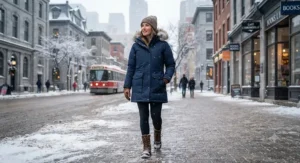
Fit is where most urban winter parka shopping goes wrong, and it’s tied directly to how the coat gets worn day to day. A slim-fit cut, like the one on the Canada Goose Langford Parka or Arc’teryx Therme Parka, is designed to layer over a sweater or dress shirt without adding visible bulk — which matters enormously if you’re commuting in business-casual clothing and don’t want to look like you’re wearing a sleeping bag into a meeting.
That slim fit comes with a real trade-off, though: less room for heavy mid-layers means a lower practical warmth ceiling in genuinely extreme cold, since down and synthetic insulation both rely partly on trapped air volume to work. Reviewers of the Arc’teryx Therme Parka specifically noted it doesn’t feel bulky even during active movement, which is a direct result of Arc’teryx’s decision to prioritize a tailored silhouette over maximum loft.
Roomier cuts, like the Orolay Men’s Warm Parka Jacket and The North Face McMurdo Parka III, sacrifice some of that tailored look in exchange for layering flexibility and, generally, a higher effective warmth ceiling. What most buyers overlook is that a roomy coat isn’t automatically warmer than a slim one — a well-insulated slim parka with a sealed hood can outperform a loosely fitted roomy coat that lets warm air pump out with every stride. The right call depends on whether your winter wardrobe leans toward business casual or bulky knitwear.
Commuter-Friendly Design Features That Actually Matter (And Those That Don’t)
Marketing copy loves to list features. Here’s what actually earns its place in a coat built around a men’s winter parka for city commuting use case, and what’s mostly noise.
Actually matters: A snug, adjustable hood that cinches independently of the collar — this is the single biggest factor in comfort during short, windy exposures, and it’s why the cavernous hood on the Canada Goose Langford Parka consistently gets singled out in reviews. Deep, accessible hand pockets you can use one-handed while holding a phone or transit card also matter more than most buyers expect until they’re fumbling for a pass at a turnstile in the cold.
Mostly noise: An excessive number of decorative pockets, which the North Face McMurdo Parka III review flagged as awkward to access anyway. Detachable liners marketed as “3-in-1 versatility” often add bulk and cost without meaningfully improving daily commuter comfort, since most city dwellers wear one consistent setup all winter rather than swapping layers mid-week.
✨ Ready to compare a few of these commuter-friendly features side by side before you decide? Take a closer look at current listings and specs while they’re fresh in your mind! 🧥❄️
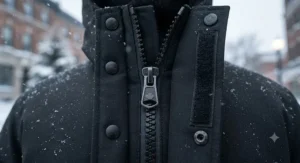
A properly sealed zipper with a wind flap, like the hidden zipper and snap combination on the Levi’s Arctic Cloth City Parka, genuinely reduces draft infiltration — this is functional, not decorative. Reflective heat-lining technology, like Columbia’s Omni-Heat lining in the Columbia South Canyon Long Down Parka, is a legitimate performance feature rather than marketing fluff, since it measurably reduces radiant heat loss through the shell fabric.
Men’s Winter Parka for City Commuting: Real-World Scenarios
Different commuters have genuinely different needs, so here’s how three common Canadian city-dweller profiles map onto this lineup.
The budget-conscious transit rider: Someone taking the bus or subway to a retail or service job, with a 10-to-15-minute walk on each end and limited disposable income for outerwear. The Rokka&Rolla Men’s Warm Parka Jacket or Levi’s Arctic Cloth City Parka covers this reliably, since neither exposure duration nor budget justifies premium fill power here.
The office professional layering over business attire: Someone walking a few blocks from a parking garage or transit stop to an office, who needs a coat that looks credible over a suit or blazer and doesn’t need to survive backcountry conditions. The Arc’teryx Therme Parka or Canada Goose Langford Parka fits this profile best, trading some raw warmth ceiling for a genuinely professional, slim silhouette.
The family commuter juggling drop-offs and long outdoor stretches: Someone doing school drop-off, standing at a bus shelter with kids, or walking a dog before work — genuinely extended outdoor exposure in unpredictable weather. The Columbia South Canyon Long Down Parka or The North Face McMurdo Parka III makes more sense here, since the higher fill power and extended coverage earn their keep during those longer outdoor stretches.
Practical Usage Guide: Getting the Most From Your New Parka
Buying the right coat is half the equation — using and maintaining it properly extends both comfort and lifespan considerably.
In your first 30 days: Test the hood adjustment and drawcords indoors before you need them in a windstorm, since factory settings are rarely optimized for your head size. Spot-treat the shell with a DWR (durable water repellent) reactivating wash if water stops beading off the fabric — most synthetic and down parkas need this refreshed roughly once a season with regular wear.
Layering strategy: A merino or synthetic base layer under a light mid-layer, topped by your parka, outperforms a single heavy sweater underneath, since it manages moisture rather than trapping it against your skin. This matters more with tighter, slim-cut coats like the Arc’teryx Therme Parka, where there’s less room for a bulky knit.
Storage and maintenance between wears: Hang your parka rather than folding it for storage, since compressed down and synthetic fill both lose loft over time when crushed. Follow manufacturer washing guidance closely — down-filled coats like the Columbia South Canyon Long Down Parka or Canada Goose Langford Parka typically require specific down-safe detergents and low, gentle drying with clean tennis balls to redistribute clumped down.
Common first-winter mistakes: Overdressing underneath a well-insulated parka is the most frequent error, leading to sweating that then chills you once you’re outside again — a phenomenon the Canadian Centre for Occupational Health and Safety explicitly flags as a real cold-weather risk, since damp clothing loses insulating value fast. Zipping the coat only partway to “regulate temperature” is another common misstep; a properly matched insulation level shouldn’t require venting on a normal commute.
Common Mistakes When Buying an Urban Winter Parka
Even careful shoppers fall into predictable traps here. First, buying based on the coldest recorded temperature in your city rather than your actual daily exposure pattern — as covered above, this leads to overspending on fill power you’ll rarely use to its full potential. Second, ignoring hood and collar fit in favour of comparing fill power numbers alone, when in practice a poorly sealed hood undermines even excellent insulation.
Third, choosing size based on a snug, no-layers fit rather than accounting for a sweater or blazer underneath — this is a particularly common mistake with slim-cut options like the Levi’s Arctic Cloth City Parka, where sizing up one size often solves comfort complaints entirely. Fourth, overlooking the shell’s actual waterproof rating in favour of insulation specs, despite wet insulation losing much of its effectiveness regardless of fill power or fill type. Fifth, assuming a higher price automatically means a warmer coat; as the comparison above shows, the Canada Goose Langford Parka‘s independently tested warmth actually trailed some lower-priced competitors, since brand cachet and construction quality don’t always correlate directly with raw thermal performance.
Benefits vs Traditional Alternatives
| Category | Urban Winter Parka | Wool Overcoat | Technical Ski Shell | Expedition Parka |
|---|---|---|---|---|
| Warmth in intermittent city cold | High | Moderate | Low without layering | Very high |
| Wind & water resistance | High | Low-moderate | High | Very high |
| Mobility for transit & cycling | Good | Good | Excellent | Poor |
| Style versatility (work to weekend) | High | High | Low | Very low |
| Typical price range (CAD) | C$90–C$1,800 | C$200–C$800 | C$150–C$700 | C$500–C$2,500+ |
The comparison makes the trade-offs concrete: a wool overcoat wins on classic office styling but loses badly on wind and water resistance the moment real winter weather hits, which is exactly the gap an urban winter parka is built to fill without sacrificing that same styling versatility. A technical ski shell offers excellent mobility and weather protection but typically skips real insulation entirely, assuming you’ll layer heavily underneath — fine on the slopes, impractical for a five-minute walk to a coffee shop. Expedition parkas top the chart on raw warmth and weather resistance but bottom out on mobility and everyday style, confirming why they’re the wrong tool for daily city commuting despite superficially similar looks.
Long-Term Cost & Maintenance: Is a Premium Parka Worth It
Sticker price tells an incomplete story. A useful way to think about value is cost-per-winter, assuming reasonable care and typical wear frequency.
| Tier | Price Range (CAD) | Realistic Lifespan | Rough Cost-Per-Winter | Best-Suited Buyer |
|---|---|---|---|---|
| Budget (Rokka&Rolla, Levi’s) | C$90–C$180 | 2–4 winters | C$25–C$60 | First-timer, occasional wearer |
| Mid-range (Orolay, Columbia) | C$150–C$380 | 4–7 winters | C$25–C$70 | Daily commuter, hybrid use |
| Premium (North Face, Arc’teryx, Canada Goose) | C$430–C$1,800 | 7–12+ winters | C$40–C$150 | Long-term daily wearer, professional dress code |
The math tends to surprise people: a well-maintained premium parka like the Arc’teryx Therme Parka or Canada Goose Langford Parka can land at a similar or even lower cost-per-winter than replacing a budget coat every two or three years, provided you actually wear it daily for most of a decade. That said, this only holds up if the coat gets used — a C$1,700 parka worn twice a week for two winters before a style change is a worse deal than a C$150 coat replaced twice in that same span. Maintenance matters here too: down-filled coats professionally cleaned or hand-washed with down-safe detergent every one to two seasons will noticeably outlast neglected ones, since dirt and body oils break down the down clusters’ loft over time.
Safety, Wind Chill & Cold-Weather Regulations in Canada
Winter outerwear isn’t just about comfort — it’s genuinely a safety consideration in much of Canada. Environment and Climate Change Canada issues extreme cold warnings based on wind chill values that indicate real frostbite risk within minutes of exposure, and the department’s own guidance on how to be prepared for winter weather recommends dressing in layers with a wind- and water-resistant outer shell as a baseline precaution, not a style preference.
There’s no federal insulation-rating certification specific to consumer parkas the way there is for, say, safety footwear, so “arctic-rated” or similar marketing terms on product listings should be read as brand claims rather than verified standards. That’s a legitimate gap worth knowing about before you trust a listing’s temperature-rating claim at face value; independent testing, like the comparisons cited throughout this guide, remains a more reliable signal than manufacturer marketing copy alone. For anyone spending extended time outdoors — winter construction work, dog walking, delivery cycling — pairing a properly sealed hood and shell with moisture-wicking base layers matters more for actual safety than chasing the highest fill-power number on a spec sheet.
Frequently Asked Questions
❓ What's the warmest urban winter parka for Canadian winters?
❓ How much should I budget for a quality urban winter parka in Canada?
❓ Can I wear a slim-fit urban parka for skiing or snowmobiling?
❓ Is Canada Goose worth the price for everyday city wear?
❓ How do I properly wash and care for a down-filled parka?
Conclusion
There’s no single “best” urban winter parka, and honestly, anyone claiming otherwise hasn’t accounted for how differently Canadians actually experience winter depending on their commute, climate zone, and dress code. What the research does make clear is that matching insulation and cut to your real exposure pattern beats chasing the highest fill-power number or the most recognizable logo every time.
If you’re working with a tight budget and a short transit commute, the Rokka&Rolla Men’s Warm Parka Jacket or Levi’s Arctic Cloth City Parka covers the basics without overspending. If you want an all-around daily driver with a devoted following behind it, the Orolay Men’s Warm Parka Jacket remains hard to beat on value. Readers who split time between downtown streets and ski weekends should look hardest at the Columbia South Canyon Long Down Parka, while anyone facing genuinely brutal, prolonged cold should weigh the The North Face McMurdo Parka III seriously despite its bulkier profile. For office-appropriate technical performance, the Arc’teryx Therme Parka stands out, and for readers who want the most recognizable, tailored urban silhouette in Canadian outerwear, the Canada Goose Langford Parka remains the benchmark — provided the price fits the budget.
Whichever direction you go, the core lesson from every comparison above holds: an urban winter parka should be chosen for the winter you actually live through, not the one in outdoor gear marketing photos.
Recommended for You
- Expedition Parka for Extreme Cold: 7 Best Picks for 2026
- Long Winter Parka for Women: 7 Real Picks for Canadian Cold (2026)
- Arctic Parka for Canadian Winters: 7 Ultimate Picks for 2026
Disclaimer: This article contains affiliate links. As an Amazon Associate, I earn from qualifying purchases. If you purchase products through these links, we may earn a small commission at no additional cost to you.
✨ Found this helpful? Share it with your friends! 💬🤗
