

In This Article
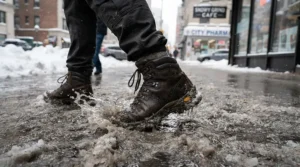
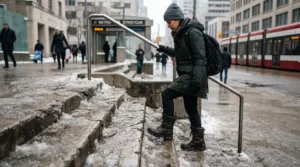
Every Canadian knows the sound. It’s the wet, sad squelch at the crosswalk when a grey puddle at the curb turns out to be much deeper than it looked. Your sock is soaked before the light changes. By the time you reach the office, your toes are filing a formal complaint.
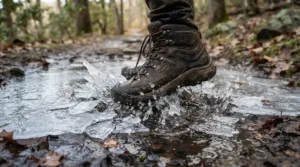
Slush is a different enemy from snow. Dry snow sits politely on top of a boot. Slush is half-melted, salt-laced porridge, and it pushes water into every seam and stitch while pulling heat out of your foot faster than powder ever could. That’s why waterproof winter boots for slush and snow need a different checklist than a generic “warm boot”: sealed construction, a genuine waterproof barrier, a sensible shaft height, and an outsole that doesn’t turn the sidewalk into a skating rink.
This guide compares seven real boots, from budget to premium, and translates every spec into what it means on an actual sidewalk. You’ll also find a men’s winter boot sizing chart, a plain-English breakdown of men’s insulated winter boots Canada buyers should understand, a care routine for salt-stain-resistant boots, and three scenarios for anyone shopping for winter boots for commuting.
A quick word on method: I haven’t worn these boots and won’t pretend otherwise. What follows is analysis built on published specs, editorial test roundups, and the review themes that surface in buyer feedback. Prices appear as CAD ranges because they move constantly, so always check the current price before you buy.
What Are Waterproof Winter Boots for Slush and Snow?
Waterproof winter boots for slush and snow are insulated, seam-sealed boots with a waterproof membrane, shell or coated upper, plus a lugged outsole built to grip wet, salty surfaces. They keep meltwater out, hold body heat in, and stay stable on ice, packed snow and slushy curbs.
Why does the waterproof part matter so much? Because wet is more dangerous than cold. Canada’s occupational health authority notes that wet feet lose heat roughly 25 times faster than dry ones, which is why a “water-resistant” boot that merely sheds light flurries can fail badly in a slushy downtown commute.
Think of a proper winter boot as three layers working together:
- The barrier: a membrane, rubber shell or sealed upper that blocks water.
- The insulation: synthetic fill or a felt liner that traps warmth.
- The traction: an outsole compound that stays grippy when temperatures drop.
If one layer is weak, the whole boot is only as good as its weakest link. The seven picks below were chosen because each one is strong in a different layer, so you can match the boot to your actual winter instead of an imaginary one.
Quick Comparison: 7 Winter Boots at a Glance
| Boot | Standout Trait | Warmth Level | Price Range (CAD) | Best For |
|---|---|---|---|---|
| Sorel Caribou | Rubber shell with removable felt liner | Extreme | C$200-C$260 | Long days outdoors |
| Columbia Bugaboot III | Omni-Grip traction | Moderate to high | C$180-C$250 | Everyday urban walkers |
| The North Face Chilkat V 400 | 400 g insulation | High | C$190-C$260 | Cold-prone commuters |
| NORTIV 8 Men’s Insulated Waterproof Snow Boots | 200 g Thinsulate at a low cost | Moderate | C$60-C$110 | Budget buyers |
| Icebug Metro2 BUGrip | Carbide-studded outsole | Light to moderate | C$250-C$330 | Icy sidewalk commuters |
| MUCK Arctic Pro | Neoprene waterproof shell | High | C$200-C$280 | Wet snow and shovelling |
| Baffin Control Max | Extreme-cold construction | Extreme | C$280-C$380 | Deep-freeze regions |
Price ranges reflect the time of research and may vary. Looking at the table, the NORTIV 8 Men’s Insulated Waterproof Snow Boots is the clear value play, while the Sorel Caribou and Baffin Control Max are really insurance policies against serious cold. If ice is your main daily threat rather than temperature, the Icebug Metro2 BUGrip justifies its higher price through its studs alone.
💬 Just one click — help others make better buying decisions too!😊
Top 7 Waterproof Winter Boots for Slush and Snow: Expert Analysis
Each boot below is analyzed on what its specs mean in practice, who it suits, and where it falls short.
1. Sorel Caribou — legendary pac-boot warmth for deep cold
The Sorel Caribou does one thing relentlessly: it keeps a cold, wet foot warm. A waterproof nubuck upper sits on a vulcanized rubber shell, so the lower part of the boot works like a rubber bathtub for your foot. There’s no stitched seam down there for slush to sneak through.
Here’s what the specs mean on the street. The felt liner is removable, so you can pull it out and dry it overnight. The brand rates the boot down to -40°C, which suits prairie cold snaps but is overkill for a damp Vancouver winter. The non-loading Aero-Trac outsole is designed to shed packed slush rather than clump up with it.
Based on the spec comparison, this is the boot for people who spend long stretches outside, such as dog walkers, shovellers and rink parents. It’s less ideal for anyone who needs a slim profile on a crowded streetcar. Pac-style boots like this feel like small canoes if you spend your whole day indoors.
Review sentiment is encouraging. Reviewed’s Canadian test team ranked it Best Overall among 12 boots, citing warmth, durability and waterproofing. For Amazon.ca buyer reviews, read the recent sizing comments, since pac boots often fit roomy.
Pros:
- ✅ Rubber shell blocks slush from the bottom up
- ✅ Removable liner dries overnight
- ✅ Outsole sheds packed snow and slush
Cons:
- ❌ Bulky profile feels clumsy indoors
- ❌ Overkill for mild city winters
Expect roughly C$200-C$260 (check current price), which is strong value if you need genuine deep-cold insurance.
2. Columbia Bugaboot III — Omni-Grip traction without the pac-boot bulk
Think of the Columbia Bugaboot III as the sensible middle child. It’s warm enough for most Canadian winters, grippy enough for icy crosswalks, and not so bulky that you’ll resent it indoors. It’s fully waterproof and insulated, and its Omni-Grip rubber outsole is built to bite into wet surfaces instead of skating across them. One heads-up: Columbia has released newer Bugaboot generations since, so confirm which version a listing actually shows.
What do those specs mean on a Tuesday morning? Waterproof construction turns a slush puddle at the curb into an inconvenience rather than a disaster. The mid-weight insulation is better matched to the -5°C to -15°C band where most Canadian city dwellers actually live than to Arctic extremes.
That makes it a smart pick for someone who walks 15 to 30 minutes each way and then sits at a desk. It’s warm outside without becoming a furnace inside.
On sentiment, roundup reviewers single out the waterproofing-plus-grip combination as its calling card for slushy conditions. I couldn’t verify a stable Amazon.ca review sample for this exact generation, so scan recent reviews for toe-box width and seam-durability comments.
Pros:
- ✅ Fully waterproof build for wet commutes
- ✅ Omni-Grip outsole handles slick surfaces
- ✅ Warm without feeling like a pac boot
Cons:
- ❌ Mid-weight insulation is not deep-freeze ready
- ❌ Listings may show different model generations
Expect roughly C$180-C$250, a solid mid-range value for urban winters.
3. The North Face Chilkat V 400 — 400-gram warmth in a sportier silhouette
Take the “400” in The North Face Chilkat V 400 literally. It points to 400 grams of insulation, double the 200 g standard that dominates the budget end of the market. Roundups list it as a waterproof snow boot, and the extra fill is the real story here.
Why does that matter? Insulation weight matters most when you’re standing still, and the bus stop at -20°C is where cheaper boots tend to give up. The spec sheet won’t tell you this, but a heavier fill is also a gamble on mild days. If your winter is mostly slushy and hovering near zero, feet can overheat and sweat, and sweat is its own form of wet.
This is a good fit for people who run cold, wait outdoors for transit, or live somewhere like Winnipeg or Edmonton where “winter” is not a suggestion. Check the listing for seam-sealing details before you commit, since waterproofing specifics vary by version.
Review sentiment is hard to pin down. The boot appears in several 2026 winter-walking roundups, but I couldn’t verify a robust Amazon.ca sample, so read the 3-star reviews for fit patterns.
Pros:
- ✅ 400 g insulation suits genuinely cold commutes
- ✅ Sportier look than pac-style boots
- ✅ Waterproof build for slushy sidewalks
Cons:
- ❌ Can run warm on mild slush days
- ❌ Bulkier than lightweight city boots
At roughly C$190-C$260, it’s worth it if cold is your priority and wasteful if it isn’t.
4. NORTIV 8 Men’s Insulated Waterproof Snow Boots — best value with 200 g Thinsulate
If the goal is dry, warm feet without a luxury-boot invoice, the NORTIV 8 Men’s Insulated Waterproof Snow Boots make a compelling case. Roundups describe seam-sealed waterproof construction and 200 g Thinsulate insulation. One editorial roundup names it a Best Value Pick and says it handles three to four months of snow, slush and freezing temperatures.
Here’s the practical meaning. 200 g is the “sweet spot” fill for active walking in roughly 0°C to -10°C, so this boot suits Ontario, Quebec and Maritimes winters better than a Yellowknife January. Because the boot isn’t weighed down by heavy insulation, it also stays light enough for all-day wear.
My analytical take: this is the boot for students, first-time winter-boot buyers, and anyone who needs a spare pair for the car or cottage. The caution is longevity. It comes from a lesser-known brand, so long-term durability data is thinner than for the established names. Treat it as a “good for a couple of winters” purchase and check recent reviews for sole-wear comments.
Pros:
- ✅ Seam-sealed waterproof build at a budget cost
- ✅ 200 g Thinsulate suits moderate cold
- ✅ Lighter than most insulated competitors
Cons:
- ❌ Not built for deep-freeze conditions
- ❌ Long-term durability data is thinner
Expect roughly C$60-C$110, which is outstanding value for moderate Canadian winters.
5. Icebug Metro2 BUGrip — carbide-studded grip for glazed sidewalks
Slush is only half the commute battle. Black ice is the other half, and the Icebug Metro2 BUGrip is aimed squarely at it. This Swedish-designed winter walking boot uses carbide-tipped studs set into its outsole, a very different traction philosophy from ordinary lugs, which can only hope the surface is cooperative.
Translated into daily life, studs mean you can cross a frozen parking lot or a glazed crosswalk without doing the arms-out penguin shuffle. Based on the spec comparison, this is a commuter winter footwear pick built for walkers, not for deep-snow trekking or standing at a -30°C bus stop. The boot is positioned for urban walking, so confirm waterproofing and insulation details on the current listing.
The trade-off is indoor behaviour. Studded soles can feel noisy or skittery on tile, polished concrete and hardwood, so you’ll want to change shoes at your destination, which is a normal habit for Nordic commuters anyway.
Roundups include it among the winter walking boots with credible traction. I couldn’t verify a sufficient Amazon.ca review sample, so check recent comments on stud wear.
Pros:
- ✅ Carbide studs bite into black ice
- ✅ Urban styling suits office-adjacent wear
- ✅ Lighter than pac-style alternatives
Cons:
- ❌ Studs feel skittery on smooth indoor floors
- ❌ Lighter warmth than extreme-cold boots
Expect roughly C$250-C$330, which is worth it if icy sidewalks are your daily hazard.
6. MUCK Arctic Pro — fully waterproof neoprene for wet, heavy work
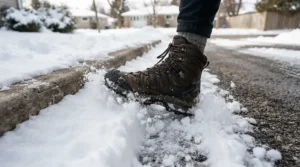
The MUCK Arctic Pro takes the most literal approach to waterproofing imaginable. Its neoprene shell is described as 100% waterproof, so water simply has nowhere to enter above sole level. One roundup recommends it for snow shoveling, hunting and wet-snow work, and says it grips well on mud, slush and packed snow.
What does that mean for you? If your day involves standing in meltwater, clearing a driveway, or working on a site where you can’t avoid puddles, a neoprene shell is the most forgiving design on this list. The trade-off is breathability. Neoprene traps sweat, so on active, mild days your socks may end up damp from the inside. Pair it with moisture-wicking wool socks, and consider a spare pair for long shifts.
This is the right boot for outdoor workers, snow-removal duty and anyone whose winter is more “wet and heavy” than “dry and cold.” It’s a poor match for a polished office commute. Check the listing for shaft height and sizing, as taller neoprene boots can feel stiff at the ankle.
Pros:
- ✅ Fully waterproof neoprene shell
- ✅ Performs well in wet snow and slush
- ✅ Strong warmth for sub-zero work
Cons:
- ❌ Neoprene traps sweat on active days
- ❌ Too workwear-styled for office wear
At roughly C$200-C$280, it’s excellent value for wet, physical winter work.
7. Baffin Control Max — extreme-cold engineering from an Ontario brand
The Baffin Control Max is what you buy when someone says “Canadian winter” and means it. The brand, based in Stoney Creek, Ontario, designs it for conditions far below what most commuters ever face, with a multi-layer removable liner system and an extreme-cold rating well below -40°C.
Let’s translate that. Ratings at this level are about survival, not comfort, and they assume activity, proper socks and dry liners. For ice fishing, northern work or anywhere the wind chill routinely hits -35°C, this is the correct tool. For a Toronto commute, it’s like bringing a snowplow to a parking-lot dusting.
My honest take: unless you’re in the far north, the Prairies at their coldest, or you simply never want to think about cold again, you’re probably paying for capability you won’t use. The removable multi-layer liner is a real advantage, though, because liners dry overnight and extend the boot’s lifespan.
Roundups include it among top winter walking boots, but I couldn’t verify a robust Amazon.ca review sample, so check recent reviews for fit and weight comments.
Pros:
- ✅ Extreme-cold rating suits harsh regions
- ✅ Removable liner system dries faster
- ✅ Canadian-brand pedigree in deep cold
Cons:
- ❌ Heavy and bulky for daily commuting
- ❌ Premium price for capability many won’t need
Expect roughly C$280-C$380, which makes sense only if you genuinely face extreme cold.
Top 7 Specs Comparison
| Boot | Insulation | Waterproofing | Traction | Price Range (CAD) | Best For |
|---|---|---|---|---|---|
| Sorel Caribou | Removable felt liner (-40°C brand rating) | Waterproof nubuck on rubber shell | Aero-Trac non-loading outsole | C$200-C$260 | Long outdoor days |
| Columbia Bugaboot III | Mid-weight insulated | Waterproof build | Omni-Grip rubber | C$180-C$250 | Everyday urban walkers |
| The North Face Chilkat V 400 | 400 g | Waterproof (verify seams) | Lugged outsole | C$190-C$260 | Cold-prone commuters |
| NORTIV 8 Men’s Insulated Waterproof Snow Boots | 200 g Thinsulate | Seam-sealed waterproof | Lugged outsole | C$60-C$110 | Budget buyers |
| Icebug Metro2 BUGrip | Light urban insulation | Verify on listing | Carbide studs | C$250-C$330 | Icy sidewalks |
| MUCK Arctic Pro | Insulated neoprene | 100% waterproof neoprene | Slush and mud lugs | C$200-C$280 | Wet snow work |
| Baffin Control Max | Multi-layer removable liner | Waterproof (verify) | Rugged lugs | C$280-C$380 | Deep-freeze regions |
Read the table by priority. If your top concern is slush, the MUCK Arctic Pro and Sorel Caribou (both with rubber or neoprene lower sections) have the most forgiving designs. If your top concern is ice, only the Icebug Metro2 BUGrip brings studs. For budget-first buyers, the NORTIV 8 Men’s Insulated Waterproof Snow Boots delivers the most protection per dollar, with the trade-off of less proven longevity.
Salt-Stain-Resistant Boots: A Prevention and Rescue Routine
Here’s an uncomfortable truth: no boot is truly salt-proof. Some are simply better at hiding the evidence. Rubber, neoprene and dark smooth leather resist visible salt rings, while nubuck and suede hold onto those chalky tide lines like a grudge. Salt is everywhere in Canadian winters, and the federal government keeps an entire road salts resource hub with management guidance for exactly that reason.
Use this routine to keep salt-stain-resistant boots looking sharp:
- Pre-treat before the first snowfall. Apply a protectant suited to your material, whether wax for smooth leather or a spray for nubuck and suede.
- Wipe after every wet commute. A cloth dampened with warm water removes salt before it crystallizes. This takes thirty seconds and saves hours later.
- Use a diluted vinegar rescue. For dried stains on smooth leather, a half-and-half mix of white vinegar and water on a soft cloth is a widely used fix. Test a hidden spot first, and never use it on suede.
- Dry slowly. Stuff boots with newspaper and leave them at room temperature. Radiators and hair dryers crack leather and weaken adhesives.
- Re-treat monthly. Salt strips protective coatings faster than snow does.
Common mistake: waiting until spring to clean. By then, salt has penetrated the grain and the stains have become permanent. Based on the spec comparison earlier, rubber-shell options like the Sorel Caribou and neoprene options like the MUCK Arctic Pro are the easiest to maintain because a wipe-down handles most of it.
Winter Boots for Commuting: Three Real-World Commuter Profiles
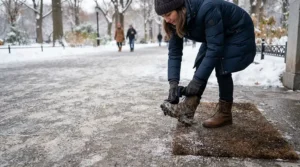
Specs mean little until you attach them to a life. Here are three commuter profiles matched to the best boot and the reasoning behind each.
Profile 1: The downtown transit rider. This commuter walks 25 minutes round trip, then spends eight hours at a desk. Budget is around C$250. The best match is the Columbia Bugaboot III for balanced warmth and waterproofing. If their route crosses glazed sidewalks, the Icebug Metro2 BUGrip is worth the premium. The key is commuter winter footwear that’s comfortable both outdoors and in a heated office.
Profile 2: The suburban park-and-walk commuter. This person drives, then walks across a windy parking lot to the entrance. Frequency is daily, exposure is short, and the biggest enemy is slushy lot puddles. The NORTIV 8 Men’s Insulated Waterproof Snow Boots are plenty for a short exposure, and the savings can go toward a good pair of wool socks.
Profile 3: The all-day outdoor commuter. Think 5 km each way on foot, or a job that keeps you outdoors for hours. Prioritize the MUCK Arctic Pro for wet-snow durability or the The North Face Chilkat V 400 if cold, not wetness, is the constant threat.
For all three, here’s a simple routine: keep a pair of office shoes at work, bring a small boot-drying aid, and rotate between two pairs when possible. Winter boots for commuting last far longer if they get a full day to dry between wears.
How to Choose Waterproof Winter Boots for Slush and Snow
- Define your real temperature range. Most city dwellers live between 0°C and -15°C, not at -40°C. Buying for your actual winter saves money and prevents overheating.
- Verify true waterproofing. Look for seam-sealed construction, a membrane, or a rubber or neoprene shell. “Water-resistant” is not enough for slush.
- Match insulation to activity. 200 g suits active walking, while 400 g suits standing around in the cold.
- Check shaft height. A shaft at least 15 cm (6 in.) above the ankle helps keep slush from topping the boot.
- Inspect the outsole. Deep, widely spaced lugs shed slush, softer rubber grips cold surfaces, and studs conquer black ice.
- Size with socks in mind. Use the men’s winter boot sizing chart below and leave about one thumb-width at the toe.
- Prefer removable liners. Liners dry faster and extend lifespan.
Men’s Winter Boot Sizing Chart: Getting the Fit Right
Sizing mistakes cause more winter misery than almost any spec. Too tight and you restrict circulation, which raises cold-injury risk. Too loose and your heel lifts, creating blisters and wasted heat. Use this men’s winter boot sizing chart as a starting point, then check the brand’s own chart, since manufacturers differ.
| US Men’s | UK | EU (approx.) | Foot Length (cm) | Best For / Fit Tip |
|---|---|---|---|---|
| 8 | 7 | 41 | 26.0 | Size up half if between sizes |
| 9 | 8 | 42 | 27.0 | Leaves room for a medium wool sock |
| 10 | 9 | 43-44 | 28.0 | Check width in pac-style boots |
| 11 | 10 | 44.5-45 | 29.0 | Allow a thumb-width at the toe |
| 12 | 11 | 46 | 30.0 | Try on with your usual sock |
These figures are approximate, so treat them as a guide. Looking at the chart, the biggest practical takeaway is that foot length alone isn’t enough. Width, sock thickness and liner type change the answer. Measure your feet in the afternoon, since they swell through the day, and wear the socks you’ll actually use. If you’re between sizes, size up and use a thin insole rather than cramming into a tight fit.
Men’s Insulated Winter Boots Canada: Decoding Grams, Liners and Ratings
Insulation labels can feel like a secret code. Here’s a rough rule of thumb for men’s insulated winter boots Canada shoppers, with the caveat that individual circulation varies a lot:
- Around 200 g: active walking in roughly 0°C to -10°C. This is the commuter sweet spot.
- Around 400 g: light activity or standing in roughly -10°C to -25°C.
- Removable felt or multi-layer liners: the pac-boot approach for deep cold, found in the Sorel Caribou and Baffin Control Max.
Temperature ratings are usually generous marketing figures that assume activity and dry conditions. Treat a -40°C rating as “survivable while moving,” not “toasty at a bus stop.” Insulation also needs dryness to work, so a waterproof boot with moderate insulation will often outperform a heavily insulated boot that lets slush in.
One more detail: the sole. Cold travels up through the ground, and thin or uninsulated soles can leak heat. Pair any boot with a quality wool or wool-blend sock, avoid cotton, and skip layering multiple thick pairs that restrict circulation.

Features That Actually Matter (And Those That Don’t)
Features worth paying for:
- True waterproofing. Whether it’s a rubber shell or a Gore-Tex-style breathable membrane, the barrier is the most important feature in slushy weather.
- Outsole compound and lug depth. A cold-friendly rubber with deep lugs outperforms nearly any marketing gimmick.
- Removable liners. These are underrated, since dry liners mean warm feet tomorrow.
- Shaft height and a gusseted tongue. These keep slush out where seams meet.
Features to question:
- Extreme temperature ratings you’ll never use. Heavy ratings add weight and cost.
- Fashion fur trim. It looks cozy but rarely adds measurable warmth.
- “Water-resistant” claims. Without sealed seams, these are fine for flurries and unreliable in slush.
A quick note for anyone who needs workplace footwear: most consumer winter boots are not CSA-certified safety boots. If your job requires CSA-approved footwear, confirm the marking before buying rather than assuming a winter boot qualifies.
Common Mistakes When Buying Waterproof Winter Boots
Most regrets come from a handful of predictable errors:
- Buying for the coldest day, not the average day. A boot rated for -60°C will overheat and make you sweat on a +1°C slush day.
- Confusing water-resistant with waterproof. The difference becomes obvious about three minutes into a puddle crossing.
- Ignoring weight. A heavy boot becomes tiring on a long walk, so test it if possible.
- Skipping sock planning. Boots can fit perfectly with thin socks and feel cramped with thick ones.
- Forgetting outsole rubber. Hard, cheap rubber stiffens in the cold and loses grip right when you need it.
- Never replacing liners or insoles. Compressed insoles lose insulating value, even if the boot looks fine.
- Trusting star ratings alone. Read the 3-star reviews, which tend to be the most informative about fit and durability.
A smarter approach is to decide what your winter actually looks like first, then shop for that. A commuter who walks fifteen minutes in slush needs a very different boot than someone who spends all day outdoors.
Waterproof Winter Boots vs Alternatives: What Actually Works in Slush
Is a dedicated waterproof winter boot always necessary? Not for everyone, but for slush it’s hard to beat.
| Option | Slush Protection | Warmth | Best For |
|---|---|---|---|
| Waterproof winter boots | Excellent | High | Daily slush and snow exposure |
| Water-resistant leather boots | Fair | Moderate | Dry, cold days with light flurries |
| Insulated sneakers or trail shoes | Poor to fair | Low to moderate | Brief, mild-weather walks |
| Rubber overshoes over dress shoes | Good | Low | Formal commutes in short exposure |
Dedicated waterproof boots win because they combine all three layers: barrier, insulation and traction. Overshoes are a clever hack for formal dress codes but add little warmth, and water-resistant leather boots eventually fail when slush sits against the seams. For most Canadians dealing with real winter, the boot remains the best solution, with overshoes or sneakers reserved as situational supplements.
Long-Term Cost & Maintenance
The sticker price is only half the story. A boot in the C$200 range lasting four winters works out to roughly C$50 a winter. A C$80 pair that fails after two works out to a similar figure, but with more risk of cold, wet feet in the final weeks. Total cost depends on how well you maintain the boot.
A simple maintenance schedule:
- Daily: remove liners and insoles, wipe off salt, and let the boot dry at room temperature.
- Weekly: brush off grit, check laces and eyelets, and inspect seams.
- Monthly: reapply waterproofing treatment and clean the outsole.
- End of season: deep clean, dry fully, and store away from heat and sunlight.
Rotating two pairs, even a budget pair like the NORTIV 8 Men’s Insulated Waterproof Snow Boots paired with a more durable boot like the Sorel Caribou, extends the life of both. A boot that gets a full 24 hours to dry between wears lasts noticeably longer than one worn daily without rest.
FAQ
❓ Can I wear waterproof winter boots for slush and snow in spring rain?
❓ Are Canadian-brand winter boots better than imported ones?
❓ Do waterproof membranes wear out over time?
❓ Are winter boots for commuting comfortable to wear in the office all day?
❓ How many pairs of winter boots do I need in a Canadian winter?
Conclusion
Choosing waterproof winter boots for slush and snow is really about matching three things: your winter, your commute and your budget. Slush punishes weak waterproofing, ice punishes weak traction, and deep cold punishes weak insulation, so the best boot is the one that fixes your specific problem.
If I had to boil the seven picks down, it would look like this. The NORTIV 8 Men’s Insulated Waterproof Snow Boots wins on value, the Columbia Bugaboot III on everyday balance, and the The North Face Chilkat V 400 on cold-weather warmth. The Icebug Metro2 BUGrip is the answer to black ice, the MUCK Arctic Pro shrugs off wet work, and the Sorel Caribou and Baffin Control Max are the heavy artillery for deep cold.
Pair your choice with the right size from the men’s winter boot sizing chart, a simple salt-care routine, and good wool socks, and your feet will stay dry through the worst the season throws at them. Always check current prices and recent reviews before buying.
✨ Ready to stop dreading slushy sidewalks?
🔍 Compare the boots above, click any highlighted boot name to check current pricing and availability, and give your feet the winter they deserve. Dry, warm toes are one click away!
Recommended for You
- Winter Boots For Toddlers: 7 Best Warm, Grippy Picks (2026)
- Top Rated 3-in-1 Jackets For Kids: 7 Proven Picks 2026
- 7 Best Convertible System Jacket Picks For 2026 (Smart Buys)
Disclaimer: This article contains affiliate links. As an Amazon Associate, I earn from qualifying purchases. If you purchase products through these links, we may earn a small commission at no additional cost to you.
✨ Found this helpful? Share it with your friends! 💬🤗
