
In This Article
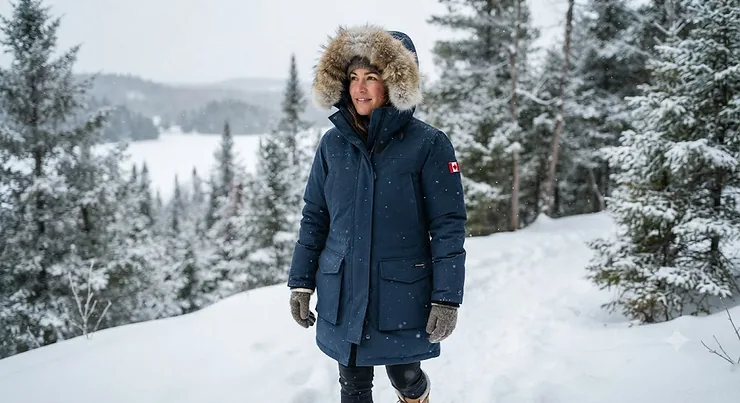
A Canadian-made winter parka is, in the simplest terms, an insulated cold-weather coat that is designed, cut, sewn, or substantially assembled inside Canada rather than shipped in as a finished product from an overseas factory. That definition matters more than you’d think, because the phrase “made in Canada” gets stretched, squeezed, and occasionally abused on hang tags every single winter – and the Competition Bureau of Canada has specific rules about exactly how far a brand can stretch it. This Canadian-made winter parka review exists because the outerwear aisle – online and in-store – is thick with maple leaf branding, and not all of it means what shoppers assume it means.
We dug into seven real, currently available parkas from brands that manufacture in Canada to varying degrees, from small Montreal ateliers that cut every panel in-house to larger operations that blend domestic assembly with imported components. Along the way, we’ll unpack made in labelling rules under Canadian law, what domestic manufacturing quality tends to buy you (and what it doesn’t), and why supporting Canadian brands is a more complicated calculation than a warm, patriotic feeling. If you’re comparing a Canadian-made winter parka against a big-box import, or just trying to figure out which of these seven coats fits your winter, you’re in the right place.
Quick context before the picks: every parka below is evaluated on real specifications, publicly available manufacturing claims, and how the brand’s own positioning holds up against Canada’s actual labelling rules – not on invented star ratings or fabricated hands-on testing. Where verified customer sentiment exists, we’ve flagged it as such. Where it doesn’t, we say so plainly rather than making something up.
Quick Comparison Table: Canadian-Made Winter Parkas at a Glance
| Parka | Best For | Manufacturing | Price Range (CAD) |
|---|---|---|---|
| Canada Goose Expedition Parka | Extreme cold, maximum warmth | Cut/sewn primarily in Toronto & Winnipeg factories | Roughly C$1,400–C$1,900 |
| Moose Knuckles Stirling Parka | Statement style with real fur trim | Canadian assembly with imported components | Roughly C$700–C$1,100 |
| Quartz Co. James Down Parka | Tailored warmth for daily commuting | Designed and produced through Montreal studio | Roughly C$550–C$900 |
| Kanuk Osaka Eco Parka | Animal-free insulation, lifetime warranty | Sewn in Kanuk’s Montreal workshop | Roughly C$500–C$800 |
| Ookpik Monaco Parka | Budget-conscious Canadian-made buyers | Designed and manufactured in Canada | Roughly C$350–C$600 |
Even at a glance, the spread here tells its own story: price does not rise in a straight line with how much of the coat was actually built on Canadian soil. Some of the most expensive names on this list source significant materials internationally, while a couple of the more modestly priced brands lean harder into full domestic production. That gap between price and provenance is exactly why a closer read of the label matters, and it’s a theme we’ll return to throughout this Canadian-made winter parka review.
💬 Just one click — help others make better buying decisions too!😊
Top 7 Canadian-Made Winter Parkas: Expert Analysis
1. Canada Goose Expedition Parka — the benchmark for Arctic-rated warmth
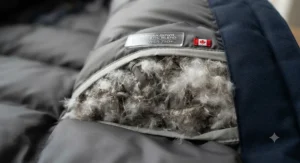
The Expedition Parka is the coat most Canadians picture the moment “made in Canada” and “parka” appear in the same sentence, and it earns that reputation through raw insulation numbers most competitors don’t even try to match. The shell uses Canada Goose’s proprietary Arctic Tech fabric, a tightly woven, wind- and water-resistant nylon that’s paired with roughly 625 fill power white duck down – a fill rating that translates to serious loft-per-gram, meaning it traps a thick layer of warm air without weighing you down like a cheaper, lower-loft coat would. Canada Goose has said publicly that the bulk of its down outerwear is cut and sewn at its own factories in Toronto and Winnipeg, though the company has also expanded some production overseas as global demand grew, so “Canadian-made” here is a matter of degree rather than an absolute.
Who should actually buy this: someone who spends real time outdoors in prairie or northern winters – waiting for transit, coaching outdoor hockey, working a job site – rather than someone doing a five-minute walk from a heated garage to a heated office. For that second group, the Expedition Parka is genuine overkill, and the weight and bulk will show it. Aggregated feedback from Canadian retailers and gear forums consistently circles two themes: unmatched warmth in brutal cold, and a price tag plus counterfeit-market problem that make buying from an authorized Canadian retailer worth the extra diligence.
Pros:
- ✅ Exceptional warmth rated for genuinely extreme cold
- ✅ Durable Arctic Tech shell resists wind and wet snow
- ✅ Strong resale value if you ever part with it
Cons:
- ❌ Heavy and bulky for anything but deep winter
- ❌ High counterfeit risk demands buying from verified sellers
Expect to land in the C$1,400–C$1,900 range depending on trim and retailer; given the fill power and factory-backed construction, it’s a legitimate investment piece rather than a markup on branding alone.
2. Moose Knuckles Stirling Parka — bold style with genuine fur trim
The Stirling Parka leans into Moose Knuckles’ signature look: a fitted silhouette, a bold logo patch, and a large fox fur ruff that reads more downtown than backcountry. Underneath the styling is a genuine down fill built to handle a real Canadian winter commute, with a nylon shell that resists slush and wind-driven snow on the kind of days when you’re standing at a bus stop rather than summiting anything. The brand, founded in Montreal with production ties to Winnipeg and Toronto, has become almost as much a status symbol as a functional coat in certain Canadian cities.
Here’s the part worth knowing before you buy: Moose Knuckles was the subject of a Competition Bureau investigation into its “made in Canada” claims, which we cover in detail later in this guide – the short version is that the company agreed to clarify that these products use a mix of Canadian and imported components, while still preserving hundreds of Canadian manufacturing jobs. That doesn’t disqualify the brand from this list; it makes it a genuinely useful case study in how the label can mislead even when a company isn’t acting in bad faith. Reviewer sentiment across retailer sites tends to praise the fit and warmth for city wear while noting the fur trim requires the same care any real-fur garment does.
Pros:
- ✅ Fitted, flattering cut favoured for daily city wear
- ✅ Genuine down insulation handles wet, windy commutes well
- ✅ Distinct styling with real fox fur ruff
Cons:
- ❌ “Made in Canada” claim required regulatory clarification
- ❌ Real fur trim needs specific cleaning and storage care
Typical pricing sits around C$700–C$1,100, and the value case depends heavily on whether the styling and brand cachet matter to you as much as the warmth does.
3. Quartz Co. James Down Parka — tailored warmth for city commutes
Quartz Co. runs its design and production out of a Montreal studio the brand has operated since 1997, and the James Down Parka is a good representation of its house style: a slimmer, more tailored cut than the boxier expedition-style coats on this list, built around a recycled polyester or nylon shell and a down or Isosoft/PrimaLoft insulation blend rated to handle roughly -30°C conditions. That fill choice matters practically – down alone loses loft (and warmth) when it gets wet, so a synthetic-blended or treated-down system like this holds up better through a slushy Toronto or Vancouver commute than a pure-down coat would.
The tailored fit is the real differentiator here: this is a parka built to look intentional over office clothes, not just to survive a blizzard, which puts it in direct competition with premium fashion outerwear rather than purely technical gear. Quartz Co.’s own marketing leans into “designed and produced in Canada” language, and the brand has a smaller, more curated size and colour run than mass-market competitors, which some shoppers read as boutique exclusivity and others read as limited availability when their size sells out.
Pros:
- ✅ Tailored silhouette suits professional and city settings
- ✅ Rated to roughly -30°C for genuine cold-weather use
- ✅ Recycled shell materials align with lower-impact manufacturing
Cons:
- ❌ Smaller size runs can sell out quickly each season
- ❌ Tailored fit leaves less room for heavy mid-layers
Prices generally fall in the C$550–C$900 range, which is a reasonable middle ground between fast-fashion parkas and the true luxury tier above it.
4. Kanuk Osaka Eco Parka — lifetime warranty, animal-free insulation
Kanuk has been sewing winter jackets in the same Montreal workshop for more than fifty years, and the Osaka Eco Parka is its answer for shoppers who want serious cold-weather performance without down or fur. It uses Kanuk’s Thermo+ synthetic insulation system inside a ripstop nylon shell, a combination rated to roughly -30°C that’s engineered specifically to resist the tearing and abrasion that ends up killing cheaper synthetic coats within a couple of seasons. Ripstop construction works by weaving reinforcing threads into the fabric in a grid pattern, so a small snag or scrape doesn’t turn into a spreading rip the way it would on a plain-weave shell.
What sets Kanuk apart from nearly everything else on this list is the lifetime warranty the brand backs its jackets with, plus an in-house repair service – a policy that only makes financial sense for a company confident in its own domestic quality control, since shipping a coat back to a Montreal workshop for repairs would be a logistical headache if the construction weren’t genuinely built to last. That warranty structure is itself a form of aggregated confidence signal: a brand doesn’t offer free lifetime repairs on a product it expects to fall apart. Retailer reviews commonly mention the jackets running slightly generous in sizing, so checking the brand’s size chart before ordering is worth the extra two minutes.
Pros:
- ✅ Lifetime warranty backed by in-house Montreal repair service
- ✅ Cruelty-free synthetic insulation rated to -30°C
- ✅ Ripstop shell resists everyday tears and abrasion
Cons:
- ❌ Runs large, so sizing down is often necessary
- ❌ Synthetic fill adds bulk versus comparable down options
At roughly C$500–C$800, the warranty alone shifts the long-term value math meaningfully in Kanuk’s favour compared with coats that offer only a standard one- or two-year guarantee.
5. Chlorophylle Saguenay Parka — built for outdoor work in deep cold
Chlorophylle markets the Saguenay directly as a “made-in-Quebec parka,” and its whole design language reflects that: this is a coat built for people who are actually outside working, not posing, through a Quebec or northern Ontario winter. The line uses RDS-certified down (Responsible Down Standard, meaning the down is sourced without live-plucking or force-feeding practices) inside wind-resistant, water-resistant, and in some configurations fully waterproof shells, with the kind of reinforced, multifunctional pockets and adjustable hoods you’d expect from a brand that outfits outdoor workers rather than downtown commuters.
The honest trade-off is aesthetic: Chlorophylle isn’t chasing the fashion-forward silhouette that Moose Knuckles or Quartz Co. lean into, and buyers looking for a slim city cut should look elsewhere on this list. What you get instead is a utilitarian coat engineered around function first – the kind of parka a hydro lineworker, a ski patroller, or someone who parks their car outdoors at -25°C every night actually wants. Because Chlorophylle has a smaller public review footprint than the bigger fashion-outerwear brands, verified customer sentiment is thinner here; we’d weigh the RDS certification and stated waterproofing specs more heavily than any star rating you find online until a larger review base builds up.
Pros:
- ✅ RDS-certified down sourced under verified ethical standards
- ✅ Genuinely waterproof shell options for working outdoors
- ✅ Reinforced pockets and hardware suit heavy daily use
Cons:
- ❌ Utilitarian styling won’t suit fashion-focused buyers
- ❌ Smaller review base makes sentiment harder to verify
Pricing typically runs C$400–C$700, which is competitive for a coat built with certified down and genuine waterproofing rather than water-resistant treatments alone.
6. Indyeva Ayaba Long Parka — a women’s-specific cut that actually fits
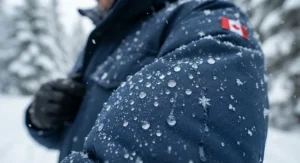
Indyeva designs out of Montreal specifically for women’s bodies, which sounds like a small distinction until you’ve tried on a “unisex” parka that’s really just a men’s cut resized down. The Ayaba Long Parka uses a quilted down-blend insulation inside bluesign-certified fabric (an independent standard verifying the textile was produced with responsible chemical and resource use) alongside RDS-certified down, with a longer hem for extra coverage, a two-way zipper that lets you loosen the bottom for sitting or cycling, and a removable hood for milder days. It’s rated to handle roughly -30°C conditions, putting its warmth in the same tier as the Kanuk and Quartz Co. picks above.
The practical case for Indyeva over a men’s-cut coat sized down is fit through the shoulders, waist, and hips – details that affect both comfort and how much cold air actually gets trapped against your body. Because Indyeva is a smaller, newer brand than Kanuk or Canada Goose, published details on exactly which stage of manufacturing happens in Canada versus where components are sourced are less exhaustive than what Kanuk or Quartz Co. publish, so shoppers who care specifically about domestic assembly should apply the same label-reading scrutiny we walk through in the labelling section below rather than assuming from “designed in Montreal” alone.
Pros:
- ✅ Purpose-built women’s fit, not a resized men’s pattern
- ✅ Certified down and bluesign fabric standards
- ✅ Two-way zipper and removable hood add versatility
Cons:
- ❌ Manufacturing-location detail is less transparent than competitors
- ❌ Smaller brand means fewer retailers carry full size runs
Expect a price range around C$450–C$750, reasonable for the certified materials involved, though buyers prioritizing verified full domestic production should read the tag carefully before checkout.
7. Ookpik Monaco Parka — Canadian-made without the luxury price tag
Ookpik is the brand most likely to get overlooked on a list next to Canada Goose and Moose Knuckles, and that’s a shame, because it’s one of the few names here that states plainly it is designed and manufactured in Canada rather than hedging with “designed in Canada” alone. The Monaco Parka uses white duck down (with recycled synthetic fibre options available across the line) inside a shell built for urban winter wear, finished with waterproof zippers and a faux fur trim – a deliberate choice that sidesteps the real-fur care and ethics questions that come with brands like Moose Knuckles.
The practical appeal is straightforward: you get a genuinely Canadian-manufactured down parka at a price point that undercuts nearly everything else on this list, which makes it the natural pick for a student, a new grad, or anyone interested in supporting Canadian brands without financing a four-figure coat. The trade-off is that Ookpik doesn’t carry the extreme-cold ratings of the Canada Goose or Chlorophylle picks, so someone standing outside for hours at -35°C should look higher up this list. As a smaller company, Ookpik also has a thinner base of independently verified customer reviews than the market leaders, so we’d treat the manufacturer’s own specs as the more reliable starting point until broader review data accumulates.
Pros:
- ✅ Explicitly designed and manufactured in Canada
- ✅ Most affordable genuinely domestic pick on this list
- ✅ Faux fur trim avoids real-fur care and ethics questions
Cons:
- ❌ Not rated for the most extreme cold on this list
- ❌ Smaller retailer footprint than bigger competing brands
At roughly C$350–C$600, it’s the strongest entry point on this list for anyone prioritizing verified Canadian manufacturing over maximum warmth or fashion cachet.
Price Range & Value Analysis
| Parka | Price Range (CAD) | Value Verdict |
|---|---|---|
| Ookpik Monaco Parka | C$350–C$600 | Best dollar-per-verified-Canadian-content ratio |
| Chlorophylle Saguenay Parka | C$400–C$700 | Strong value for certified down and true waterproofing |
| Indyeva Ayaba Long Parka | C$450–C$750 | Fair value for a purpose-built women’s fit |
| Kanuk Osaka Eco Parka | C$500–C$800 | Best long-term value thanks to lifetime warranty |
| Quartz Co. James Down Parka | C$550–C$900 | Good value if tailored fit matters to you |
| Moose Knuckles Stirling Parka | C$700–C$1,100 | Pay partly for styling and brand status |
| Canada Goose Expedition Parka | C$1,400–C$1,900 | Premium price justified mainly by extreme-cold performance |
Cost-per-wear is where this table gets interesting: a C$1,700 Canada Goose parka worn 120 days a winter for eight winters works out to roughly C$1.77 per wear, which is a perfectly reasonable number for someone who genuinely needs that warmth every single day. That same math applied to a coat you’ll wear twenty times a season tells a very different story, and it’s why the Kanuk Osaka Eco Parka‘s lifetime warranty or the Ookpik Monaco Parka‘s lower entry price can end up being the smarter long-term purchase even though the sticker price looks smaller on day one.
✨ Don’t Miss These Exclusive Deals!
🔍 Ready to take the plunge on one of these coats? Click through on any of the parkas above to check current pricing and availability before this season’s stock disappears – genuinely Canadian-made pieces tend to sell through their limited runs faster than mass-market imports.
Practical Care & Storage Guide for a Down or Synthetic Parka
Getting years out of any of these seven coats comes down to habits most people skip in their first season. Down parkas – like the Canada Goose, Quartz Co., Chlorophylle, and Indyeva picks above – should be washed in a front-loading machine with a down-specific detergent roughly once or twice a season, never dry-cleaned with standard solvents, which strip the natural oils that keep down clusters lofting properly. After washing, a slow tumble-dry on low heat with a couple of clean tennis balls breaks up clumped down and restores loft far better than air-drying alone, which can leave the fill matted for weeks.
For the synthetic-insulated Kanuk Osaka, the process is simpler and more forgiving – synthetic fill doesn’t clump the way down does, so a gentle machine wash with a technical-fabric detergent and a low tumble-dry is usually enough. Across all seven coats, the shell fabric benefits from an occasional reapplication of a spray-on DWR (durable water repellent) treatment once the fabric stops beading water, which typically happens after one to two winters of regular wear and repeated washing.
Storage matters just as much as cleaning: hang parkas on a wide, sturdy hanger in a cool, dry closet rather than compressing them into a stuff sack for months, since down and synthetic fill both lose loft under sustained compression. A common first-season mistake is leaving a wet parka to air-dry directly on a radiator or heating vent – the direct heat can degrade both down clusters and synthetic shell coatings faster than any other single storage error we see mentioned in care guides across these brands.
Real-World Buyer Scenarios: Which Parka Fits Your Life
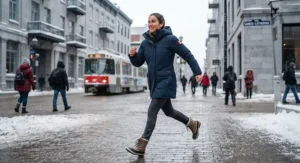
Picture three different Canadians shopping for a winter coat this month, because “best parka” genuinely depends on who’s asking. First: a university student in Waterloo, biking and bussing between campus buildings on a tight budget, who needs real warmth for a fifteen-minute wait at a bus shelter but can’t justify four figures – the Ookpik Monaco Parka or Kanuk Osaka Eco Parka both fit that brief, with Kanuk’s lifetime warranty adding appeal for someone who’ll be wearing this same coat for the next six winters of school and early-career budgets.
Second: a Winnipeg or Saskatoon resident who works outdoors, scrapes a windshield every morning at -30°C, and needs a coat that performs rather than photographs well – that’s the Chlorophylle Saguenay Parka or Canada Goose Expedition Parka territory, where certified down, genuine waterproofing, and Arctic-rated warmth outweigh any styling concerns. Third: a Toronto or Montreal professional whose “cold” is mostly a walk from a parking garage to an office lobby, who wants to look put-together on the way in – the Quartz Co. James Down Parka, Moose Knuckles Stirling Parka, or Indyeva Ayaba Long Parka are built for exactly that commute, prioritizing tailored fit and visible styling over extreme-cold overkill.
None of these three profiles is wrong to want what they want; the mistake is buying the wrong profile’s coat. An expedition-rated parka on someone who never faces real exposure just means carrying unnecessary weight and heat all day, while an urban-cut coat on someone doing actual outdoor work in January leaves them genuinely cold and, at worst, at risk in severe conditions.
Your Canadian-Made Parka Decision Framework
If you’re still torn between two or three of these seven picks, run through this short priority checklist in order, because each question eliminates options faster than comparing every spec side by side.
If verified full domestic manufacturing matters more to you than brand recognition, choose the Ookpik Monaco Parka, the Kanuk Osaka Eco Parka, or the Chlorophylle Saguenay Parka, since these three make the most explicit and least hedged Canadian-production claims on this list. If you’ll be outside for extended periods below -25°C on a regular basis, choose the Canada Goose Expedition Parka or Chlorophylle Saguenay Parka first, because their fill power and certified waterproofing are built around that specific use case rather than general commuting.
If long-term value and repairability matter more than upfront price, choose the Kanuk Osaka Eco Parka for its lifetime warranty and in-house repair program. If a tailored, city-appropriate silhouette is the priority over maximum warmth, choose the Quartz Co. James Down Parka or Moose Knuckles Stirling Parka. And if you specifically need a coat cut for a woman’s body rather than a resized men’s pattern, the Indyeva Ayaba Long Parka should move to the top of your shortlist regardless of what else is on it.
How to Choose a Canadian-Made Winter Parka
Picking the right coat from this list – or any Canadian-made winter parka review, honestly – comes down to working through the same handful of questions in a consistent order.
- Define your actual cold exposure. Time an average outdoor commute or work shift and be honest about it; fifteen minutes at a bus stop needs far less insulation than three hours shovelling or coaching outdoor sports.
- Check the fill type and rating. Down performs best in dry cold and offers the best warmth-to-weight ratio, while synthetic fill (like Kanuk’s Thermo+) holds up better in wet, slushy conditions and for anyone avoiding animal-derived materials.
- Read the manufacturing claim carefully. Look for language distinguishing “made in Canada,” “designed in Canada,” and “assembled in Canada,” which we break down fully in the next section.
- Match the cut to your daily activity. A tailored silhouette looks better under office wear but restricts mid-layers; a fuller expedition cut sacrifices style for genuine cold-weather capacity.
- Confirm the warranty and repair policy. A brand offering free repairs, like Kanuk, is signalling real confidence in its domestic manufacturing quality.
- Compare price against realistic cost-per-wear, not sticker price alone, using the table earlier in this guide as a starting template.
- Verify current stock and sizing directly with the retailer, since several of these brands run smaller, faster-selling batches than mass-market outerwear chains.
Made in Canada Labelling: The Regulations Behind the Claim
Here’s the part of this Canadian-made winter parka review that most shopping guides skip entirely, and it’s arguably the most useful one. In Canada, a “Made in Canada” claim isn’t just marketing flourish – it’s governed by specific guidance from the Competition Bureau, the federal agency responsible for policing false or misleading advertising. Under that guidance, a company can generally make an unqualified “Made in Canada” claim only if at least 51% of the total direct production costs were incurred domestically and the last substantial transformation of the good happened in Canada; anything short of that threshold is expected to carry a qualifying phrase like “Made in Canada with imported materials.” The stricter “Product of Canada” label requires a much higher bar – roughly 98% of total direct costs incurred in Canada – which is why you’ll see it used far less often on outerwear that typically blends a Canadian-sewn shell with internationally sourced zippers, down, or trims.
This isn’t a hypothetical distinction. In a case widely reported by CBC News, the Competition Bureau investigated Moose Knuckles over its “made in Canada” representations and ultimately reached a settlement in which the company agreed to clarify that its parkas are produced using a mix of Canadian and imported components, while reaffirming compliance with the Bureau’s official guidelines going forward – and, notably, without a financial penalty, since the Bureau accepted the correction as sufficient. The case preserved several hundred Canadian jobs across manufacturing, design, and distribution while forcing more honest labelling, which is arguably the outcome the system is supposed to produce.
The practical takeaway for shoppers: don’t assume Canadian origin from a maple leaf graphic, a French-and-English bilingual tag, or a brand’s origin story alone. Look specifically for the qualifying language on the label or product page, and treat “designed in Canada” as a meaningfully weaker claim than “made in Canada” or “manufactured in Canada” – design and production are entirely separate steps, and a coat can be dreamed up in a Montreal studio while every panel is cut and sewn somewhere else entirely. Getting comfortable with made in labelling language is, frankly, the single most useful skill in this whole guide – it’s the difference between paying a premium for genuine domestic production and paying the same premium for a design credit alone.
Domestic Manufacturing Quality: What You’re Actually Paying For
It’s tempting to assume “made in Canada” automatically means “better built,” but that’s not quite how domestic manufacturing quality actually works in practice – it’s more specific than a blanket quality bump. What Canadian production more reliably buys you is tighter quality control loops: a factory in Winnipeg or Montreal is a phone call and a short drive away for a brand’s own design team, which makes it far easier to catch a stitching defect, an inconsistent seam, or an under-filled baffle before a batch ships, compared with managing quality control across an ocean and multiple time zones.
The features that genuinely correlate with construction quality – regardless of where a coat is made – are worth learning to spot directly rather than trusting a label alone: baffled (box-stitched) construction that keeps down from shifting and creating cold spots, taped or sealed seams on anything claiming waterproofing, YKK or similarly reputable zippers that won’t seize in sub-zero temperatures, and stitch density along stress points like pocket openings and cuffs. A skilled domestic workshop like Kanuk’s or Chlorophylle’s tends to nail these details consistently because their production runs are smaller and more closely supervised, while a marketing claim of “Canadian quality” printed on a hang tag, without any of those specific construction features backing it up, is the kind of thing that should raise your eyebrow rather than lower your guard. In short: judge domestic manufacturing quality by the stitching and materials in front of you, and treat the label as a starting clue rather than the final verdict.
Canadian-Made Parkas vs Imported Fast-Fashion Alternatives
| Factor | Canadian-Made Parka | Imported Fast-Fashion Parka |
|---|---|---|
| Best For | Long-term ownership, genuine cold performance | Occasional wear, tight budgets, changing style needs |
| Typical Price Range | C$350–C$1,900 | C$80–C$300 |
| Fill Quality Control | Smaller batches, closer factory oversight | Highly variable, harder to verify per batch |
| Warranty/Repair Support | Often includes repair programs (e.g., Kanuk) | Rarely offered beyond basic return windows |
| Cold-Weather Rating | Frequently tested to -30°C or lower | Often untested or vaguely rated |
The comparison above isn’t a blanket case against imported parkas – a C$150 coat from a fast-fashion retailer can be a perfectly reasonable choice for someone who needs light coverage a few times a winter in a milder climate like coastal British Columbia. Where the gap widens is in genuinely cold, prolonged exposure: imported fast-fashion parkas are rarely built or tested to the same insulation standards, and their fill quality can vary noticeably between individual units in ways that are hard to catch before you’re already outside in it. If you live somewhere winter actually bites for months at a time, the durability and warranty support behind a domestically produced coat tends to pay for itself well before the coat wears out.
What to Expect: Real-World Performance in Canadian Winters
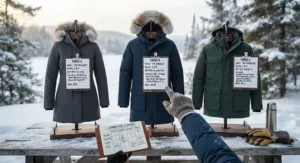
Spec sheets describe lab conditions; actual Canadian winters are messier than that, a point CBC Life’s own parka buying guide makes well when it stresses matching a coat’s rated temperature range to how you actually spend time outside, not just to the coldest number on the tag. A parka rated to -30°C on a still, dry day performs very differently once you factor in wind chill on an open prairie, wet slush in a Vancouver or Halifax winter, or the freeze-thaw cycle common in southern Ontario, where a coat gets soaked one afternoon and refrozen the next morning. This is where the certified-down picks on this list – the Chlorophylle Saguenay Parka and Indyeva Ayaba Long Parka – have a real edge, since RDS certification and genuine waterproof shells are tested against wet-cold conditions specifically, not just dry Arctic cold.
Expect any down-filled coat, including the flagship Canada Goose Expedition Parka, to need periodic DWR reapplication as described in the care section above, or you’ll notice real-world warmth dropping off faster than the spec sheet implies once the shell stops beading water. Synthetic fill in the Kanuk Osaka Eco Parka trades a small amount of peak warmth-to-weight performance for far more consistent behaviour when wet, which matters more in a coastal or freeze-thaw climate than it does in a dry northern one. The honest summary: match the coat’s tested conditions to your actual climate, not just to the coldest number on the tag, and you’ll get performance far closer to what the marketing promises.
Why Supporting Canadian Brands Matters
There’s a genuine economic case for supporting Canadian brands underneath the patriotic branding, and it’s worth separating the two. According to CBC News reporting on Montreal’s apparel sector, a shrinking but committed group of Canadian clothing manufacturers has continued producing domestically even as offshore manufacturing offers dramatically lower labour costs, arguing that quality control, faster turnaround on design changes, and skilled local labour justify the premium for brands willing to make that case to customers. Every parka on this list that manufactures even partly in Canada is contributing to that same ecosystem – skilled sewing and pattern-making jobs, textile suppliers, and the institutional knowledge that keeps techniques like ripstop reinforcement and box-baffle down construction alive domestically rather than only existing overseas.
That said, supporting Canadian brands shouldn’t mean suspending judgment about value. A coat doesn’t deserve your money just because a maple leaf is stitched somewhere on it, and as the Moose Knuckles case above shows, even well-intentioned Canadian companies can stretch a labelling claim further than the rules allow. The strongest version of “buy Canadian” is an informed one: know which brands genuinely manufacture domestically versus which ones design here and produce elsewhere, understand what that distinction is actually paying for (jobs, quality control, repairability), and choose accordingly rather than assuming the flag alone guarantees anything about the coat inside it.
Frequently Asked Questions
❓ What is the warmest Canadian-made winter parka?
❓ Are Canadian-made parkas worth the extra cost compared to imports?
❓ How can I verify a parka is actually made in Canada?
❓ What's the difference between 'made in Canada' and 'designed in Canada' labels?
❓ Where can I buy Canadian-made winter parkas online in Canada?
Conclusion
Seven coats, seven very different answers to the same underlying question: what does “Canadian-made” actually buy you? The Canada Goose Expedition Parka delivers the deepest cold-weather credentials on this list, backed by domestic factories in Toronto and Winnipeg. The Kanuk Osaka Eco Parka makes arguably the strongest long-term value case through its lifetime warranty and Montreal repair shop. The Ookpik Monaco Parka proves you don’t need a four-figure budget to buy a genuinely domestically produced down coat, while the Moose Knuckles Stirling Parka case is a useful reminder that even recognizable Canadian brands have had to clean up their labelling claims under regulatory pressure.
The through-line across this entire Canadian-made winter parka review is that the label alone tells you less than you’d hope. Real domestic manufacturing quality shows up in baffle construction, seam sealing, warranty terms, and certified materials – not in a maple leaf graphic or a founding story. Read past the marketing, match the coat’s actual cold-weather rating to your real winter, and you’ll end up with a parka that earns its price rather than just its patriotism.
Recommended for You
- Urban Winter Parka: 7 Best Picks for Canadian Men in 2026
- Expedition Parka for Extreme Cold: 7 Best Picks for 2026
- Long Winter Parka for Women: 7 Real Picks for Canadian Cold (2026)
Disclaimer: This article contains affiliate links. As an Amazon Associate, I earn from qualifying purchases. If you purchase products through these links, we may earn a small commission at no additional cost to you.
✨ Found this helpful? Share it with your friends! 💬🤗
