
In This Article
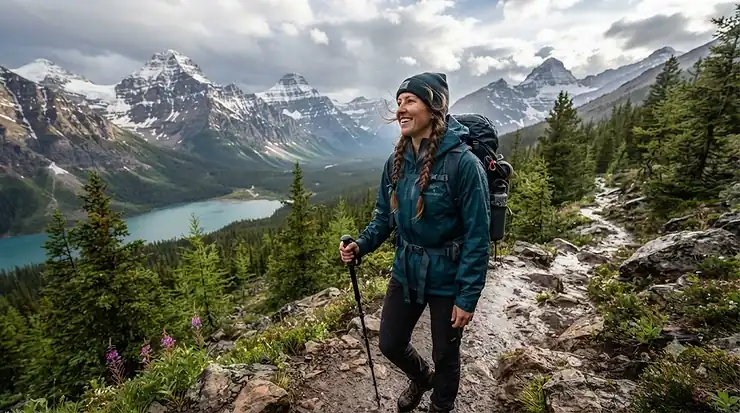
Ask anyone who has hiked past treeline near Lake Louise what a rain jacket for Canadian Rockies conditions actually needs to do, and you’ll get the same answer, usually delivered with a slightly haunted look: survive four seasons before lunch. You can start a July morning in a t-shirt at the trailhead and be pelted with sleet by the time you crest a pass two hours later. That’s not hyperbole — it’s just how the Canadian Rockies work, a range where elevation gain does more to your forecast than any app on your phone ever could.
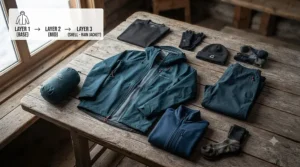
A rain jacket for Canadian Rockies hiking is a waterproof, wind-resistant outer shell — typically built from a 2.5-layer or 3-layer membrane like Gore-Tex — designed to block sustained rain and snow squalls while venting enough body heat to keep you from stewing in your own sweat on the climb. That’s the 40-second definition. The other 4,000 words are about which one actually earns a spot in your pack.
This guide skips the fluff and gets into real gear: seven jackets you can actually find and buy, pulled from budget, mid-range, and premium categories, each broken down by what its specs mean once you’re standing in a hailstorm on the Plain of Six Glaciers trail. We’ll compare them side by side, walk through mountain rain gear strategy for different trip types, and cover the elevation considerations that make alpine weather protection such a different beast than staying dry on a rainy commute. No invented five-star reviews, no fabricated “I tested this for six months” claims — just honest analysis built on real specs and real aggregated reviewer sentiment, clearly labelled as such. Let’s get into it.
Quick Comparison Table
Before diving into the deep dive, here’s the fast version for anyone standing in an outfitter aisle with three minutes to decide.
| Jacket | Layer/Membrane | Best For | Price Range (CAD) |
|---|---|---|---|
| Arc’teryx Beta SL | 3L Gore-Tex ePE | Serious alpine protection | C$650-C$750 |
| Outdoor Research Foray 3L / Aspire 3L | 3L Gore-Tex Paclite | Best ventilation on climbs | C$300-C$360 |
| Patagonia Torrentshell 3L | 3L H2No recycled nylon | Eco-conscious all-rounder | C$230-C$270 |
| Helly Hansen Seven J | 2-layer Helly Tech | Wet coastal-style storms | C$180-C$230 |
| The North Face Venture 2 | 2.5L DryVent | Budget-friendly versatility | C$160-C$200 |
| Marmot PreCip Eco | 2.5L NanoPro (recycled) | Ultralight budget pick | C$120-C$160 |
| Columbia Watertight II | 2.5L Omni-Tech | Entry-level day hikes | C$90-C$120 |
A quick read of this table tells an honest story: price climbs steadily with membrane quality, breathability under load, and durability against pack straps and scree. The Arc’teryx Beta SL sits at the top because Gore-Tex ePE is currently the most reliable fully-waterproof, fully-breathable membrane on the market, and that reliability matters most exactly when the Rockies decide to test you. Budget picks like the Columbia Watertight II aren’t bad jackets — they’re just built for lighter, shorter exposure to rain rather than an all-day soaking above treeline.
💬 Ready to gear up before your next Rockies trip? Compare current prices and grab the shell that matches your trail plans.
Top 7 Rain Jackets for the Canadian Rockies: Expert Analysis
Coverage here spans budget, mid-range, and premium tiers, plus a mix of men’s and women’s variants where relevant, so there’s a real option regardless of what your pack (and wallet) can handle.
1. Arc’teryx Beta SL — best all-around alpine protection
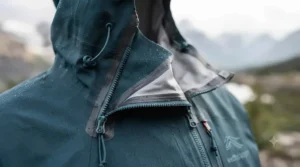
The standout here is membrane quality: Arc’teryx builds the Beta SL around Gore-Tex ePE, the PFAS-reduced evolution of classic Gore-Tex that keeps the waterproof-breathable performance without the older membrane’s environmental baggage. That matters more than it sounds — it means you’re not trading eco-conscience for dryness. The shell fabric runs a 40D face with a 70D reinforced base, paired with a soft-knit backer that keeps the jacket from feeling clammy against a base layer, and Arc’teryx being a Vancouver-founded company means the design DNA comes directly from the coastal-and-alpine weather this jacket is built for. Based on the spec comparison against lighter shells in this guide, the Beta SL trades a bit of packed size for genuinely bombproof seam construction and a laminated hood that stays put in wind gusts — the kind of gust that regularly rolls off the Icefields Parkway ridgelines. This is the jacket for scramblers, multi-day backpackers, and anyone who has been burned before by a “waterproof” jacket that quietly gave up at hour three of steady rain. Aggregated reviewer sentiment across outdoor retail sites consistently highlights the jacket’s durability over repeated seasons and its unusually good breathability for a fully-taped hardshell, though some reviewers note the boxier cut runs slightly large and the higher price is a real barrier for casual hikers.
Pros:
- ✅ Gore-Tex ePE handles sustained downpours reliably
- ✅ Durable 40D/70D shell survives years of pack-strap wear
- ✅ Excellent breathability for a full hardshell design
Cons:
- ❌ Premium price puts it out of reach for casual hikers
- ❌ No pit zips, so venting relies on the main zip alone
Expect to pay in the C$650-C$750 range at the time of research, and while that’s steep, the value verdict holds up: this is a 5-10 year jacket for people who are genuinely in the mountains, not just visiting them.
2. Outdoor Research Foray 3L / Aspire 3L — best ventilation for climbs
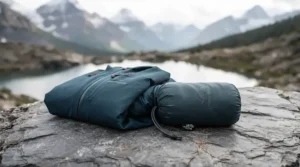
The standout feature is the TorsoFlo zip system — full-length side zippers that run from hem to underarm, letting you open the entire jacket like a cape mid-climb without ever taking it off. That’s a genuinely clever solution to the classic hardshell problem: you sweat just as much fighting a switchback as you would standing in the rain unprotected. The 3-layer Gore-Tex Paclite construction (Foray for men, Aspire for women) keeps weight down around 400-440 grams while still fully taping every seam, and the fabric’s slightly stiffer hand than the Beta SL translates to noticeably better abrasion resistance against branches and rock along narrower Rockies trails like Healy Pass. What most buyers overlook about this model is how well the TorsoFlo vents work even in a downpour — because the zips sit under the arm rather than directly exposed to falling rain, you can vent aggressively without soaking your base layer. Reviewers on outdoor gear forums and retailer sites frequently cite the ventilation as best-in-class among 3-layer shells, with common complaints centred on the slightly narrow “mountain-fit” hood, which doesn’t always play nicely over a climbing helmet.
Pros:
- ✅ TorsoFlo zips vent heat without letting rain in
- ✅ Genuinely durable 3L Gore-Tex Paclite fabric
- ✅ Hipbelt-compatible pockets for backpackers
Cons:
- ❌ Hood fit is tight over bulkier helmets
- ❌ Heavier than ultralight competitors in this price range
At around C$300-C$360, this sits in the sweet spot between “budget shell” and “guide-grade investment” — a strong pick for anyone doing serious vertical gain on hot, humid trail days.
3. Patagonia Torrentshell 3L — best eco-conscious all-rounder
The headline feature is Patagonia’s H2No 3-layer fabric, made with 100% recycled nylon face fabric and a PFC-free DWR (durable water repellent) coating, which puts it a step ahead of older 2.5-layer recycled shells on the sustainability front without sacrificing waterproof rating. Key specs worth flagging: fully taped seams, pit zips for ventilation, and a stowable hood that rolls into the collar — a small detail that keeps the collar from flapping annoyingly when you don’t need the hood, which is more often than you’d think below treeline in the Bow Valley. Here’s what to weigh: this jacket isn’t the lightest or most technical option on this list, but it’s engineered as an honest daily-use shell rather than a specialized alpine tool, which makes it a smart pick for hikers who also want to wear the jacket around town. Reviewers consistently report that the Torrentshell holds up impressively well over multiple seasons of regular use, with the most common complaint being that the fabric feels noticeably crinkly and stiff compared to premium shells — a fair trade-off at this price point.
Pros:
- ✅ Recycled 3L fabric with PFC-free DWR coating
- ✅ Reliable waterproofing across multiple seasons
- ✅ Doubles well as an everyday city rain shell
Cons:
- ❌ Stiffer, crinklier feel than premium competitors
- ❌ Runs heavier than dedicated alpine shells
Priced around C$230-C$270, the Torrentshell earns a strong value verdict as the jacket you buy when you want one shell for both trail and city life.
4. Helly Hansen Seven J — best for wet, coastal-style storms
Helly Hansen built its reputation on the North Sea, and the Seven J’s standout feature is exactly that heritage: a 2-layer Helly Tech Protection membrane engineered for the kind of driving, horizontal rain the Rockies occasionally throw down when a Pacific storm system pushes over the Continental Divide. The fully-taped seams and adjustable, helmet-compatible hood are built with commercial-fishing-grade attention to keeping water out at the collar and cuffs — a detail casual jackets often skimp on. Based on the spec comparison, the 2-layer build (versus the 2.5 or 3-layer shells elsewhere on this list) means slightly less breathability during aerobic effort, but noticeably better wind-blocking in gusty, exposed sections like the ridge above Lake Louise. This jacket suits hikers who prioritize raw weatherproofing over featherweight packability — think shoulder-season day hikers more than ultralight backpackers. Aggregated review sentiment on retail sites points to strong praise for the jacket’s wind resistance and simple, reliable design, with a recurring complaint that the interior can feel clammy on long, sustained climbs without much airflow.
Pros:
- ✅ Excellent wind resistance in exposed alpine terrain
- ✅ Reinforced seams built for heavy, driving rain
- ✅ Helmet-compatible hood with solid cinch adjustment
Cons:
- ❌ Less breathable than 3-layer competitors
- ❌ Heavier packed size limits backpacking appeal
At roughly C$180-C$230, it’s a smart mid-range choice specifically for people who hike in genuinely miserable, windy weather rather than light summer drizzle.
5. The North Face Venture 2 — best budget-friendly versatility
The Venture 2’s standout feature is its DryVent 2.5-layer waterproof-breathable coating, a proprietary membrane that keeps the price accessible while still delivering a legitimate fully-taped, fully-waterproof shell — not a water-resistant impostor. Pit zips run the length of the underarm for quick venting, and the adjustable hood and hem give a genuinely custom fit for a jacket in this price bracket. What most buyers overlook is that “budget” doesn’t mean “flimsy” here — the ripstop face fabric resists snagging on brush better than some pricier ultralight shells, which matters on the more overgrown lower sections of trails like Johnston Canyon. This is a strong fit for beginner and occasional hikers who want one reliable jacket without committing alpine-guide money to it. Reviewer sentiment aggregated from major retailers is broadly positive on value and packability, though a recurring theme is that the DryVent membrane’s breathability noticeably lags behind 3-layer Gore-Tex on sustained uphill efforts, leading to some interior dampness on hot days.
Pros:
- ✅ Genuinely waterproof DryVent membrane at a fair price
- ✅ Ripstop fabric resists brush and branch snags
- ✅ Packs down small enough for day-pack carry
Cons:
- ❌ Breathability lags behind 3-layer alternatives
- ❌ Less durable long-term than premium hardshells
Sitting around C$160-C$200, the Venture 2 is the jacket most first-time Rockies visitors should reasonably start with.
6. Marmot PreCip Eco — best ultralight budget pick
The Marmot PreCip Eco‘s standout feature is sheer weight: at roughly 300 grams, it’s one of the lightest fully-seam-sealed rain shells you’ll find under C$160, built from 100% recycled NanoPro nylon ripstop with a PFC-free DWR finish. The microporous NanoPro membrane is designed to block liquid water while letting vapour escape, and pit zips plus a DriClime-lined chin guard round out a feature set that punches well above its price tag. On paper, this means you’re getting genuine emergency-storm protection in a jacket light enough to live in your day pack permanently rather than get left in the car “because it probably won’t rain.” That’s a real behavioural advantage — the jacket you actually carry beats the better jacket sitting at home. It suits budget-conscious day hikers and anyone who wants insurance against a surprise squall on an otherwise sunny forecast, which, per Banff’s own advisories, happens more often than visitors expect. Reviewers across major retail platforms have used this jacket for two decades running as an entry point into waterproof shells, consistently citing its packability and price as the draw, with the recurring downside being reduced long-term durability of the DWR coating compared to pricier options.
Pros:
- ✅ Extremely lightweight and packable for its price
- ✅ Genuine seam-taped waterproofing, not just water resistance
- ✅ Recycled, PFC-free fabric construction
Cons:
- ❌ DWR coating wears off faster than premium shells
- ❌ Thin fabric offers limited abrasion resistance
At C$120-C$160, this is the jacket to throw in your pack “just in case” without a second thought about cost.
7. Columbia Watertight II — best entry-level day-hike option
The standout here is accessibility: the Columbia Watertight II uses Columbia’s proprietary Omni-Tech 2.5-layer waterproof-breathable coating to deliver fully-sealed rain protection at one of the lowest price points on this list, often available in the widest range of sizes and colours. The adjustable, fully-adjustable hood and hem give a reasonably snug fit despite the budget build, and the jacket packs into its own pocket for easy stashing. Here’s what to weigh: this isn’t a jacket built for eight hours of steady alpine rain or serious elevation gain — it’s built for the far more common scenario of “I’m doing an easy interpretive trail near the townsite and don’t want to get soaked.” Reviewers commonly describe it as a reliable, no-fuss layer for casual outings, travel, and everyday errands in wet weather, with the most consistent critique being that the 2.5-layer construction feels clammy and less breathable than pricier alternatives during any real physical exertion.
Pros:
- ✅ Lowest price point of any jacket on this list
- ✅ Wide range of sizes and colour options
- ✅ Packs into its own stuff pocket easily
Cons:
- ❌ Not built for sustained alpine rain exposure
- ❌ Breathability struggles during aerobic hiking effort
Priced around C$90-C$120, it’s the right call for casual visitors doing gentle valley walks around Banff or Jasper townsite rather than committing hikers.
Practical Usage Guide: Setting Up and Maintaining Your Mountain Shell
A brand-new rain jacket for Canadian Rockies hiking isn’t automatically performing at its best the moment it leaves the packaging — the DWR (durable water repellent) coating on most shells needs to be “activated” with a warm tumble-dry cycle or a few minutes with a hair dryer on low heat, which restores the fabric’s ability to bead water rather than soak it in. Skip this step and even a genuinely waterproof jacket can look and feel like it’s failing within the first hour of rain, a phenomenon called “wetting out” that gets misdiagnosed as a defective membrane far more often than it actually is one.
For maintenance, wash technical shells every 10-15 wears using a technical wash like Nikwax Tech Wash rather than regular detergent, which coats and clogs the membrane’s pores over time. Reapply DWR treatment once beading visibly slows — usually every one to two seasons of regular Rockies use, given how much UV and trail grit these jackets take on. A common first-30-days mistake is storing a damp jacket compressed in a stuff sack overnight, which encourages mildew and breaks down seam tape adhesive faster than normal wear would. Hang it open to dry fully before packing it away, and avoid ironing or high-heat drying directly on the membrane, which can damage waterproof laminates permanently.
Real-World Scenarios: Matching the Jacket to Your Rockies Trip
If you’re a university student in Calgary planning weekend day trips to Banff on a tight budget, the Marmot PreCip Eco or Columbia Watertight II covers you for sudden downpours on well-marked trails without draining your student loan — you’re prioritizing “won’t get soaked” over “technical alpine performance,” and that’s a completely reasonable trade at this stage.
If you’re a family visiting Jasper for a week of moderate day hikes with young kids, the The North Face Venture 2 hits the right balance: durable enough for scraped-up trail use, affordable enough that outgrowing gear in a couple of years doesn’t sting, and simple enough to hand off between siblings without a learning curve.
If you’re a weekend backpacker tackling multi-day routes like the Skyline Trail with real elevation gain and unpredictable alpine weather windows, the Outdoor Research Foray 3L or Patagonia Torrentshell 3L earns its higher price through genuine 3-layer durability and, in the OR’s case, ventilation that keeps you from arriving at camp drenched in your own sweat.
And if you’re a scrambler or shoulder-season mountaineer working routes above treeline where a sudden whiteout is a real possibility rather than an inconvenience, the Arc’teryx Beta SL or Helly Hansen Seven J is the honest recommendation — this is where jacket failure stops being uncomfortable and starts being a safety issue.
Problem → Solution: Fixing Common Mountain Rain Gear Mistakes
Problem: You’re soaked from the inside, not the outside. This is almost always a breathability mismatch, not a waterproofing failure — a budget 2.5-layer shell working hard on a steep climb traps sweat faster than it can vent. Solution: vent proactively through pit zips or side zips before you start sweating heavily, not after, and consider a more breathable 3-layer membrane like the ones on the Outdoor Research Foray 3L or Arc’teryx Beta SL if this happens repeatedly.
Problem: The jacket “leaks” during long rain. Often this is DWR failure, not membrane failure — water is soaking into the outer face fabric (wetting out) rather than beading off, which adds weight and makes the jacket feel like it’s leaking even when the internal membrane is intact. Solution: reapply a wash-in or spray-on DWR treatment.
Problem: Sudden hail or sleet at elevation catches you unprepared. This is the single most common weather surprise in the Rockies, and per Parks Canada’s own advisories, conditions where the temperature and precipitation can shift dramatically within an hour of gaining elevation are entirely normal rather than freak events. Solution: always carry the jacket even on a sunny forecast day, and layer a light insulating piece underneath for exposed, high-elevation sections.
Problem: Cold, wet skin isn’t warming back up. This edges toward hypothermia risk, which — per Health Canada guidance — can set in even at temperatures well above freezing once clothing is wet. Solution: change into dry base layers as soon as you’re sheltered, and treat a soaked base layer under a “waterproof” shell as a warning sign, not a minor annoyance.
Problem: Zippers stick or jam with grit. Common on trails with fine glacial silt. Solution: rinse zippers with fresh water at camp or at home and apply a small amount of zipper lubricant seasonally.
How to Choose a Rain Jacket for the Canadian Rockies
- Prioritize membrane quality over brand name. A genuine 3-layer Gore-Tex or equivalent (H2No, Helly Tech) will outperform a 2-layer budget membrane on any multi-hour exposure, regardless of logo.
- Match ventilation to your activity level. Steep, sustained climbing demands pit zips or side vents; gentle valley walks don’t need them nearly as much.
- Check the hood’s helmet compatibility if you scramble. A hood that only fits a bare head becomes useless the moment you’re wearing a climbing helmet in a storm.
- Weigh packed size against trip length. Day hikers can afford a slightly bulkier budget shell; multi-day backpackers benefit from every gram saved.
- Consider the DWR’s environmental footprint. PFC-free finishes on jackets like the Torrentshell and PreCip Eco perform nearly as well as older C8 treatments now, without the same chemical persistence.
- Test the cuffs and hem for real adjustability. Velcro or drawcord cinches that actually seal tight are what keep wind-driven rain from sneaking in at the wrists and waist.
- Buy one size that fits a mid-weight layer underneath. Shoulder-season Rockies hiking often means a fleece or light puffy under the shell — size for that, not for a t-shirt.
Common Mistakes When Buying Mountain Rain Gear
The most frequent mistake is treating “waterproof” and “water-resistant” as interchangeable — they aren’t, and manufacturers rarely make the distinction obvious on hang tags. A water-resistant windbreaker will fail within 20-30 minutes of real Rockies rain. Another common misstep: buying based on weight alone and ending up with a jacket so minimal it lacks pit zips or a functional hood cinch, both of which matter enormously once you’re actually on trail. Shoppers also frequently underestimate how much a jacket’s cut affects layering — a slim-fit shell that looks great in a mirror can become useless once you try to zip it over a midlayer at 2,200 metres with the temperature dropping fast. Finally, plenty of buyers skip checking the seam-sealing quality; fully-taped critical seams are a baseline requirement for genuine alpine weather protection, and a jacket without them shouldn’t be marketed as backcountry-ready regardless of its fabric.
Rain Jacket vs Poncho vs Softshell: Alpine Weather Protection Compared
| Feature | Rain Jacket (Hardshell) | Poncho | Softshell |
|---|---|---|---|
| Waterproofing | Fully sealed, high | Fully sealed, gappy coverage | Water-resistant only |
| Breathability | Good to excellent | Excellent (open design) | Excellent |
| Wind resistance | Excellent | Poor | Good |
| Best For | Sustained rain, exposed alpine terrain | Short showers on flat trails | Cool, dry-to-damp conditions |
A rain jacket beats a poncho the moment wind enters the equation — and in the Rockies, wind is nearly always part of the equation above treeline, where a poncho simply flaps open and stops protecting you. Softshells, meanwhile, aren’t a true substitute for rain protection at all; they’re excellent for cool, dry, or lightly damp conditions but will eventually soak through in sustained rain, making them a layering piece rather than a storm shell. For genuine mountain storm protection, a proper hardshell rain jacket remains the only category that reliably handles wind-driven, sustained precipitation without compromise.
What to Expect: Real-World Performance During Sudden Weather Changes
On paper, a 20,000mm waterproof rating and a 3-layer membrane sound abstract. In practice, here’s what that translates to: on an exposed section like the ridge near Sunshine Meadows, a quality shell keeps you dry through a 30-minute hail burst while a budget 2-layer jacket starts wetting through at the shoulders within 10-15 minutes of the same storm. Breathability differences show up less dramatically but matter over hours — a 3-layer Gore-Tex shell on a steady 400-metre climb will leave you noticeably less clammy than a 2.5-layer budget alternative doing the same climb, even though both are “waterproof” on a spec sheet. What the spec sheet won’t tell you, but reviewers note repeatedly, is that hood design matters just as much as membrane rating once wind actually picks up — a poorly cinched hood lets rain drive straight down your collar regardless of how good the fabric underneath is.
Elevation Considerations: How Altitude Changes What You Need
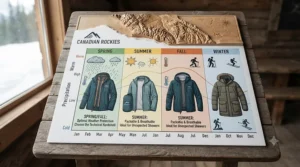
Elevation isn’t just a number on a trail sign — it’s arguably the single biggest variable in choosing mountain rain gear for the Rockies. Valley-bottom trails around Banff townsite sit around 1,400 metres, where summer rain tends to be relatively mild and short-lived. Push up toward alpine terrain above 2,000-2,200 metres, however, and the same storm system can arrive as sleet or snow rather than rain, even in July. Temperature typically drops roughly 6°C for every 1,000 metres gained, which means a comfortable 18°C morning at the trailhead can feel closer to 5°C at a high pass — a swing that catches even experienced hikers off guard. This is precisely the pattern Parks Canada flags in its own trip-planning guidance, and it’s why every product on this list, even the budget options, includes a fully-adjustable hood: at elevation, hood coverage stops being a comfort feature and starts being a core piece of alpine weather protection. Practically, this means day hikers heading above treeline should pack their rain jacket even under a clear morning sky, and should lean toward the more breathable, better-ventilated shells on this list if their route involves serious elevation gain.
Mountain Storm Protection: A Safety Guide for Sudden Rockies Weather
Mountain storms in this range don’t telegraph themselves the way prairie or coastal storms often do — a clear morning can become a whiteout above treeline within an hour, which is exactly why Parks Canada safety staff have repeatedly warned hikers that weather, terrain, and trip distance are consistently underestimated by visitors heading into backcountry terrain. A genuinely storm-ready setup means more than just the jacket: pair it with waterproof pants or gaiters for sustained rain, check trail and weather bulletins before departure rather than relying on a general regional forecast, and treat cell coverage as unreliable once you’re deep in a valley or behind a ridge. If a storm rolls in fast, prioritize getting below treeline and out of exposed terrain over pushing to a summit — wind chill combined with wet clothing is how mild-seeming weather turns into a real medical emergency. None of the seven jackets above are a substitute for turning around when conditions genuinely deteriorate; they’re what keeps a manageable situation manageable.
Long-Term Cost & Maintenance: What a Rocky Mountain Hiking Jacket Really Costs You
| Jacket | Upfront Price (CAD) | Expected Lifespan | Reproofing Cost (Approx.) |
|---|---|---|---|
| Columbia Watertight II | C$90-C$120 | 2-4 seasons | C$15-C$20/treatment |
| Marmot PreCip Eco | C$120-C$160 | 3-5 seasons | C$15-C$20/treatment |
| The North Face Venture 2 | C$160-C$200 | 4-6 seasons | C$15-C$20/treatment |
| Arc’teryx Beta SL | C$650-C$750 | 8-10+ seasons | C$15-C$20/treatment |
Run the numbers over a decade and the picture flips from what the sticker price suggests: replacing a Columbia Watertight II two or three times over ten years of regular use can land in a similar total-cost range as buying one Arc’teryx Beta SL upfront, minus the superior alpine performance along the way. That doesn’t make the budget option a bad buy — for casual, occasional use, a shorter lifespan barely matters — but for frequent Rockies hikers, the premium shell’s cost-per-wear often ends up lower over time, not higher. Reproofing costs stay roughly consistent across the lineup regardless of price tier, since DWR treatments cost the same whether they’re going on a C$100 jacket or a C$700 one.
Frequently Asked Questions
❓ What is the best rain jacket for hiking in the Canadian Rockies?
❓ Do I need a rain jacket even if the forecast looks clear?
❓ What's the difference between 2-layer, 2.5-layer, and 3-layer rain jackets?
❓ Can a softshell jacket replace a rain jacket in the mountains?
❓ How much should I budget for a good Rocky Mountain hiking jacket?
Conclusion
There’s no single “best” rain jacket for Canadian Rockies hiking, and honestly, anyone who tells you otherwise is skipping the part where your trip type actually matters. A casual walker exploring the boardwalks around Johnston Canyon has completely different needs than a backpacker pushing through the Skyline Trail during a shoulder-season storm window. What stays consistent across every budget and every trip, though, is this: mountain weather here doesn’t negotiate, elevation changes the rules faster than most people expect, and a genuinely waterproof, well-ventilated shell is the one piece of gear that turns a miserable, potentially dangerous day into just a slightly damp one. Whether you land on the budget-friendly Columbia Watertight II for gentle valley trails or the alpine-grade Arc’teryx Beta SL for serious vertical terrain, the real win is simply owning a jacket that matches how you actually hike — and remembering to pack it, even under a blue sky.
✨ Ready to Gear Up for Your Next Rockies Adventure?
🔍 Take your mountain rain gear to the next level with these carefully compared picks. Click on any highlighted jacket above to check current pricing and availability on Amazon.ca. The right shell means more trail time and fewer cut-short hikes when the weather turns.
Recommended for You
- Rain Jacket Vancouver Weather: 7 Picks That Won’t Fail (2026)
- Budget Rain Jacket Under $100: 7 Picks That Actually Work (2026)
- Cheap vs Expensive Rain Jacket: 7 Picks Worth Buying in 2026
Disclaimer: This article contains affiliate links. As an Amazon Associate, I earn from qualifying purchases. If you purchase products through these links, we may earn a small commission at no additional cost to you.
✨ Found this helpful? Share it with your friends! 💬🤗
