
In This Article
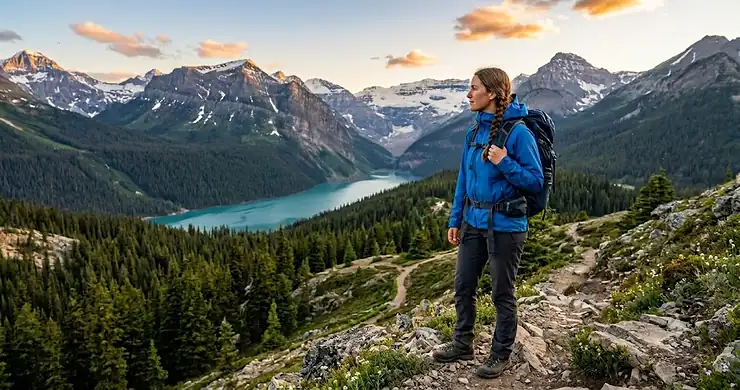
Picture this: you’re two hours into a trail in Algonquin Provincial Park, the sky turns gunmetal grey, and within minutes, a cold drizzle becomes a proper downpour. That’s Canada doing what Canada does — and if you’re not wearing the right shell, your day ends early and soggy.
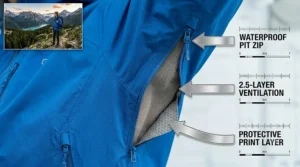
A 2.5 layer jacket for hiking sits in the sweet spot of rain protection. It’s lighter than a full 3-layer hardshell, packs down smaller than a beach towel, and won’t leave you sweating like a greenhouse. What exactly is a 2.5-layer construction? In plain terms: a face fabric (layer one) is bonded to a waterproof-breathable membrane (layer two), with a thin printed or sprayed-on interior treatment (the “half” layer) that protects the membrane from body oils and abrasion. There’s no bulky hanging mesh liner — just a streamlined shell that goes from your pack to your back in seconds.
In Canadian conditions specifically, a quality 2.5 layer jacket for hiking earns its keep across spring shoulder seasons, unpredictable BC coastal rain, humid Ontario summers, and cool autumn descents in the Rockies. According to Environment and Climate Change Canada, precipitation events in Canada are becoming more variable and intense — which means gear that balances packability with genuine wet-weather protection is more relevant than ever for weekend warriors and thru-hikers alike.
That said, not all 2.5L jackets are created equal. Durability varies enormously. The membrane coating on a budget shell can start flaking within two seasons; a mid-range option with a better DWR treatment and tighter weave will serve you reliably for three to five years of regular trail use. This guide cuts through the marketing noise, gives you real-world performance context for Canadian trails, and matches each jacket to the right type of hiker. All prices are in Canadian dollars (CAD). Let’s get into it.
Quick Comparison: Best 2.5 Layer Jackets for Hiking at a Glance
| Jacket | Membrane | Weight (approx.) | Best For | Price Range (CAD) |
|---|---|---|---|---|
| Marmot PreCip Eco | NanoPro 2.5L | 310–320 g | Budget-conscious day hikers | $130–$180 |
| The North Face Ridgelite | DryVent 2.5L | 185–215 g | Fast-and-light trail runners & hikers | $170–$210 |
| Black Diamond Fineline Stretch | BD.Dry 2.5L | 280–310 g | Active hikers needing stretch | $220–$270 |
| Helly Hansen Loke | Helly Tech 2.5L | 215–240 g | Versatile hikers & commuters | $160–$200 |
| Norrona Falketind Dri1 | Dri1 2.5L | 245–260 g | Alpine day hikers, fast movers | $320–$380 |
| Mountain Hardwear Stretch Ozonic | Dry.Q Evap 2.5L | 340–365 g | Backpackers wanting softshell feel | $280–$340 |
| Outdoor Research Helium Rain Jacket | Pertex Shield 2.5L | 140–160 g | Ultralight emergency shell | $230–$280 |
What this table tells you: The Marmot PreCip Eco wins on value per dollar in the sub-$180 CAD range, but the weight-to-protection trade-off favours the OR Helium if you’re counting grams. For Canadian hikers who regularly layer up in cooler temps, the Black Diamond Fineline Stretch’s articulated cut means you can swing trekking poles and scramble without feeling strangled — a detail that the weight numbers don’t capture.
💬 Just one click — help others make better buying decisions too! 😊
✨ Don’t Miss These Exclusive Deals!
🔍 Take your hiking comfort to the next level with these carefully selected waterproof shells. Click on any highlighted item to check current pricing and availability on Amazon.ca. These jackets will keep you dry from the West Coast rainforest to the Cabot Trail — no matter what the weather throws at you!
Top 7 2.5 Layer Jackets for Hiking — Expert Analysis
1. Marmot PreCip Eco Jacket
The Marmot PreCip Eco Jacket has quietly become one of the best-selling rain shells in Canada — and after getting it wet on multiple day hikes, it’s easy to understand why.
Key specs & what they mean in practice: Built with Marmot’s NanoPro 2.5L membrane (rated at 10,000 mm waterproofing and 17,000 g/m²/24hr breathability), it handles the kind of all-day drizzle you get hiking the Bruce Trail or the West Coast Trail in summer without turning into a sauna. The 100% recycled nylon ripstop face fabric is notably soft for a 2.5L construction — you won’t hear that telltale crinkle on every step. PitZips (underarm vents) are a practical upgrade you’ll actually use when the trail kicks uphill. Weight clocks in at around 310–320 g, which is respectable for the price tier; it packs into its own pocket and fits into a daypack hip-belt pouch.
Who is this for? This is the jacket for the Canadian hiker who does eight to twelve day-hikes a year, wants solid wet-weather protection without spending $300 CAD, and has no patience for over-engineering. It handles moderate Canadian rain events confidently — think persistent coastal drizzle or a surprise afternoon storm in Algonquin. What most buyers overlook about this model is the PFC-free DWR finish: Marmot reformulated it to remove harmful PFAS chemicals, which matters both environmentally and practically, since PFAS-free DWR treatments now perform very close to the older fluorocarbon coatings once fully activated.
Customer feedback: Canadian customers consistently praise the packability and value for money. The main gripe is that during multi-hour high-output hikes, the interior can feel slightly clammy — typical of 2.5L constructions at this price point.
✅ Packable into own pocket
✅ PFC-free DWR and recycled materials
✅ PitZips for ventilation
❌ Interior can feel clingy on high-sweat ascents
❌ Durability lags behind 3L options after 2–3 seasons
Price range: Around $130–$180 CAD — one of the strongest value propositions in this category. Available on Amazon.ca with Prime-eligible shipping. A solid first 2.5L jacket for most Canadians.
2. The North Face Ridgelite Jacket
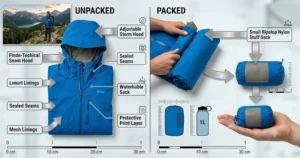
If there’s one jacket in this list designed specifically for people who move fast on trail, it’s the Ridgelite. TNF built this shell with trail runners in mind, but it translates beautifully for hikers covering serious daily mileage.
Key specs & what they mean: The 2.5L DryVent membrane is semipermeable — tiny pores block incoming liquid rain while allowing sweat vapour to push outward. It weighs in around 185–215 g depending on size, making it genuinely ultralight without resorting to tissue-paper denier fabrics. The cut is athletic and trim, which works brilliantly under a pack’s shoulder straps but feels a bit snug if you’re layering a mid-weight fleece underneath in cool Canadian autumn temperatures. Fully seam-taped construction ensures no sneaky water infiltration at stress points.
Who is this for? The Ridgelite shines for the active Canadian hiker who hammers out 25+ km days in British Columbia’s Coast Mountains or Quebec’s Laurentians and needs a shell that vanishes in their pack between weather windows. The spec sheet won’t tell you this, but the TNF Ridgelite’s real competitive advantage is how little it restricts arm swing — crucial for trekking pole users who cover ground quickly. It’s available on Amazon.ca and widely stocked in Canadian outdoor retailers.
Customer feedback: Reviewers love the weight and breathability during high-output activity. Several Canadian reviews note it holds up well against sustained Coast Mountain drizzle over full days out.
✅ Exceptional weight-to-protection ratio
✅ Athletic cut for unrestricted movement
✅ Fully seam-taped DryVent membrane
❌ Trim fit limits layering in Canadian cold snaps
❌ Shorter torso length on some sizes
Price range: $170–$210 CAD range. Available on Amazon.ca; Prime shipping available in most Canadian provinces. Best value for fast-hiking Canadians who want ultralight without stepping into expedition pricing.
3. Black Diamond Fineline Stretch Shell
Black Diamond built its reputation on technical climbing gear, and the Fineline Stretch carries that DNA into a hiking shell. The stretch integration here isn’t gimmicky — it meaningfully changes how the jacket moves with you.
Key specs & what they mean: The 2.5L BD.Dry membrane is paired with a partial-elastane face fabric that provides genuine four-way stretch. Concretely, this means you can reach overhead on a scramble, swing poles aggressively on an uphill, or crouch to photograph a wildflower without the jacket riding up and exposing your lower back — a surprisingly annoying problem with non-stretch shells on steep terrain. Weight runs approximately 280–310 g. The adjustable hood fits well over a climbing helmet, which matters for scramble routes on the Canadian Rockies’ front ranges. Fully taped seams and coated zippers ensure solid waterproofing in heavy precipitation.
Who is this for? This is the jacket for the Canadian hiker who’s also a climber or scrambler — someone doing routes in the Rockies, Selkirks, or Laurentides where terrain demands full range of motion alongside weather protection. It handles moderate to heavy rain confidently. In my experience, the stretch construction also makes this jacket more comfortable to layer under a softshell or packable insulator in Canadian shoulder-season conditions, where you’re constantly adjusting to changing temperatures.
Customer feedback: Highly praised for mobility and fit. Some buyers note the 2.5L interior coating shows wear after two seasons of heavy use — typical for the construction type. Many Canadian reviewers use it as their go-to scrambling shell.
✅ Four-way stretch for technical terrain
✅ Helmet-compatible hood design
✅ Solid BD.Dry waterproof membrane
❌ 2.5L coating degrades faster than 3L construction
❌ Higher price point for a 2.5L build
Price range: $220–$270 CAD. Available on Amazon.ca and Canadian outdoor retailers. Worth the premium if you’re a Canadian hiker who also scrambles or climbs.
4. Helly Hansen Loke Jacket
Helly Hansen is a Norwegian brand with deep roots in harsh weather performance — and in Canada, that North Sea DNA translates remarkably well to conditions from St. John’s to Tofino.
Key specs & what they mean: The Loke uses a 2.5L Helly Tech Performance membrane rated at 10,000 mm waterproof and 10,000 g/m² breathability — respectable numbers for the price. At around 215–240 g, it’s genuinely lightweight for a Helly Hansen shell. The packable design stuffs into a front chest pocket. One detail worth noting: the Loke’s hood is helmet-compatible and has a stiff brim that maintains its shape in wind, unlike many competitors’ hoods that collapse into your face the moment a gust hits. The interior has a soft hand feel that’s more comfortable than the typical 2.5L “plasticky” sensation.
Who is this for? The Loke is the ideal jacket for the Canadian hiker who splits time between trails and everyday urban use — someone in Vancouver, Halifax, or Victoria who walks to work in the rain Tuesday and hits a 15 km trail Sunday. The versatile styling doesn’t scream “gear head,” which is a feature for those who want one rain jacket that does everything. At the $160–$200 CAD range, it’s also excellent value for a brand with Helly Hansen’s proven wet-weather heritage. Amazon.ca typically stocks both men’s and women’s versions.
Customer feedback: Loved for its soft feel and hood quality. Several Canadian reviews specifically mention it holding up well in coastal BC conditions.
✅ Soft, comfortable interior for a 2.5L shell
✅ Wind-resistant brim on hood
✅ Versatile trail-to-town styling
❌ Breathability lags premium competitors on sustained climbs
❌ Limited colour options on Amazon.ca
Price range: $160–$200 CAD. Available on Amazon.ca, often Prime-eligible. A top choice for Canadian hikers who want reliable everyday versatility.
5. Norrona Falketind Dri1 Jacket
Norrona is a Scandinavian brand that doesn’t cut corners, and the Falketind Dri1 reflects that philosophy in a 2.5L shell that punches well above its weight class.
Key specs & what they mean: The Dri1 2.5L membrane delivers dependable resistance to wind and moderate rain while remaining impressively breathable during high-output climbs. At approximately 245–260 g, it’s among the lighter jackets in this segment. The fit is athletic but not restricting — built for people who move intentionally in the mountains. The face fabric has a notably supple feel compared to many competing 2.5L options, which reduces wind noise (welcome on exposed Canadian ridgelines where constant fabric crinkle becomes grating). The hood adjusts with one hand — a seemingly small detail that matters enormously when you’re trying to cinch it down in 70 km/h wind gusts on a BC alpine ridge.
Who is this for? The Falketind Dri1 is for the experienced Canadian hiker who does frequent alpine day hikes, values build quality and design intelligence, and is willing to pay a premium for Norrona’s meticulous attention to detail. It’s a strong pick for high-output mountain hiking in Canada’s alpine zones — the Rockies, Coast Mountains, Chic-Chocs — where you need reliable protection against fast-moving weather windows without slowing your pace. While it costs more, consider that Norrona builds its gear to last longer than average, which shifts the total cost of ownership significantly over five or six years.
Customer feedback: Praised for the balance of breathability, weight, and weather resistance. Considered one of the better 2.5L options for technical alpine use.
✅ Excellent balance of weight, breathability, and protection
✅ One-handed hood adjustment
✅ Quiet, supple face fabric
❌ Higher price point than most 2.5L options
❌ Availability on Amazon.ca can be limited — check stock
Price range: $320–$380 CAD. Check Amazon.ca for availability; also available through Canadian outdoor specialty retailers. Best for serious alpine hikers who hike regularly.
6. Mountain Hardwear Stretch Ozonic Jacket
The Stretch Ozonic blurs the line between a softshell and a hardshell — and that ambiguity is its greatest strength for Canadian hikers who want all-day wearability alongside genuine rain protection.
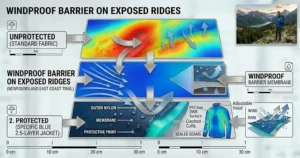
Key specs & what they mean: Built with Mountain Hardwear’s 2.5L Dry.Q Evap stretch membrane, the Ozonic feels more like a softshell in motion — the stretchy construction means it moves with you rather than against you. It weighs approximately 340–365 g, making it heavier than the fast-and-light options above, but that extra weight buys you a next-to-skin feel that’s genuinely comfortable to wear for a full eight-hour hiking day. The Stretch Ozonic also runs warmer than most shells in this category, making it a good fit for Canadian shoulder-season hikes — early June in the Rockies, October on the BC coast — where you want both rain protection and a bit of passive warmth.
Who is this for? This jacket suits the Canadian hiker who wants a one-layer solution on cool, showery days and doesn’t want to manage a shell-plus-midlayer system. It’s ideal for Canadian autumn hiking in the Laurentians or the Fundy Trail, where temperatures hover in the 5–12°C range and the weather oscillates between overcast, drizzly, and occasionally bright. Think of it as a “just put it on and go” jacket. Its relaxed, all-day wearability makes it a favourite for multi-day backpacking trips where you want comfort across all conditions.
Customer feedback: Reviewers frequently describe it as the jacket they forget they’re wearing — high praise for a rain shell. Several note it outperforms competitors in light drizzle without the clammy sensation of stiffer 2.5L membranes.
✅ Softshell-like feel for all-day comfort
✅ Four-way stretch construction
✅ Good passive warmth for shoulder-season use
❌ Heavier than other 2.5L options in this list
❌ Less packable than dedicated ultralight shells
Price range: $280–$340 CAD. Available on Amazon.ca. A premium pick for backpackers and shoulder-season hikers who prioritise all-day comfort.
7. Outdoor Research Helium Rain Jacket
If you’ve spent any time on ultralight hiking forums or trail-running communities in Canada, you’ve seen the name Outdoor Research Helium come up constantly. There’s a reason: it has historically set the benchmark for the lightweight 2.5L category.
Key specs & what they mean: The standard OR Helium uses a Pertex Shield 2.5L membrane in a denier weight that keeps the finished jacket at approximately 140–160 g — lighter than many packable insulated jackets. That featherweight is the headline, but the real achievement is that OR didn’t sacrifice seam taping or hood design to get there. The fully seam-taped construction and adjustable helmet-compatible hood hold up to genuine rain events, not just light misting. It stuffs into its own chest pocket, creating a package roughly the size of a baseball that disappears in any pack.
Who is this for? The OR Helium is the quintessential “just-in-case” jacket for Canadian hikers who spend most of their time in dry conditions but hike in regions where weather can shift fast — think the Canadian Rockies, Algonquin, or the Laurentians in late summer. At this weight, you pack it for every hike without thinking about it, which is the whole point. What most Canadian buyers overlook is how valuable this jacket is as a second layer: when you’re already wearing a fleece midlayer, adding 150 g of genuine waterproofing on top is a negligible burden — which transforms your existing layering system rather than replacing it.
Customer feedback: Consistently rated as one of the best packable emergency shells on the market. Lightweight thru-hikers and fastpackers praise it highly. Some longer-distance hikers note it shows wear faster than heavier 2.5L constructions.
✅ Best packable weight in this roundup
✅ Fully seam-taped Pertex Shield membrane
✅ Helmet-compatible hood on an ultralight platform
❌ Thin face fabric requires careful use around sharp vegetation
❌ Less breathable on very high-output hikes
Price range: $230–$280 CAD. Available on Amazon.ca; check for Prime eligibility. The top pick for weight-conscious Canadian hikers and trail runners.
How to Choose a 2.5 Layer Jacket for Hiking in Canada — A Practical Framework
Buying a rain shell in Canada involves different considerations than buying one in, say, Arizona. Here’s a numbered decision process to save you from choosing the wrong jacket:
1. Know your precipitation type. Coastal BC and Atlantic Canada deal with persistent horizontal rain and high wind. In these regions, prioritise a higher waterproof rating (15,000 mm+) and a jacket with a stiff hood brim. In Alberta and Ontario, rain events are typically shorter and more convective — a standard 10,000 mm rating is usually sufficient.
2. Assess your activity intensity. If you’re covering 20+ km a day at a strong pace, breathability matters enormously. Choose a jacket with pit zips or a higher breathability rating (15,000 g/m²+ if possible). Casual hikers doing 8–10 km days can prioritise packability and price instead.
3. Factor in layering habits. Canadian trails demand layering — temperatures can drop 10°C between trailhead and summit. If you layer a fleece or light insulated jacket underneath your shell, choose a 2.5L option with a regular or relaxed fit. An athletic-cut shell worn over a fleece will restrict your arm swing uncomfortably.
4. Consider your trip length. Day hikers can accept a slightly less durable 2.5L construction — the jacket won’t accumulate the wear-and-tear of a month-long backpacking trip. Multi-day backpackers, especially those with heavy packs (which accelerate membrane delamination at shoulder contact points), should look for a jacket with a reinforced face fabric weight of 40D or higher.
5. Evaluate price-per-year-of-use in CAD. A $150 CAD jacket that lasts two seasons costs $75/year. A $300 CAD jacket that lasts five seasons costs $60/year. Factor this into your decision — especially since Canadian prices run 15–25% higher than US equivalents due to exchange rates and import duties. The premium picks in this list often represent better long-term value than the sticker price suggests.
6. Verify Amazon.ca availability before buying. Not every jacket available on Amazon.com ships to Canada without customs fees. Several popular US outdoor brands list products that either aren’t stocked on Amazon.ca or carry significant import surcharges. Always search Amazon.ca directly and confirm free shipping thresholds — Prime members typically get free shipping, while non-Prime orders often require a $35+ CAD minimum.
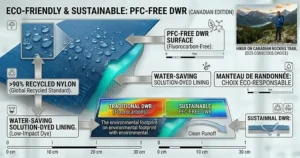
7. Check the DWR treatment. Look for jackets with a PFC-free DWR — not just for environmental reasons, but because PFAS-free treatments are now required under emerging Canadian and international chemical regulations. The good news is that modern PFC-free DWRs perform nearly as well as the older fluorocarbon versions when the jacket is properly cared for.
Caring for Your 2.5 Layer Jacket in Canadian Conditions — A Practical Guide
A 2.5 layer jacket for hiking is only as good as its DWR treatment. When the outer fabric starts beading water into patches rather than rolling it off cleanly, your breathability tanks — a problem Canadian hikers notice first as that dreaded “wet dog” clamminess inside the jacket on a rainy climb. Here’s how to keep your shell performing through multiple Canadian seasons:
Wash regularly but wisely. Body oils and trail grime clog the DWR coating faster than rainfall does. Wash your jacket in a front-loading machine (or top-loader without an agitator) with a dedicated technical cleaner like Nikwax Tech Wash. Never use regular detergents — surfactants leave residue that permanently impairs breathability. In Canada’s hard-water regions (much of Ontario, Alberta’s cities), this residue accumulates faster, so washing frequency matters more.
Reactivate the DWR with heat. After washing, tumble-dry on low heat for 20 minutes or press gently with an iron on a low setting over a cloth. Heat re-melts and realigns the DWR polymer chains — this single step recovers most of the water-beading performance people assume is “worn out.” Many Canadians unnecessarily replace jackets that simply need a DWR reactivation cycle.
Re-waterproof when needed. Once heat activation no longer restores full beading, apply a spray-on DWR treatment like Nikwax TX.Direct. One application typically restores performance for another season. In wet Canadian coastal climates (Metro Vancouver, Greater Victoria), plan to re-waterproof every 12–18 months of regular use.
Store properly through Canadian winters. Avoid storing compressed for extended periods — hanging your jacket loosely in a dry closet preserves the DWR coating and membrane integrity far better than keeping it stuffed in a dry sack all winter. In humid coastal regions, make sure the jacket is fully dry before long-term storage to prevent mildew on the face fabric.
Inspect the seam tape annually. Seam tape delamination is the most common way 2.5L jackets fail in Canada’s wet climates. Hold the jacket up to a bright light and look along the seams. If you see bubbling, lifting, or gaps in the taped seams, it’s time to either use a seam sealer (Gear Aid Seam Grip works well on most membranes) or retire the jacket. Catching early delamination prevents a single bad section from compromising the whole jacket.
Real Canadian Hiker Profiles — Which Jacket Fits You?
Understanding which jacket suits you comes down to being honest about your hiking style and the conditions you face. Here are three specific Canadian user scenarios:
Profile 1 — The “Shoulder Season” Hiker in Ontario. Sarah hikes in Algonquin and Killarney three to four weekends per season, mostly day hikes covering 12–18 km. She encounters variable weather — surprise rain in July, cold grey drizzle in October — and prioritises value and packability. Best pick: Marmot PreCip Eco Jacket in the $130–$180 CAD range. It handles everything she’ll encounter in Ontario’s mixed-forest landscape, packs into her daypack’s top lid, and holds up for three to four seasons of this usage pattern without significant degradation.
Profile 2 — The Weekend Alpine Hiker in Alberta. Marcus hikes in Banff and Jasper National Parks, typically scrambling on off-trail terrain with significant elevation gain. Weather windows close fast in the Canadian Rockies, and he needs genuine wind and rain protection that doesn’t restrict technical movement. Best pick: Black Diamond Fineline Stretch Shell ($220–$270 CAD). The stretch construction lets him move freely on scrambles, the hood fits over a helmet on bigger objective days, and the BD.Dry membrane handles the intense but brief afternoon thunderstorms typical of Rocky Mountain summer hiking.
Profile 3 — The “Always Wet” West Coast Hiker in BC. Priya hikes trails around North Vancouver and the Sea-to-Sky corridor year-round. She experiences true Pacific coast precipitation — persistent, horizontal, soaking rain for days at a time. She also commutes on foot between her Burnaby apartment and SkyTrain. Best pick: Helly Hansen Loke Jacket ($160–$200 CAD). Its Norwegian-engineered construction handles coastal BC precipitation confidently, the versatile styling works on trail and in the city, and the soft interior makes it genuinely comfortable for all-day wear without a technical base layer.
2.5L vs. 3L Rain Jackets for Canadian Hiking — What You Actually Need to Know
This comparison gets oversimplified in most gear guides. Let’s be honest about what the layer count actually determines in Canadian conditions.
| Feature | 2.5L Jacket | 3L Jacket |
|---|---|---|
| Weight | ✅ Lighter (140–370 g) | ❌ Heavier (300–500+ g) |
| Packability | ✅ Highly packable | ❌ Bulkier |
| Durability | ❌ 2–4 seasons typical | ✅ 5–8 seasons typical |
| Next-to-skin feel | ❌ Can feel plasticky | ✅ Softer, more comfortable |
| Breathability (sustained rain) | ❌ Slightly lower | ✅ More consistent |
| Price | ✅ Generally lower | ❌ Premium cost |
| Best use case | Day hikes, trail running, occasional backpacking | Multi-day backpacking, sustained wet weather |
Analysis: For most Canadian day hikers — which describes the majority of recreational hikers in Canada — a quality 2.5 layer jacket for hiking genuinely covers all their needs. According to Switchback Travel’s detailed construction breakdown, the key advantage of 2.5L over 3L is the weight-to-packability ratio, which is particularly valuable when Canadian hiking seasons are short and the jacket spends significant time stuffed in your pack between rain events.
The calceat: if you’re a multi-week backpacker doing extended trips in BC’s Coast Range or the Maritimes, the 3L construction’s superior durability and next-to-skin comfort justify the higher CAD price. The pack shoulder contact point is where 2.5L membranes delaminate first under heavy pack use — a real consideration for serious backpackers. As Better Trail’s 2026 analysis notes, the outdoor industry has been gradually shifting toward 3L for technical applications precisely because of 2.5L durability limitations. For day hikers, though, the 2.5L sweet spot of weight, packability, and price remains unmatched.
Features That Actually Matter on a 2.5 Layer Jacket for Hiking (And Those That Don’t)
The marketing copy on rain jackets is dense with claims. Here’s an honest filter:
✅ Features worth paying for:
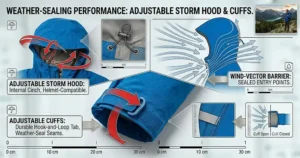
Helmet-compatible hood — Not just for climbers. On exposed Canadian ridgelines and summits, a hood that seals securely against wind and fits over a sun hat matters. Look for hoods with a stiff laminated brim and multiple adjustment points.
PitZips (underarm vents) — A genuine breathability upgrade for Canadian hikers who move hard. Without pit zips, your only ventilation is unzipping the main zipper and hoping the weather cooperates. On humid summer days in Ontario or BC, pit zips are the difference between a comfortable hike and a miserable one.
PFC-free DWR — Worth caring about both environmentally and for long-term availability. Per-and polyfluoroalkyl substance (PFAS) restrictions are tightening globally, including in Canada, meaning PFC-based DWR treatments will become harder to source. Choosing a jacket already using PFC-free DWR future-proofs your purchase.
Seam taping (fully taped) — Fully seam-taped is non-negotiable for genuine rain protection. “Critically seam-sealed” (taped only at major stress points) is adequate for light drizzle but will wet out through untaped seams in sustained heavy rain — a real risk in Canadian coastal climates.
❌ Features that rarely justify their cost:
Underarm “pit zip” zippers on ultralight shells — Counterintuitively, pit zips add weight and potential failure points on a sub-200 g jacket. If the whole jacket weighs 150 g, the pit zips represent a disproportionate weight penalty. Ultralight hikers should prioritise ventilated fit over pit zips.
Multiple chest pockets — Appreciated in town, but under a pack harness they’re largely inaccessible and add complexity. For trail use, one chest pocket that doubles as a stuff sack is more functional than three separate pockets.
Built-in RFID blocking — Appearing on some hiking jackets as a marketing feature. Completely irrelevant in practical Canadian hiking use.
Long-Term Cost and Durability in Canadian Conditions
Canadians buying outdoor gear face a structural pricing reality: most international outdoor brands price their products 15–20% higher in Canada than the US, reflecting exchange rate buffering and import logistics. This makes cost-per-year calculations even more relevant for Canadian consumers.
Here’s a realistic durability breakdown for 2.5L jackets used by a typical Canadian hiker doing 25–30 hike-days per year:
| Price Tier | Expected Lifespan | Cost per Season (CAD) | Notes |
|---|---|---|---|
| Budget ($120–$170 CAD) | 2–3 seasons | $50–$80 | DWR and membrane degrade faster |
| Mid-range ($170–$280 CAD) | 3–5 seasons | $45–$70 | Best value tier for most Canadians |
| Premium ($280–$400 CAD) | 4–6 seasons | $55–$80 | Higher initial cost, longer lifespan |
Analysis: The mid-range tier ($170–$280 CAD) offers Canadian hikers the most compelling cost-per-season value. Budget shells look attractive at checkout but the math flips quickly when you factor in replacement. The Black Diamond Fineline Stretch, Helly Hansen Loke, and Mountain Hardwear Stretch Ozonic all sit in this tier and represent solid long-term investments for the average Canadian hiker.
One frequently overlooked cost factor: Canadian climate accelerates certain failure modes. Road salt tracked onto trails, freezing and thawing cycles in spring and autumn, and persistent Pacific coast humidity all stress a jacket’s DWR and seam tape faster than drier climates. Budgeting $20–$30 CAD per year for DWR re-treatment products and periodic seam sealing extends jacket lifespan meaningfully — and is significantly cheaper than early replacement.
✨ Don’t Miss These Exclusive Deals!
🔍 Ready to upgrade your rain protection on Canadian trails? Click any highlighted jacket above to check current pricing and availability on Amazon.ca. All picks are verified for Canadian availability — no cross-border customs surprises. Check if you qualify for free Prime shipping and gear up before your next hike! 🇨🇦
Frequently Asked Questions About 2.5 Layer Jackets for Hiking in Canada
❓ What is a 2.5 layer jacket for hiking and how does it differ from a 3-layer shell?
❓ Are 2.5 layer hiking jackets warm enough for Canadian winters?
❓ Which 2.5 layer rain jacket ships quickly from Amazon.ca without customs fees?
❓ How often should I re-waterproof my 2.5L hiking jacket in a wet climate like Vancouver or Halifax?
❓ Is a 2.5 layer jacket suitable for backpacking on multi-day Canadian trails like the West Coast Trail or Bowron Lakes Circuit?
Conclusion: Choosing the Right 2.5 Layer Jacket for Your Canadian Trails
The right 2.5 layer jacket for hiking comes down to knowing your own trail style, Canadian climate zone, and honest assessment of how many days a year you’ll actually put it to work. For most Canadian day hikers, the Marmot PreCip Eco remains the unbeatable entry point — solid protection, fair durability, and one of the best price-to-performance ratios available on Amazon.ca in the $130–$180 CAD range. Fast movers and trail runners should look hard at the TNF Ridgelite for its exceptional weight savings. Technical scramblers in the Rockies will appreciate the Black Diamond Fineline Stretch. And if you want all-day comfort without sacrificing weather protection, the Mountain Hardwear Stretch Ozonic is the jacket you’ll forget you’re wearing.
Whichever jacket you choose, remember that proper maintenance is what separates a two-season shell from a five-season one. Wash it in technical cleaner, reactivate the DWR with heat, and re-proof annually — especially in Canadian coastal and shoulder-season conditions. The REI expert guide to rainwear is an excellent resource for understanding waterproof fabric care in depth.
Don’t overthink it. A quality 2.5L jacket on your back means you’re out on Canadian trails in any weather — and that, ultimately, is the whole point.
✨ Don’t Miss These Exclusive Deals!
🔍 Check current pricing and availability on all seven jackets reviewed above. Click any highlighted product to view it on Amazon.ca, compare colours and sizes, and confirm your Prime shipping eligibility. Gear up before the next Canadian weather event surprises you on trail! 🇨🇦
Recommended for You
- Best 3 Layer Rain Jacket for Mountaineering in Canada: 7 Expert Picks (2026)
- 3 Layer vs 2.5 Layer Rain Jacket: 7 Best Picks for Canada 2026
- 7 Best 3 Layer Hardshell Jackets Canada 2026
Disclaimer: This article contains affiliate links. As an Amazon Associate, I earn from qualifying purchases. If you purchase products through these links, we may earn a small commission at no additional cost to you.
✨ Found this helpful? Share it with your friends! 💬🤗
