
In This Article
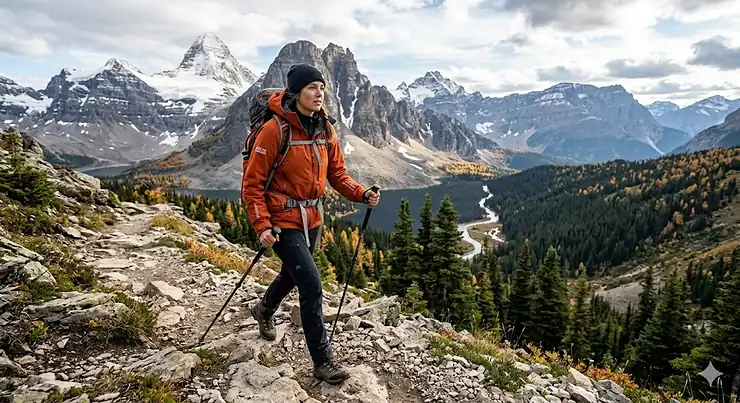
If you’ve ever been caught on a ridge in Kananaskis when the weather turned sideways — or soaked through on a November trail run in North Vancouver — you already know the answer. A well-built 3 layer hardshell jacket isn’t a luxury in Canada. It’s a survival tool.
Here’s the thing: Canada is one of the most climatically demanding places on Earth to dress for. Environment Canada’s wind chill index makes clear that at -20°C with prairie winds, you’re already experiencing -33°C on exposed skin. Vancouver sees relentless coastal rain from October through April. The Great Lakes region deals with fluctuating wet-dry lake-effect conditions. And in Quebec and the Atlantic provinces, you’re staring down heavy mixed precipitation for months on end. No single piece of gear handles all of this better than a quality 3 layer hardshell jacket.
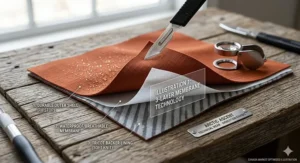
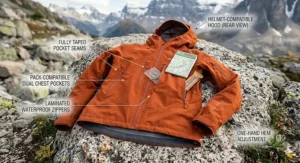
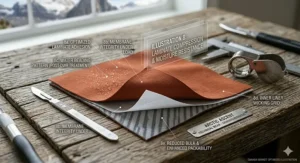
So what exactly is a 3 layer hardshell jacket? In brief: it’s a waterproof, windproof, breathable outer shell built from a three-layer laminated construction — a durable face fabric, a waterproof-breathable membrane (commonly Gore-Tex), and a protective inner backer, all bonded into a single unified piece of fabric. Unlike 2-layer constructions, there’s no loose floating liner to trap moisture and add bulk. Everything is fused. The result is a jacket that’s lighter, more breathable, and longer-lasting than virtually any other rain protection technology.
In this guide, I’ve researched and reviewed seven of the best 3 layer hardshell jackets available on Amazon.ca in 2026 — from entry-level options around $250 CAD to premium Gore-Tex Pro shells north of $900 CAD. Every product section includes real specs translated into what they actually mean for a Canadian buyer, Canadian-climate performance notes, and honest pros and cons. Let’s get into it.
Quick Comparison: Top 3 Layer Hardshell Jackets in Canada (2026)
| Product | Membrane | Face Fabric | Weight (approx.) | Price Range (CAD) | Best For |
|---|---|---|---|---|---|
| Arc’teryx Beta AR Jacket | Gore-Tex PRO ePE | 100D/80D hybrid nylon | ~460 g | $900–$1,000+ | All-mountain hardshell, serious alpine |
| Arc’teryx Beta Jacket | Gore-Tex ePE | 80D bio-nylon | ~375 g | $650–$750 | Versatile everyday/backcountry shell |
| Patagonia Triolet Jacket | Gore-Tex ePE | 75D recycled poly | ~560 g | $500–$580 | Durable all-rounder, ski touring, value |
| Outdoor Research Headwall Gore-Tex 3L | Gore-Tex | 75D recycled poly | ~510 g | $450–$520 | Alpine climbing, Canadian Rockies use |
| Patagonia Granite Crest Jacket | H2No Performance Standard | Recycled nylon | ~400 g | $280–$320 | Budget 3L option, trail hiking |
| Patagonia Torrentshell 3L Jacket | H2No Performance Standard | Recycled polyester | ~400 g | $240–$275 | Entry-level 3L, everyday wet-weather |
| The North Face Dryzzle FUTURELIGHT Jacket | FUTURELIGHT (nanospun) | Recycled nylon | ~340 g | $500–$580 | Urban commuters, lightweight touring |
The comparison above tells a clear story: if you’re a serious alpine or backcountry user in Canada, the price jump to the Arc’teryx Beta AR or Patagonia Triolet is absolutely justified by the heavier-duty face fabric and premium membrane durability. But if your use case is trail hiking and commuting through wet Canadian springs, the Torrentshell 3L or Granite Crest deliver excellent protection for roughly a quarter of the premium price — and both ship free to Canada on Amazon.ca with Prime. Budget buyers should know that stepping up from 2.5L to 3L construction (as the Granite Crest does vs. the popular Marmot Minimalist) brings real gains in breathability and long-term durability that are very much worth the extra spend.
💬 Just one click — help others make better buying decisions too! 😊
✨ Don’t Miss These Exclusive Deals!
🔍 Take your outdoor kit to the next level with these carefully selected hardshell jackets. Click on any highlighted item to check current pricing and availability on Amazon.ca. These shells are built to handle everything Canadian weather can throw at you!
Top 7 Three Layer Hardshell Jackets: Expert Analysis
1. Arc’teryx Beta AR Jacket — The Gold Standard for All-Mountain Use
The Beta AR is the jacket that Canadian mountain guides reach for when everything else fails — and that reputation is hard-earned.
The 2026 model now runs on Gore-Tex PRO ePE (expanded polyethylene) membrane in a hybrid configuration: 100D 3L on the yoke, arms, and hood (the areas that take the most abrasion), and 80D 3L on the body for weight savings. In practical terms, that hybrid design means you get a jacket that resists pack-strap and harness wear over years of use without the overall bulk of a full 100D shell. For Canadian backcountry skiers in the Rockies or climbers on Squamish granite, this matters enormously — cheaper shells with 50D face fabrics show wear at the shoulder seams within a single season.
The DropHood is genuinely one of the best technical hoods on the market: it’s designed separately from the collar, allowing it to move with your head rather than twisting uncomfortably when you turn to check your partner on belay. It’s also RECCO-reflector equipped — a small detail that Canadian search-and-rescue teams have come to rely on in winter avalanche terrain. The WaterTight Vislon zipper and pack-friendly pockets round out a jacket that clearly was designed by people who actually climb and ski.
Canadian buyers should know that Arc’teryx is headquartered in North Vancouver, BC — and while prices on Amazon.ca run slightly higher than US equivalents due to exchange rates, you avoid cross-border customs headaches and warranty issues. Amazon.ca Prime shipping also means next-day delivery in most major Canadian cities.
Customer feedback summary: Canadian reviewers consistently praise the Beta AR for lasting multiple seasons of hard alpine use without delamination or zipper failures — common complaints on lower-tier jackets.
✅ Hybrid 100D/80D construction outlasts most competing shells significantly
✅ DropHood with RECCO reflector is ideal for backcountry Canadian use
✅ Gore-Tex PRO ePE is PFAS-free — a meaningful environmental commitment
❌ Premium pricing in the $900–$1,000+ CAD range is a major barrier for casual users
❌ Limited colour availability on Amazon.ca vs. the Arc’teryx direct site
Price range: Around $900–$1,000+ CAD. Worth every dollar for frequent alpine use.
2. Arc’teryx Beta Jacket — The Everyday Workhorse That Doesn’t Feel Like One
If the Beta AR is a race car, the Arc’teryx Beta Jacket is the precision sports sedan — slightly less extreme, but a better fit for most Canadians’ actual lives.
The Beta Jacket uses an 80D Gore-Tex ePE (not PRO) fabric across the full body, along with Arc’teryx’s C-KNIT backer technology on the inside. The C-KNIT backer is something the spec sheet downplays — it creates a noticeably quieter, softer feel against a base layer compared to the crinkly tricot liners found on most competing jackets. After a long day on skis or on trail, that comfort difference is real. The Gore-Tex ePE membrane is PFC-free and derived from bio-based nylon, aligning with Canada’s growing demand for sustainable outdoor gear.
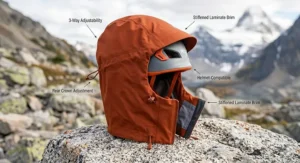
At roughly 375 grams, it’s meaningfully lighter than the Triolet or Headwall — important if you’re in shoulder season and want a shell that doubles as a packable layer for trail running or hiking in the Coast Mountains. The StormHood adjusts with a single pull even with gloves on, which matters at -15°C on a Whistler backcountry approach. Hand pockets and an interior laminated pocket round out a clean, functional design.
For most Canadian buyers — urban commuters who hit the mountains on weekends, casual backcountry skiers, trail runners wanting weather insurance — the Beta Jacket hits a near-perfect sweet spot of performance, weight, and real-world versatility.
Customer feedback: Highly rated on Amazon.ca for fit accuracy and consistent waterproofing over multiple seasons. Some buyers note that sizing runs slightly slim for tall Canadians who want room for a thick mid-layer.
✅ C-KNIT backer is noticeably softer and quieter than competitors in this price range
✅ Lighter weight than most 3L options — excellent for active pursuits
✅ Amazon.ca Prime eligible with free shipping across Canada
❌ 80D face fabric (single-denier) not as abrasion-resistant as the Beta AR’s hybrid build
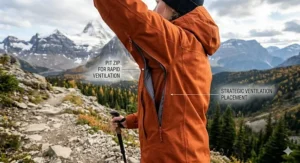
❌ No pit zips — ventilation entirely via front zipper and hood design
Price range: $650–$750 CAD range. Exceptional value for the quality of Gore-Tex construction offered.
3. Patagonia Triolet Jacket — The “Last Hardshell You’ll Ever Need to Buy”
That quote above came from a longtime tester at OutdoorGearLab, and after examining the Triolet’s construction, it’s hard to argue.
The Triolet is built around a 75-denier Gore-Tex ePE Performance fabric — the same membrane partnership Patagonia has spent a decade quietly developing to remove PFAS from technical outerwear without sacrificing performance. That 75D face fabric is notably heavier than most competitors at this price point (where 50D is standard), and what that buys you in practice is years of reliable use around crampons, ski edges, and jagged rock without the fabric pilling or delaminating. One tester reported using the Triolet for over three seasons of demanding ski touring and ice climbing with zero degradation.
For Canadian users specifically: the Triolet’s extended cut and generous fit is excellent for heavy layering beneath — a real advantage on those brutal January days in the Laurentians or the Columbia Icefields when you’re wearing a fleece mid-layer plus base layers underneath. The two-way pit zips are a feature that competitors in this price range often omit, and on sustained uphill efforts — ski touring, snowshoeing — they make a genuine difference in regulating temperature.
Patagonia’s Fair Trade Certified manufacturing and commitment to sustainable materials also carry real weight with Canadian consumers, particularly in BC and Ontario where environmental consciousness drives purchasing decisions.
Customer feedback: Canadian buyers love the durability and versatility; common feedback is that the boxy cut isn’t for everyone and the weight (~560 g) is noticeable on long approaches.
✅ 75D face fabric is unusually durable for the price bracket — survives serious alpine abuse
✅ Two-way pit zips for ventilation — uncommon at this price point
✅ Extended cut accommodates heavy winter layering comfortably
❌ Heaviest jacket in our lineup at ~560 g — not ideal for fast-and-light missions
❌ Boxy fit may feel untailored compared to Arc’teryx’s trimmer cut
Price range: $500–$580 CAD. Arguably the best value in our entire list for serious Canadian winter use.
4. Outdoor Research Headwall Gore-Tex 3L Jacket — The Climber’s Choice for Canadian Rockies Conditions
Outdoor Research doesn’t always get the same headlines as Arc’teryx or Patagonia, but among serious alpine climbers in Canada — particularly in the Rockies and the Bugaboos — the Headwall is a quietly beloved jacket.
Built on a 75D recycled polyester Gore-Tex 3L shell with full seam-taping and YKK AquaGuard zippers, the Headwall is designed for one thing: sustained wet, cold, high-output use. The TorsoFlo venting system runs from the hem all the way to the bicep — far more ventilation than traditional underarm pit zips — and that extended vent design allows serious heat dumping on steep technical terrain without unzipping the whole jacket. In variable Canadian Rocky Mountain conditions (where you might go from -10°C in the couloir to +5°C in the valley in a single morning), that ventilation range is genuinely useful.
The helmet-compatible hood is fully adjustable with gloved hands, high chest pockets sit above a harness waistbelt for accessible use while roped up, and the bluesign-approved 100% recycled polyester shell speaks to Outdoor Research’s environmental commitments. Unlike some premium brands, OR also offers a lifetime guarantee on craftsmanship — a meaningful assurance for Canadian buyers who want long-term value in CAD.
Customer feedback: Highly regarded among Canadian alpinists for fit, ventilation, and storm protection. Some users note the jacket runs slightly large in the torso.
✅ TorsoFlo venting from hem to bicep — best ventilation system in our lineup
✅ Lifetime guarantee from Outdoor Research — excellent long-term value
✅ Climber-specific features (helmet hood, harness-compatible pockets) designed for technical Canadian terrain
❌ Less known brand may deter buyers unfamiliar with OR’s product quality
❌ Sizing can run large — worth checking the fit guide before ordering
Price range: $450–$520 CAD. Strong value for alpine-focused Canadians who’ll use those climbing-specific features.
5. Patagonia Granite Crest Jacket — The Budget 3L That Punches Above Its Weight Class
Most “budget waterproof” options are 2.5-layer constructions — Patagonia’s own Torrentshell being the classic example. The Granite Crest is different: it’s a genuine 3-layer hardshell at a price that brings full laminated construction within reach of buyers who can’t justify $500+ CAD.
Patagonia’s H2No Performance Standard membrane isn’t Gore-Tex, but it delivers serious waterproofing across the range of conditions most Canadian hikers actually encounter. The 3-layer construction means better breathability on sustained uphill effort compared to the 2.5-layer Torrentshell — if you’re doing long ridge hikes in Garibaldi or multi-day backpacks in Algonquin, that breathability difference translates to real comfort. At roughly 400 grams, it’s also light enough to toss in a day pack without noticing it’s there.
Where it shows its price point: no pit zips, fewer pocket options than the Triolet, and a less refined hood system than Arc’teryx’s offerings. For the outdoors-curious Canadian who wants real technical performance without a $600+ CAD commitment, the Granite Crest is genuinely the best value-to-performance hardshell in our lineup.
Customer feedback: Canadian buyers frequently cite the Granite Crest as a “gateway” jacket — the product that opened their eyes to what a real 3L construction feels like compared to budget alternatives.
✅ Genuine 3L laminated construction at a budget-friendly price in CAD
✅ Patagonia’s H2No membrane handles typical Canadian trail conditions reliably
✅ Light enough to pack for shoulder-season hikes and urban commuting
❌ No pit zips limits ventilation on high-output activities
❌ H2No membrane is less breathable and less durable than Gore-Tex over time
Price range: $280–$320 CAD. The best entry point into real 3L hardshell technology for Canadian buyers on a budget.
6. Patagonia Torrentshell 3L Jacket — The Honest Everyday Rain Jacket for Canadian Weather
The Torrentshell 3L occupies a unique spot: it’s built on genuine 3-layer construction, but it’s priced and designed for urban use and trail hiking rather than alpine climbing. That’s not a criticism — it’s a feature.
The face fabric here is a recycled polyester H2No construction, and at ~400 grams it’s one of the lighter options in our lineup. The magic of the Torrentshell is how well it packs: it stows into its own left pocket, making it the ideal “throw in the bag in case Vancouver does what Vancouver does” jacket. The seams are fully taped, DWR is PFAS-free, and Patagonia’s build quality is consistent enough that this jacket simply doesn’t fail in the kind of sustained rain that BC and Atlantic Canada routinely deliver.
What the spec sheet doesn’t tell you: the Torrentshell runs somewhat stiff and crinkly compared to premium shells — not ideal against skin, but fine over a base layer. More critically, it lacks the burly face fabric durability you’d want for scrambling or backcountry skiing. This is a jacket for rain in the city, on the trail, and on casual mountain days — not sustained alpine hard use.
Customer feedback: One of the best-reviewed waterproof jackets on Amazon.ca, with buyers consistently praising waterproofing reliability and packability for everyday Canadian wet-weather use.
✅ Packs into its own pocket — unbeatable convenience for variable Canadian weather
✅ PFC-free PFAS-free DWR aligns with Canadian consumers’ sustainability values
✅ Most affordable genuine 3L option in our lineup
❌ Stiff, crinkly face fabric isn’t suited for use over skin or in technical alpine settings
❌ Limited breathability vs. Gore-Tex options — not recommended for high-output activities
Price range: $240–$275 CAD. The best choice for Canadians who want real 3L waterproofing for everyday use without paying alpine prices.
7. The North Face Dryzzle FUTURELIGHT Jacket — The Urban-to-Mountain Commuter Shell
The North Face’s FUTURELIGHT membrane technology uses a nanospun construction process to create a 3-layer shell that’s consistently among the lightest and most breathable in its class — and the Dryzzle is the version that translates that performance into a jacket Canadians can wear from the subway to the summit without looking out of place at either.
At roughly 340 grams, it’s the lightest jacket in our lineup by a meaningful margin — important if you’re weight-sensitive for trail running or fastpacking. The FUTURELIGHT membrane’s breathability ratings exceed most Gore-Tex options at this price point, which matters on the sustained high-output efforts common in Canadian trail running and ski touring. The fully seam-sealed construction and DWR treatment handle the persistent coastal rain of Vancouver and Victoria effectively, and the stretch integration in the fabric gives it a freedom of movement that stiffer Gore-Tex shells can’t match.
Canadian buyers specifically will appreciate that the Dryzzle is genuinely versatile across the range of conditions most of us actually experience: it works equally well for a commute through Toronto in November rain, a weekend hike in Algonquin in spring slush, and a ski day at Tremblant when the forecast says mixed precipitation. The price range in CAD puts it squarely in the mid-premium tier — justified by the FUTURELIGHT technology and The North Face’s reliable Canadian availability on Amazon.ca.
Customer feedback: Loved for its lightweight feel and urban versatility; some alpine users find it less durable around technical gear than heavier-duty shells.
✅ Lightest jacket in our lineup at ~340 g — excellent for active pursuits and packing
✅ FUTURELIGHT breathability is among the best in this price range
✅ Versatile design transitions seamlessly from urban to outdoor Canadian environments
❌ Less durable face fabric than 75D options — not ideal for sharp alpine terrain
❌ FUTURELIGHT is newer technology with less long-term track record than Gore-Tex
Price range: $500–$580 CAD. Best choice for Canadians who want maximum breathability in a lightweight, urban-capable shell.
How to Choose a 3 Layer Hardshell Jacket in Canada: A Step-by-Step Framework
Choosing the right 3 layer hardshell jacket isn’t just about picking the most expensive Gore-Tex label you can afford. In Canada, the variables are specific and the stakes are real. Here’s how I’d approach it:
1. Define your primary use case. Alpine climbing and backcountry skiing demand the most durable face fabrics (75D or higher) and the most protective hoods. Trail hiking and urban commuting can get away with lighter, less burly constructions. Be honest about what you’ll actually do 80% of the time.
2. Match the membrane to your activity level. Gore-Tex PRO is the gold standard for high-output, sustained alpine use. Regular Gore-Tex ePE handles almost everything else. H2No Performance Standard (Patagonia’s proprietary membrane) is excellent for budget-conscious buyers who aren’t doing technical climbing.
3. Consider Canadian regional climate. As Environment Canada notes, wind chill is the relevant metric — not just air temperature. BC coastal buyers need maximum waterproofing and breathability. Prairie buyers need windproof construction that handles dramatic temperature swings. Ontario and Quebec users need robust seam-sealing for mixed precipitation.
4. Check pit zip availability if you run warm. On any sustained uphill effort — ski touring, trail running, snowshoeing — a jacket without pit zips will cook you. The Triolet and Headwall have them; the Beta Jacket and Torrentshell do not. Choose accordingly.
5. Verify hood compatibility with your headgear. Technical ski touring and climbing require a helmet-compatible hood that moves independently from the collar. The Beta AR, Headwall, and Triolet all offer this. Non-helmet hoods (StormHood style on the Beta Jacket) are better for casual use.
6. Budget for the long term, not the short term. A $900 CAD Arc’teryx Beta AR that lasts 8–10 seasons costs roughly $100–$115/year. A $250 CAD jacket that delaminate in two seasons costs $125/year — and you’re back shopping again during Canada’s shortest outdoor windows.
7. Check Amazon.ca availability and Prime status. Not all products ship equally to remote or northern Canadian communities. Confirm shipping to your postal code before purchasing.
Real Canadian User Scenarios: Which Jacket Is Right for You?
Profile 1 — The Toronto Weekend Hiker. You live downtown, commute by TTC, and hit Algonquin or the Bruce Trail on weekends from May through November. Budget: $300–$400 CAD. You don’t need a $900 alpine shell. The Granite Crest’s genuine 3L construction at $280–$320 CAD handles your conditions perfectly, and the packability means it lives in your commuter bag all week without bulk. On longer shoulder-season trips where sustained rain is likely, consider stepping up to the Torrentshell 3L for its packs-into-pocket convenience.
Profile 2 — The Whistler/Banff Backcountry Skier. You ski tour 30+ days a season, often in variable Rocky Mountain or Coast Mountain conditions. You need a jacket that survives ski edges, crampons, harness wear, and full-day storm exposure. Budget: $500–$900+ CAD. The Patagonia Triolet is your sweet spot — the 75D fabric handles abuse, the pit zips manage the sweat of uphill skinning, and the Gore-Tex ePE delivers in full storms. For the serious alpinist doing multi-day missions, the Beta AR’s PRO ePE construction justifies the premium.
Profile 3 — The Vancouver Commuter/Runner. Rain is your constant companion September through April. You need something light, breathable, and packable that transitions between your morning run and afternoon meetings. Budget: $350–$600 CAD. The North Face Dryzzle FUTURELIGHT is ideal — lightest in our lineup, excellent breathability for running, and a design that doesn’t scream “technical mountaineering gear” on the SkyTrain.
Caring for Your 3 Layer Hardshell Jacket: What the Label Won’t Tell You
Most Canadians dramatically underperform their hardshell jackets simply by not maintaining the DWR coating — and in a country where waterproofing is critical for six-plus months of the year, that’s a costly oversight.
Restore DWR performance regularly. If water starts sheeting off your jacket rather than beading (i.e., the fabric is “wetting out”), your DWR is failing. This doesn’t mean the membrane has failed — it means the outer fabric is saturated, blocking breathability and making the jacket feel like a wet blanket. Wash your jacket with a technical detergent like Nikwax Tech Wash (available on Amazon.ca), then tumble dry on low heat or iron on low. Heat reactivates the DWR treatment in most 3-layer constructions. This one maintenance step can restore a jacket that felt “broken” to near-new performance.
Store uncompressed. Folding a 3-layer jacket into a tight compression sack over long Canadian winters stresses the laminate bonds. Hang it loosely in your gear closet, or stuff it loosely in a breathable bag.
Close all zippers before washing. Open zippers allow zipper teeth to abrade the membrane during washing cycles — particularly in front-loading machines (which Canadians predominantly use). Closed zippers during machine washing dramatically extends zipper life.
Avoid fabric softeners. This seems obvious but it still happens. Fabric softener degrades DWR coatings faster than almost anything else, and it can leave residue that blocks the microporous membrane. Use only technical detergents.
Inspect seam tape annually. On Gore-Tex shells used in hard alpine conditions, seam tape can begin to peel at stress points after several seasons. Most premium brands (Arc’teryx, Patagonia, OR) offer seam repair kits or warranty repair services — take advantage of them before a small peel becomes a major leak. Arc’teryx specifically has repair centres in Vancouver, Toronto, and Montreal for Canadian customers.
3 Layer Hardshell Jacket vs. Softshell vs. 2-Layer Rain Jacket: The Canadian Verdict
This comparison comes up endlessly in outdoor communities, so let me address it directly.
| Feature | 3L Hardshell | 2L Rain Jacket | Softshell |
|---|---|---|---|
| Waterproofing | ✅ Excellent (fully taped) | ✅ Good (fully taped) | ❌ Water-resistant only |
| Breathability | ✅ Excellent | ✅ Moderate | ✅ Excellent |
| Weight | ✅ Lighter than 2L | ❌ Heavier | ✅ Lightest |
| Durability | ✅ Best (bonded laminates) | ❌ Moderate (loose liner) | ✅ Good |
| Best Canadian Use | Alpine, backcountry, storms | Urban, casual hiking | Dry cold, high-output |
As Vertical Addiction’s Canadian Rockies guide clearly notes, hardshells are non-negotiable in heavy rain, wet ice climbing, or on any objective where you cannot afford to soak through. In a country where the weather can shift from sunny to sleet in a single afternoon — which anyone who’s hiked in the Rockies or climbed in the Laurentians knows — the 3 layer hardshell’s fully-bonded, seam-sealed construction is the only technology that reliably keeps you dry through sustained exposure.
The 2-layer jacket’s separate floating liner adds bulk and reduces breathability — both disadvantages on the high-output efforts common to Canadian outdoor activities. The softshell’s lack of full waterproofing is simply inadequate for BC coastal rain or Atlantic storm conditions. For serious Canadian outdoor use, the 3L construction is the correct answer.
✨ Don’t Miss These Exclusive Deals!
🔍 Check current pricing and availability on Amazon.ca for every jacket reviewed above. Prime members get free shipping across Canada — perfect for last-minute gear orders before the season starts!
Common Mistakes Canadians Make When Buying a Hardshell Jacket
Mistake 1: Buying for the wrong climate zone. A jacket optimized for dry alpine powder (lighter face fabric, maximum breathability) will struggle in sustained coastal rain. A burly 75D storm shell designed for Alaskan conditions is overkill — and unnecessarily hot — for casual Toronto trail use. Match your jacket to your regional Canadian climate first, activity second.
Mistake 2: Ignoring DWR maintenance. As described above, more hardshell “failures” reported on Canadian outdoor forums are DWR failures than membrane failures. Regular maintenance with Nikwax or Granger’s products (widely available on Amazon.ca) extends effective waterproofing by years.
Mistake 3: Overlooking Canadian warranty terms. Some international outdoor brands don’t honour warranty claims on products bought from Amazon.ca vs. brand-direct channels. Before purchasing, verify the brand’s Canadian warranty policy. Arc’teryx, Patagonia, and Outdoor Research all have clear Canadian warranty coverage — confirm this with other brands before committing.
Mistake 4: Choosing 2-layer to “save money” for alpine use. A 2-layer jacket’s loose inner liner traps moisture during high-output activities, adds unnecessary weight, and degrades faster from the constant friction between membrane and liner. For Canadian backcountry skiers and climbers, the investment in 3-layer construction repays itself quickly in performance and longevity.
Mistake 5: Buying the wrong size for layering. Most hardshell sizing guides are based on slim-fit measurements. If you’re adding a fleece or down mid-layer underneath — essential in Canadian winter use — size up one. A jacket that fits perfectly over a t-shirt in August will feel like a straitjacket over a Patagonia R2 fleece in January.
Frequently Asked Questions About 3 Layer Hardshell Jackets in Canada
❓ What is the difference between 3 layer and 2 layer hardshell jackets?
❓ Are Gore-Tex 3 layer jackets worth it for Canadian winters?
❓ Which 3 layer hardshell jacket ships free to Canada on Amazon.ca?
❓ How do I maintain a 3 layer hardshell jacket in Canada's climate?
❓ Is a 3 layer hardshell jacket good for Canadian backcountry skiing?
Conclusion: The Right Shell for Every Canadian
A great 3 layer hardshell jacket is the single most important piece of technical outerwear a Canadian outdoor person can own. It’s the layer between you and a bad day on the mountain, a soaked-through trail run in the fall, or a genuinely dangerous situation in deteriorating alpine weather.
The best choice depends on your specific corner of Canada and your actual use case. The Arc’teryx Beta AR remains the benchmark for serious alpine and backcountry users — built harder, performing longer, and worth every dollar of that premium CAD price if you’re logging real mountain days. The Patagonia Triolet is the best all-around value for Canadian conditions: durable enough for hard use, versatile enough for ski touring, hiking, and everyday storms. For entry-level 3L quality at accessible Canadian pricing, the Torrentshell 3L and Granite Crest are excellent starting points that don’t compromise on the fundamental waterproofing technology.
Whatever you choose, invest in real 3-layer laminated construction. Canada’s weather demands it — and the long-term cost of a quality shell, divided over the years of reliable service it delivers, is always lower than the cycle of replacing cheaper jackets season after season.
✨ Don’t Miss These Exclusive Deals!
🔍 Check current pricing and Prime availability on Amazon.ca for all seven jackets reviewed above. Your next great Canadian adventure deserves the right shell to go with it!
Recommended for You
- Best 7 Packable Rain Jackets for Backpacking in Canada 2026
- 7 Best Ultra Light Packable Rain Jackets Under 200g in Canada (2026)
- Best Packable Rain Jacket in Canada: 7 Expert Picks for 2026
Disclaimer: This article contains affiliate links. As an Amazon Associate, I earn from qualifying purchases. If you purchase products through these links, we may earn a small commission at no additional cost to you.
✨ Found this helpful? Share it with your friends! 💬🤗
