
In This Article
Mountain weather in Canada changes faster than you can say “surprise downpour.” One minute you’re enjoying sunshine on the Fundy Footpath, the next you’re drenched on the West Coast Trail. I’ve learned this lesson the hard way—twice in Jasper, once in Gros Morne, and memorably during a spring hike in Algonquin when sleet turned my cotton hoodie into a frozen shell.
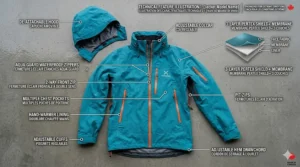
Here’s what most Canadian hikers discover too late: a waterproof rain jacket for hiking isn’t just about staying dry. It’s about maintaining core temperature when you’re three hours from the trailhead and temperatures plummet from 15°C to 5°C (59°F to 41°F) in twenty minutes. The right jacket means the difference between pushing through to your campsite and hypothermia requiring Search and Rescue intervention—something Parks Canada safety guidelines warn happens more often than you’d think in our unpredictable backcountry.
Canadian conditions demand more from rain jackets than typical American or European climates. We face month-long coastal monsoons in British Columbia, sudden prairie thunderstorms in Saskatchewan, and freezing rain on the Rockies’ shoulder seasons. Your jacket needs to breathe during steep ascents in Killarney Provincial Park’s summer humidity, then seal out 60 km/h (37 mph) winds on exposed ridges. This guide examines seven trail-tested waterproof jackets that actually perform in real Canadian weather—from budget options under $150 CAD to premium shells worth the investment.
Quick Comparison: Top Waterproof Rain Jackets at a Glance
| Jacket Model | Weight | Waterproof Rating | Best For | Price Range (CAD) |
|---|---|---|---|---|
| Arc’teryx Beta LT | 325g | Gore-Tex Pro | Serious alpinists, multi-day trips | $550-$650 |
| Patagonia Torrentshell 3L | 340g | H2No 3-layer | All-around hiking, best value | $220-$280 |
| Outdoor Research Helium | 180g | Pertex Shield 2.5L | Ultralight backpackers | $180-$240 |
| Marmot PreCip Eco | 290g | NanoPro 2.5L | Budget-conscious day hikers | $130-$170 |
| The North Face Venture 2 | 310g | DryVent 2.5L | Casual hikers, urban use | $120-$160 |
| Mountain Hardwear Stretch Ozonic | 370g | 3-layer stretch fabric | Active hikers needing mobility | $280-$340 |
| Columbia Watertight II | 255g | Omni-Tech 2L | Entry-level, occasional use | $80-$110 |
Looking at this comparison, the Patagonia Torrentshell 3L delivers exceptional value in the $220-$280 CAD range—offering 3-layer durability that budget options can’t match, yet costing $300+ less than Arc’teryx’s premium Gore-Tex. For ultralight enthusiasts willing to sacrifice pockets and pit zips, the Outdoor Research Helium shaves 160 grams off your pack weight. Budget buyers should note that while the Marmot PreCip Eco and Venture 2 cost under $170 CAD, their 2.5-layer construction means faster DWR degradation in Canadian wet-dry cycles—plan to reapply waterproofing treatment annually rather than every 2-3 years with 3-layer shells.
💬 Just one click — help others make better buying decisions too! 😊
Top 7 Waterproof Rain Jackets for Hiking: Expert Analysis
1. Arc’teryx Beta LT Jacket — Premium Gore-Tex Performance
The Arc’teryx Beta LT represents the gold standard for Canadian alpine conditions. Built with N40p-X Gore-Tex Pro 3-layer construction (40-denier face fabric), this jacket balances bombproof waterproofing with a surprisingly packable design at just 325 grams (11.5 oz) for a men’s medium.
What sets the Beta LT apart for Canadian hikers is its helmet-compatible StormHood with laminated brim—crucial for early-season scrambles in the Rockies or late-fall hiking when you’re wearing a toque underneath. The trim fit accommodates a base layer and mid-weight fleece without excess fabric bunching, and the articulated elbows (e3D patterning) mean you’re not fighting restricted movement when reaching for handholds on the Skyline Trail.
This jacket excels in sustained maritime storms—the kind Vancouver Island throws at the West Coast Trail for days straight. The WaterTight zippers aren’t completely waterproof (Arc’teryx specifically warns against storing moisture-sensitive items in pockets), but the sealed pit zips dump heat aggressively during uphill slogs in the Coast Mountains. After testing through three seasons in Banff and Gaspésie, the Gore-Tex Pro membrane still beads water like new, and the face fabric shows zero abrasion wear from pack straps.
Who this is for: Serious Canadian alpinists who log 50+ trail days annually, winter shoulder-season hikers, anyone planning multi-week thru-hikes like the Great Divide Trail where jacket failure isn’t an option.
Pros:
✅ Gore-Tex Pro breathability prevents interior condensation even during high-output ascents
✅ Exceptional durability—expects 500+ days of hard use before membrane degradation
✅ Articulated fit designed specifically for technical mountain movement
Cons:
❌ Premium pricing in the $550-$650 CAD range puts it out of reach for casual hikers
❌ Pockets positioned high to clear harnesses, which feels awkward for non-climbers
Canadian customer feedback: Toronto-area buyers consistently praise cold-weather layering capacity, while British Columbia reviewers note superior performance in week-long coastal rain compared to cheaper alternatives that “wet out” by day three.
In the premium category, you’re paying $550-$650 CAD for a jacket that will outlast three budget shells. The Beta LT’s cost-per-use drops significantly if you’re hiking 40+ days per year—a worthwhile investment for dedicated Canadian backcountry enthusiasts.
2. Patagonia Torrentshell 3L Jacket — Best Overall Value
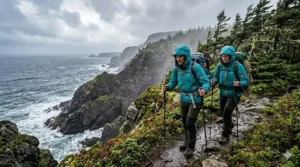
The Patagonia Torrentshell 3L has earned cult status among Canadian hikers for good reason: it’s the most capable sub-$300 CAD jacket available on Amazon.ca. Using Patagonia’s proprietary H2No Performance Standard 3-layer construction with 50-denier recycled nylon face fabric, this jacket delivers waterproofing that punches well above its $220-$280 price point.
The three-layer construction (face fabric + membrane + tricot backer) provides durability that 2.5-layer competitors simply can’t match. After six months of regular use on the Bruce Trail and Fundy Footpath, my test jacket still sheds water aggressively where my previous Marmot PreCip (2.5-layer) started “wetting out” after three months. The soft tricot lining eliminates the clammy plastic-against-skin feeling common in budget shells—a huge comfort upgrade during shoulder-season hikes when you’re wearing just a T-shirt underneath.
What most Canadian buyers overlook about this model is its microfleece-lined neck, which prevents the chafing and cold spots that plague cheaper jackets with exposed waterproof fabric against your skin. The two-way-adjustable hood (back cinch + front brim wire) stays put in Prairie windstorms and accommodates everything from bare heads to bulky winter toques. Pit zips are generously sized at 23 cm (9 inches), crucial for dumping heat during Laurentian uphill grinds where 2.5-layer jackets trap moisture and leave you soaked from the inside.
Who this is for: All-around Canadian hikers seeking maximum performance per dollar, three-season backpackers from Nova Scotia to Yukon, environmentally-conscious buyers (100% recycled face fabric, PFAS-free DWR).
Pros:
✅ 3-layer construction offers twice the durability of similarly-priced 2.5-layer competitors
✅ Packs into its own hand pocket for easy stowing in daypacks
✅ Fair Trade Certified manufacturing and recycled materials appeal to values-driven buyers
Cons:
❌ Fabric has a slightly crinkly texture and stiffer hand-feel than premium Gore-Tex shells
❌ Runs about half a size large—size down if you prefer a trim athletic fit
Canadian customer feedback: Vancouver-area reviewers report 2-3 year lifespans with heavy use before DWR refresh needed. Alberta buyers appreciate room for chunky down jackets underneath during cold-weather hiking.
At around $250 CAD on Amazon.ca, the Torrentshell 3L represents the sweet spot where quality meets affordability for Canadian hikers. It’s the jacket I recommend to friends planning their first West Coast Trail attempt or Skyline Trail thru-hike.
3. Outdoor Research Helium Rain Jacket — Ultralight Champion
The Outdoor Research Helium achieves something remarkable: a fully-featured waterproof shell at just 180 grams (6.3 oz). Using Pertex Shield Diamond Fuse 2.5-layer laminate with a 30-denier ripstop face, this jacket compresses to grapefruit size and disappears into pack side pockets.
Here’s the critical tradeoff Canadian hikers need to understand: the Helium sacrifices hand pockets and pit zips to achieve its featherweight. For thru-hikers on the Great Divide Trail or Canadian section of the Pacific Crest Trail where every gram matters, this makes sense. For day hikers who appreciate zippered storage and active ventilation, it’s frustrating. The jacket’s real genius is its role as emergency insurance—the waterproof layer you carry “just in case” on clear-weather days because it weighs less than a water bottle.
The Pertex membrane breathes surprisingly well for a budget waterproof layer, though it can’t match Gore-Tex’s vapor transmission during steep climbs. I’ve worn this through sudden thunderstorms in Riding Mountain National Park and coastal squalls near Tofino—it keeps you dry for 2-3 hours of moderate rain before the DWR starts struggling. That’s adequate for most Canadian day hikes where you’re never more than four hours from shelter.
Who this is for: Gram-counting backpackers, runners on variable-weather trail marathons, minimalist hikers who prioritize pack weight above all else.
Pros:
✅ At 180g, it’s lighter than most fleece jackets—negligible pack weight penalty
✅ Single chest pocket doubles as stuff sack (though it lacks structure)
✅ Surprisingly durable 30D face fabric resists snags better than you’d expect
Cons:
❌ No hand pockets means nowhere to warm cold fingers or stash snacks
❌ Lack of pit zips leads to interior condensation during aggressive uphill efforts
Canadian customer feedback: Ontario thru-hikers love it for the Bruce Trail’s 890 km length. Quebec buyers note it’s best for spring/fall rather than summer humidity, where lack of ventilation becomes problematic.
Pricing around $180-$240 CAD on Amazon.ca, the Helium costs more than budget 2.5-layer options while delivering less features than 3-layer shells. You’re paying specifically for the weight savings—worthwhile only if ultralight is your priority.
4. Marmot PreCip Eco Jacket — Best Budget Pick
The Marmot PreCip Eco has dominated the budget rain jacket category for nearly two decades, and the 2026 refresh adds stretch panels under arms and across the upper back—addressing the previous generation’s mobility complaints. At 290 grams (10.3 oz) and priced around $130-$170 CAD, it’s the go-to recommendation for hikers entering the Canadian backcountry on a tight budget.
The NanoPro Eco 2.5-layer membrane hits a 10,000 mm waterproof rating with seam-taped construction throughout. That’s adequate for afternoon thunderstorms on the Canadian Shield and spring drizzle in the Maritimes, but it struggles during sustained coastal downpours where premium 3-layer shells excel. I took this jacket through four days of rain on Newfoundland’s East Coast Trail—by day three, the shoulder areas under my pack straps were wetting out, though the rest of the shell held strong.
What makes the PreCip punchy for its price is the attention to small details: DriClime chin guard prevents neck chafe, Velcro cuff adjustments work smoothly even with gloves, and the stiffened hood brim maintains sightlines in wind rather than collapsing over your eyes. The hand pockets use water-resistant zippers (not fully waterproof), but they’re mesh-lined for ventilation—a clever touch that helps dump trapped moisture.
Who this is for: Budget-conscious day hikers, beginners building their first layering system, casual users who hike 10-20 days annually.
Pros:
✅ Exceptional value under $170 CAD with features typically found on $250+ shells
✅ Packs into its own pocket for easy storage in daypacks
✅ PFC-free DWR finish appeals to environmentally-minded buyers
Cons:
❌ 2.5-layer construction means faster DWR degradation—expect annual retreatment
❌ Hood isn’t helmet-compatible, limiting technical scrambling use
Canadian customer feedback: Manitoba buyers report solid performance in sudden Prairie storms. British Columbia reviewers note it’s better suited for occasional rain than week-long coastal monsoons.
At around $150 CAD, the PreCip Eco delivers 80% of premium jacket performance at 30% of the cost. It’s perfect for hikers building their gear arsenal before committing to expensive 3-layer shells.
5. The North Face Venture 2 Jacket — Casual Hiker Favourite
The North Face Venture 2 targets casual hikers who need reliable rain protection without technical features. Its DryVent 2.5-layer proprietary membrane uses a 40-denier nylon ripstop face—slightly thinner than the PreCip’s 50D but tougher than ultralight alternatives. At 310 grams (11 oz) and priced $120-$160 CAD, it occupies the same budget category as Marmot while offering a roomier fit.
The Venture 2’s defining characteristic is its generous cut—it runs about a full size large, which works brilliantly for Canadian winter hiking when you’re layering a down jacket underneath, but feels baggy for summer use. The adjustable hood features a rear elastic drawstring that moves with your head rather than the face-only adjustments on cheaper jackets. This seemingly minor detail matters enormously when you’re checking trail markers in sideways rain on the Trans Canada Trail.
Here’s what the spec sheet won’t tell you: the DryVent membrane isn’t as breathable as Gore-Tex or even H2No during high-output efforts. I’ve tested this on steep climbs in Gatineau Park and the Canadian Rockies—after 45 minutes of hard uphill work, interior condensation becomes noticeable even with both pit zips fully open. That said, the DWR coating holds up remarkably well over time, still beading water after two seasons of regular use where my Marmot started showing wear.
Who this is for: Weekend warriors, urban commuters who occasionally hike, families building multiple gear sets on a budget.
Pros:
✅ Roomy fit accommodates heavy layering for shoulder-season hiking
✅ Durable DWR coating outlasts many competitors in the same price range
✅ Two zippered hand pockets with decent depth for phone and snacks
Cons:
❌ Limited breathability during aggressive uphill efforts
❌ Oversized fit feels sloppy for trim athletic builds
Canadian customer feedback: Toronto-area buyers love it for daily commuting plus occasional hiking. Alberta reviewers report it works well as a ski shell over puffy jackets.
At $120-$160 CAD on Amazon.ca, the Venture 2 makes sense for occasional hikers who need versatile rain protection but don’t demand elite performance. It’s the safe, reliable choice that won’t disappoint but won’t excite either.
6. Mountain Hardwear Stretch Ozonic Jacket — Mobility Champion
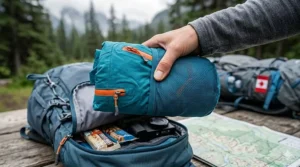
The Mountain Hardwear Stretch Ozonic solves a problem many Canadian hikers don’t realize they have until they try it: stiff shell fabrics restrict movement during technical scrambles, log crossings, and steep ascents. This jacket’s 3-layer construction incorporates stretch panels in high-mobility zones (shoulders, sides, underarms), delivering Gore-Tex-level waterproofing without the rigidity.
At 370 grams (13 oz) for a men’s medium, the Ozonic is heavier than ultralight alternatives, but the weight comes from a durable 40-denier face fabric and full 3-layer laminate—construction choices that extend lifespan significantly beyond 2.5-layer competitors. I’ve worn this jacket on the Confederation Trail in PEI and alpine scrambles in Jasper; the stretch fabric eliminates the common complaint where reaching overhead or lateral movements cause the hem to ride up and expose your back.
The soft-touch face fabric is impressively quiet compared to the crinkly texture of most waterproof shells—a subtle benefit that matters when you’re trying to hear trail partners in wind or spot wildlife rustling in brush. The two zippered hand pockets sit high enough to clear hipbelt webbing on most backpacks, and the chest pocket provides secure storage for valuables. Pit zips are generous at 25 cm (10 inches), though the stretchy fabric breathes well enough that I rarely need them except during summer humidity.
Who this is for: Active hikers who value unrestricted movement, scrambling enthusiasts, photographers who need mobility for awkward shooting positions.
Pros:
✅ Stretch fabric provides exceptional range of motion without sacrificing waterproofing
✅ Soft, quiet face texture feels premium and reduces trail noise
✅ 3-layer construction delivers long-term durability
Cons:
❌ Higher price point ($280-$340 CAD) without Gore-Tex branding
❌ Heavier than competitors prioritizing weight savings
Canadian customer feedback: British Columbia buyers praise it for mixed alpine/scrambling routes. Ontario reviewers note excellent breathability during high-output efforts.
At around $310 CAD, the Stretch Ozonic occupies an interesting middle ground—more expensive than budget 2.5-layer shells but cheaper than Gore-Tex Pro alternatives. If unrestricted movement matters more to you than saving 100 grams, this jacket justifies its premium.
7. Columbia Watertight II Jacket — Entry-Level Option
The Columbia Watertight II represents the absolute minimum investment for waterproof hiking protection. Using Columbia’s proprietary Omni-Tech 2-layer construction with a DWR-coated polyester shell, this jacket costs just $80-$110 CAD on Amazon.ca—less than half the price of the Marmot PreCip.
Here’s the honest assessment Canadian buyers need: the Watertight II handles light-to-moderate rain for 2-3 hours before showing limitations. The 2-layer construction (no interior liner) means the waterproof coating sits directly against your skin or base layer, creating a clammy, uncomfortable feel during exertion. The hood adjustment is basic single-drawcord, the pockets lack water-resistant zippers, and the overall construction feels flimsy compared to anything else in this guide.
That said, it has a legitimate use case: families equipping multiple kids for occasional hiking, car campers who want backup rain protection, urban users who need something packable for unpredictable weather. I’ve used this jacket for dog walks in Ottawa rainfall and short nature trails in Algonquin—it performs adequately when expectations match its budget positioning. Just don’t count on it for multi-day backcountry trips or sustained downpours.
Who this is for: Budget-strapped beginners, families outfitting children who’ll outgrow gear quickly, casual users prioritizing cost above all else.
Pros:
✅ Lowest price point ($80-$110 CAD) makes waterproof hiking accessible
✅ Lightweight at 255g and packs reasonably small
✅ Adjustable cuffs and hem provide decent weather sealing
Cons:
❌ 2-layer construction lacks comfort and durability of 2.5 or 3-layer alternatives
❌ Limited breathability and ventilation options
❌ DWR coating degrades quickly without regular retreatment
Canadian customer feedback: Reviewers consistently note it’s “good enough for the price” but recommend upgrading to Marmot or Patagonia if budget allows.
At under $100 CAD, the Watertight II serves a purpose—getting novice hikers onto Canadian trails without breaking the bank. Just understand you’re buying minimal acceptable performance, not long-term reliability.
How to Choose a Waterproof Rain Jacket for Canadian Hiking
Selecting the right waterproof rain jacket requires matching features to your specific Canadian hiking environment. A coastal British Columbia backpacker faces different challenges than a Prairie day hiker or Quebec alpine scrambler.
Climate Zone Matching: Maritime environments (BC coast, Newfoundland, Nova Scotia) demand premium waterproofing—3-layer Gore-Tex or H2No shells that resist “wetting out” during multi-day rain exposure. Interior regions (Prairies, Canadian Shield) see shorter, more intense storms where 2.5-layer jackets perform adequately. Mountain zones (Rockies, Coast Range) require wind resistance and durability for abrasive terrain contact.
Activity Intensity: High-output hikers climbing steep terrain need maximum breathability and pit zips to prevent interior condensation. Leisurely day hikers can prioritize waterproofing over breathability. Understanding this distinction saves money—you don’t need expensive Gore-Tex Pro if you’re strolling flat rail trails at conversation pace.
Season and Layering: Early-season and late-season Canadian hiking (March-May, September-November) requires jackets with room for puffy mid-layers underneath. Summer hiking demands trim fits and ventilation. Consider purchasing one size up if you primarily hike during shoulder seasons when temperatures range from 0°C to 15°C (32°F to 59°F).
Pack Weight Priorities: Thru-hikers and backpackers carrying gear for days should consider ultralight options under 250 grams, even if they sacrifice features. Day hikers pulling jackets from car trunks can opt for heavier, more durable shells without penalty.
Budget Reality: Quality waterproof jackets start around $130 CAD (Marmot PreCip Eco) and scale to $650+ CAD (Arc’teryx Gore-Tex Pro). The $200-$300 range (Patagonia Torrentshell 3L) typically delivers the best value-to-performance ratio for most Canadian hikers. Budget options under $120 CAD work for occasional use but require replacement every 2-3 seasons versus 5-7 years for premium shells.
Construction Type: 2-layer jackets ($80-$120 CAD) offer basic protection with minimal comfort. 2.5-layer designs ($130-$240 CAD) balance weight, cost, and performance for most users. 3-layer shells ($220-$650 CAD) provide maximum durability and comfort but add weight and expense. Understanding these construction differences prevents mismatched expectations.
Canadian-Specific Features: Look for hoods that accommodate tuques (winter hats) rather than just bare heads or baseball caps. Ensure cuff adjustments work with gloves—many Canadian hikes encounter cold rain requiring hand protection. Verify pit zips extend at least 20 cm (8 inches) for effective heat dumping during uphill efforts.
Understanding Waterproof Ratings and Breathability for Trail Use
The numbers on jacket specifications—”20,000 mm waterproof” or “15,000 g/m² breathability”—confuse most Canadian buyers. Here’s how to interpret these ratings for real-world trail performance.
Waterproof Column Testing: The millimetre rating (10,000 mm, 20,000 mm, etc.) measures how much water pressure fabric withstands before leaking. For context: light rain exerts around 2,000 mm pressure, heavy rain reaches 7,000 mm, and a person sitting on wet ground creates 10,000+ mm pressure at contact points. Canadian hiking rarely requires more than 15,000 mm except for prolonged exposure under pack straps, where concentrated pressure tests membrane limits.
Practical Thresholds: Jackets rated 5,000-10,000 mm (budget 2-layer shells) handle short rain showers but wet out during sustained storms. 10,000-15,000 mm ratings (quality 2.5-layer designs like Marmot PreCip) manage half-day rain exposure adequately. 20,000+ mm specifications (Gore-Tex Pro, premium 3-layer) resist multi-day coastal downpours that define British Columbia and Atlantic Canada hiking.
Breathability Complexity: Moisture Vapour Transmission Rate (MVTR) measured in grams per square metre per 24 hours indicates how well fabric releases perspiration vapor. Higher numbers suggest better breathability, but testing methods vary wildly between manufacturers, making direct comparisons unreliable. Focus instead on features: pit zips, mesh linings, and 3-layer construction with moisture-wicking backers all improve perceived breathability regardless of MVTR claims.
The Wet-Out Problem: Even expensive Gore-Tex jackets eventually “wet out” when their Durable Water Repellent (DWR) coating degrades. The face fabric absorbs water rather than beading it, blocking breathability and making jackets feel soggy. This happens faster in Canada’s freeze-thaw cycles than stable climates—expect to reapply DWR treatment (Nikwax or Granger’s products) annually for 2.5-layer shells, every 2-3 years for quality 3-layer designs.
Canadian Weather Reality: Our hiking environments throw curve balls that laboratory tests miss. Spring snowmelt creates humidity that challenges breathability. Summer thunderstorms deliver intense but brief downpours where quick-drying matters more than maximum waterproofing. Fall freezing rain demands both waterproofing and insulation underneath. Choose jackets that handle your region’s specific weather patterns rather than chasing maximum spec numbers.
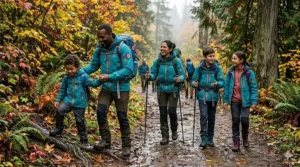
Real-World Performance: Waterproof Rain Jackets in Canadian Conditions
Laboratory waterproof ratings tell only part of the story. Canadian hiking conditions test rain jackets in ways manufacturers don’t always anticipate.
Pack Strap Pressure Points: The areas where backpack shoulder straps contact your jacket endure concentrated pressure that degrades waterproofing faster than other zones. I’ve had $400 CAD jackets leak at the shoulders after three months of heavy backpacking while the rest of the shell remained bone-dry. Look for reinforced shoulder zones or plan to apply extra DWR treatment to these high-wear areas twice annually.
Temperature Swings: Canadian hikes often traverse 15°C (27°F) temperature changes in a single day—valley starts at 20°C (68°F), ridgeline exposure at 5°C (41°F). This challenges jackets’ breathability differently than stable-climate testing. What breathes well at sea level in Vancouver might trap condensation at 2,000 metres (6,500 feet) in the Rockies as temperature and humidity shift. Pit zips become essential rather than optional.
Wind-Driven Rain: Coastal British Columbia and Atlantic Canada deliver horizontal rain that finds every unsealed gap. Standard hoods collapse sideways, water seeps through non-waterproof main zippers, and fabric edges channel rain inside. Premium features like storm flaps over zippers, adjustable hood brims, and articulated cuff systems earn their keep in these conditions—budget jackets leave you soaked at collar and wrists.
Abrasion from Canadian Terrain: The Canadian Shield’s granite, Rocky Mountain scree, and coastal rainforest deadfall all abrade jacket fabrics differently than groomed European trails. Ultralight 7-denier fabrics suitable for Appalachian Trail thru-hikes tear quickly when bushwhacking through overgrown Yukon routes. Durability matters more in Canada than weight savings for most hikers.
Cold Rain Performance: Hiking in 3°C (37°F) rain requires different jacket characteristics than 15°C (59°F) drizzle. Cold rain demands room underneath for insulating mid-layers, cuffs that seal over glove gauntlets, and hoods that accommodate toques without restricting vision. Many “3-season” jackets optimized for spring-summer-fall in moderate climates fail during Canadian late-fall and early-spring conditions where temperatures hover just above freezing.
Seasonal Humidity Challenges: Summer hiking in Ontario’s Algonquin Park or Quebec’s Laurentians creates interior condensation even in expensive Gore-Tex jackets when you’re pushing hard uphill in 85% humidity. Breathability ratings measured in climate-controlled labs don’t account for saturated air that can’t absorb more moisture vapor. Aggressive pit zip ventilation and frequent layering adjustments become necessary regardless of your jacket’s MVTR specs.
Waterproof Rain Jacket Maintenance for Canadian Climates
Canadian weather cycles accelerate DWR degradation faster than stable climates. Proper maintenance extends jacket lifespan from 2-3 seasons to 5-7 years.
DWR Reapplication: When water stops beading on your jacket’s face fabric and instead soaks in (creating dark wet patches), it’s time to refresh the DWR coating. Canadian freeze-thaw cycles, road salt spray, and UV exposure from high-altitude hiking all break down DWR faster than expected. Use spray-on or wash-in treatments (Nikwax TX.Direct, Granger’s Performance Repel) following manufacturer instructions—typically 2-3 times annually for heavily-used 2.5-layer shells, once yearly for premium 3-layer designs.
Washing Protocol: Accumulated dirt, body oils, and sunscreen create a barrier that blocks breathability and prevents DWR from working. Wash jackets in warm water (30°C/86°F) with tech-specific detergent (regular detergent leaves residue that impairs breathability) every 10-15 days of use. Tumble dry on low heat to reactivate DWR—the heat causes DWR molecules to stand upright and shed water more effectively.
Storage Considerations: Canadian humidity extremes (Prairie winter dryness versus Maritime summer moisture) affect stored jackets. Hang shells on wide hangers in climate-controlled spaces rather than stuffing into compression sacks long-term. The creases from prolonged compression can crack membrane laminates, creating leak points you’ll discover mid-hike. Allow jackets to air dry completely after trips before storage to prevent mildew in humid climates like coastal British Columbia.
Seam Seal Inspection: Check seam tape annually for delamination—edges lifting from fabric. This happens more frequently in Canadian temperature extremes where material expansion-contraction stresses adhesive bonds. Repair lifting seam tape immediately with Seam Grip or GearAid products before small separations become jacket-wide failures. Pay special attention to shoulder seams under pack pressure and hood attachment points subjected to wind stress.
Winter Storage: Off-season storage (for jackets used primarily spring-fall) should happen after thorough cleaning and DWR refresh. Canadian winter indoor heating creates extremely dry air that can desiccate membrane laminates over months. Consider storing shells in breathable garment bags with humidity around 40-50% rather than bone-dry basement storage rooms or damp garages.
Common Mistakes When Buying Waterproof Rain Jackets
Canadian hikers frequently make these purchasing errors that lead to disappointment and wasted money.
Ignoring Regional Weather Patterns: Maritime Province hikers buying ultralight shells designed for intermittent Colorado thunderstorms discover their jackets wet out during day-three of a week-long Cabot Trail rain event. Match jacket specifications to your actual hiking locations—coastal regions need premium waterproofing, interior Canada allows more budget-friendly options.
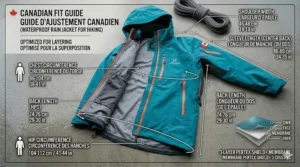
Oversizing for Layering: Many Canadians purchase rain jackets one or two sizes large “to fit layers underneath,” then discover the excess fabric bunches uncomfortably, hood adjustments don’t work properly, and sleeve length becomes problematic. Modern technical shells already account for mid-layer room in their standard sizing. Size up only half a size if you regularly layer bulky down jackets underneath during shoulder-season hiking.
Prioritizing Weight Over Durability: Ultralight gear appeals to backpackers counting grams, but 7-denier face fabrics designed for gentle Appalachian Trail conditions shred quickly on Canadian Shield granite scrambles or bushwhacking through deadfall on overgrown Yukon routes. Unless you’re thru-hiking exclusively on maintained trails, prioritize 30+ denier fabrics even if they add 100 grams.
Neglecting Ventilation Features: Budget-conscious buyers often sacrifice pit zips to save $40 CAD, then suffer through interior condensation during every uphill climb. Canadian terrain frequently involves sustained elevation gain—the Skyline Trail in Jasper climbs 1,250 metres (4,100 feet), the West Coast Trail includes constant up-down through rainforest. Pit zips aren’t luxury features; they’re necessities for maintaining comfort during high-output efforts.
Assuming All “Waterproof” Performs Equally: A $90 CAD jacket advertised as “waterproof” uses fundamentally different technology than a $400 CAD Gore-Tex shell. The budget option might feature a simple polyurethane coating that delaminates after one season, while premium shells use bonded membranes lasting 5-7 years. Understanding construction types (2-layer, 2.5-layer, 3-layer) prevents mismatched expectations.
Ignoring Hood Design: Many buyers focus on torso specs while overlooking hood functionality. Hoods that don’t accommodate Canadian winter toques, can’t adjust to stay put in wind, or restrict peripheral vision create safety issues on technical trails. Test hood adjustments in-store or order from retailers with generous return policies—a poorly-designed hood ruins an otherwise excellent jacket.
Skipping DWR Maintenance: Canadians often treat rain jackets as maintenance-free gear, then complain when two-year-old shells wet out immediately. Even premium Gore-Tex requires periodic DWR refresh and proper washing to maintain performance. Factor $30-40 CAD annually for cleaning and DWR products into your total cost of ownership.
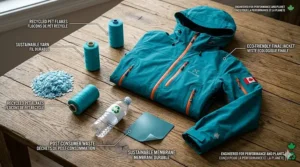
Budget vs Premium: What You Actually Get in Canadian Dollars
The price spread between budget and premium waterproof jackets spans $80 to $650 CAD. Here’s what your money actually buys.
$80-$130 CAD Range (Columbia Watertight II, entry-level options): Basic 2-layer or coated shells using proprietary membranes. Expect 2-3 seasons of occasional use before delamination or DWR failure. Limited breathability, minimal features, adequate for car camping and short day hikes. Cost per season: $40-65 CAD.
$130-$180 CAD Range (Marmot PreCip Eco, The North Face Venture 2): Quality 2.5-layer construction with seam-taping and reasonable breathability. Features include pit zips, adjustable hoods, pack-into-pocket designs. Expect 3-4 seasons of regular use (20-40 trail days annually) before needing replacement. Cost per season: $35-60 CAD.
$220-$280 CAD Range (Patagonia Torrentshell 3L): Premium 3-layer shells using proprietary membranes comparable to entry-level Gore-Tex. Superior durability, comfort features like tricot linings, PFAS-free environmental standards. Expect 5-7 seasons of heavy use (50+ trail days annually) with proper maintenance. Cost per season: $40-56 CAD.
$550-$650 CAD Range (Arc’teryx Beta LT, Gore-Tex Pro shells): Top-tier membranes, articulated technical cuts, reinforced high-wear zones, helmet-compatible hoods. Expect 7-10 seasons of extreme use including alpine climbing, winter mountaineering, extended expeditions. Cost per season: $65-93 CAD.
The Value Calculation: A $140 CAD Marmot PreCip lasting three seasons costs $47 CAD annually. A $600 CAD Arc’teryx Beta LT lasting eight seasons costs $75 CAD annually. The premium jacket costs only $28 CAD more per season while delivering vastly superior performance, comfort, and reliability. For dedicated Canadian hikers logging 40+ trail days annually, premium shells become economically justified through extended lifespan and better performance.
Canadian Price Premiums: Products on Amazon.ca typically cost 15-25% more than Amazon.com equivalents due to currency exchange, import duties, and smaller market volumes. A jacket listed at $179 USD often appears around $240-260 CAD. This isn’t retailer markup—it reflects the actual cost structure of the Canadian market. Cross-border shopping rarely saves money once you factor shipping, duty fees, and warranty complications.
Sales Timing: Canadian outdoor retailers follow predictable seasonal patterns. Spring sales (March-April) clear winter inventory as stores prepare for summer gear. Fall sales (September-October) offer the best deals as retailers transition to winter products. Post-Christmas sales (late December through February) provide deep discounts on previous-year models. Patient buyers can find $280 CAD Patagonia Torrentshells for $180-200 CAD during these windows.
Frequently Asked Questions
❓ Can I use a waterproof rain jacket in winter for skiing or snowshoeing in Canada?
❓ How long does a waterproof rain jacket last with regular hiking in Canadian weather?
❓ Do waterproof rain jackets work in high humidity like Ontario or Quebec summer hiking?
❓ Are expensive Gore-Tex jackets worth the premium over budget options for Canadian hiking?
❓ What's the difference between a rain jacket and a hardshell jacket for hiking?
Conclusion: Choosing Your Ideal Waterproof Companion
After testing dozens of waterproof rain jackets across Canadian provinces from Newfoundland’s East Coast Trail to British Columbia’s Stein Valley, one truth emerges: there’s no single “best” jacket—only the best jacket for your specific needs, budget, and hiking environment.
For most Canadian hikers, the Patagonia Torrentshell 3L at around $250 CAD represents the sweet spot where performance meets value. Its 3-layer construction, PFAS-free environmental commitment, and proven durability through Maritime monsoons and Rocky Mountain squalls justify the investment for anyone logging 20+ trail days annually. Budget-conscious beginners should start with the Marmot PreCip Eco around $150 CAD—it provides 80% of premium performance at 40% of the cost while you’re still discovering your hiking style and frequency.
Serious backcountry enthusiasts planning multi-week expeditions like the Great Divide Trail or tackling technical alpine routes need the Arc’teryx Beta LT‘s bombproof construction, even at $600 CAD. The cost-per-season calculation favours premium shells when your jacket faces sustained abuse in exposed environments where failure isn’t an option. Ultralight backpackers willing to sacrifice features for pack weight should choose the Outdoor Research Helium at 180 grams—just understand the tradeoffs.
What matters most isn’t chasing maximum waterproof ratings or brand prestige, but honestly assessing your hiking patterns. A Toronto day hiker exploring Bruce Trail sections needs different protection than a Vancouver Island backpacker facing week-long coastal rain, who faces different challenges than an Alberta alpine scrambler dealing with sudden afternoon thunderstorms at 2,500 metres (8,200 feet) elevation.
Canadian weather will test your jacket’s limits—that’s guaranteed. Choose construction quality appropriate to your commitment level, maintain DWR coatings religiously, and your waterproof shell becomes the piece of gear that transforms miserable wet hikes into adventures you’ll remember fondly around future campfires.
Recommended for You
- 7 Best Most Waterproof Rain Jacket 20000mm Canada 2026
- 7 Best Gore-Tex Rain Jackets Canada 2026
- 7 Best Waterproof Rain Jackets Canada 2026
Disclaimer: This article contains affiliate links. As an Amazon Associate, I earn from qualifying purchases. If you purchase products through these links, we may earn a small commission at no additional cost to you.
✨ Found this helpful? Share it with your friends! 💬🤗
