
In This Article
Somewhere in your closet, there’s probably a Gore-Tex jacket that used to shrug off rain like it was nothing — and now it just… doesn’t. Water soaks in instead of beading up. The inside feels clammy after twenty minutes on the trail. You start wondering if the jacket is broken, or if you’re the one doing something wrong. Here’s the plot twist: it’s almost never the membrane. It’s almost always the maintenance.
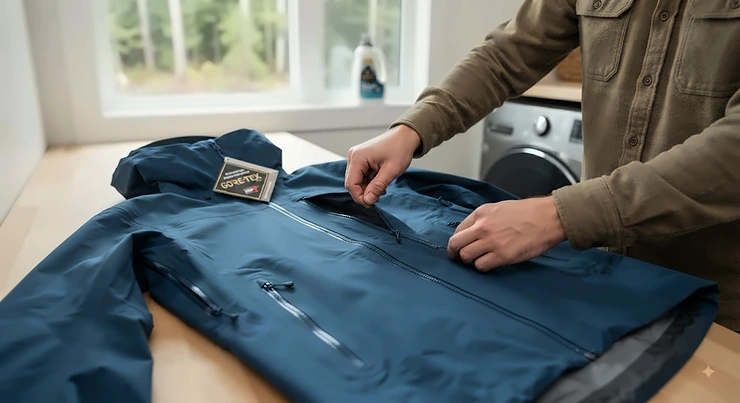
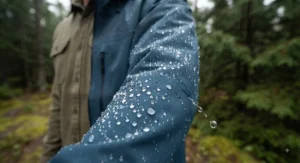
Learning how to care for Gore-Tex jacket fabric properly is less about babying an expensive purchase and more about understanding a fairly simple system: a waterproof-breathable membrane sandwiched inside layers of fabric, topped with a factory-applied coating called durable water repellent (DWR). Wash it wrong, and you clog the membrane’s microscopic pores with detergent residue. Ignore the DWR, and the outer face fabric starts absorbing water — what gear techs call “wetting out” — even while the membrane underneath is still doing its job perfectly.
Gore-Tex itself is a trademarked membrane made from expanded polytetrafluoroethylene, first developed by W. L. Gore & Associates in the late 1960s, and it remains the benchmark that most other waterproof-breathable fabrics get measured against. But the membrane is only half the story — the other half is what you do with it after you buy it.
This guide walks through exactly how to wash it, when and how to reactivate DWR, how to store it between seasons, and which products actually deliver on Amazon.ca, based on real product specs and aggregated review sentiment rather than marketing copy. Whether you’re maintaining a $180 packable shell or a $700 mountaineering jacket, the process — and the payoff — is the same.
Quick Comparison Table
Before diving into the full breakdown, here’s a fast-reference snapshot of the seven products this guide covers, what they do, and who they suit best.
| Product | Type | Best For | Price Range (CAD) |
|---|---|---|---|
| Nikwax Tech Wash | Cleaner | Everyone — first step in every wash cycle | C$15–C$35 |
| Nikwax TX.Direct Wash-In | Wash-in reproofer | Full-garment DWR renewal | C$18–C$26 |
| Nikwax TX.Direct Spray-On | Spray reproofer | Targeted, high-wear zones | C$18–C$32 |
| Grangers Performance Wash | Cleaner | Hard-water regions, bluesign-conscious buyers | C$18–C$24 |
| Grangers Performance Repel Plus | Spray reproofer | Fast, heat-activated touch-ups | C$22–C$30 |
| Gear Aid Revivex Pro Cleaner + DWR Spray | Cleaner + reproofer combo | Buyers who want one system, one brand | C$28–C$38 |
| Kiwi Camp Dry Heavy Duty Water Repellent | Budget silicone spray | Non-breathable shells and emergency touch-ups | C$12–C$18 |
A quick read of the table above tells most of the story: this category splits cleanly into cleaners, reproofers, and combo kits, and almost nobody needs all three types from all three brands at once. Based on the spec comparison, Nikwax Tech Wash paired with either Nikwax TX.Direct Wash-In or Nikwax TX.Direct Spray-On covers the vast majority of Gore-Tex owners’ needs for well under C$50 a year. The outlier is Kiwi Camp Dry Heavy Duty Water Repellent — it’s the cheapest option on the list, but its silicone-based formula isn’t designed with breathable membranes in mind, which matters more than the price tag once you understand what silicone does to a Gore-Tex jacket’s pores (more on that below).
💬 Just one click — help others make better buying decisions too!😊
Top 7 Gore-Tex Jacket Care Products: Expert Analysis
Affiliate disclosure: this article contains affiliate links, and as an Amazon Associate we may earn from qualifying purchases. Prices below are approximate ranges in Canadian dollars at the time of research and will vary — always check the current price on Amazon.ca before buying.
1. Nikwax Tech Wash — the gold-standard technical cleaner
Nikwax Tech Wash is the product most gear techs reach for first, and for good reason: it’s formulated specifically to clean waterproof-breathable fabric without leaving behind the residues that ordinary laundry detergent does. Its key spec is what it doesn’t contain — no optical brighteners, no added scent, no fabric softening agents — because those additives are exactly what coat a Gore-Tex membrane’s pores and quietly kill its breathability. In practice, that means you can run it through a normal washing machine on a 30°C gentle cycle without worrying about degrading the laminate. Based on the spec comparison with regular detergents, this matters more than most buyers realize; a single wash with the wrong soap can undo years of careful use.
Who should care: literally anyone who owns technical outerwear, from weekend hikers to daily transit commuters who just want their shell to keep working. Aggregated reviewer sentiment across major retailers consistently points to the same two themes — it’s genuinely gentle on fabric, and it noticeably revives water beading even before a dedicated reproofing step. A common thread in user feedback is that people are surprised how much dirt comes out of a jacket they assumed was already clean, and how much better it repels water afterward.
Pros:
- ✅ PFAS-free, water-based, scent-free formula
- ✅ Safe for regular washing machines on gentle cycle
- ✅ Revives some water beading even before reproofing
Cons:
- ❌ Cleans only — does not restore DWR on its own
- ❌ Larger bottles are a bulky one-time purchase for occasional use
Available in sizes from small travel bottles to bulk containers, Nikwax Tech Wash typically runs in the C$15–C$35 range depending on volume — the smaller bottles are genuinely good value if you only own one or two technical jackets, since a little goes a long way per wash.
2. Nikwax TX.Direct Wash-In — best for full-garment DWR renewal
Once a jacket has been cleaned, Nikwax TX.Direct Wash-In is the logical next step for anyone who wants an even, whole-garment refresh rather than spot-treating problem areas. The key spec here is the delivery method: it goes into the washing machine’s detergent drawer alongside the (already-clean, already-rinsed) jacket, distributing an even water-repellent finish across every seam, cuff, and panel in one cycle. That even coverage is genuinely hard to replicate by hand with a spray bottle, especially on jackets with lots of seams and pocket flaps.
What most buyers overlook about wash-in reproofers is that they treat the inside of pockets and hard-to-reach interior seams just as thoroughly as the outer shell — something a spray can miss entirely. Reviewers frequently note that this is their preferred method for jackets that see heavy, sustained rain exposure, like ski shells or rain jackets used for daily commuting, precisely because there’s no risk of missing a patch of fabric.
Pros:
- ✅ Even coverage across the entire garment, including hidden seams
- ✅ No spraying technique required — just add to the wash
- ✅ Maintains breathability while restoring repellency
Cons:
- ❌ Treats the whole jacket even if only cuffs and shoulders need it
- ❌ Requires the Tech Wash step first for best results
Priced roughly C$18–C$26 depending on bottle size, this is a strong mid-range pick for anyone who’d rather run one more wash cycle than fuss with even spray coverage by hand.
3. Nikwax TX.Direct Spray-On — best for targeted, high-wear zones
The spray-on sibling to the wash-in version above, Nikwax TX.Direct Spray-On solves a different problem: shoulders, cuffs, and the front zipper placket wear out their DWR coating faster than the rest of the jacket because that’s where fabric flexes and rubs the most. Rather than reproofing an entire garment when only those zones have started wetting out, this spray lets you concentrate treatment exactly where abrasion has done the most damage — a genuinely useful option for extending time between full reproofing cycles.
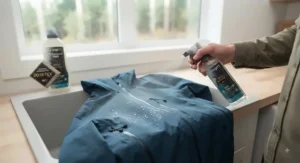
Here’s what the spec sheet won’t tell you, but the application instructions make clear: it needs to go on a clean, damp garment and works best applied from about 15cm away, in an even pass, followed by a few minutes’ wait before wiping excess. That’s a slightly more hands-on process than the wash-in version, which is exactly the trade-off — more control in exchange for more effort. It’s the better choice for people who reproof more frequently in smaller doses rather than doing one big annual treatment.
Pros:
- ✅ Lets you target high-wear areas without treating the whole garment
- ✅ Aerosol-free, non-flammable spray formula
- ✅ Doesn’t require a full wash cycle to apply
Cons:
- ❌ Manual technique means coverage can be uneven if rushed
- ❌ Better suited to touch-ups than full-garment renewal
Expect to pay around C$18 for a 300ml bottle up to roughly C$32 for the larger 500ml size — a reasonable range for a product that, used correctly, can stretch a jacket’s DWR life by a full season or more between full treatments.
4. Grangers Performance Wash — best for hard-water regions
Grangers Performance Wash is Nikwax Tech Wash’s closest direct competitor, and the meaningful difference shows up in the fine print: Grangers explicitly markets this cleaner as working the same in hard and soft water, which matters a lot more in parts of Canada than people expect. Hard water can leave mineral residue on technical fabric that behaves a lot like detergent residue — clogging pores and dulling repellency — so a formula built to perform consistently regardless of local water hardness is a genuine practical advantage, not just marketing language.
Based on the spec comparison, Grangers Performance Wash and Nikwax Tech Wash land in nearly identical territory on core function — both are PFC-free, both are safe for Gore-Tex, both skip optical brighteners. The real differentiator for buyers is brand ecosystem and bottle format: Grangers’ bluesign-approved certification and 100%-recycled packaging tend to appeal to buyers specifically prioritizing supply-chain transparency alongside performance, and aggregated reviewer sentiment reflects genuine loyalty among people who’ve compared both brands side by side over multiple seasons.
Pros:
- ✅ Performs consistently in both hard and soft water
- ✅ bluesign-approved, PFC-free formulation
- ✅ 12 washes per concentrate bottle in most sizes
Cons:
- ❌ Slightly pricier per wash than budget alternatives
- ❌ Less widely stocked in Canadian brick-and-mortar stores than Nikwax
Typically priced in the C$18–C$24 range for a standard concentrate bottle, it’s a comparable investment to the Nikwax equivalent with a genuinely different formulation philosophy behind it.
5. Grangers Performance Repel Plus — best for fast, heat-activated touch-ups
Grangers Performance Repel Plus takes a different technical approach to DWR renewal than the Nikwax sprays above: it’s designed to be applied to a damp garment and then heat-activated, either in a dryer on low heat or with a warm iron over a protective cloth. That heat-activation step is the detail most casual buyers skip — and skipping it is a big reason people report disappointing results with spray reproofers generally, not just this one. Heat helps the repellent finish bond properly to individual fibres rather than just sitting on the surface.
What most buyers overlook about heat-activated formulas like this one is that the reproofing itself often finishes in minutes, but the quality of the result depends almost entirely on that follow-up drying step. Reviewers who follow the full instructions — spray, then tumble dry or iron — consistently report longer-lasting bead-up than those who skip straight to air-drying. It’s a case where reading the label actually changes the outcome meaningfully.
Pros:
- ✅ Fast spray-on application on damp fabric
- ✅ Heat activation improves bond and longevity
- ✅ VOC-free, fluorocarbon-free technology
Cons:
- ❌ Requires access to a dryer or iron for best results
- ❌ Less effective if the heat-activation step is skipped
Priced around C$22–C$30 depending on bottle size, this sits at the higher end of spray reproofers, but the heat-activation bonding process is a legitimate reason for the premium if you’ll actually follow through on the drying step.
6. Gear Aid Revivex Pro Cleaner + DWR Spray — best all-in-one system
For buyers who’d rather not mix and match brands, the Gear Aid Revivex Pro Cleaner + DWR Spray combo bundles a technical cleaner with a matching reproofing spray from the same product line, designed to be used together in sequence. The DWR spray itself is rated to treat several jackets per bottle and is explicitly formulated to be PFAS-free with zero fluorocarbons, a spec worth flagging given how much attention PFAS chemistry is getting from Canadian regulators right now (more on that later in this guide).
Based on the spec comparison with the Nikwax and Grangers systems above, the Gear Aid combo’s main advantage isn’t a fundamentally different chemistry — it’s convenience and consistency. Buying a matched cleaner-and-reproofer pair removes the guesswork of whether two different brands’ products play well together, and aggregated review sentiment suggests this resonates especially with buyers newer to technical gear care who want a single, clearly labelled system rather than assembling one from separate products.
Pros:
- ✅ Matched cleaner-and-reproofer system in one purchase
- ✅ PFAS-free with zero fluorocarbons
- ✅ One 16.9 fl oz bottle treats multiple jackets
Cons:
- ❌ Combo pricing is higher than buying a single product
- ❌ Two-step process still requires patience between wash and spray
Expect to pay roughly C$28–C$38 for the combo pack, which — split across two products that would otherwise be bought separately — lands in a fairly reasonable middle ground for the convenience it offers.
7. Kiwi Camp Dry Heavy Duty Water Repellent — the budget pick, with a caveat
Kiwi Camp Dry Heavy Duty Water Repellent is, by a wide margin, the cheapest product on this list, and it’s worth including precisely because it illustrates an important distinction. Its formula contains silicone, which is genuinely effective at repelling water on non-breathable fabrics like tarps, tent flies, and boot leather. The catch: silicone-based repellents can coat and partially clog the microscopic pores that let a Gore-Tex membrane breathe, which is the opposite of what you want on technical outerwear designed to vent sweat vapour.
Here’s the honest analytical take — this isn’t a product to avoid entirely, it’s a product to use selectively. For a budget rain shell without a breathable membrane, or for non-clothing gear like tent covers and boots, it performs well and reviewers consistently praise its value and ease of application. But on an actual Gore-Tex jacket, the fluoropolymer-based sprays from Nikwax, Grangers, or Gear Aid above are the more appropriate choice, because they’re formulated specifically not to interfere with breathability. What the label won’t tell you outright, but the underlying chemistry makes clear, is that “waterproofing spray” is not a single interchangeable category — the base chemistry matters as much as the price.
Pros:
- ✅ Lowest price point of any product on this list
- ✅ Effective on non-breathable fabrics, boots, and tents
- ✅ Fast-drying, widely available in multi-packs
Cons:
- ❌ Silicone base can reduce breathability on Gore-Tex membranes
- ❌ Not the manufacturer-recommended chemistry for technical shells
At roughly C$12–C$18 for a two-can pack, it’s genuinely good value for the right application — just not the first choice for a breathable Gore-Tex jacket specifically.
Gore-Tex Washing Instructions: The Complete Step-by-Step Method
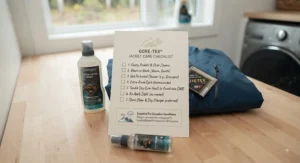
Getting the wash itself right solves most Gore-Tex care problems before they start. Here’s the process that most manufacturer guides — and the products above — are built around.
- Check the care label first. Every Gore-Tex garment ships with brand-specific instructions from the jacket maker, not just Gore. When in doubt, the label overrides general advice.
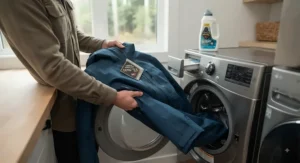
- Prep the jacket. Zip every zipper, fasten Velcro closures, and empty the pockets. Turn it right-side out (not inside out, contrary to some myths — most guides recommend washing Gore-Tex shells right-side out so the DWR-treated face fabric gets properly agitated).
- Run an empty rinse cycle first. This clears out any leftover regular detergent or fabric softener residue sitting in your machine’s dispenser, which would otherwise contaminate the wash.
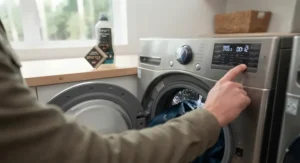
- Wash with a technical cleaner only. Add Nikwax Tech Wash or Grangers Performance Wash to the detergent drawer — never regular laundry detergent, and never fabric softener. Set the machine to a gentle cycle at around 30°C (some newer Gore-Tex Pro fabrics tolerate warmer washes; check the label) with a slow spin speed to avoid creasing the membrane.
- Run a second rinse. This ensures no cleaner residue is left behind, which could otherwise interfere with the reproofing step.
- Test for water beading. Once dry, spray a little water on the surface. If it beads and rolls off, you’re done. If it soaks in and darkens the fabric, it’s time to reproof.
- Reproof if needed, then dry. Apply a wash-in or spray-on treatment as described above, and finish with a low-heat tumble dry if the care label allows — the heat helps activate most DWR formulas.
That test-and-reproof loop is really the whole system. The Mountain Equipment Co-op guide to caring for a waterproof jacket uses almost the same water-bead test to determine wash timing, which is a good sign this isn’t brand-specific folklore — it’s the standard diagnostic across the industry.
DWR Reactivation Guide: Restoring Water Repellency at Home
DWR reactivation gets confused with reproofing, but they’re actually two different situations, and knowing which one you’re dealing with saves both money and effort.
Reactivation applies when the factory DWR finish is still physically present but temporarily deactivated by dirt, oils, or old detergent residue sitting on top of it. In this case, a thorough wash with a technical cleaner — sometimes combined with a low-heat tumble dry to reactivate the existing coating — is often enough to bring back water beading without adding any new product at all. This is worth trying before buying a reproofing spray, since it’s essentially free once you already own a technical cleaner.
Reproofing applies when the DWR coating itself has genuinely worn away from repeated washing, UV exposure, and abrasion — no amount of cleaning will restore repellency because there’s nothing left to reactivate. This is when a wash-in or spray-on product like Nikwax TX.Direct Wash-In, Nikwax TX.Direct Spray-On, or Grangers Performance Repel Plus actually adds a fresh repellent layer rather than just cleaning what’s there.
The practical test: wash the jacket with a technical cleaner and tumble dry on low if the label allows. Spray water on the surface. If it beads, you’ve reactivated the existing finish and you’re done — no reproofing needed yet. If it still soaks in, move to a dedicated reproofing product. Running this test before automatically reproofing every wash saves both money and unnecessary product application, and most gear techs recommend checking rather than assuming reproofing is always required.
✨ Don’t Miss These Exclusive Deals!
🔍 Take your Gore-Tex jacket care routine to the next level with the products covered above. Click on any highlighted item to check current pricing and availability on Amazon.ca — a properly maintained shell is one of the best value-per-wear pieces of gear you’ll ever own.
Real-World Scenarios: Matching Care Routines to How You Actually Use Your Jacket
Not everyone needs the same care schedule. Here’s how three different Gore-Tex owners might realistically approach maintenance.
The daily commuter in Vancouver or Halifax. If you’re wearing a Gore-Tex shell four or five days a week through a wet coastal winter, your jacket is absorbing sweat, road grime, and constant light rain far more often than a weekend hiker’s gear. For this profile, a monthly wash with Nikwax Tech Wash and a water-bead test is realistic, with reproofing using Nikwax TX.Direct Wash-In roughly every two to three months during the wettest stretch of the season. The even, whole-garment coverage of a wash-in reproofer suits daily wear better than spot-spraying, since the whole jacket is under constant light stress.
The backcountry skier in the Rockies. Someone spending full days in deep cold, high UV exposure, and abrasive contact with pack straps and ski poles will wear through DWR fastest at the shoulders and cuffs. This is the profile where Nikwax TX.Direct Spray-On or Grangers Performance Repel Plus genuinely shine — targeted reproofing on high-wear zones between full washes, saving the whole-garment treatment for the start and middle of the season.
The budget-conscious weekend camper. If your Gore-Tex jacket sees the outdoors a dozen times a year rather than daily, an annual deep clean with Grangers Performance Wash and a single reproofing pass is genuinely sufficient. This is also the buyer for whom a combo kit like the Gear Aid Revivex Pro Cleaner + DWR Spray makes the most sense — one purchase, one system, minimal decision fatigue for infrequent use.
Problem → Solution: Fixing the Most Common Gore-Tex Issues
Problem: Water is soaking into the fabric instead of beading up. Solution: this is almost always DWR wear, not membrane failure. Wash with a technical cleaner, run the water-bead test, and reproof with a wash-in or spray-on treatment if beading doesn’t return.
Problem: The inside of the jacket feels damp even though it’s not raining. Solution: this is usually condensation from trapped sweat vapour, not a leak — a sign the outer face fabric has “wetted out” and lost breathability. The fix is the same wash-and-reproof cycle above, since a clogged or saturated outer layer blocks vapour transfer even when the membrane underneath is fine.
Problem: The jacket smells musty even after washing. Solution: this usually points to incomplete rinsing or a wash with regular detergent that left residue behind. Run an extra rinse cycle with a technical cleaner specifically, and avoid fabric softener permanently — it’s one of the most common causes of both odour retention and reduced breathability.
Problem: Seams are leaking at the tape line. Solution: this is a different issue from DWR wear — it’s failing seam tape, not a wash-care problem. A technical cleaner and reproofer won’t fix it; look into seam tape repair kits or a manufacturer repair service instead.
Problem: DWR treatment doesn’t seem to be working even after reproofing. Solution: heat activation is very often the missing step. Products like Grangers Performance Repel Plus are specifically designed to bond properly with a follow-up low-heat tumble dry or gentle ironing over a cloth — skipping that step is the single most common reason reproofing sprays underperform.
How to Choose the Right Gore-Tex Care Products
Picking between the seven products above comes down to a short list of practical questions.
- Do you need a cleaner, a reproofer, or both? If your jacket is dirty but still beads water, you only need a cleaner like Nikwax Tech Wash. If it’s clean but wetting out, you need a reproofer.
- How often do you actually wash technical gear? Infrequent users benefit from a combo kit like the Gear Aid Revivex Pro Cleaner + DWR Spray; frequent users often save money buying cleaner and reproofer separately in larger volumes.
- Is your water hard or soft? Hard-water regions may see more consistent results with Grangers Performance Wash, which is explicitly formulated to perform the same in both conditions.
- Do you want whole-garment or targeted reproofing? Wash-in products treat everything evenly; spray-on products let you concentrate on shoulders, cuffs, and seams specifically.
- Do you have dryer access for heat activation? Heat-activated formulas like Grangers Performance Repel Plus need that follow-up step to perform as intended — if you air-dry only, factor that into your choice.
- Is the garment actually a breathable membrane? For genuine Gore-Tex or similar waterproof-breathable fabric, avoid silicone-based sprays like Kiwi Camp Dry in favour of PFC-free, fluoropolymer-based options.
- What’s your budget per wash cycle? Concentrated cleaners like Nikwax Tech Wash typically offer more washes per bottle than combo kits, which matters over a multi-year ownership period.
Walking through those seven questions in order gets most buyers to the right product within a minute or two, without needing to compare every spec sheet side by side.
Common Mistakes When Caring for a Gore-Tex Jacket
The single biggest mistake is using regular laundry detergent instead of a technical cleaner. Standard detergents are built to leave a residue behind on purpose — it’s part of what makes clothes smell fresh — and that exact residue is what clogs a membrane’s pores and defeats breathability. A close second is fabric softener, which coats fibres in a way that’s directly at odds with how a waterproof-breathable membrane needs to function.
Another common misstep is assuming a jacket needs reproofing every single wash. It doesn’t — the water-bead test exists precisely so you’re not applying unnecessary product (and unnecessary cost) when a simple wash and reactivation would have done the job. On the flip side, some owners wait too long between washes entirely, letting dirt and body oils build up to the point where they’re actively degrading the DWR faster than normal wear would.
Skipping the heat-activation step on sprays formulated to need it is another frequent error — reviewers of heat-activated products consistently report disappointing results when they air-dry only. And finally, storing a damp jacket balled up in a gym bag or at the bottom of a pack for weeks is a fast way to encourage mildew and break down waterproof coatings well before their time — which brings us to storage specifically.
Proper Storage Methods Between Seasons
How a Gore-Tex jacket spends its off-season matters almost as much as how it’s washed. The core rule is simple: always store it clean and completely dry — never damp, and never dirty, since both trapped moisture and residual body oils continue degrading fabric even while the jacket just sits in a closet.
Hang it loosely on a wide hanger in a cool, dry space away from direct sunlight, rather than folding it into a tight compression stuff sack for months at a time. Sustained UV exposure breaks down DWR finishes and, over years, can affect the membrane laminate itself, so a closet shelf beats a sunny mudroom hook for long-term storage. Compression is fine for a weekend trip, but repeated long-term compression can create permanent creasing along the membrane’s laminate lines, which is one of the more overlooked ways otherwise well-maintained jackets develop premature wear.
If you’re storing the jacket for an entire off-season — say, a rain shell over a dry summer, or a ski jacket over the summer months — a quick wash and reproof before storage (rather than after pulling it back out) means you’re not leaving months of trapped dirt and oil sitting against the fabric. The MEC guide to cleaning and storing winter gear recommends essentially this same clean-before-storage approach, which lines up with what most gear manufacturers advise as well.
Rain Jacket Maintenance Tips for Canadian Weather
Canadian conditions add a few wrinkles to standard care advice. Salt exposure from winter sidewalks and road spray can build up on jacket hems and cuffs the same way it does on boots, and that residue behaves similarly to hard-water mineral deposits — it can dull DWR performance if left to accumulate. A quick rinse or spot-wash after heavy salt exposure, even outside your normal wash schedule, helps prevent buildup.
Rapid temperature swings — think a warm transit ride followed by a cold platform wait — cause repeated condensation cycles inside a jacket, which is normal but means Canadian commuters may find their jackets need washing slightly more often than the same garment would in a milder, drier climate. Cold-weather storage also matters: don’t leave a jacket in an unheated garage or car trunk through a deep freeze for extended periods, since extreme cold can make some fabric coatings more brittle and prone to cracking at fold lines.
Finally, winter layering matters for jacket longevity in ways people don’t always connect to “care.” Heavy backpack straps and toque friction at the collar are common high-wear points in a Canadian winter specifically, which is exactly where a targeted spray reproofer like Nikwax TX.Direct Spray-On earns its keep between full washes.
How Proper Care Extends Your Jacket’s Lifespan
A well-maintained Gore-Tex jacket can reasonably last five to ten years of regular use, while a neglected one — washed with regular detergent, never reproofed, stored damp — often shows serious performance decline within two or three seasons. That gap represents real money: a mid-range Gore-Tex shell in the C$400–C$600 range, replaced every two years due to neglect, costs roughly C$1,000–C$1,500 over five years. The same jacket properly maintained with roughly C$40–C$60 a year in cleaner and reproofer, lasting the full five to ten years, brings total cost of ownership down substantially — often by more than half.
That math holds up even before factoring in the environmental cost of manufacturing a replacement jacket versus extending the life of one you already own. Total cost of ownership on technical outerwear isn’t just the sticker price — it’s sticker price divided by years of genuine performance, and care products are cheap leverage against that denominator. Reviewers who’ve owned the same shell for many seasons consistently credit regular washing and reproofing as the difference-maker, rather than any particular jacket brand or price point.
Gore-Tex vs Standard Rain Jacket Care Requirements
Not every “waterproof” jacket needs the same care regimen as Gore-Tex, and conflating the two is a common source of frustration. A basic PU-coated rain jacket — the kind with a shiny, rubbery interior coating rather than a breathable membrane — is genuinely more tolerant of regular detergent and less sensitive to reproofing schedules, simply because it isn’t relying on microscopic pores to stay breathable. There’s less to damage.
Gore-Tex and other waterproof-breathable membranes trade that tolerance for a significant performance upgrade: they let sweat vapour escape while still blocking liquid water, which is why they cost more and why they demand more careful maintenance. The comparison table below lays out the practical differences.
| Care Factor | Gore-Tex / Waterproof-Breathable | Standard PU-Coated Rain Jacket |
|---|---|---|
| Detergent tolerance | Requires technical cleaner only | Tolerates regular detergent reasonably well |
| DWR maintenance needed | Yes, ongoing | Minimal to none |
| Breathability risk from residue | High | Low to none |
| Typical lifespan with proper care | 5–10 years | 2–5 years |
| Best For | Frequent, high-output outdoor use | Occasional, low-intensity wear |
The practical takeaway from that comparison is that the extra care burden of Gore-Tex is directly tied to the extra performance it delivers — you’re maintaining breathability, not just waterproofing, which a basic PU jacket was never designed to offer in the first place. For someone who only needs occasional rain protection walking to the bus stop, a standard rain jacket’s lower maintenance bar might genuinely be the more sensible choice; for anyone sweating through sustained outdoor activity, Gore-Tex’s care requirements are the cost of admission for a fabric that actually breathes.
PFAS, DWR & Environmental Regulations: What Canadians Should Know
DWR chemistry has been under increasing regulatory scrutiny in Canada, and it’s worth understanding why so many of the products above now market themselves as PFAS-free or fluorocarbon-free. Per- and polyfluoroalkyl substances, commonly called PFAS, are a large class of synthetic chemicals historically used in older-generation water-repellent treatments because they’re extremely effective and extremely persistent — which is also exactly the problem. According to Health Canada’s overview of PFAS in Canadians, these substances can accumulate in the environment and in the human body over time, which is why the federal government has moved toward broader risk management scrutiny of the entire PFAS class in recent years.
This regulatory shift is a big part of why nearly every product covered in this guide — Nikwax Tech Wash, Nikwax TX.Direct Wash-In, Nikwax TX.Direct Spray-On, Grangers Performance Wash, Grangers Performance Repel Plus, and the Gear Aid Revivex Pro Cleaner + DWR Spray — now markets itself specifically as PFAS-free or fluorocarbon-free. That’s a meaningful shift from a decade ago, when most DWR treatments on the market relied on long-chain PFAS chemistry by default. For Canadian buyers, choosing a PFC-free product isn’t just an environmental preference anymore — it’s increasingly the industry default, and it’s worth actively checking the label on any care product before buying, since older formulations may still be on some shelves.
Frequently Asked Questions
❓ How often should I wash my Gore-Tex jacket?
❓ Can I use regular laundry detergent on a Gore-Tex jacket?
❓ How do I know if my jacket needs reproofing versus just washing?
❓ Can I tumble dry a Gore-Tex jacket?
❓ Does washing a Gore-Tex jacket too often damage it?
Conclusion
Learning how to care for Gore-Tex jacket fabric really comes down to three habits: clean it with a technical cleaner instead of regular detergent, test for water beading before assuming you need to reproof, and store it clean and dry rather than damp and balled up. Get those three things right and a jacket that cost several hundred dollars can reasonably outlast a decade of Canadian winters, wet commutes, and backcountry weekends.
The seven products in this guide — from Nikwax Tech Wash and Nikwax TX.Direct Wash-In or Spray-On, through Grangers Performance Wash and Performance Repel Plus, the Gear Aid Revivex Pro Cleaner + DWR Spray combo, and even the budget-friendly but breathability-limited Kiwi Camp Dry Heavy Duty Water Repellent — cover every realistic care scenario, from daily commuting to occasional weekend trips. None of them are complicated to use, and the cost of maintaining a jacket properly is genuinely tiny compared to the cost of replacing one that failed early from neglect.
Whichever products you land on, the underlying principle stays the same: your jacket isn’t waterproof forever by accident — it stays that way because you keep the membrane clean and the DWR finish topped up. Treat those two habits as routine maintenance, not an occasional emergency fix, and the jacket will keep its side of the bargain for years.
Recommended for You
- Rain Jacket Denier Explained: 7 Real Picks 2026 Guide
- How to Choose Rain Jacket Waterproof Rating: 7 Top Picks (2026)
- Cycling Rain Jacket Breathable: 7 Picks That Actually Work in 2026
Disclaimer: This article contains affiliate links. As an Amazon Associate, I earn from qualifying purchases. If you purchase products through these links, we may earn a small commission at no additional cost to you.
✨ Found this helpful? Share it with your friends! 💬🤗
