

In This Article
Standing at a gear wall staring at a dozen shells that all claim to be “waterproof” is its own special kind of soggy misery. You already got rained on once — figuratively, by marketing copy — so let’s fix that. Learning how to choose rain jacket waterproof rating specifics is really about learning to read one number, the hydrostatic head, and understanding what it trades off against breathability, weight, and price. In Canada, where a Vancouver drizzle and a Nova Scotia nor’easter demand very different armour, that number matters more than the logo on the chest.
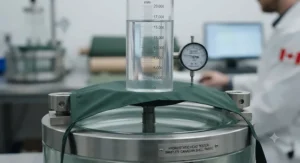
Here’s the 40-second version: hydrostatic head (HH) measures, in millimetres, how tall a column of water a fabric can resist before it leaks. A rating of 1,500mm barely clears the legal bar for “waterproof.” A rating of 10,000mm handles steady rain. A rating of 20,000mm or higher, the territory of Gore-Tex and its rivals, shrugs off sideways downpours and long days on the trail. Below, we’ve pulled seven real, currently available jackets — budget to premium — and broken down exactly what their specs mean once you’re standing in an actual Canadian rainstorm, not a showroom.
We researched real specs, aggregated genuine reviewer sentiment from outlets like OutdoorGearLab, Switchback Travel, and CleverHiker, and cross-referenced manufacturer claims wherever we could verify them. Where a brand doesn’t publish a number, we say so plainly instead of inventing one. This article contains affiliate links, and as an Amazon Associate we may earn from qualifying purchases at no cost to you.
Quick Comparison Table
| Jacket | Waterproof Rating (HH) | Weight | Best For | Price Range (CAD) |
|---|---|---|---|---|
| Frogg Toggs Ultra-Lite2 | Not officially rated (welded seams) | ~155g | Emergency backup layer | Under C$45 |
| Columbia Watertight II | ~10,000mm (independently tested) | ~390g | Casual everyday rain | C$90–C$115 |
| Marmot PreCip Eco | Not published; budget 2L class | ~310g | First technical shell | C$140–C$175 |
| The North Face Antora | 15,000mm / 15,000g breathability | ~345g | City-to-trail commuting | C$180–C$210 |
| Patagonia Torrentshell 3L | ~20,000mm (brand-tested) | ~400g | Value 3-layer protection | C$235–C$270 |
| Outdoor Research Helium | ~15,000mm | ~175g | Ultralight backpacking | C$270–C$300 |
| Arc’teryx Beta AR | 28,000mm (Gore-Tex Pro) | ~448g | All-season technical hardshell | C$850–C$900 |
Looking at the spread, the jump from Columbia Watertight II to Patagonia Torrentshell 3L roughly triples the price but also roughly doubles the hydrostatic head, which is the trade you’re actually paying for. The Frogg Toggs Ultra-Lite2 and Outdoor Research Helium sit at opposite ends of the ultralight category — one prioritizes cost, the other prioritizes durability and sustained protection at a similar weight class. If you only remember one row from this table, make it the Arc’teryx Beta AR: at 28,000mm it’s rated for conditions the other six jackets simply aren’t built to survive.
💬 Just one click — help others make better buying decisions too!😊
Top 7 Rain Jackets: Expert Analysis
1. Frogg Toggs Ultra-Lite2 — lightest true emergency backup
The Ultra-Lite2 skips the usual membrane-and-DWR formula entirely, and that’s precisely what makes it interesting. It’s built from a welded, non-woven polypropylene laminate rather than a coated nylon face fabric, so waterproofing is baked into the material itself instead of relying on a topical treatment that wears off. At roughly 155 grams for the jacket alone, it’s one of the lightest genuinely waterproof layers you can buy anywhere near this price. There’s no pit zips, no adjustable cuffs beyond basic elastic, and no hydrostatic head figure published by the brand — the welded-seam design isn’t tested the same way coated fabrics are, so treat this as a “keeps rain out” garment rather than a technical shell with a comparable number. This is squarely a beginner and budget pick: ideal for the hiker who wants a just-in-case layer at the bottom of a pack, a festival-goer, or anyone who needs backup rain protection without committing real money. Reviewers on Trailspace and Backpackers.com consistently describe it as legitimately waterproof in testing, while also flagging that the seams and pants in particular tear more easily than the jacket under repeated stress.
Pros:
- ✅ Extremely light at roughly 155 grams for the jacket
- ✅ Genuinely waterproof welded-seam construction, no DWR to wear off
- ✅ Among the cheapest legitimately waterproof jackets available
Cons:
- ❌ No published hydrostatic head rating to compare against rivals
- ❌ Fragile seams that reviewers say tear under repeated stress
At under C$45, the value proposition is simple: this is a spare-tire jacket, not a daily driver, and it does that one job better than almost anything else at the price.
2. Columbia Watertight II — best budget everyday commuter
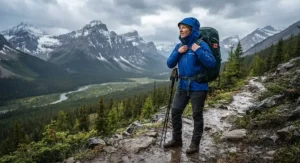
The Watertight II uses Columbia’s in-house Omni-Tech 2-layer construction, and while Columbia itself doesn’t publish a hydrostatic head figure, independent lab testing has placed it around 10,000mm — enough to handle a genuinely wet commute or a moderate hike without soaking through in the first hour. In practice, that number means you can trust this jacket through steady rain, but a prolonged, driving downpour will eventually find its way in at pressure points like the shoulders under a backpack strap. The Omni-Shield DWR finish does a lot of the heavy lifting here, and reviewers at OutdoorGearLab specifically note that the coating beads water impressively well even though the base fabric’s rating is modest. This is the jacket for someone who wants “waterproof enough” for city life — walking to the bus stop, dog walks, school drop-off — without paying for backcountry-grade performance they’ll never use. Aggregated reviewer sentiment across REI and Zappos is remarkably consistent: people are pleasantly surprised by how dry it keeps them relative to the price, with the most common complaint being a snug fit through the shoulders and the mesh liner snagging on zippers over time.
Pros:
- ✅ Roughly 10,000mm HH is solid for the price bracket
- ✅ Omni-Shield DWR beads water noticeably well
- ✅ Wide colour and size range, including boys’ and women’s fits
Cons:
- ❌ No pit zips, so breathability lags in warmer rain
- ❌ Mesh liner reported to snag on layers and packs over time
In the C$90–C$115 range, the Watertight II earns its “budget hero” reputation, but if you’re regularly hiking in sustained downpours, it’s worth stepping up to something with a higher HH.
3. Marmot PreCip Eco — best all-round beginner shell
The PreCip Eco has been a gateway jacket into “real” outdoor gear for two decades, and the 2026 version keeps that role with its NanoPro nylon ripstop fabric and a PFC-free DWR finish that swaps out the older, environmentally persistent chemistry for a greener alternative. Marmot doesn’t publish a specific hydrostatic head figure for the PreCip Eco, but independent reviewers who’ve tested it alongside rated competitors consistently place it in the same general performance tier as other budget 2-layer nylon shells — solid for light-to-moderate rain, not built for sustained alpine storms. What actually sets it apart from the Columbia at a similar price is the feature set: pit zips for ventilation and a DriClime-lined chin guard that prevents the classic clammy-zipper-against-your-neck problem. CleverHiker’s testers, who used it extensively on Alaskan day hikes, describe it as ideal for misty days and front-country camping, while noting it wets through faster than pricier, multi-layer options during extended exposure. That’s an honest trade-off, not a flaw — it’s what allows the jacket to pack down small and weigh next to nothing.
Pros:
- ✅ PFC-free DWR without sacrificing water-shedding performance
- ✅ Pit zips add real ventilation most budget shells skip
- ✅ Packs into its own pocket for effortless portability
Cons:
- ❌ No official hydrostatic head figure published for direct comparison
- ❌ Wets through faster than 3-layer options in sustained heavy rain
For C$140–C$175, this is the jacket most Canadians should default to if they hike occasionally and want one dependable shell without hardshell pricing.
4. The North Face Antora — best city-to-trail crossover
The Antora runs on The North Face’s DryVent 2-layer membrane, rated at a genuine 15,000mm hydrostatic head with a matching 15,000g/m²/24h breathability figure — a rare case of a mid-range jacket where both numbers are actually published and balanced against each other. What that pairing means practically is that the Antora handles sustained rain competently while still letting a reasonable amount of body heat escape during brisk walking, though it will still feel clammy if you push into a real cardio effort. Built from 100% recycled polyester with a PFC-free DWR coating, it leans into everyday versatility rather than technical mountaineering — there are no pit zips, which caps its ceiling for high-output activities like trail running or backcountry skiing. REI reviewers who tested it in Iceland’s notoriously wet, windy conditions reported that it held up well through most of the trip but let some dampness through during the heaviest sustained downpours, which tracks with a 15K rating rather than a 20K-plus one. This is the shell for someone who splits their time between sidewalks and light trails and doesn’t want a jacket that looks like technical mountaineering gear at brunch.
Pros:
- ✅ Balanced, published 15,000mm HH and 15,000g breathability numbers
- ✅ 100% recycled shell fabric with PFC-free DWR
- ✅ Flattering, everyday-friendly cut that layers well in the city
Cons:
- ❌ No pit zips limits ventilation during high-output activity
- ❌ Reviewers note some dampness getting through in the heaviest rain
At C$180–C$210, the Antora sits at the sweet spot between “looks like a coat” and “performs like a shell.”
5. Patagonia Torrentshell 3L — best value 3-layer protection
This is where the jump to genuine 3-layer construction happens without a genuine 3-layer price tag. Patagonia’s proprietary H2No Performance Standard membrane is brand-tested to roughly 20,000mm, a figure GearJunkie’s field testing in the Washington Cascades corroborated as more than sufficient to shut out sustained downpours and gale-force wind. The tricot backer that comes with the newer 3-layer build (up from the older 2.5-layer version) improves durability and keeps the membrane from getting fouled by body oils, which is a subtle but meaningful upgrade most shoppers won’t notice on a spec sheet but will feel over years of use. Breathability is the honest weak point here — Patagonia doesn’t publish a numeric moisture vapour transmission rate, and reviewers across Switchback Travel and OutdoorGearLab repeatedly flag it as clammy on strenuous climbs, which lines up with what you’d expect from a shell prioritizing bombproof waterproofing over airflow. At 100% recycled nylon with a PFC-free DWR and Fair Trade Certified sewing, it also checks sustainability boxes that budget shells generally skip. For hillwalking, backpacking, and travel where you might hit a genuine storm, this is the jacket most gear reviewers land on as the best dollar-for-dollar 3-layer option on the market right now.
Pros:
- ✅ ~20,000mm HH rivals jackets costing far more
- ✅ True 3-layer build improves long-term durability
- ✅ 100% recycled fabric with PFC-free DWR finish
Cons:
- ❌ Breathability is a consistent weak point in strenuous use
- ❌ Stiffer, crinklier feel than premium competitors until broken in
At C$235–C$270, this is the jacket to buy if you want Gore-Tex-adjacent confidence without a Gore-Tex-adjacent bill.
6. Outdoor Research Helium — best ultralight for thru-hikers
The Helium line has been a thru-hiker staple for years precisely because it refuses to compromise on weight — the current UL version drops to roughly 5.7 ounces (162 grams) using a 2.75-layer Pertex Shield Diamond Fuse construction with a 15-denier face fabric. Independent testing at The Trek rated the platform at around 15,000mm hydrostatic head, which is genuinely impressive for something this light, though OutdoorGearLab’s team is more blunt, classifying it functionally closer to a heavy-duty windbreaker that handles brief rain events rather than a jacket built for hours of sustained storm exposure. That tension is the entire story of this jacket: the fabric technology has closed much of the gap between ultralight and true waterproof performance, but the complete absence of pit zips and pockets (on the men’s version) means breathability suffers badly the moment you’re working hard. Switchback Travel’s long-term reviewer specifically compares it favourably against the Marmot PreCip Eco on weight while noting Arc’teryx’s pricier Zeta FL edges it out on all-around protection. If your priority is minimizing pack weight on a multi-week trail and you’re comfortable accepting some clamminess as the cost of doing business, this remains one of the best ultralight shells sold today.
Pros:
- ✅ Roughly 5.7–6.3 ounces, among the lightest waterproof shells sold
- ✅ ~15,000mm HH is strong for its ultralight fabric class
- ✅ Chest pocket doubles as a built-in stuff sack
Cons:
- ❌ No pit zips means poor ventilation under exertion
- ❌ Delicate 15-denier fabric demands careful handling
At C$270–C$300, you’re paying a premium for grams saved, not for all-weather comfort — know which one you actually need before buying.
7. Arc’teryx Beta AR — best technical hardshell overall
The Beta AR sits at the top of this list because Gore-Tex Pro’s ePE membrane, newly updated to a PFAS-free formulation, delivers a manufacturer-stated 28,000mm hydrostatic head — nearly triple what the Patagonia offers and comfortably the highest number on this entire list. In practice, that rating means the Beta AR is built for conditions where the other six jackets would eventually wet through: sustained alpine storms, wind-driven horizontal rain, and multi-day exposure without a break. Arc’teryx zones the fabric strategically, using a more breathable 80-denier Gore-Tex Pro across most of the body and a tougher 100-denier version on the shoulders and hood where abrasion from pack straps does the most damage over time. Long-term owners on Exploring Wild and The Broke Backpacker describe it as the most reliably waterproof jacket they’ve tested against real mountain weather, with the most common maintenance note being that the DWR benefits from an annual refresh with a product like Nikwax TX.Direct to keep beading water at its best. The helmet-compatible DropHood and RECCO reflector round it out as a piece built for people who genuinely need backcountry-grade protection, not just the reputation of owning one.
Pros:
- ✅ 28,000mm HH is the highest rating in this roundup by a wide margin
- ✅ Zoned 80D/100D Gore-Tex Pro balances weight and durability
- ✅ Helmet-compatible hood and RECCO reflector for backcountry use
Cons:
- ❌ Premium price puts it out of reach for casual use
- ❌ Less breathable than lighter softshell-style alternatives
At C$850–C$900, the Beta AR is an investment piece — but for anyone spending real time above treeline in Canadian mountain weather, reviewers consistently frame it as a jacket you buy once.
Practical Usage Guide: Getting the Most From Your Rain Jacket
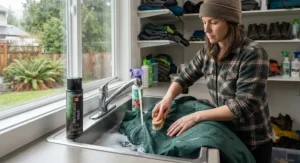
Buying the right HH number is only half the job — how you treat the jacket in its first month determines whether that number still means anything a year from now. Start by seam-checking before you need it: pull the jacket on over a base layer, zip everything up, and spray yourself with a garden hose or shower head to spot leaks before you’re relying on it in the backcountry. On first wear, most DWR finishes benefit from a quick tumble-dry on low heat (check the care label first), since gentle heat reactivates the water-repellent coating that can dull slightly in shipping and storage.
A common early mistake is over-layering underneath a high-HH shell like the Arc’teryx Beta AR or Patagonia Torrentshell 3L, then blaming the jacket for feeling “wet” when it’s actually condensation from trapped sweat. Vent early using pit zips or the front zipper before you’re overheating, not after. For maintenance, wash technical shells every few months with a dedicated technical wash — regular detergent leaves residue that blocks the membrane’s pores and tanks both waterproofing and breathability. Reapply a spray-on or wash-in DWR treatment once water stops beading and starts soaking into the face fabric, typically every 20–40 wears depending on exposure. Finally, always dry a wet jacket fully before stuffing it into its pocket for storage; trapping moisture against a membrane for weeks is one of the fastest ways to shorten its working life.
Real-World Scenarios: Matching the Jacket to the Person
The Toronto transit commuter. Sarah walks 12 minutes to the subway most mornings, year-round, and just needs something that survives a downpour without looking like hiking gear at the office. The Columbia Watertight II or The North Face Antora both fit this profile — enough hydrostatic head for a wet walk, a look that passes for a normal jacket, and a price that doesn’t sting if it gets left on a coat hook somewhere.
The weekend Algonquin backpacker. Priya does two or three multi-day trips a season, carries a 30-pound pack, and needs something that survives sustained exposure without weighing her down on the portages. The Patagonia Torrentshell 3L or Marmot PreCip Eco cover this well depending on budget — enough waterproofing for real storms, packable enough not to be a burden, without the alpine-specific pricing of a true hardshell.
The Rockies scrambler. Dev spends entire weekends above treeline where weather turns fast and violently, and a soaked base layer at altitude is a genuine safety issue, not just discomfort. This is exactly the use case the Arc’teryx Beta AR is built for — its 28,000mm rating and reinforced high-wear zones exist specifically for people whose margin for error is thinner than a commuter’s.
How to Choose Rain Jacket Waterproof Rating
A rain jacket’s waterproof rating is its hydrostatic head number, measured in millimetres, showing how much water pressure the fabric resists before leaking — generally, 5,000mm suits light rain, 10,000–15,000mm handles sustained moderate rain, and 20,000mm or higher is built for genuine storms and extended backcountry exposure.
Here’s how to actually apply that when comparing jackets:
- Match the number to your worst realistic weather, not your average day. If you occasionally hike somewhere that gets genuine sustained downpours, buy for that day, not the sunny ones.
- Weigh HH against breathability together, since a bombproof 28,000mm shell with poor airflow can leave you just as wet from sweat as a lower-rated jacket would from rain.
- Check the seam construction, since even a high-HH fabric leaks at unsealed or partially taped seams — fully taped seams are non-negotiable above the budget tier.
- Factor in DWR freshness, because a worn-out DWR coating makes even a high-rated fabric “wet out” on the surface, feeling soaked even when the membrane underneath is still doing its job.
- Consider denier alongside waterproofing, since a thin, high-HH fabric like the Outdoor Research Helium‘s can still fail from abrasion long before the membrane itself gives out.
- Think about your activity’s output level, because high-exertion activities need pit zips and better MVTR figures far more than they need an extra 5,000mm of HH.
- Don’t assume price equals fit for purpose — the MEC guide to choosing a rain jacket is a genuinely useful independent resource for weighing construction types before you commit to a number.
Understanding Waterproof Specs: Hydrostatic Head Numbers Explained
The hydrostatic head test itself is refreshingly literal: a lab clamps a swatch of fabric under a sealed tube, then raises the water level inside that tube until it begins to seep through. The height of that water column at the moment of failure, expressed in millimetres, is the number printed on the hang tag. A rating of 20,000mm means the fabric theoretically resisted the pressure of a 20-metre column of water — massive overkill for actual rainfall pressure, but a useful proxy for how the fabric holds up against the more concentrated pressure of, say, a loaded backpack strap pressing wet fabric against your shoulder.
This is where understanding waterproof specs actually pays off at the shelf: a 10,000mm jacket like the Columbia Watertight II isn’t “worse” in some abstract sense than the Arc’teryx Beta AR’s 28,000mm — it’s simply calibrated for a different pressure environment. Casual, low-pressure rain exposure (walking, light hiking without a heavy pack) rarely tests a fabric anywhere near its rated ceiling, which is exactly why budget shells feel perfectly dry for most people most of the time. The gap only becomes obvious under sustained pressure: sitting on wet ground, kneeling, or carrying a loaded pack through hours of rain, which is precisely the scenario premium hardshells are engineered around. If you want the deeper technical mechanics of how membranes achieve these numbers, MEC’s explainer on waterproof versus water-resistant fabrics breaks down the lab test methodology in more depth than most brand marketing pages bother to.
What Is DWR Coating on a Rain Jacket?
DWR stands for durable water repellent, and it’s a completely different mechanism from the hydrostatic head number, even though shoppers frequently conflate the two. Where HH measures the fabric’s resistance to water pressure, DWR is a surface-level treatment that makes water bead up and roll off the outer face fabric instead of soaking in and “wetting out.” A jacket can have an excellent HH rating and still feel soaked to the touch during a storm if its DWR has worn thin, because a saturated face fabric blocks airflow and traps heat even when the waterproof membrane underneath is doing its job perfectly.
The industry has shifted meaningfully here in the past few years: most of the jackets in this roundup, including the Marmot PreCip Eco, Patagonia Torrentshell 3L, and The North Face Antora, now use PFC-free DWR formulations that avoid the “forever chemicals” historically used in water repellents. The trade-off, as reviewers at Kayak Cambria and elsewhere note, is that PFC-free DWR generally needs more frequent reapplication than the older PFAS-based chemistry to maintain the same beading performance. Practically, that means budgeting for a DWR refresh treatment once or twice a year if you use your jacket regularly — a small maintenance habit that keeps a jacket performing like new far longer than most owners expect.
Breathability Ratings Explained
If hydrostatic head answers “how much rain can this keep out,” breathability answers “how much sweat can this let out” — and ignoring the second question is how people end up soaked from the inside on a jacket that never let a drop of rain through. Breathability is typically expressed as MVTR, or moisture vapour transmission rate, in grams of water vapour per square metre over 24 hours. A rating in the 5,000–10,000g/m²/24h range is fine for low-output activities like walking; serious hiking or climbing benefits from 15,000g/m²/24h or higher, and premium Gore-Tex laminates typically clear 20,000g/m²/24h.
Among the jackets here, The North Face Antora‘s published 15,000g/m²/24h figure is unusually transparent for its price tier, while brands like Patagonia and Arc’teryx tend to rely on their membrane’s general reputation (H2No, Gore-Tex Pro) rather than a headline MVTR number. What actually matters day-to-day is the combination of membrane breathability and physical venting: pit zips, mesh-lined pockets, and looser cuts all move air regardless of what the lab number says. That’s part of why the pit-zip-equipped Marmot PreCip Eco feels noticeably more comfortable on a warm, humid hike than the zip-free Outdoor Research Helium, despite both sitting in a broadly similar HH bracket.
Technical Specifications Buyers Actually Need to Check
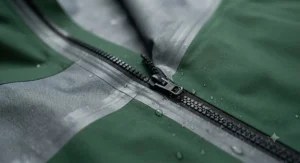
It’s easy to get fixated on the headline hydrostatic head number and skip past the technical specifications that determine whether a jacket survives contact with actual use. Denier — the thickness and durability of the outer face fabric — deserves nearly as much attention as HH, since a 15-denier ultralight fabric like the Outdoor Research Helium’s demands far more careful handling around zippers, packs, and brush than the 80-denier body of an Arc’teryx Beta AR. Layer count matters too: 2-layer construction (Columbia Watertight II) is the most affordable but least durable long-term; 2.5-layer (older Marmot and Outdoor Research builds) shaves weight at the cost of some interior comfort; 3-layer (Patagonia Torrentshell 3L, Arc’teryx Beta AR) laminates a full lining to the membrane for the best combination of durability and next-to-skin feel.
Seam construction is the quiet dealbreaker most shoppers skip entirely — a jacket with a 20,000mm-rated fabric but only partially taped seams will still leak at every stitch line under sustained rain. Every jacket in this roundup uses fully sealed, taped seams, which is the baseline any waterproof-rated jacket sold today should meet regardless of price. Finally, check zipper type: water-resistant coil zippers with storm flaps (used across most of this list) are perfectly adequate for rain, while fully waterproof laminated zippers, reserved for the priciest hardshells, add a small extra margin of protection at exposed closures.
Waterproof Rating Explained: Rain Jacket vs. Poncho vs. Softshell
| Feature | Waterproof Rain Jacket | Poncho | Softshell |
|---|---|---|---|
| Typical HH rating | 10,000–28,000mm | Not rated the same way | Often water-resistant only |
| Breathability | Moderate to good with venting | Poor, traps heat | Excellent |
| Wind protection | Excellent | Poor in gusts | Good |
| Mobility | Good, fitted design | Bulky, flaps in wind | Excellent |
| Best For | Marmot PreCip Eco, Arc’teryx Beta AR and similar shells | Brief, calm-weather showers | Cool, dry-to-damp active use |
A poncho can technically shed just as much rain as a low-rated jacket, but the lack of a fitted design means wind drives water in at the sides and neck — the garment’s shape defeats its own waterproofing in anything but calm conditions. Softshells, meanwhile, trade true waterproofing for excellent breathability and stretch, making them genuinely better for cold, dry, high-output days but a poor substitute the moment sustained rain shows up. If your Canadian weather forecast includes wind, which most of it does, a properly rated jacket like the Patagonia Torrentshell 3L consistently outperforms both alternatives in real-world comfort.
💬 Ready to stop guessing at the gear aisle? See our full picks above and grab the one that matches your weather!😊
Common Mistakes When Buying by Waterproof Rating
The single most common mistake is buying based on HH number alone, ignoring breathability entirely, and ending up drenched in sweat inside a technically bone-dry jacket. A close second is assuming “waterproof” and “water-resistant” mean the same thing on a product label — they don’t, and only the former is backed by a hydrostatic head rating and taped seams. Shoppers also frequently skip checking denier and layer count, buying an ultralight 15-denier shell for rugged bushwhacking use it was never designed to survive.
Another frequent error: assuming DWR performance is permanent. A jacket that beaded water perfectly at the store can wet out within a season of regular use if the coating isn’t maintained, leading buyers to mistakenly believe the jacket itself has failed. Finally, people often buy the highest HH number they can afford “just in case,” overpaying for the Arc’teryx Beta AR‘s alpine-grade protection when their actual use case — an occasional damp commute — is served just as well by the Columbia Watertight II at a fraction of the price.
Long-Term Cost & Maintenance
A rain jacket’s real cost isn’t the sticker price — it’s the sticker price divided by how many seasons it actually performs at spec. The Frogg Toggs Ultra-Lite2, at under C$45, is cheap per unit but has the shortest realistic lifespan among fragile seams and thin fabric, making it a poor primary jacket even though it’s an excellent backup. At the other end, the Arc’teryx Beta AR‘s C$850–C$900 price tag looks steep until you factor in owners on forums like Exploring Wild reporting a decade or more of hard use with only annual DWR maintenance and, occasionally, a warranty-covered seam repair.
| Jacket | Approx. Price (CAD) | Realistic Lifespan | Annual Maintenance Cost |
|---|---|---|---|
| Frogg Toggs Ultra-Lite2 | Under C$45 | 1–2 seasons, light use | Minimal — replace as needed |
| Columbia Watertight II | C$90–C$115 | 3–5 seasons | Occasional DWR refresh |
| Patagonia Torrentshell 3L | C$235–C$270 | 5–8 seasons | Annual DWR treatment |
| Arc’teryx Beta AR | C$850–C$900 | 8–10+ seasons | Annual DWR + occasional reproofing |
Amortized across its expected lifespan, the Arc’teryx Beta AR can end up cheaper per year of reliable use than replacing a budget jacket every two or three seasons — but only for someone who’s actually putting it through enough use to justify the upfront cost. For occasional users, the Marmot PreCip Eco or Columbia Watertight II deliver a far better return on a garment that may spend most of its life on a hook by the door.
Safety, Regulations & Compliance Guide
Rain jacket shopping in Canada increasingly intersects with chemical safety regulation, and it’s worth understanding why so many brands are now marketing “PFC-free DWR” as a selling point rather than a footnote. Per- and polyfluoroalkyl substances, commonly called PFAS, have historically been used to make water repellents durable and long-lasting, but Canada’s federal government has classified PFAS as a class of toxic substances under the Canadian Environmental Protection Act, citing their persistence in the environment and potential health effects. Canada’s move to regulate PFAS as an entire chemical class, rather than substance-by-substance, was reported by CBC News as a significant step putting the country ahead of many international peers on this issue.
Practically, this means the PFC-free DWR finishes used on jackets like the Marmot PreCip Eco, The North Face Antora, and Patagonia Torrentshell 3L aren’t just a marketing angle — they reflect a genuine regulatory shift the entire outdoor industry is adapting to, and buying PFC-free where possible is a reasonable, low-effort way to reduce personal exposure to persistent chemicals while these regulations continue to phase in. From a physical safety standpoint, remember that a jacket’s waterproof rating protects against discomfort, not hypothermia risk on its own — pairing adequate rain protection with proper layering underneath remains the more important factor in genuinely cold, wet Canadian conditions.
Buyer’s Decision Framework
If you commute in the city and rarely leave pavement, choose a 2-layer budget shell like the Columbia Watertight II because the moderate HH rating and low price match a low-pressure use case perfectly. If you hike occasionally on maintained trails, choose a jacket with pit zips and a mid-tier HH rating, like the Marmot PreCip Eco, because ventilation matters more than maximum waterproofing at this activity level. If you backpack multi-day trips carrying real weight, choose a 3-layer shell such as the Patagonia Torrentshell 3L, since sustained pack-strap pressure and multi-day exposure both demand the durability a full lining provides. If ounces are your obsession and trail conditions are forgiving, choose an ultralight option like the Outdoor Research Helium, accepting reduced breathability as the cost of a featherweight pack. If you’re regularly above treeline in genuinely severe alpine weather, choose a premium hardshell like the Arc’teryx Beta AR, because that’s the one scenario on this list where a 28,000mm rating stops being overkill and starts being necessary.
Frequently Asked Questions
❓ What waterproof rating is good for a rain jacket?
❓ Is a higher hydrostatic head always better?
❓ How do I know if my rain jacket's DWR needs reapplying?
❓ What's the difference between waterproof and water-resistant?
❓ Do rain jackets need to be Gore-Tex to be good?
Conclusion
Choosing a rain jacket by its waterproof rating isn’t about chasing the biggest number on the hang tag — it’s about matching a specific hydrostatic head, breathability figure, and construction quality to the weather you’ll actually face. A Toronto commuter and a Rockies scrambler have completely different “correct” answers, and both of them are wrong if they buy based on price or brand reputation alone. Whether that means the budget-friendly Columbia Watertight II for city drizzle, the balanced Patagonia Torrentshell 3L for weekend backpacking, or the alpine-grade Arc’teryx Beta AR for genuinely severe conditions, the number on the label should follow your actual use case, not the other way around.
Keep the maintenance habits in mind too — a fresh DWR coating and properly taped seams matter just as much as the original spec sheet once a jacket has seen real wear. Canada’s shift toward PFC-free water repellents is only going to accelerate, so factor that into long-term buying decisions as well. Armed with an actual understanding of hydrostatic head, breathability, and denier, you’re now equipped to walk past the marketing copy and pick the jacket that will actually keep you dry.
✨ Don’t Miss These Exclusive Deals!
🔍 Take your rain jacket shopping to the next level with the seven picks above. Click through on any highlighted jacket to check current pricing and availability on Amazon.ca. The right shell means fewer soggy commutes and more dry, comfortable days outside!
Recommended for You
- Cycling Rain Jacket Breathable: 7 Picks That Actually Work in 2026
- Rain Gear for Fishing: 7 Trusted Picks Canadian Anglers Love
- 7 Best Rain Jacket for Dog Walking Picks in 2026
Disclaimer: This article contains affiliate links. As an Amazon Associate, I earn from qualifying purchases. If you purchase products through these links, we may earn a small commission at no additional cost to you.
✨ Found this helpful? Share it with your friends! 💬🤗
