
In This Article
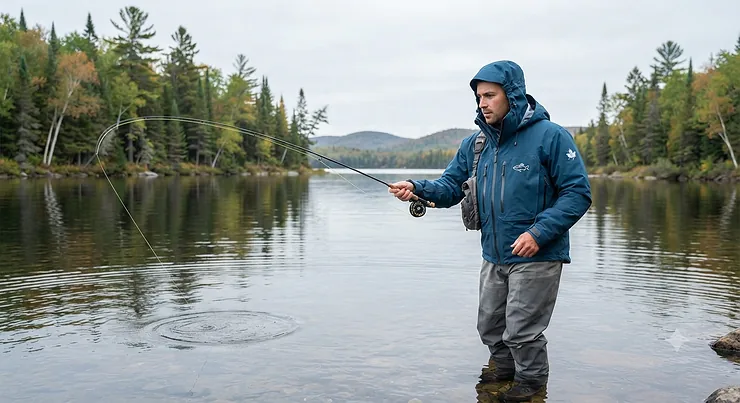
Somewhere between the third hour of a steady drizzle and the moment your “waterproof” jacket starts wicking cold water down your spine, you learn the difference between rain gear that’s marketed as waterproof and rain gear that’s actually built for it. That lesson usually arrives at the worst possible time — mid-cast, boat rocking, fish finder blinking, and you’re the only one on the water who forgot that Canadian weather doesn’t read the forecast.
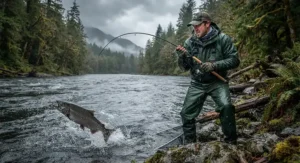
Rain gear for fishing is purpose-built outerwear — typically a jacket and matching bibs or pants — engineered with sealed seams, a waterproof-rated fabric, and articulated shoulders so you can still cast, net, and reel without the jacket fighting you the whole time. It’s a different animal from a commuter raincoat, and the gap shows up exactly when you need it most: hour four of a lake trip, not the walk from your car to the office.
This guide breaks down seven real products anglers across Canada actually buy, from budget-friendly packable shells to marine-grade offshore jackets built for open water. We’ll look at the specs that matter (and the ones that are mostly marketing), pull in genuine aggregated review sentiment where it’s verifiable, and walk through exactly how to match gear to your fishing style — whether that’s casting off a dock, running a bass boat, or standing in the bow during a squall on a big lake. Every waterproof rating referenced here follows the standard hydrostatic head testing method, so you can compare products on equal footing rather than trusting a marketing sticker.
Quick Comparison Table
| Product | Type | Waterproof Rating | Best For | Price Range (CAD) |
|---|---|---|---|---|
| Grundens Neptune Jacket & Bibs | Commercial-grade suit | PU-coated, fully sealed | Boat decks, rough handling | C$150-C$200 (jacket) |
| Frogg Toggs Pilot II Guide Jacket & Bib | Breathable 3-layer | 15,000mm / 10,000 MVTR | All-day breathability | C$130-C$180 (jacket) |
| HUK CYA Packable Rain Jacket | Packable shell | DWR-treated, taped seams | Backup gear, kayak anglers | C$85-C$115 |
| KastKing AquaLite Rain Suit | Budget 2-piece suit | Sealed seams | First-time buyers | C$55-C$85 (suit) |
| Striker Adrenaline Rain Suit | Tournament-grade suit | Hydrapore Pro 15K/10K | Bass tournament anglers | C$250-C$320 (suit) |
| Helly Hansen Skagen Offshore Jacket | Marine offshore shell | HELLY TECH 2-layer | Boat fishing, marine spray | C$420-C$520 |
| Gill OS2 Offshore Jacket | Premium offshore shell | 30,000mm XPLORE | Extended open-water trips | C$420-C$490 |
Looking at the spread above, there’s a clear line between gear built for occasional showers and gear built for sustained marine exposure. The KastKing AquaLite and HUK CYA sit at the accessible end — fine for weekend anglers who mostly fish in fair weather but occasionally get caught out. The Helly Hansen Skagen and Gill OS2, on the other hand, are engineered around the assumption that you’ll be standing in spray and driving rain for hours, which is exactly why their waterproof ratings and price tags both run higher. The middle tier — Grundens, Frogg Toggs, and Striker — is where most serious recreational anglers land, balancing genuine durability against a price that doesn’t require a family meeting.
💬 Just one click — help others make better buying decisions too!😊
Top 7 Rain Gear for Fishing Picks: Fishing Rain Suit Reviews & Expert Analysis
Choosing rain gear for fishing isn’t just about finding “waterproof” on a tag — it’s about matching the fabric weight, mobility, and features to how you actually fish. Below are seven real products, spanning budget to premium, based on published specifications and aggregated review sentiment gathered during research for this fishing rain suit reviews roundup.
1. Grundens Neptune Commercial Fishing Jacket & Bibs — commercial-grade toughness for boat decks
Grundéns built the Neptune line for actual commercial fishermen, and that pedigree shows the moment you put it on. The jacket uses medium-weight PU-coated polyester with an athletic cut and underarm gussets, meaning it stretches with your casting motion instead of bunching up around the shoulders. On paper, “PU-coated polyester” sounds generic, but in practice it means the fabric forms a continuous waterproof skin rather than relying on a coating that wears off after a season of net-hauling and gunwale-leaning — a meaningful difference for anyone fishing from a boat several times a month. This is a strong match for boat anglers, guides, and anyone who’s hard on gear; the adjustable hems, neoprene cuffs, and snap chest pocket are practical rather than flashy, which tracks with a brand built for people who fish for a living, not for Instagram. Aggregated review sentiment across major retailers consistently praises the durability and true-to-size fit, with a recurring theme that the jacket holds up to years of hard commercial use — though a handful of reviewers note the athletic cut runs snug over heavy layers, so sizing up is common advice.
Pros:
- ✅ Commercial-grade PU-coated fabric built for years of hard use
- ✅ Athletic cut with underarm gussets preserves casting mobility
- ✅ Neoprene cuffs and adjustable hem block splash effectively
Cons:
- ❌ Snug athletic fit means many buyers size up
- ❌ Heavier fabric than ultralight packable alternatives
At around C$150-C$200 for the jacket (bibs typically add a similar amount), the Grundens Neptune delivers commercial-grade construction at a price that’s genuinely reasonable for how long it lasts — solid value if you fish from a boat often enough to punish cheaper gear.
2. Frogg Toggs Pilot II Guide Jacket & Bib — breathable all-rounder for long days
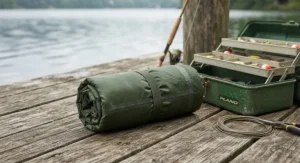
The standout feature here is the DriPore Gen2 fabric, a three-layer waterproof-breathable system rated above 15,000mm waterproof with over 10,000 g/m²/24hr of breathability (MVTR). What that combination means practically: you can hike to a spot, work up a sweat casting, and not end up damp from the inside the way you would in a purely waterproof-but-non-breathable rain shell. The outer Teflon DWR-coated layer sheds surface water, the middle DriPore membrane blocks it entirely, and the inner tricot layer keeps the fabric from feeling clammy against skin — a three-part system that’s more technically sophisticated than most jackets in this price bracket. This is a strong fit for anglers who fish actively (wading, hiking to spots, working a shoreline) rather than sitting stationary in a boat, since breathability matters most when you’re moving. Reviewers on major retail platforms frequently highlight the removable liner system, which lets the same jacket work across three seasons, and the multiple accessory D-rings for clipping on tools — though some note the splash-resistant (not fully sealed) zipper is a weak point in sustained downpours.
Pros:
- ✅ True 3-layer waterproof-breathable construction, not just DWR coating
- ✅ Removable liner extends use into cooler months
- ✅ Available in 13 colourways including camo patterns
Cons:
- ❌ Front zipper is splash-resistant rather than fully sealed
- ❌ Breathability advantage matters less for stationary boat fishing
The jacket typically lands in the C$130-C$180 range, with the matching bib in a similar bracket — a fair value proposition for anglers who prioritize breathability over maximum waterproofing.
3. HUK CYA Packable Rain Jacket — pocket-sized backup that dries fast
The whole point of the CYA (its name is a not-so-subtle nod to “cover yourself”) is that it packs into its own included stuff sack small enough to live permanently in a tackle bag, kayak hatch, or glovebox. The DWR coating repels water on contact rather than absorbing it, and HUK specifically markets the quick-dry lining as a feature — a genuinely useful detail if you’re stuffing a damp jacket back into a small bag between showers. Taped seams and a one-piece draw-cord hood and hem round out a design that prioritizes portability over bulk protection. This is the jacket for anglers who don’t expect rain but want casting freedom if it shows up — kayak fishermen with limited storage, tournament anglers who need a just-in-case layer, or anyone who’s been burned once by an unexpected squall. Aggregated customer sentiment is largely positive on the packability and wind resistance, with a recurring note that it performs better in showers than in sustained, heavy rain — which tracks with its lighter-weight construction compared to dedicated foul-weather suits.
Pros:
- ✅ Packs into its own included stuff sack for easy storage
- ✅ Quick-dry lining means less time carrying a damp jacket
- ✅ Taped seams and Velcro cuffs for a genuinely secure fit
Cons:
- ❌ Lighter fabric struggles in sustained heavy downpours
- ❌ No matching bibs sold as a full suit
Priced around C$85-C$115, the HUK CYA Packable Rain Jacket is best understood as insurance rather than a primary foul-weather suit — good value for what it is, as long as your expectations match its lightweight design.
4. KastKing AquaLite Rain Suit — budget-friendly full-body coverage
The AquaLite earns its spot as the most accessible full two-piece suit on this list, and it’s a genuine Amazon.ca listing rather than a US-only import, which matters for anyone who wants straightforward Canadian shipping and returns. The loose-fit design is intentional — it’s cut to layer over bulkier clothing underneath, which the manufacturer explicitly recommends sizing for, and the sealed seams are built to resist tearing rather than just repelling light moisture. A storm flap over the zipper and an adjustable hood add a layer of protection that’s often missing at this price point. This suit makes the most sense for occasional anglers, first-time buyers testing whether they even like fishing in wet weather, or anyone who wants a suit to keep in the trunk for surprise downpours rather than a daily-use piece of technical gear. Aggregated review sentiment describes the fabric as thicker and more durable than expected for the price, with repeated mentions that sizing runs larger than standard rain gear — a detail worth noting before ordering.
Pros:
- ✅ Genuine Amazon.ca listing with straightforward Canadian availability
- ✅ Sealed seams resist tearing better than typical budget suits
- ✅ Includes a storage bag for compact packing
Cons:
- ❌ Sizing runs noticeably larger than standard expectations
- ❌ Not rated for sustained marine-level exposure
At roughly C$55-C$85 for the full two-piece suit, the KastKing AquaLite is the entry point on this list — solid value for anyone easing into dedicated rain gear without a big upfront commitment.
5. Striker Adrenaline Rain Suit — built for tournament bass anglers
Striker built the Adrenaline around a 2.5-layer shell using Hydrapore Pro fabric rated at 15,000mm waterproof and 10,000g breathability, paired with 100% seam-sealed construction rather than partial taping — a distinction that matters because partially taped seams are a common failure point in cheaper suits during hour-long downpours. What stands out practically is the waist-high waterproof leg zippers, which let you get the bibs on and off quickly over boots, and the four exterior waterproof storage pockets sized for soft plastics and electronics rather than generic cargo space. This is gear designed by tournament anglers for tournament anglers, and it shows in details like the kill-switch attachment point and reflective panels for early-morning or late-evening takeoffs. Aggregated review sentiment from tackle retailers highlights the relaxed-but-not-baggy fit that preserves casting freedom, along with genuine praise for the neoprene cuffs keeping water from running down the arms — a common complaint about cheaper alternatives that reviewers say the Adrenaline avoids.
Pros:
- ✅ 100% seam-sealed construction, not just partial taping
- ✅ Waist-high leg zippers for fast on/off over boots
- ✅ Four waterproof storage pockets sized for tackle and electronics
Cons:
- ❌ Premium price relative to similarly rated mid-tier suits
- ❌ Bulkier fit than ultralight packable options
Expect to pay somewhere in the C$250-C$320 range for the full suit — a legitimate investment, but one that reviewers consistently frame as justified for anglers who fish tournaments in all conditions rather than fair-weather outings only.
6. Helly Hansen Skagen Offshore Jacket — quick-dry lining for marine conditions
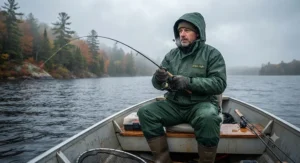
Helly Hansen built the Skagen for offshore and coastal sailing, which happens to make it one of the more genuinely marine-capable jackets an angler can buy off the shelf. The HELLY TECH Performance 2-ply fabric is paired with a mesh quick-dry lining developed specifically so the jacket doesn’t stay clammy after a soaking — a detail that matters enormously in a marine environment where spray, not just overhead rain, is the primary threat. The high-cut, fleece-lined collar and adjustable face shield block wind-driven spray at the exact point where most rain jackets fail: the neck and lower face. This is a genuine fit for boat anglers who spend real time on open water — big lakes, coastal fishing, or anyone running a boat where spray comes over the bow regularly — rather than shore anglers who mostly deal with overhead rain. Independent marine gear reviews consistently rate the Skagen as excellent value relative to full offshore-racing jackets costing significantly more, with reviewers specifically noting it kept them dry through sustained storms without feeling clammy underneath, a direct result of that quick-dry lining doing its job.
Pros:
- ✅ Quick-dry mesh lining prevents the clammy feeling of a soaked jacket
- ✅ High-cut collar and face shield block wind-driven marine spray
- ✅ Roughly 50% recycled Ocean Bound materials in construction
Cons:
- ❌ Two-layer construction is heavier than three-layer breathable shells
- ❌ Premium pricing reflects its marine sailing pedigree, not just fishing use
Sitting around C$420-C$520, the Helly Hansen Skagen costs more than fishing-specific competitors, but the marine-grade engineering is a legitimate reason why — this is boat fishing rain clothes built to a sailing standard, not a fishing-branded raincoat with a marketing story attached.
7. Gill OS2 Offshore Jacket — highest waterproof rating on this list
Gill’s OS2 line carries a 30,000mm hydrostatic head rating on its XPLORE two-layer fabric, roughly double the waterproof rating of most fishing-specific rain gear and independently verified through Gill’s own testing protocols. The technical distinction that matters here is the combination of hydrophobic and hydrophilic layers working together — the outer layer repels water while the inner layer actively transports moisture away from skin, rather than just blocking it and trapping sweat. Features like the retractable outer cuffs with PU inner seals, a life-jacket attachment facility, and a fully adjustable rollaway hood reflect a British brand with five decades in offshore sailing rather than a fishing brand borrowing marine language. This is the pick for anglers who spend extended stretches in open water — multi-day trips, big-lake trolling, or coastal fishing where a squall can roll in with real force. Review sentiment from marine publications and long-term owners consistently describes the OS2 as keeping wearers dry through genuinely severe weather, with the fleece-lined collar and chin guard specifically praised for comfort during multi-hour exposure, though a few reviewers note the jacket runs warm in milder conditions given its thermal collar design.
Pros:
- ✅ 30,000mm hydrostatic head rating, among the highest available
- ✅ Life-jacket attachment facility built for real marine safety use
- ✅ Made with roughly 98% recycled plastic bottles and fibres
Cons:
- ❌ Thermal collar design runs warm in mild, low-rain conditions
- ❌ Among the priciest options here relative to fishing-specific alternatives
Priced around C$420-C$490, the Gill OS2 competes directly with the Helly Hansen Skagen for anglers who want the absolute highest waterproof rating money can buy in this category — arguably overbuilt for casual shore fishing, but exactly right for serious open-water use.
Practical Usage Guide: Getting the Most from Your Fishing Rain Gear
Buying the right jacket is half the equation — how you treat it in the first month determines whether it performs like new or starts leaking within a season. Start by re-treating the DWR (durable water repellent) finish before first use if the product doesn’t arrive pre-treated; tumble drying on low heat for 20 minutes reactivates most factory DWR coatings, which is why brands like Helly Hansen and Gill print that instruction directly on care labels. Wash technical rainwear separately, using a non-detergent technical wash rather than regular laundry soap — standard detergents leave a residue that clogs the fabric’s pores and kills breathability over time, a mistake that shows up as the jacket “wetting out” (soaking through on the surface) far sooner than the rating suggests it should. For suits like the Grundens Neptune or Striker Adrenaline, check seam tape annually for lifting or peeling, especially at high-stress points like the underarms and crotch, and address it early with seam sealant rather than waiting for a leak mid-trip. A common first-30-days mistake is storing rain gear wet and compressed in a tackle bag; even fully waterproof fabrics can develop mildew and odour if packed away damp, so hang everything to air-dry fully before storage. Finally, test the zippers and Velcro closures on a dry day before you actually need them in a downpour — a stuck zipper on the KastKing AquaLite or a worn Velcro cuff on the HUK CYA is a five-minute fix at home and a genuine problem on the water.
Real-World Scenarios: Matching Rain Gear to Your Fishing Style
Picture three different anglers heading out on the same rainy Saturday. The first is a weekend shore angler fishing a local river a few times a month, budget-conscious, mostly dealing with light-to-moderate rain rather than sustained storms — for this profile, the KastKing AquaLite or HUK CYA Packable covers the realistic use case without overspending on marine-grade features that would go unused. The second is a bass tournament competitor fishing 20-plus days a season from a boat, running at speed between spots regardless of weather, needing gear that survives constant on/off cycling and abrasion from tackle and boat surfaces — this is exactly the Striker Adrenaline or Grundens Neptune use case, where the seam-sealed durability and quick-access leg zippers earn their higher price tag through sheer frequency of use. The third is a big-lake or coastal angler who fishes from an open boat where spray comes over the bow as often as rain falls from above, sometimes running multi-hour trips far from shore — this is where the Helly Hansen Skagen or Gill OS2 genuinely justifies the premium price, since their marine-specific engineering (quick-dry lining, high collars, life-jacket attachment points) addresses risks the other categories simply weren’t built for. Matching gear to frequency and environment, rather than buying the most expensive option by default, is the single most effective way to avoid both overspending and being underprepared.
Problem → Solution: Fixing the Most Common Rain Gear Complaints
Problem: Water running down your neck despite a “waterproof” jacket. This usually traces back to a low or poorly adjustable collar rather than the fabric itself — the fix is a jacket with a high, adjustable collar and drawcord hood, like the Helly Hansen Skagen or Gill OS2, both purpose-built around this exact failure point.
Problem: Overheating and sweating through your base layer while wearing rain gear. This is a breathability issue, not a waterproofing one — switch to a rated breathable fabric like the DriPore Gen2 in the Frogg Toggs Pilot II, which is engineered specifically to let vapour escape while blocking liquid water.
Problem: A jacket that felt fine in the store but restricts your casting motion on the water. Look for articulated shoulders and underarm gussets rather than a straight-cut design; the Grundens Neptune‘s athletic cut is a direct answer to this complaint, since commercial fishermen need full range of motion all day.
Problem: Gear that’s too bulky to store on a kayak or small boat. A dedicated packable shell like the HUK CYA solves the storage problem directly, trading some heavy-rain performance for a footprint small enough to stash anywhere.
Problem: Rain gear that leaked after only one season of use. This is almost always a seam-sealing issue rather than fabric failure — fully seam-sealed suits like the Striker Adrenaline cost more upfront specifically because every seam is sealed, not just the high-stress points, which is the detail that separates one-season gear from multi-year gear.
How to Choose Rain Gear for Fishing
- Match the waterproof rating to your exposure level. Occasional showers call for 3,000-10,000mm fabric; sustained marine spray or all-day storms call for 15,000mm or higher, like the Gill OS2‘s 30,000mm rating.
- Decide between a jacket-only setup and a full jacket-and-bibs system. Bibs eliminate water running down your legs into boots — a real issue for boat and shore anglers who kneel or sit often.
- Prioritize seam construction over marketing claims. Fully taped or welded seams, as seen on the Striker Adrenaline and Grundens Neptune, outperform partially sealed seams in sustained rain regardless of the base fabric’s rating.
- Consider breathability if you’re active rather than stationary. Wading anglers and shore fishermen who hike between spots benefit more from breathable fabric like the Frogg Toggs Pilot II than boat anglers who sit still.
- Factor in mobility features for casting. Underarm gussets, articulated shoulders, and stretch fabric preserve your natural casting motion — a detail specs sheets rarely emphasize but every angler notices immediately.
- Weigh packability against protection. A packable shell like the HUK CYA trades some heavy-weather performance for portability; decide which matters more for your typical trips.
- Set a realistic budget based on frequency of use. Occasional anglers rarely need to spend past the C$100 mark, while anglers fishing 20-plus days a season see real return on investment from premium marine-grade gear.
Common Mistakes When Buying Rain Gear for Fishing
The most common mistake is buying a jacket without matching bibs and assuming the jacket alone covers “rain gear” — shore and boat anglers who kneel, sit, or lean against wet gunwales quickly learn that uncovered legs undo a perfectly good jacket. A close second is fixating on waterproof rating alone while ignoring seam construction; a 15,000mm fabric with poorly taped seams will leak sooner than a 10,000mm fabric with fully sealed seams, since seams — not the fabric itself — are the most common failure point in real-world use. Buyers also frequently underestimate sizing, particularly with layering suits like the KastKing AquaLite, which is cut loose specifically to fit over base layers; ordering true-to-normal-clothing-size often results in a suit that’s too tight to layer under. Another recurring error is choosing a non-breathable fabric for active fishing styles like wading or hiking to spots, which traps sweat and leaves anglers just as wet from the inside as they’d have been from rain outside. Finally, many buyers skip checking the return policy and sizing chart specific to the brand — European-cut brands like Gill and Helly Hansen often run differently than North American fishing brands, and a mismatched size negates even the best waterproof rating.
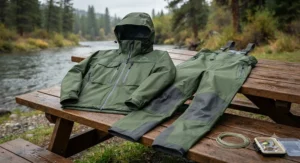
Fishing Rain Suits vs Regular Rainwear
The difference between fishing-specific rain suits and a generic rain jacket from a department store comes down to three things: mobility engineering, seam durability, and feature placement. A standard commuter raincoat is cut for walking, not casting — the shoulders and sleeves restrict the overhead and side-arm motion anglers need repeatedly throughout a session, which is exactly why fishing-specific jackets like the Grundens Neptune and Striker Adrenaline build in underarm gussets and articulated shoulders that generic rainwear skips entirely. Seam durability is the second major gap: department-store raincoats are typically rated for walking to a car in a shower, not standing in sustained rain or boat spray for hours, so their seam sealing is lighter-duty and prone to failure under prolonged pressure exactly where fishing gear like the Frogg Toggs Pilot II is engineered to hold. Finally, feature placement matters more than it seems — fishing rain suits position pockets for tackle and electronics access while standing or seated in a boat, include D-rings for tool attachment, and often add flotation-adjacent safety features like the kill-switch attachment on the Striker Adrenaline, none of which a generic raincoat considers. The trade-off is price: fishing-specific gear costs more than a big-box raincoat, but for anyone spending real hours on the water, the mobility and durability difference shows up within the first serious downpour.
Angler Waterproof Gear for Boat Fishing in a Marine Environment
Boat fishing introduces a threat that shore fishing mostly avoids: spray. Water coming off the bow at speed, off another boat’s wake, or blown sideways by wind hits gear from angles that overhead-rain-focused jackets simply weren’t designed to handle — which is exactly why angler waterproof gear built for a marine environment, like the Helly Hansen Skagen and Gill OS2, emphasizes high collars, face shields, and cuff seals over the features that matter most for shore fishing. Boat fishing rain clothes also need to account for constant contact with wet surfaces: gunwales, seats, coolers, and tackle boxes all transfer moisture and abrasion that a jacket built purely for overhead rain doesn’t anticipate. This is where the Grundens Neptune‘s commercial-grade PU coating earns its keep — it’s designed around exactly this kind of contact abrasion from a lifetime of deck use. Casting freedom matters more on a boat than almost anywhere else in fishing, since boat anglers are frequently casting from a braced, standing position where a restrictive jacket directly costs distance and accuracy; this is a major reason tournament-focused suits like the Striker Adrenaline invest heavily in stretch fabric and articulated cuts. For anyone fishing primarily from a boat — bass boat, pontoon, or offshore charter — prioritizing spray protection and mobility over raw waterproof rating alone will generally produce a better real-world experience than chasing the single highest hydrostatic head number on a spec sheet.
Features That Actually Matter (And Those That Don’t)
Fully taped or welded seams matter enormously — this is the single feature most correlated with a jacket actually staying dry over years of use, more than the headline waterproof rating. Adjustable cuffs with a genuine seal, like the PU inner seals on the Gill OS2, matter because wrist openings are a top entry point for water during casting and netting motions. Quick-dry lining, as featured on the Helly Hansen Skagen, matters more than most buyers expect, since a jacket that stays clammy inside makes an entire trip miserable even if it’s technically kept rain out. On the other hand, an extremely high waterproof rating past roughly 15,000mm delivers diminishing real-world returns for most recreational anglers — the jump from 15,000mm to 30,000mm matters for sustained marine exposure but is largely irrelevant for someone fishing shore or calm-water lakes a few times a month. Colour and camo pattern, despite heavy marketing emphasis from brands offering a dozen-plus options, has zero effect on waterproofing and exists purely for personal preference or visibility purposes. Similarly, an abundance of pockets sounds useful on a spec sheet but often just adds weight and snag points if they’re not positioned for actual on-the-water access — the Striker Adrenaline‘s four pockets, deliberately placed for reachability while seated or standing, are a better model than suits that simply maximize pocket count.
Long-Term Cost & Maintenance
Total cost of ownership for rain gear extends well past the sticker price, and it’s worth running the math before committing to a budget option that needs replacing every season versus a premium piece that lasts five-plus years. A KastKing AquaLite at roughly C$55-C$85 replaced annually costs more over five years than a single Striker Adrenaline at C$250-C$320 purchased once and properly maintained — assuming, critically, that maintenance actually happens. That maintenance is inexpensive: a technical wash cycle every handful of trips (roughly C$15-C$20 per bottle of technical detergent, which lasts many washes) and periodic DWR reactivation through low-heat tumble drying costs essentially nothing beyond time. Seam sealant for touch-up repairs runs a modest amount and can extend the working life of gear by several seasons once factory sealing begins to show wear. The real long-term cost differentiator is fabric quality: PU-coated commercial fabric like the Grundens Neptune and fully-laminated marine shells like the Gill OS2 resist UV degradation and abrasion far longer than budget coatings, meaning the premium price partly reflects a genuinely longer usable lifespan rather than just brand markup. For anglers fishing more than a handful of days per season, calculating cost-per-fishing-day over the expected lifespan of the gear — rather than sticker price alone — consistently favours investing in mid-to-premium tier rain gear.
Safety, Regulations & Compliance for Canadian Anglers
Rain gear plays a bigger safety role than most anglers realize, particularly for boat fishing on Canadian waters where cold-water immersion remains a leading cause of on-water fatalities. Transport Canada’s own guidance for anglers and hunters specifically flags that fishing trips often start early and end late in the season, when water temperatures are coldest and the risk of cold shock and hypothermia is highest — a genuine argument for gear with a high collar and sealed cuffs that reduce heat loss if you’re caught in sustained wind and rain. The Canadian Safe Boating Council notes that a person can lose body heat roughly 25 times faster in water than in air at the same temperature, and that this rate increases further with movement, which is exactly why cold water immersion risk should factor into gear choices, not just comfort. None of the rain gear covered here substitutes for a Transport Canada-approved personal flotation device (PFD), which remains mandatory equipment on every pleasure craft in Canada regardless of how well you’re dressed for the weather. For anglers fishing in colder provinces or shoulder seasons, look for CSA-certified flotation-assist features where available, and always pair quality rain gear with a properly fitted PFD rather than treating one as a substitute for the other. AdventureSmart’s fishing safety resources are a useful supplementary check before any trip where weather or water temperature is a genuine variable, particularly for solo anglers heading out on larger or more remote bodies of water.
Frequently Asked Questions
❓ What is the best rain gear for fishing in Canada?
❓ Is a rain jacket enough, or do I need bibs too?
❓ How much should I budget for fishing rain gear?
❓ Can I just use a regular raincoat for fishing?
❓ How do I stop my fishing rain gear from leaking after a season of use?
Conclusion
Good rain gear for fishing isn’t about chasing the highest number on a spec sheet — it’s about matching fabric weight, seam quality, and mobility features to how and where you actually fish. A weekend shore angler and a bass tournament competitor running twenty days a season have genuinely different needs, and the seven products covered here span that entire range honestly, from the budget-friendly KastKing AquaLite to the marine-grade Gill OS2. What separates gear that lasts five seasons from gear that leaks by August almost always comes down to seam construction and maintenance habits rather than the headline waterproof rating alone — a detail worth remembering the next time a bigger number on a tag tempts you to overspend. Whichever tier fits your budget and fishing frequency, the anglers who stay driest are the ones who matched their gear honestly to their actual conditions rather than buying for the trip they occasionally imagine taking. Rain doesn’t care about your plans, but the right gear means it doesn’t have to end your day either.
Recommended for You
- 7 Best Rain Jacket for Dog Walking Picks in 2026
- Rain Jacket for Canadian Rockies: 7 Top Picks Tested in 2026
- Rain Jacket Vancouver Weather: 7 Picks That Won’t Fail (2026)
Disclaimer: This article contains affiliate links. As an Amazon Associate, I earn from qualifying purchases. If you purchase products through these links, we may earn a small commission at no additional cost to you.
✨ Found this helpful? Share it with a fishing buddy who still thinks a hoodie counts as rain gear! 💬
