
In This Article
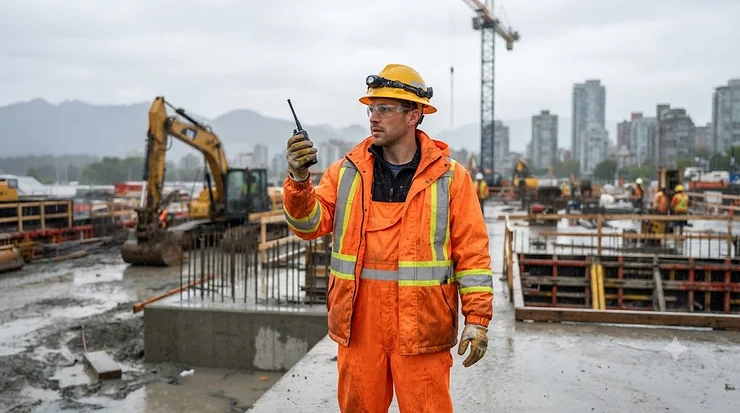
A heavy duty rain suit for construction is a two-piece (or three-piece) waterproof jacket-and-pants system built from abrasion-resistant PVC, polyurethane, or nylon shells with sealed seams, meant to survive daily wear on active job sites rather than a single weekend fishing trip. That’s the short answer. The long answer is a little messier, and a little more expensive if you get it wrong.
Here’s the thing about rain gear sold to Canadians every autumn: most of it is built for someone standing still. Golfers. Dog walkers. Festival-goers who need forty-five minutes of dry shoulders before ducking under a tent. None of that gear survives a scaffold, a rebar cage, or six hours of bending, climbing, and hauling material in a downpour on a Kitchener high-rise. The seams split. The knees blow out. The “waterproof” rating quietly becomes “water resistant for now.”
So this guide skips the generic stuff. Every product below comes from brands that actually sell into industrial and construction channels — Tingley, Radians, Helly Hansen, Viking, Neese, PIP, and TIDEWE — and every recommendation is grounded in real specs and aggregated reviewer sentiment, not marketing copy. You’ll get a quick comparison table, seven full product breakdowns with honest pros and cons, a buyer’s framework for matching gear to your actual job type, and straight answers on ANSI/CSA visibility compliance, which matters more in Canada than most rainwear listings ever mention. If you’re outfitting one worker or a whole crew ahead of spring runoff or fall storms, you’ll leave this page knowing exactly what to buy and why.
Quick Comparison Table
| Product | Material | Best For | Price Range (CAD) |
|---|---|---|---|
| Tingley Iron Eagle Rain Suit | PU-coated nylon | Chemical and oil-heavy sites | C$140-C$190 |
| Radians RW32 Ripstop Rain Suit | Ripstop PU polyester | Reinforced hi-vis durability | C$150-C$210 |
| Helly Hansen Workwear Gale Rain Suit | PU-coated polyester | All-day mobility and comfort | C$220-C$290 |
| Viking Journeyman 420D Rain Suit | PVC-backed nylon | Canadian-made cold-weather durability | C$110-C$160 |
| Neese Air-Tex Class 3 Rain Suit | PU-coated polyester, vented | Breathable hi-vis compliance | C$150-C$200 |
| PIP 353-1000 Class 3 Rain Suit | 150D polyester, PU coat | Budget-friendly ANSI compliance | C$60-C$95 |
| TIDEWE Heavy Duty PVC Rain Suit | PVC-coated polyester | Tightest budget, occasional crews | C$70-C$100 |
Looking at the spread above, price and protection track each other fairly closely, but not perfectly. The Viking Journeyman 420D Rain Suit punches above its price bracket on raw abrasion resistance, while the Radians RW32 Ripstop Rain Suit justifies its premium with reinforced seams that the cheaper PVC options simply can’t match. If ANSI compliance is a hard requirement on your site, note that only three of the seven — Radians RW32 Ripstop Rain Suit, Neese Air-Tex Class 3 Rain Suit, and PIP 353-1000 Class 3 Rain Suit — carry Class 3 certification out of the box.
💬 Just one click — help others make better buying decisions too!😊
Top 7 Heavy Duty Rain Suits for Construction: Expert Analysis
Coverage below spans budget, mid-range, and premium tiers, plus a mix of standard and high-visibility configurations, so you can match the suit to your site’s actual requirements instead of guessing.
1. Tingley Iron Eagle Rain Suit — best chemical and oil resistance
The standout here isn’t waterproofing — plenty of suits handle rain — it’s what happens when that rain mixes with diesel, hydraulic fluid, or form-release oil on an active site. The Tingley Iron Eagle Rain Suit exterior is coated polyurethane on nylon with a 2-mil coating layer, and Tingley’s own applications list leans heavily toward petrochemical, forestry, and industrial sanitation work where chemical splash is a daily reality, not a hypothetical. Therm-O-Rad sealed seams back up the 100% waterproof claim, and the batwing sleeve cut is generous enough that most reviewers report full range of motion even with a tool belt underneath.
On the specs: the jacket resists fats, oils, pine tars, gasoline, and grease, which matters practically because a PVC suit exposed to the same substances will stiffen and crack within a season. Based on the spec comparison against the PVC options further down this list, the polyurethane-on-nylon build trades a bit of raw tear strength for chemical durability and lighter overall weight — a fair trade if your site involves equipment fueling, asphalt work, or interior mechanical rough-in. Reviewers consistently note the snap hardware holds up better than expected under repeated on/off cycles, though a detachable hood sold separately catches some buyers off guard.
Aggregated review sentiment across industrial supply retailers is strongly positive on durability and mobility, with recurring praise for the mildew resistance in humid storage conditions. A common complaint is that sizing runs generous, so first-time buyers are advised to check the chest measurement chart rather than ordering their usual jacket size.
Pros:
- ✅ Genuine chemical, oil, and fuel resistance beyond basic waterproofing
- ✅ Batwing sleeve design preserves mobility with tool belts
- ✅ Snap hardware rated not to fail under daily use
Cons:
- ❌ Hood sold separately on most jacket configurations
- ❌ Sizing runs large, requiring careful chart checking
The Tingley Iron Eagle Rain Suit typically lands in the C$140-C$190 range for a jacket and bib combination, and given the chemical-resistance premium built into the coating chemistry, it represents solid value specifically for workers who need more than rain protection.
2. Radians RW32 Ripstop Rain Suit — toughest reinforced seams in this lineup
What most buyers overlook about ripstop fabric is that it’s not really about tear resistance in the abstract — it’s about what happens after the first snag. Standard PU-coated polyester tears in a straight line once punctured; ripstop’s grid-woven reinforcement threads stop that tear from spreading past a few centimetres. On a rebar-heavy or scaffold-heavy site, that difference is the gap between a minor repair and a suit that’s done for the season.
The Radians RW32 Ripstop Rain Suit is built from 300-denier PU-coated ripstop polyester and carries full ANSI/ISEA 107 Class 3 certification, meaning it clears the highest hi-vis tier available for a single garment. Reflective tape wraps the torso, shoulders, and sleeves for 360-degree visibility, and a vented back cape helps offset the heat buildup that non-breathable coatings are known for. Based on the spec comparison, this is one of the few suits in this list that pairs genuine reinforced construction with full daylight-and-low-light visibility compliance in one product line, rather than requiring a separate hi-vis vest layered on top.
Reviewers on industrial safety retail sites consistently flag the reflective tape placement as a strength, noting it stays visible even when a harness or tool belt is worn over the jacket. The recurring critique is weight: the ripstop reinforcement and coating add heft compared to lighter PU jackets, which some crews doing high-mobility tasks find noticeable by the end of a twelve-hour shift.
Pros:
- ✅ Ripstop weave stops small punctures from spreading
- ✅ Full ANSI/ISEA 107 Class 3 hi-vis certification included
- ✅ Vented back cape reduces heat buildup during activity
Cons:
- ❌ Noticeably heavier than non-reinforced PU alternatives
- ❌ Premium price compared to standard Class 3 jackets
Expect to pay in the C$150-C$210 range for the full suit, and for roadway-adjacent or heavy-equipment sites where both durability and daylight visibility are non-negotiable, this is genuinely difficult to beat on paper.
3. Helly Hansen Workwear Gale Rain Suit — best all-day mobility
Helly Hansen has built rainwear for Norwegian fishing crews since 1877, and the Gale line is the direct descendant of that legacy translated into North American construction workwear. The standout feature is stretch: unlike rigid PVC shells, the Gale jacket and bib pants use a PU-coated polyester with enough give that a contributing editor at a trade publication reported being able to bend, kneel, and reach overhead with tool bags on without feeling bound up — a claim that lines up with the broader pattern in aggregated reviews.
Specs worth noting: micro-welded seams replace traditional stitching at stress points, which the manufacturer positions as added strength in rugged conditions, and the bib pants use adjustable elastic suspenders that slip easily over work clothes rather than requiring a full change. Neoprene cuffs on the jacket are a small but meaningful detail — they seal tighter around the wrist than standard elastic, cutting down on the water-running-down-your-arm problem that plagues cheaper suits. What most buyers overlook is that this stretch and comfort doesn’t come at the cost of oil resistance; the PVC-coated polyester construction on the bib pants specifically targets oil and mildew resistance for fishing and heavy outdoor work.
Reviewer sentiment aggregated from trade publications and retail sites is close to universally positive on comfort and durability, with one contributing tradesperson noting the gear held up through a full record-rainfall season without failure. The main knock is price relative to basic PVC suits, though buyers consistently frame that as justified given the multi-season lifespan reported.
Pros:
- ✅ Stretch fabric preserves mobility for bending and climbing
- ✅ Neoprene cuffs seal noticeably better than standard elastic
- ✅ Micro-welded seams reinforce high-stress zones
Cons:
- ❌ Highest price point of the seven suits featured here
- ❌ Non-hi-vis colours require a separate reflective layer for ANSI needs
Priced around C$220-C$290 for a matching jacket and bib set, the Helly Hansen Workwear Gale Rain Suit sits at the premium end, but the value case is straightforward: every shift you’re not sent home for weather is a shift the gear paid for itself.
4. Viking Journeyman 420D Rain Suit — best Canadian-built durability
Viking has outfitted Canadian workers since 1938, and the Journeyman line is the company’s volume workhorse — the suit you’ll actually see on forestry crews and road construction sites from Newfoundland to the BC coast. The standout advantage is denier: at 420D, the nylon shell used here is meaningfully thicker than the 150D-300D fabrics common in budget rain suits, and Viking backs it with PVC backing for full waterproof integrity rather than a thinner PU film.
The jacket includes a detachable hood, breathable mesh lining, and a fleece-lined collar, which is a small but genuinely useful feature for Canadian shoulder-season work where cold rain and wind chill show up together. Double-stitched, taped, and heat-sealed seams push waterproofing well past the entry-level suits, and reflective safety piping across the front and back adds a visibility boost even on the non-certified base model, though it stops short of full ANSI Class 3 certification. Based on the spec comparison, the 420D nylon-and-PVC construction trades a bit of flexibility for straight-line puncture and abrasion resistance — a reasonable call for forestry and heavy construction where snagging on rebar or brush is a real risk.
Aggregated reviewer sentiment highlights the fleece collar and detachable hood as standout comfort features rarely found at this price point, and durability comments consistently reference multi-year use without seam failure. A recurring complaint involves fit through the shoulders on the smallest sizes, which several reviewers describe as running narrow relative to Viking’s own size chart.
Pros:
- ✅ 420-denier shell outlasts thinner budget alternatives
- ✅ Fleece collar and detachable hood add cold-rain comfort
- ✅ Double-stitched, taped, heat-sealed seams
Cons:
- ❌ Smallest sizes run narrow through the shoulders
- ❌ Base model lacks full ANSI Class 3 certification
At roughly C$110-C$160 for the full suit, the Viking Journeyman 420D Rain Suit delivers commercial-grade durability at a mid-tier price, and for crews prioritizing Canadian sourcing and cold-weather comfort, it’s hard to argue with the value.
5. Neese Air-Tex Class 3 Rain Suit — best breathable hi-vis option
Here’s what the spec sheet won’t tell you outright: non-breathable rainwear is fine for a rainstorm, but on a humid August afternoon with intermittent showers, the sweat buildup inside a sealed PU shell can be worse than just getting a little wet. That’s the specific problem the Neese Air-Tex Class 3 Rain Suit is engineered around. It uses a PU-coated polyester shell with a back ventilation system and mesh-lined panels designed to let heat and moisture vapour escape while keeping liquid rain out.
The suit carries full ANSI/ISEA 107-2015 Type R Class 3 certification with 2-inch reflective tape for 360-degree visibility, elastic inner cuffs for a snug seal, and a raglan sleeve pattern that adds shoulder mobility compared to standard set-in sleeves. Reviewers consistently note the back ventilation as the defining feature — several comparisons against non-vented Class 3 competitors describe noticeably less interior condensation during active work. What most buyers overlook is that “breathable” in PU-coated rainwear almost always means engineered venting rather than a moisture-permeable membrane, so the airflow works best when there’s some movement of air outside the suit too, not in a sealed indoor space.
Aggregated sentiment from safety-supply retailers is favourable specifically among workers doing physically demanding outdoor tasks — flaggers, utility crews, and general labourers — who cite the ventilation as the deciding factor over competing Class 3 suits. The main drawback flagged in reviews is that the tuck-away hood, while convenient for storage, offers less coverage in driving rain than a fixed hood design.
Pros:
- ✅ Back ventilation genuinely reduces interior heat buildup
- ✅ Full ANSI Class 3 compliance with 360-degree reflective tape
- ✅ Raglan sleeve cut improves shoulder mobility
Cons:
- ❌ Tuck-away hood offers less coverage than fixed designs
- ❌ Ventilation reduces protection in sustained wind-driven rain
Priced around C$150-C$200, the Neese Air-Tex Class 3 Rain Suit is a strong pick specifically for warmer-weather compliance work where comfort during long shifts matters as much as the rain rating.
6. PIP 353-1000 Class 3 Rain Suit — best budget ANSI compliance
Full ANSI Class 3 rainwear usually starts well above the entry-level price bracket, which is exactly what makes the PIP 353-1000 Class 3 Rain Suit worth flagging. Built from 150-denier polyester with a water-resistant PU coating, it clears ANSI/ISEA 107 Class 3 certification while staying priced closer to non-certified budget suits than to the premium hi-vis options higher up this list.
Key features include a concealed hood for storage when not needed, a double storm flap zipper closure to block wind-driven rain at the front seam, and an elastic waist with snap-adjustable cuffs on the pants for a customizable fit over work clothes. Based on the spec comparison against the heavier Radians and Neese suits above, the thinner 150-denier shell trades some long-term abrasion resistance for weight and cost savings — a reasonable trade for crews that need compliance now on a tight budget rather than a five-year workhorse suit.
Reviewer sentiment aggregated from safety-supply retailers is generally positive for the price point, with repeated mentions that the compliance-per-dollar ratio is difficult to beat for outfitting larger crews or seasonal hires. The honest caveat, and one reflected in review patterns for lighter-denier rainwear generally, is that seams and coating on thinner fabrics tend to show wear faster under daily abrasive contact than the 300D-plus options featured elsewhere in this guide.
Pros:
- ✅ Full ANSI Class 3 certification at a budget price point
- ✅ Double storm flap zipper blocks wind-driven rain
- ✅ Concealed hood keeps the profile clean when not needed
Cons:
- ❌ Thinner 150-denier shell wears faster under heavy abrasion
- ❌ Less suited to multi-year daily use than heavier-denier suits
At around C$60-C$95, the PIP 353-1000 Class 3 Rain Suit is the clearest answer for contractors who need to hit visibility compliance across a whole crew without premium-suit spending.
7. TIDEWE Heavy Duty PVC Rain Suit — tightest budget for occasional crews
Not every job site needs premium-grade rainwear, and pretending otherwise wastes money on gear that will sit in a locker most of the year. The TIDEWE Heavy Duty PVC Rain Suit is built from PVC-coated polyester with electronically welded seams — a construction method that fuses material rather than stitching it, which genuinely does eliminate needle-hole leak points that plague cheaper stitched-seam rain gear.
The suit includes two side pockets with flap covers, underarm and back ventilation to offset PVC’s inherent lack of breathability, an elastic waistband on the pants, and adjustable snaps at the wrists and ankles to cinch out drafts. Here’s what most buyers overlook about entry-level PVC suits generally: the material itself is fully waterproof and genuinely tough against abrasion in short bursts, but it’s also rigid in cold weather and prone to cracking after repeated fold-and-store cycles over multiple seasons — a real trade-off against the nylon and PU-coated options above.
Aggregated review sentiment is strongly positive for occasional and seasonal use, with reviewers frequently noting the suit performed well on multi-day outdoor work and held up through sustained heavy rain without leaking. A recurring critique is noise — the stiffer PVC shell rustles more than PU-coated fabric during movement — and several buyers mention wishing for a softer PVC or vinyl blend for extended daily wear.
Pros:
- ✅ Electronically welded seams eliminate stitch-hole leak points
- ✅ Genuinely tough, fully waterproof PVC shell
- ✅ Lowest price point of the seven suits in this guide
Cons:
- ❌ Stiffer and noisier than PU-coated alternatives
- ❌ Less flexible in cold temperatures, with cracking risk over years
Typically priced around C$70-C$100, the TIDEWE Heavy Duty PVC Rain Suit is the right call for backup gear, seasonal hires, or crews that only face rain a handful of days a year.
How to Choose a Heavy Duty Rain Suit for Construction
Picking the right suit comes down to seven weighted decisions, not one. Work through them in this order:
- Confirm your visibility requirement first. If your site is anywhere near moving vehicles or equipment, ANSI/ISEA 107 or CSA Z96 compliance isn’t optional — it determines which products even qualify, before price or comfort enter the conversation.
- Match the shell material to your hazards. PVC handles abrasion and standing water well but stiffens in cold; PU-coated nylon or polyester resists chemicals and stays flexible but costs more.
- Weigh denier against mobility needs. Heavier denier (300D-420D) survives snagging and rough surfaces; lighter fabrics move easier but wear faster under daily abrasive contact.
- Check seam construction, not just the waterproof claim. Welded or taped seams outperform simple stitching, which leaks at needle holes over time regardless of the base fabric’s rating.
- Decide between jacket-and-pants versus bib-style pants. Bibs cover more torso and stay put better under a harness; standard waist pants are cooler and easier to remove mid-shift.
- Factor in ventilation for warm-weather work. A non-vented suit in August heat trades rain protection for heat stress risk — vented back capes and mesh linings matter more than they look on paper.
- Budget for the whole crew’s usage pattern, not just one worker. A premium suit worn three days a week justifies its cost differently than the same suit issued to a seasonal hire working four shifts total.
Job Site Durability: What Actually Holds Up
Job site durability is decided less by the headline waterproof rating and more by a handful of unglamorous construction details that marketing copy rarely highlights. Denier count — the thickness measurement of the fabric’s yarn — is the first real signal: anything under 150D is genuinely fine for light occasional use, but daily job-site wear against rebar, scaffolding, and rough concrete calls for 300D or higher, which is exactly why the Viking Journeyman 420D Rain Suit and Radians RW32 Ripstop Rain Suit outlast thinner suits under identical conditions.
Seam construction matters just as much as fabric weight. Welded or heat-taped seams, like those on the TIDEWE Heavy Duty PVC Rain Suit and Helly Hansen Workwear Gale Rain Suit, close off the needle-hole leak points that plague stitched-only construction — a detail that rarely shows up in a product title but shows up fast in a leaking shoulder seam after a few months of daily wear. Snap and zipper hardware is the third quiet failure point: cheap zippers corrode and snap teeth crack under repeated on/off cycling, which is precisely why Tingley markets its snap hardware as failure-rated and why reviewers across brands consistently flag hardware quality as a top complaint on lower-tier suits.
The takeaway for job site durability specifically: don’t buy on waterproof rating alone. A suit rated for 10,000mm of hydrostatic pressure with cheap hardware and stitched-only seams will fail before a lower-rated suit with welded construction and reinforced stress points.
Reinforced Stress Points: Why Construction Rain Gear Fails Where It Fails
If you’ve ever watched a rain jacket fail, it almost never fails in the middle of a flat panel — it fails at the shoulder seam, the crotch gusset, the knee, or wherever fabric bends and flexes hundreds of times a shift. These are the reinforced stress points that separate genuinely commercial grade rain suit construction from consumer-grade gear wearing an industrial label.
Ripstop weaving, used in the Radians RW32 Ripstop Rain Suit, is a grid-pattern reinforcement thread woven directly into the fabric that stops a small tear from running the length of a panel — the difference between a patchable puncture and a write-off garment. Double-stitched and taped seams, standard on the Viking Journeyman 420D Rain Suit, add a second line of defence exactly at the stress points where two fabric panels meet and flex against each other during bending and reaching. Micro-welded seams, Helly Hansen’s approach on the Gale line, skip stitching altogether at critical junctions in favour of a fused bond that doesn’t puncture the waterproof barrier at all.
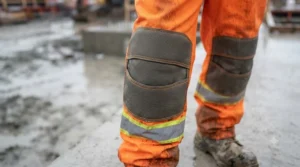
What most buyers overlook is that knee reinforcement — common on work pants generally — is comparatively rare on rain pants specifically, which is a gap worth checking for if your role involves kneeling on wet concrete or rebar mats regularly. When comparing suits, look specifically at gusseted crotches, double-layered knees, and taped shoulder seams rather than trusting a general “heavy duty” label on its own.
Industrial Rain Suit vs Everyday Rain Gear
| Factor | Industrial Rain Suit | Everyday Rain Gear |
|---|---|---|
| Shell material | 300D-420D nylon, PU or PVC coated | Lightweight nylon or polyester, 40D-150D |
| Seam construction | Welded, taped, or double-stitched | Basic single stitching, often unsealed |
| Visibility compliance | ANSI/CSA options available | Rarely certified |
| Typical lifespan (daily use) | 1-3+ seasons | Weeks to one season under heavy use |
| Best For | Construction, utility, industrial crews | Occasional outdoor recreation |
The gap here isn’t marketing spin — it’s material science and construction cost. An everyday rain jacket is optimized for weight and packability because it spends most of its life in a bag, while an industrial rain suit like the Tingley Iron Eagle Rain Suit or Neese Air-Tex Class 3 Rain Suit is engineered for the opposite use case: constant wear, constant flexing, and exposure to abrasive surfaces and job-site chemicals that a hiking shell was never tested against. Paying the premium for a genuine industrial rain suit only makes sense if the wear pattern matches — for someone standing outside a handful of days a season, the everyday category is perfectly adequate and considerably cheaper.
✨ Don’t Miss These Exclusive Deals!
🔍 Take your job-site weather protection to the next level with these carefully selected suits. Click on any highlighted item to check current pricing and availability. The right gear here means fewer rain delays and a crew that actually wants to work through a wet forecast.
High-Visibility ANSI Compliance for Job Site Rainwear
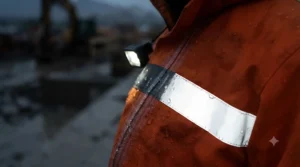
High-visibility ANSI compliance is where rainwear stops being a comfort purchase and starts being a regulatory one. In the United States, the relevant standard is ANSI/ISEA 107-2015, which defines Class 2 and Class 3 garments based on the amount and placement of retroreflective and background material; Class 3 is the highest single-garment tier and is generally required for workers near vehicles or equipment moving faster than roughly 40 km/h. In Canada, the parallel standard most provinces reference is CSA Z96-15, and CCOHS provides a practical breakdown of when high-visibility apparel is required based on factors like traffic speed, low-light conditions, and site complexity — worth reviewing before assuming a non-certified suit is acceptable on a given job.
Among the suits featured here, the Radians RW32 Ripstop Rain Suit, Neese Air-Tex Class 3 Rain Suit, and PIP 353-1000 Class 3 Rain Suit carry full Class 3 certification out of the box. The Viking Journeyman 420D Rain Suit includes reflective safety piping for a visibility boost but doesn’t carry full ANSI certification on its base configuration, so crews with a strict compliance mandate should verify current certification documentation before purchase rather than relying on reflective trim alone. Provincial requirements vary — always confirm your specific jurisdiction’s rules through your employer’s health and safety program or your provincial OHS regulator, since WorkSafeBC’s personal protective equipment guidance illustrates how detailed these provincial standards can get relative to the baseline federal framework.
Practical Usage Guide: Getting the Most from Your Workwear Rain Gear
Good workwear rain gear underperforms constantly for reasons that have nothing to do with the product itself. Here’s how to avoid the common first-30-day mistakes:
Setup and first use: Wash new PU or PVC-coated suits in cold water before first wear to remove manufacturing residue that can trap moisture against the skin. Check every snap, zipper, and Velcro closure before the first job — a stuck zipper on day one only gets worse under load.
Sizing and layering: Size up if you’re layering insulated clothing underneath for cold-weather work, but not so far up that excess fabric catches on ladders or equipment — a genuinely underrated hazard on active sites. Most suits in this guide run true to size, with the noted exception of the smaller Viking sizes.
Maintenance schedule: Rinse mud, cement dust, and chemical residue off PVC and PU coatings at the end of each shift where possible; dried-on grit acts as an abrasive during storage and folding, accelerating coating cracks. Hang-dry rather than machine-dry, since heat degrades PU coatings and adhesive seam tape over repeated cycles.
Storage between uses: Store rain suits loosely rather than tightly folded for months at a time — PVC especially develops crease-line weaknesses that eventually crack under stress at exactly those fold points. A hook or hanger in a dry area beats a compressed bag in a truck box.
Common first-30-day mistakes: Buyers frequently discover leaks at the hood drawstring or cuff closures because they weren’t cinched tight enough, not because of a manufacturing defect — always cinch every adjustment point during the first wear in real rain to confirm the fit actually seals.
Real-World Scenarios: Matching the Suit to the Job
The general contractor overseeing multiple trades: Spends more time walking the site and directing work than performing hands-on labour in sustained downpours, and needs visibility around moving equipment above almost anything else. The Radians RW32 Ripstop Rain Suit fits this role well — full Class 3 certification, reinforced against incidental snags, without the premium price of suits built for extreme daily mobility.
The framer or concrete crew doing physical labour in wet weather: Needs mobility above all else, since restrictive rain gear directly slows down repetitive bending, lifting, and reaching. The Helly Hansen Workwear Gale Rain Suit‘s stretch construction and neoprene cuffs address exactly this pain point, and the extra cost pays for itself in reduced fatigue over a full shift.
The seasonal or budget-conscious small crew: A residential renovation contractor outfitting three or four occasional workers for the wet season doesn’t need premium industrial-grade gear worn daily for years. The TIDEWE Heavy Duty PVC Rain Suit or PIP 353-1000 Class 3 Rain Suit, depending on whether visibility compliance applies, covers this need without overspending on gear that will see limited annual use.
Problem → Solution: Common Rain Gear Pain Points on Site
Problem: Sweating through the suit even though it’s not leaking. Non-breathable PVC and unvented PU coatings trap moisture vapour against the body. Solution: choose a vented option like the Neese Air-Tex Class 3 Rain Suit, or layer moisture-wicking base layers underneath a non-vented suit to manage sweat rather than eliminate it.
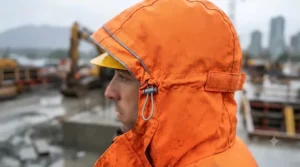
Problem: Water running down the neck despite a hooded jacket. Loose hood drawstrings and gaps at the collar are the usual culprits. Solution: cinch the hood fully and consider a jacket with a fleece-lined collar, like the Viking Journeyman 420D Rain Suit, which seals more snugly than a bare elastic collar.
Problem: Suit cracking or stiffening after one winter in storage. PVC-coated fabrics are particularly prone to cold-weather brittleness and crease damage from tight folding. Solution: store loosely in a temperature-stable area, and for crews facing genuinely cold, wet conditions regularly, budget for a PU-coated option that stays more flexible in the cold.
Problem: Reflective visibility gear failing a site inspection. Reflective trim alone doesn’t equal certification. Solution: verify the garment explicitly lists ANSI/ISEA 107 Class 2 or Class 3, or CSA Z96 compliance, rather than assuming a bright colour or some reflective tape is enough.
Problem: Zipper or snap failure mid-project. Cheap hardware corrodes and cracks under repeated cycling. Solution: prioritize suits with rated hardware, like Tingley’s failure-rated snaps, particularly for gear that gets donned and removed multiple times per shift.
Common Mistakes When Buying Rain Gear for Construction
The most expensive mistake buyers make is treating “waterproof” as a single, comparable spec across every listing — it isn’t, and a high hydrostatic-head number on a spec sheet says nothing about seam quality or hardware durability, which is where most real-world failures actually occur. A second common error is skipping the visibility requirement entirely until an inspector flags it, at which point crews end up buying twice: once for the wrong suit, and again for a compliant replacement.
Buyers also frequently under-budget for crew-wide sizing variance, ordering a single size run and discovering mid-season that several workers need exchanges — a bigger hassle during an active wet stretch than it sounds. Finally, a subtler mistake is prioritizing price per unit without factoring in expected lifespan: a C$70 suit that needs replacing every season can cost more over three years than a C$180 suit that survives all three, which is exactly the kind of total-cost-of-ownership math worth doing before a bulk order goes in.
Long-Term Cost & Maintenance
| Product | Estimated Lifespan (Daily Use) | Approx. Cost Per Season |
|---|---|---|
| TIDEWE Heavy Duty PVC Rain Suit | 1 season | C$70-C$100 |
| PIP 353-1000 Class 3 Rain Suit | 1-2 seasons | C$40-C$70 |
| Viking Journeyman 420D Rain Suit | 2-3 seasons | C$45-C$65 |
| Neese Air-Tex Class 3 Rain Suit | 2-3 seasons | C$60-C$80 |
| Tingley Iron Eagle Rain Suit | 2-4 seasons | C$45-C$70 |
| Radians RW32 Ripstop Rain Suit | 3+ seasons | C$50-C$70 |
| Helly Hansen Workwear Gale Rain Suit | 3+ seasons | C$70-C$95 |
Interpreting this table matters more than the raw numbers themselves. Spread across their realistic lifespans, the premium suits — the Helly Hansen Workwear Gale Rain Suit and Radians RW32 Ripstop Rain Suit — actually land in a similar or lower cost-per-season range than the cheapest entry-level PVC option, because they simply last longer between replacements. That’s the core logic of total cost of ownership: the sticker price tells you what you pay today, not what the gear costs you over its working life. For a contractor outfitting a returning crew year after year, that math consistently favours investing in the mid-to-premium tier rather than repeat-buying budget suits annually.
FAQ
❓ What is the best heavy duty rain suit for construction?
❓ Do construction rain suits need to be ANSI certified?
❓ How long should a commercial grade rain suit last?
❓ What's the difference between PVC and polyurethane rain gear?
❓ Can I wear a regular rain jacket on a construction site instead?
Conclusion
There’s no single best heavy duty rain suit for construction — there’s a best suit for your specific site, your visibility requirements, and how many days a year your crew actually stands in the rain. If chemical exposure is a factor, the Tingley Iron Eagle Rain Suit earns its price. If reinforced durability paired with full ANSI compliance is the priority, the Radians RW32 Ripstop Rain Suit is difficult to beat. Crews chasing all-day comfort and mobility should look hard at the Helly Hansen Workwear Gale Rain Suit, while budget-conscious contractors outfitting seasonal or occasional workers can get real, honest protection from the TIDEWE Heavy Duty PVC Rain Suit or PIP 353-1000 Class 3 Rain Suit without overspending.
What ties every recommendation in this guide together is a simple principle: match the construction — the denier, the seam type, the hardware rating, the visibility certification — to the actual conditions your crew faces, rather than buying on price or brand recognition alone. Do that, and a rainy forecast stops being a reason to lose a work day.
Recommended for You
- 2 Piece Rain Suit Men’s: 7 Top Picks Tested for 2026
- Motorcycle Rain Suit 2026: 7 Picks That Actually Keep You Dry
- Fishing Rain Suit 2026: 7 Truly Waterproof Picks for Canada
Disclaimer: This article contains affiliate links. As an Amazon Associate, I earn from qualifying purchases. If you purchase products through these links, we may earn a small commission at no additional cost to you.
✨ Found this helpful? Share it with your friends! 💬🤗
