In This Article
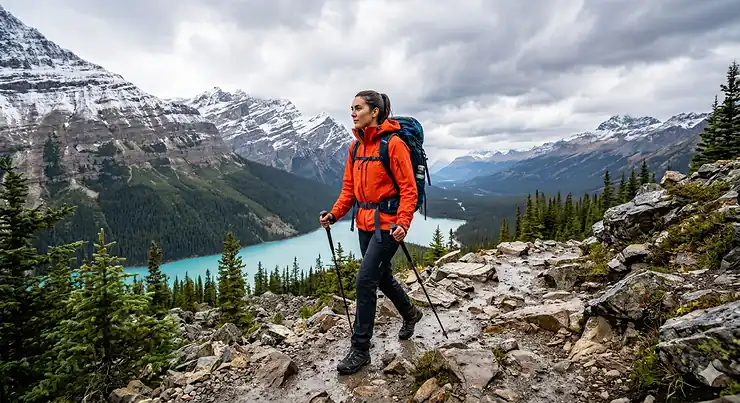
Let’s be honest. Canada doesn’t do “gentle drizzle.” Not in any way a sensible person would plan for. We do February sleet on the Sea-to-Sky Highway. We do sideways rain on the Cabot Trail in April. We do late-September snowstorms above treeline in the Rockies that arrive with zero apology and zero warning. This is the country where “nice spring day” can pivot to “horizontal ice pellets” before you’ve finished your Tim Hortons. If your rain jacket can’t handle that reality, it isn’t a rain jacket — it’s a damp cotton suggestion.
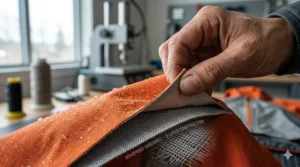
That’s precisely why a bombproof hardshell rain jacket is one of the most important gear purchases a Canadian can make. Not just any waterproof layer — a hardshell specifically, meaning a fully waterproof, seam-taped, windproof shell built to perform in sustained, severe weather rather than just a light commuter shower. The difference matters enormously when you’re two hours into a ridgeline scramble outside Squamish and the sky turns black.
In this guide, I’ve researched and reviewed seven of the most durable rain jackets currently available on Amazon.ca in 2026. These aren’t products I’ve cherry-picked based on affiliate payout — they’re the shells that consistently appear at the top of expert testing lists, earn glowing feedback from Canadian outdoor enthusiasts, and are built with the kind of extreme durability testing and reinforced high-wear areas that turn a jacket into a lifetime investment piece.
What is a bombproof hardshell rain jacket? It’s a fully waterproof, windproof, and breathable outer shell constructed with a minimum 3-layer laminate (or equivalently robust 2.5-layer with full seam taping), rated to withstand sustained downpours, high winds, and abrasive alpine conditions — unlike lighter “rain jackets” designed only for casual use. The word “bombproof” in the gear world specifically means the shell won’t fail when conditions get genuinely brutal.
All prices in this guide are in Canadian dollars (CAD). Products were verified available on Amazon.ca at the time of writing. Prices change constantly — I’ll give you ranges rather than exact figures, because nothing ages faster than a price tag.
Quick Comparison: Top 7 Bombproof Hardshell Rain Jackets in Canada (2026)
| Jacket | Membrane | Construction | Weight (approx.) | Price Range (CAD) | Best For |
|---|---|---|---|---|---|
| Arc’teryx Beta AR | Gore-Tex PRO ePE | 3-layer hybrid | ~430 g | $$$$ (High) | All-round alpine, skiing, climbing |
| Arc’teryx Alpha SV | Gore-Tex PRO | 3-layer | ~495 g | $$$$ (Ultra) | Severe alpine/expedition use |
| Arc’teryx Beta SV | Gore-Tex PRO ePE | 3-layer | ~450 g | $$$$ (High) | Severe weather versatility |
| Patagonia Torrentshell 3L | H2No 3L | 3-layer | ~400 g | $$ (Mid) | Everyday use, commuting, hiking |
| Marmot Minimalist | Gore-Tex Paclite | 2.5-layer | ~370 g | $$ (Mid) | Hiking, backpacking, travel |
| Black Diamond Fineline Stretch | BD.dry 2.5L | 2.5-layer stretch | ~265 g | $$ (Mid) | Climbing, fast-and-light alpinism |
| Mountain Hardwear Stretch Ozonic | Dry.Q Active | 2.5-layer stretch | ~390 g | $$$ (Mid-High) | High-output, technical movement |
The table above makes one thing instantly clear: the Arc’teryx family dominates the bombproof end of the spectrum. If you need genuine alpine armour, their Gore-Tex PRO ePE construction is in a different category from anything below $500 CAD. That said, the Patagonia Torrentshell 3L is the great equaliser — impressively close to hardshell performance at a fraction of the price, making it the smart choice for most Canadian hikers who aren’t summiting glaciated peaks every weekend. Budget buyers should understand that 2.5-layer options like the Marmot Minimalist trade some long-term durability for price — a worthwhile compromise for weekend warriors, but not for anyone planning to punish their jacket daily in abrasive conditions.
💬 Just one click — help others make better buying decisions too! 😊
✨ Don’t Miss These Exclusive Deals!
🔍 Ready to stay dry on every Canadian adventure? Click any highlighted product name to check current pricing and availability on Amazon.ca. These are the most durable rain jackets tested and trusted by outdoor enthusiasts across Canada.
Top 7 Bombproof Hardshell Rain Jackets: Expert Analysis
1. Arc’teryx Beta AR Jacket — The All-Rounder That Earns Its Price Tag
If there’s one jacket that defines the phrase “bombproof hardshell rain jacket” in 2026, it’s the Beta AR. The “AR” stands for All Round, and Arc’teryx means it. This is the shell you grab when your day involves skiing in the morning, a ridgeline scramble in the afternoon, and a wet hike back to the truck at dusk — in whatever weather BC decides to throw at you.
The standout technology here is the hybrid Gore-Tex PRO ePE construction: a heavier, more abrasion-resistant face fabric (40D/70D) on the shoulders, yoke, and arms where pack straps grind, combined with a slightly lighter version on the body. In practice, this means the jacket handles pack-strap abuse that would wear through lesser shells within a season. The PFAS-free ePE membrane — Gore’s environmental pivot away from traditional fluoropolymers — delivers the same legendary waterproofing without the chemical controversy. For Canadian buyers, this matters: Environment and Climate Change Canada has been increasingly stringent on per- and polyfluoroalkyl substances in consumer products.
Who is this for? The Canadian outdoor enthusiast who treats their jacket as a long-term investment rather than a seasonal purchase. Yes, it sits in the $850–$1,000+ CAD range on Amazon.ca. But consider the cost-per-use: if you’re out every weekend for ten years, you’re paying cents per outing for genuinely indestructible rain gear. Canadian reviewers consistently praise the articulated patterning, which gives full arm mobility without the jacket riding up — crucial when you’re reaching for alpine holds or pole-planting on a ski descent.
✅ Hybrid PRO ePE fabric balances durability where it counts
✅ Fully featured: helmet-compatible StormHood, pit zips, internal pockets
✅ PFAS-free — better for Canada’s environmental commitments
❌ Stiff, crinkly feel until well broken in
❌ Price point is eye-watering for casual hikers
Value verdict: In the high CAD range, but built to outlast three cheaper jackets. Prime-eligible on Amazon.ca.
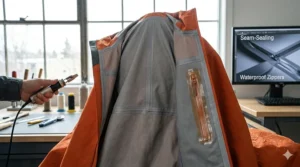
2. Arc’teryx Alpha SV Jacket — The Most Indestructible Rain Gear Money Can Buy
The Alpha SV is not for the casual weekend hiker. Let’s get that straight immediately. This is the jacket guides, ski patrollers, and mountaineers reach for when conditions are genuinely dangerous — the kind of severe weather where your shell failing isn’t an inconvenience, it’s a safety emergency.
The “SV” designation means Severe Weather, and Arc’teryx builds it with zero compromise. The Gore-Tex PRO construction uses the heaviest available face fabric in the Beta/Alpha lineup, making it the most durable option in this entire guide. What does that mean in Canadian conditions? It means this jacket shrugs off four-hour spindrift sessions above the snowline in the Monashees, and still looks nearly new. The reinforced high-wear areas across the shoulders and elbows are built for repeated crampon and rope contact — details that matter to climbers in the Canadian Rockies, but pure overkill if you’re doing day hikes in Gatineau Park.
The feature set is alpine-focused and deliberately so: a massive helmet-compatible hood with one-handed adjustment, harness-compatible hem pockets, and gusseted underarms for full reach. There are no hand pockets — a sacrifice made for weight and harness compatibility. Canadian alpinists will understand. Urban commuters will not.
Customer feedback from Canadian buyers is consistently reverent. The recurring theme: “I’ve had it for six years and it looks brand new.” That’s the story of a lifetime investment piece. Available in the ultra-high CAD range on Amazon.ca; Prime shipping available.
✅ Most extreme durability of any jacket in this guide
✅ One-handed storm-hood adjustment is a game-changer in severe conditions
✅ Made in Canada — Arc’teryx’s Vancouver roots run deep
❌ No hand pockets — a deliberate alpine design choice, but annoying for everyday carry
❌ Overkill and over-budget for most recreational users
Value verdict: Ultra-premium CAD investment. Justified only if you’re genuinely pushing into alpine terrain regularly.
3. Arc’teryx Beta SV Jacket — The Newly Reborn Severe-Weather All-Rounder
Arc’teryx quietly reintroduced the Beta SV in February 2026 after a three-year hiatus, and the outdoor community noticed immediately. This is the jacket that sits between the Alpha SV’s climbing-specific design and the Beta AR’s versatility — offering severe-weather protection without sacrificing the convenience features everyday Canadian users actually want, like hand pockets.
The Gore-Tex PRO ePE construction matches the Beta AR’s PFAS-free credentials, but adds a heavier overall build for more sustained harsh-condition use. Think of it as the Beta AR’s more serious sibling: same versatility philosophy, dialled up a notch in terms of protection. The two-way front zipper — a detail the Alpha SV lacks — lets you open from the bottom for extra ventilation during high-output climbs, which matters enormously on the humid trails of Pacific Rim National Park or during a long skin track in the Purcells.
Who should choose the Beta SV over the Beta AR? Anyone whose “all-round” activities regularly involve prolonged exposure to driving rain, strong winds, or mixed precipitation — backcountry skiers, alpine hikers, or people living in consistently wet Canadian climates like Vancouver Island or coastal Newfoundland. The extra durability margin is worth the slightly higher price premium over the AR.
Early Canadian reviewers (it was only released a few months ago) are calling it the best all-round severe-weather shell the brand has made. Available in the high CAD range on Amazon.ca, Prime-eligible.
✅ Severe-weather durability with everyday versatility (hand pockets, two-way zip)
✅ Newly updated 2026 model — current technology
✅ PFAS-free Gore-Tex PRO ePE membrane
❌ Very new to market — long-term durability data still accumulating
❌ Price nearly matches the Alpha SV without the prestige factor
Value verdict: High CAD range, but arguably the most well-rounded jacket in this guide for serious Canadian weather.
4. Patagonia Torrentshell 3L Jacket — The Canadian Everyman’s Hardshell
Here’s a radical thought: you don’t have to spend $900 CAD to own genuinely excellent heavy-duty hardshell rain protection. The Patagonia Torrentshell 3L has been quietly proving this for years, and in 2026 it remains one of the most respected waterproof jackets at any price point.
The secret is the 50-denier face fabric — substantially thicker and more hardwearing than the thin shells typically found in this price range ($250–$280 CAD on Amazon.ca). That burly construction gives it a nearly hardshell-like experience for most three-season Canadian conditions. Patagonia bonds a moisture-wicking tricot backer directly to the waterproof membrane, which eliminates the clammy, plastic-bag interior feel that plagues budget rain gear. The result is a jacket that works beautifully for everything from soggy Halifax autumn commutes to Canadian Rockies shoulder-season hikes — which covers probably 80% of what most Canadians actually do in the rain.
What it isn’t: an alpine jacket. The Torrentshell’s 50D fabric is impressively durable for the price, but it doesn’t have the reinforced high-wear zones of the Beta AR. Put it through a week of glacier travel with crampons and rope drag, and you’ll feel the difference. Put it through five years of Vancouver Island camping, trail hiking, and ferry rides in the rain, and it’ll still look excellent.
Patagonia’s lifetime environmental guarantee and recycled-material construction resonate strongly with the eco-conscious Canadian consumer. The H2No 3-layer membrane is 100% PFC-free DWR, consistent with Canada’s environmental standards. Canadian reviewers overwhelmingly rate it as the best rain jacket under $300 CAD available on Amazon.ca. Prime-eligible, ships coast to coast.
✅ Hardshell-like protection at a fraction of the cost
✅ Excellent durability for the price — 50D face fabric is notably tough
✅ Recycled materials, PFC-free DWR — strong sustainability credentials
❌ Stiff and crinkly out of the box; loosens with wear
❌ Not designed for technical alpine use or high-abrasion scenarios
Value verdict: Best value hardshell on Amazon.ca for everyday Canadian use. Strong mid-range CAD buy.
5. Marmot Minimalist Jacket (Gore-Tex Paclite) — The Trail-Tested Classic
The Marmot Minimalist has been a fixture in Canadian outdoor gear closets for over a decade, and for good reason. It threads the needle between packability and genuine weather protection better than almost anything else in the $280–$320 CAD range.
The Gore-Tex Paclite construction is a 2.5-layer design — slightly less durable over multi-year heavy use compared to the 3-layer options above, but substantially more breathable and packable than its price suggests. The face fabric is made from 100% recycled polyester, an important detail for buyers who care about supply chain transparency under Canadian competition standards. Marmot built this jacket with a refreshingly minimal feature set: a solid, adjustable hood that genuinely stays put in high winds (tested in serious North Shore trail conditions), clean pocket layout, and a relaxed fit that accommodates layering — which is essential if you’re wearing it over a down mid-layer during Canadian spring or autumn trips.
What most buyers overlook about the Minimalist is the DWR longevity. It refreshes easily with a tumble-dry cycle and holds its water-beading ability remarkably well even after two or three seasons of regular use. This isn’t something you’ll learn from the Amazon.ca product listing — it’s the kind of thing you discover after hiking through Nova Scotia fog for 30 days straight.
The 2025 update switched to Pertex Shield Revolve in some versions — worth noting when purchasing. Verify the Gore-Tex Paclite variant if that membrane matters to you. Available on Amazon.ca, Prime-eligible.
✅ Gore-Tex waterproofing at an accessible CAD price point
✅ Packable into its own hood — great for Canadian shoulder-season trips
✅ 100% recycled face fabric — Canadian environmental values aligned
❌ 2.5-layer less durable than 3-layer options for sustained alpine use
❌ Some versions now use Pertex Shield instead of Gore-Tex — verify before purchasing
Value verdict: Solid mid-range CAD buy for Canadian hikers and backpackers who value packability over extreme durability.
6. Black Diamond Fineline Stretch Shell — The Climber’s Secret Weapon
If you’ve ever tried to move freely in a stiff rain jacket while reaching for a crack at 5.9 on a granite wall above Squamish, you’ll immediately understand why the Black Diamond Fineline Stretch exists. This jacket solves a problem most hardshells ignore: freedom of movement.
The BD.dry 2.5L membrane is Black Diamond’s in-house waterproof system, and while it doesn’t quite match Gore-Tex Pro in raw waterproofing durability, it performs impressively in the moderate-to-heavy rain scenarios that cover most Canadian climbing days. The real differentiator is the two-way stretch face fabric — unlike any other jacket on this list, the Fineline moves with your body rather than fighting it. For climbers, mountaineers, or fast-and-light trail runners navigating the kind of mixed alpine terrain common in the Canadian Rockies or Coastal Mountains, this is a revelation.
At around $280–$320 CAD on Amazon.ca, it’s also the lightest jacket in this guide by a significant margin (approximately 265–270 g). It packs into its own chest pocket, which makes it ideal for routes where you need to stash the shell mid-pitch when the sun appears. The helmet-compatible hood is clean and precise. Canadian climbers who’ve used it consistently note that it handles a full day of moving-terrain use without the clammy discomfort of heavier shells.
It won’t replace a bomber hardshell for sustained severe-weather camping, but as a technical climbing shell or active-use layer, nothing else in this guide touches it.
✅ Best freedom of movement of any jacket reviewed here
✅ Lightest option — ideal for fast-and-light Canadian alpine routes
✅ Packs into its chest pocket for easy carry
❌ Less durable long-term than 3-layer Gore-Tex options
❌ Not ideal for sustained severe-weather or expedition use
Value verdict: Excellent mid-range CAD buy for climbers and high-output outdoor athletes.
7. Mountain Hardwear Stretch Ozonic Jacket — The Underrated All-Day Workhorse
The Mountain Hardwear Stretch Ozonic occupies a curious sweet spot in the market that most buyers overlook because it doesn’t carry a Gore-Tex label. That’s their loss. Mountain Hardwear’s Dry.Q Active stretch membrane delivers breathability numbers that rival — and in some high-output scenarios, beat — standard Gore-Tex, while the stretch face fabric rivals the Black Diamond Fineline for mobility.
What sets the Ozonic apart from the Fineline is the feature set: real pit zips (gloriously long ones), hand pockets that stay dry in heavy rain, and a more substantial build that handles multi-day use better. In Canadian terms, this is the jacket for the BC Interior weekend warrior who skins 1,200 metres of vertical, transitions at the ridge in driving sleet, then skis down in whatever the mountain decides to throw. The stretch fabric means zero restricted movement on the uptrack, and the Dry.Q Active membrane keeps perspiration moving outward fast enough that you don’t emerge from the treeline soaked from the inside.
At around $350–$420 CAD on Amazon.ca, the Stretch Ozonic slots into the mid-high range — more than the Patagonia Torrentshell, less than the Arc’teryx family. Canadian reviewers who ski tour or do technical trail running consistently rank it as one of the most comfortable active-use jackets available, with several noting it’s the jacket they grab on non-waterproof days just for the fit.
✅ Outstanding breathability for high-output Canadian activities
✅ Pit zips and full feature set — practical for all-day mountain use
✅ Stretch construction rivals Arc’teryx for movement freedom
❌ Dry.Q Active doesn’t match Gore-Tex PRO in extreme sustained waterproofing
❌ Less name recognition can make resale value lower
Value verdict: Mid-high CAD range. Best active-use value in the guide for skiers, trail runners, and technical hikers.
How to Choose a Bombproof Hardshell Rain Jacket in Canada: A Practical Framework
Choosing the most durable rain jacket for Canadian conditions isn’t about buying the most expensive option. It’s about matching the jacket to your actual use case. Here’s a numbered framework that cuts through the marketing:
1. Identify your worst-case scenario. Are you day hiking in Ontario’s Bruce Peninsula or doing multi-day alpine routes in the Selkirks? The gap between those two use cases is enormous. Match your jacket to your actual worst day, not your average day.
2. Understand layer count. 3-layer construction (face fabric + membrane + backer laminated together) is more durable and less clammy than 2.5-layer (face fabric + membrane + printed interior coating). For sustained heavy use or alpine conditions, always choose 3-layer.
3. Check the membrane. Gore-Tex remains the most tested and trusted waterproof membrane on the market, but proprietary systems like Mountain Hardwear’s Dry.Q Active and Black Diamond’s BD.dry perform competitively in most conditions. Gore-Tex PRO ePE is the gold standard for durability.
4. Weight the reinforced high-wear areas. If you’re using a backpack, check whether the jacket has reinforced shoulders and yoke. Pack straps destroy thin shell fabric over time. The Beta AR’s hybrid construction exists specifically to solve this problem.
5. Check Amazon.ca availability and warranty terms. Some US brands offer warranties that are harder to claim from Canada. Arc’teryx, Patagonia, and Marmot all have Canadian service centres and honour warranties without cross-border complications.
6. Factor in Canadian climate specifics. Cold temperatures reduce membrane breathability. Gore-Tex PRO ePE maintains more consistent breathability at -10°C than older membranes — crucial for Canadian winter shoulder-season use. Plan accordingly.
7. Don’t overlook DWR maintenance. Even the most indestructible rain gear fails when the DWR (Durable Water Repellent) coating degrades. A $5 can of Nikwax TX.Direct and a tumble-dry cycle restores performance on any jacket. This is the most underused maintenance tip in Canadian outdoor culture.
Real Canadian Buyers: Who Should Choose Which Jacket
Understanding the specs is one thing. Knowing which jacket fits your life is another. Here are three Canadian profiles matched to the best option on this list.
Profile 1: The Vancouver Island Trail Runner / Weekend Backpacker. You’re doing the North Coast Trail or Juan de Fuca Marine Trail — sustained coastal rain, pack weight matters, and you’re moving fast. Your jacket: the Marmot Minimalist or Black Diamond Fineline Stretch. Both pack down small, breathe well under exertion, and handle Pacific rain without turning you into a sauna. Budget: $280–$320 CAD. The Fineline wins if you value mobility; the Minimalist wins if you want the Gore-Tex name on the label.
Profile 2: The Calgary Ski Tourer / Alpine Climber. You’re skinning ridgelines in Kananaskis and doing technical terrain in the Ghost Wilderness. Wind chill matters as much as rain protection, and your jacket needs to layer over a puffy without restricting arm movement. Your jacket: the Arc’teryx Beta AR or Beta SV. The extra CAD investment is justified here — these jackets genuinely outperform everything else in sustained alpine conditions. The Beta SV is the better pick if your days frequently push into severe weather; the Beta AR is more versatile for mixed conditions.
Profile 3: The Ottawa / Halifax Everyday Adventurer. You hike on weekends, commute by bike in shoulder seasons, and want one jacket that handles everything from the Gatineau Hills to Kejimkujik trails. Budget is real. Your jacket: the Patagonia Torrentshell 3L, without question. It’s the best hardshell-class protection available in the mid-range CAD tier, performs beautifully in four-season eastern Canadian conditions, and looks good enough to wear off-trail.
What “Extreme Durability Testing” Actually Means for Hardshells
The phrase “extreme durability testing” gets thrown around in gear marketing constantly. Here’s what it actually means — and what it means specifically for Canadian buyers.
Independent labs like Bureau Veritas and SGS test hardshell fabrics using three primary metrics: hydrostatic head pressure (how much water pressure the fabric resists before leaking — anything above 20,000mm is genuinely bombproof), abrasion cycles (how many Martindale abrasion cycles before the face fabric wears through — Gore-Tex PRO fabrics typically exceed 50,000 cycles), and seam tape strength (delamination resistance under repeated flexing and UV exposure). evo Canada’s technical guide to Gore-Tex covers the membrane technology in accessible detail if you want to go deeper.
In practice for Canadian buyers: a jacket with a 28,000mm+ hydrostatic head rating and full seam taping will keep you dry in any weather Canada produces. A jacket with only 10,000mm and taped critical seams — common in budget shells — will eventually fail in sustained rain. Sustained is the key word. Most budget rain jackets handle a 20-minute shower fine. They fail in a four-hour downpour on the West Coast Trail.
Reinforced high-wear areas matter more than most buyers realise. The shoulders and elbows take 80% of the abrasion punishment in any active-use jacket. A jacket without reinforcement in these zones — no matter how impressive the membrane specs — will develop pinholes and delamination within two to three seasons of heavy use. This is the single biggest differentiator between lifetime investment pieces and disposable outdoor fashion.
Hardshell vs. Rain Jacket: The Difference That Matters in Canadian Conditions
Canadians lose a lot of money buying rain jackets when what they actually need is a hardshell. The distinction is real and consequential.
| Feature | Hardshell | Standard Rain Jacket |
|---|---|---|
| Construction | 3-layer laminate | 2- or 2.5-layer typically |
| Waterproofing durability | Long-term (5–10+ years) | Short-to-medium term |
| Windproofing | Near-total | Partial |
| Breathability | Active-use optimised | Moderate |
| Weight | Heavier | Lighter |
| Price range (CAD) | $280–$1,100+ | $80–$300 |
| Best for | Alpine, sustained severe weather | Commuting, casual hiking |
The core difference is simple: hardshells are engineered for environments where the jacket cannot fail. They cost more because they’re built to a higher standard. Standard rain jackets are built for convenience and value — perfectly adequate for most urban Canadian use, but genuinely inadequate for backcountry conditions where getting soaked isn’t an inconvenience but a hypothermia risk.
If you’re hiking, skiing, or climbing in any Canadian environment where the conditions can turn severe without warning — and that describes most of our national parks — a hardshell is the correct choice. The extra CAD investment is not luxury. It’s risk management.
The Patagonia Torrentshell 3L is the honourable exception: its 3-layer construction and 50D face fabric blur the hardshell/rain jacket line in a way that makes it functionally competitive with true hardshells for most Canadian recreational use, at a significantly lower price.
Long-Term Cost and Maintenance: Getting the Most From Your Hardshell in Canada
A $900 CAD Arc’teryx Beta AR sounds expensive until you calculate the true cost of ownership over a decade. Most Canadian gear buyers replace budget rain jackets every two to three years — that’s $600–$900 CAD spent on three mediocre jackets when one premium hardshell would have served better and longer. The math on indestructible rain gear tends to favour the upfront investment.
That said, even the most durable jacket needs maintenance. Canada’s specific conditions — road salt in winter urban use, UV exposure at high altitude, repeated machine washing — accelerate DWR degradation faster than temperate climates. Here’s a simple maintenance protocol that extends hardshell life significantly:
- Wash regularly with technical cleaner (Nikwax Tech Wash or equivalent) — never use regular detergent, which clogs membrane pores
- Restore DWR every 8–10 washes with a spray-on treatment and tumble-dry at low heat for 15 minutes — the heat reactivates the DWR finish
- Store loosely rather than compressed — long-term stuffing in a stuff sack stresses membrane lamination at fold points
- Avoid dry cleaning — solvents destroy waterproof membranes
- Inspect seam tape annually — particularly at underarms and hem where flex stress concentrates
Follow this protocol and a quality hardshell becomes a genuinely lifetime investment piece, outlasting the brands that sell you a new jacket every two years on planned obsolescence cycles.
✨ Don’t Miss These Exclusive Deals!
🔍 Ready to invest in gear that lasts? Click any product name in this guide to check current pricing on Amazon.ca and find the hardshell that fits your life.
Common Mistakes When Buying a Hardshell Rain Jacket in Canada
Even experienced outdoor enthusiasts make these purchasing errors. Avoid them.
Mistake 1: Buying based on waterproofing rating alone. A 20,000mm hydrostatic head number tells you about the membrane. It tells you nothing about seam tape quality, DWR durability, or fabric abrasion resistance — the factors that determine real-world longevity. Always check construction layer count and seam tape coverage alongside the membrane spec.
Mistake 2: Ignoring breathability in Canadian conditions. Cold temperatures reduce membrane breathability. A jacket that breathes well at 15°C will feel significantly stuffier at -5°C. Gore-Tex PRO ePE and Dry.Q Active maintain more consistent performance across temperature ranges than older or cheaper membranes. If you’re skiing or skinning in Canadian winters, breathability matters more than most people expect.
Mistake 3: Overlooking Amazon.ca vs. Amazon.com pricing differences. Some hardshells listed on Amazon.com don’t ship to Canada, or ship at prices inflated by customs and brokerage fees that aren’t visible until checkout. Always verify on Amazon.ca directly. Arc’teryx, Patagonia, Marmot, Black Diamond, and Mountain Hardwear all have strong Amazon.ca presence in 2026.
Mistake 4: Buying too small for layering. Most Canadian hardshell use involves layering — a merino base and a down or fleece mid-layer underneath. A jacket that fits perfectly over a t-shirt will be uncomfortably tight over a puffy in the Rockies in October. Size up at least one size from your normal fit if you plan to layer significantly.
Mistake 5: Neglecting the hood. In genuinely severe Canadian weather, the hood is as important as the jacket body. A poorly designed hood that doesn’t seal against the face in high wind turns a great jacket into a wet collar experience. Look for a helmet-compatible, three-way adjustable hood with a stiff brim — the Arc’teryx StormHood design remains the industry benchmark.
FAQ: Your Top Questions About Bombproof Hardshell Rain Jackets in Canada
❓ What is the most durable rain jacket available on Amazon.ca in 2026?
❓ Is Gore-Tex worth the extra cost for Canadian conditions?
❓ Can I use a hardshell rain jacket for skiing in Canadian winters?
❓ Does Amazon.ca ship hardshell jackets to remote or northern Canadian addresses?
❓ How do I know when my DWR coating needs refreshing on a hardshell jacket?
Conclusion: The Best Bombproof Hardshell Rain Jacket for Canada in 2026
Canada’s weather doesn’t negotiate. Neither should your outerwear.
After reviewing seven of the best options currently available on Amazon.ca, the clear hierarchy is this: if budget is no object and you’re doing genuine alpine work, the Arc’teryx Beta AR or the newly released Beta SV represent the pinnacle of bombproof hardshell rain jacket engineering in 2026. The Alpha SV is in a class by itself for severe alpine expeditionary use, but it’s overkill — and over-budget — for most recreational Canadian users.
For the vast majority of Canadians who hike, camp, ski, and commute through genuinely miserable weather without summiting technical routes, the Patagonia Torrentshell 3L is the honest best answer. It delivers hardshell-class protection at a mid-range CAD price, holds up to years of Canadian weather punishment, and is genuinely excellent in every condition short of an alpine sufferfest.
The Black Diamond Fineline Stretch and Mountain Hardwear Stretch Ozonic earn strong recommendations for active users who prioritise movement over maximum weather armour.
Whatever you choose, remember: a hardshell is a tool. Maintain it properly, match it to your actual use case, and it will return the investment many times over in dry, comfortable Canadian adventures.
✨ Don’t Miss These Exclusive Deals!
🔍 Use the links throughout this guide to check current pricing on Amazon.ca. Your next great Canadian outdoor adventure starts with staying dry — click any product name above to get started.
Recommended for You
- Hardshell vs Softshell Jacket: 7 Top Picks for Canada (2026)
- 7 Best Hardshell Rain Jackets Canada 2026
- 2.5 Layer Jacket Pros and Cons: 7 Best Picks for Canada 2026
Disclaimer: This article contains affiliate links. As an Amazon Associate, I earn from qualifying purchases. If you purchase products through these links, we may earn a small commission at no additional cost to you.
✨ Found this helpful? Share it with your friends! 💬🤗
