

In This Article
Anyone who has waited for a bus in Halifax in November knows the particular flavour of misery. It isn’t the cold alone, and it isn’t the wet alone. It’s the marriage of the two: a slush puddle at the kerb, a 2°C wind off the harbour, and ordinary rubber boots that turn your toes into ice cubes by minute twenty. That gap is exactly what insulated rain boots for cold rainy weather exist to close.
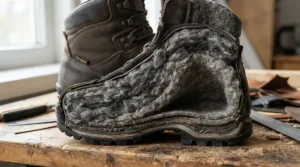
Most advice misses it. Winter boot guides assume dry, squeaky snow. Rain boot guides assume a mild drizzle. Real Canadian weather loves the messy middle: freezing rain, wet snow, a thaw, then a flash freeze. Your feet live in that middle, so your research should too.
Canada’s occupational-health agency is blunt about the stakes. The Canadian Centre for Occupational Health and Safety explains that footwear for cold conditions has to be designed for the elements, and it recommends insulated boots plus extra insulation around the legs and ankles. Warm, dry feet aren’t a luxury. They’re basic protection.
This guide covers seven real boots, from budget to premium. It explains what temperature ratings do and don’t tell you, how thermal lining materials differ, and how layering socks for cold boots can change your whole day. It also looks at kids rain boots and rain-to-snow transition footwear. Everything below comes from spec sheets and aggregated reviewer sentiment, not from boots I’ve worn. Prices are ranges in CAD, so check current prices before you buy.
Quick Comparison Table: Insulated Rain Boots for Cold Rainy Weather
Here’s the fast version before the deep dive. Ratings are the manufacturers’ or retailers’ listed comfort ratings, not guarantees.
| Boot | Insulation | Listed Cold Rating | Best For |
|---|---|---|---|
| Bogs Classic II | 7 mm Neo-Tech neoprene | -30°C to -40°C (-22°F to -40°F), by version | Wet-cold commuting and dog walks |
| Muck Boot Arctic Sport II | 5 mm neoprene + fleece + thermal foam | -40°C (-40°F) claimed | Long, low-movement outdoor days |
| Kamik Timber Hi | 5 mm neoprene | -30°C to -32°C | Mid-range Canadian value |
| Kamik Forester | Synthetic insulated lining | -40°C (-40°F) listed | Budget buyers, chores |
| Dryshod Arctic Storm | 5 mm Densoprene foam | Marketed for extreme cold | Standing-around cold |
| Hunter Play Insulated Short | Insulated lining | -5°C (23°F) | Shoulder-season slush |
| Bogs Kids Classic II | 7 mm Neo-Tech neoprene | -34°C (-30°F) | School-age kids |
Reading across the table, the Bogs Classic II and Muck Boot Arctic Sport II sit at the warm end, while the Hunter Play Insulated Short is clearly a milder-weather pick. The Kamik Forester undercuts nearly everything on price, though its listed rating deserves a sceptical eye. Match the rating to how much you actually move: a number earned while hiking doesn’t hold up at a hockey rink.
💬 Just one click: help others make better buying decisions too! 😊
Top 7 Insulated Rain Boots for Cold Rainy Weather: Expert Analysis
Each pick below gets the same treatment: what the specs mean in practice, who it suits, and what reviewers consistently report. Where I couldn’t verify a solid review pool, I say so.
1. Bogs Classic II — 7 mm of neoprene, the thickest in this lineup
The headline is the 7 mm Neo-Tech lining, noticeably thicker than the 5 mm common among rivals. The shell is hand-lasted rubber over a four-way stretch bootie, with a moisture-wicking lining and a nylon shank for midfoot support. Depending on the version, the listed comfort rating runs from -34°C to -40°C.
On paper, that extra millimetre or two of closed-cell foam is why this boot earns its rating where thinner neoprene doesn’t. The shank matters too, because it makes the boot walkable rather than floppy. There’s no removable liner, so drying means airing it out and rotating pairs. It suits commuters, dog walkers and anyone in stop-start movement through wet cold.
Reviewers consistently describe it as warm and surprisingly light for its height. Outdoor reviewers call it a toasty, waterproof option for mud, slush and frigid days.
Pros:
- ✅ Thickest neoprene in this group
- ✅ Light for the warmth it delivers
- ✅ Supportive shank for all-day walking
Cons:
- ❌ No removable liner for quick drying
- ❌ Fit and calf width vary by version
Expect roughly C$150-C$200 depending on height and version, which is strong value for a boot that earns its rating.
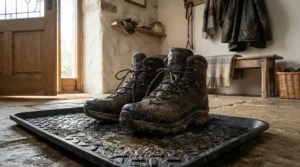
2. Muck Boot Arctic Sport II — fleece-lined comfort for long, still days
This boot stacks three heat-keepers. There’s 5 mm neoprene, a fleece lining, and, on the Mid version, 2 mm of thermal foam under the footbed. The brand claims comfort down to -40°C (-40°F), and the stretchy bootie flexes more than a stiff rubber shell.
Here’s the catch the marketing skips. One outdoor-gear tester found it warm into the single-digit Fahrenheit range (roughly -15°C), well short of the headline claim. That’s still excellent for a rubber boot, but the number is a ceiling, not a promise.
The foam footbed insulation addresses the part of your boot that touches frozen ground, which is where most “insulated” boots quietly fail. This is a strong pick for anyone who stands still outdoors: rink-side parents, snow clearing, outdoor markets.
Aggregated reviews skew favourable, with testers praising warmth and an easy-pull-on feel.
Pros:
- ✅ Fleece plus foam footbed insulation
- ✅ Flexible, comfortable neoprene bootie
- ✅ Available in mid and tall heights
Cons:
- ❌ Claimed rating exceeds tested comfort
- ❌ Priciest mainstream option here
Expect around C$200-C$270. It’s worth it for stationary cold, harder to justify for a short commute.
3. Kamik Timber Hi — Canadian-brand neoprene in the sweet spot
This one is built around a direct-injected rubber shell and 5 mm neoprene insulation, with a BLOOM EVA foam midsole and reflective details. Retail listings rate it to -30°C for women’s and youth sizes, and about -32°C for men’s. The women’s pair weighs roughly 1.6 kg (about 3.6 lb).
In practice, a -30°C rating on 5 mm neoprene is realistic for walking and commuting, less so for standing. Reflective details are a quiet bonus on dark, rainy evenings when drivers can’t see you. Kamik is a Canadian brand, and reviewers on Canadian retail sites often cite its rubber quality.
Honest caveat: the review pool I found for this specific model was tiny and mixed, so I can’t give you a confident sentiment read. Treat it as a spec-driven pick.
Pros:
- ✅ Rated to -30°C or better
- ✅ Reflective details for dark commutes
- ✅ Available in adult and youth sizes
Cons:
- ❌ Few verified reviews to lean on
- ❌ Thinner insulation than the Bogs
Expect around C$110-C$130, a fair price for what’s on paper a solid mid-range boot.
4. Kamik Forester — the made-in-Canada budget workhorse
The pitch is simple: insulated, waterproof, knee-high rubber, made in Canada, and resistant to oil and acid. Listings put its rating at -40°C (-40°F) with a synthetic lining, and one retailer lists the pair at just over 2 kg.
That rating deserves a pinch of salt. A reviewer of Kamik’s related Kamik Tundra found it comfortable only down to about -9°C (15°F) despite a -40 claim, so budget insulated rubber boots tend to overpromise. Think of the Kamik Forester as a solid sub-zero slush boot, not an arctic expedition boot.
Reviewers who own it describe it as very warm for dog walks and note it lasts, with at least one calling it their second pair.
Pros:
- ✅ Lowest price in this lineup
- ✅ Knee-high coverage keeps slush out
- ✅ Made in Canada
Cons:
- ❌ Rating likely optimistic for stationary use
- ❌ Heavier and plainer than neoprene rivals
Expect roughly C$80-C$110. For chores and dog walks, it’s hard to beat.
5. Dryshod Arctic Storm — water-shedding exterior, serious foam inside
The standout is the combination of 5 mm Densoprene foam bootie and a Hydrokote water-repellent finish, so water rolls off and dries quickly. It adds a four-way stretch airmesh lining and a roll-down calf. A kids’ version exists too.
Quick-drying exteriors matter more than they sound. A boot that stays wet on the outside keeps stealing heat through evaporation, which is why this finish helps in freezing drizzle. The brand markets it for extreme cold, and one owner reported warm feet in a windchill around -55 with good wool socks.
The recurring complaint is calf fit. Women with wider calves describe struggling to pull the boot all the way up, and the Canadian review pool is small, so weigh this as a promising, not proven, option.
Pros:
- ✅ Water-repellent exterior dries fast
- ✅ Stretch airmesh lining stays comfortable
- ✅ Kids’ version available
Cons:
- ❌ Tight on wide calves
- ❌ Highest price and smallest review pool
Expect around C$250-C$280. It’s a premium bet best for people who have tried cheaper neoprene and found it lacking.
6. Hunter Play Insulated Short — iconic looks, shoulder-season warmth
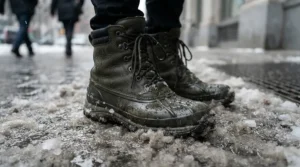
The hook is a simplified version of Hunter’s classic silhouette, with insulation that lets it work in temperatures as low as -5°C (23°F). It’s a short boot with a modest heel, so it’s built for city streets rather than snowbanks.
That -5°C figure is honest and useful. It means this is a late-October to early-December boot, or a mild-winter boot for the Pacific coast. Roundup reviewers flag the same limits: limited snow depth and not for extreme cold. The short shaft is the real trade-off, since one deep puddle will fill it.
I couldn’t verify a substantial review pool for this exact model, so the sentiment here rests on the spec and roundup commentary.
Pros:
- ✅ Stylish, easy city-wear silhouette
- ✅ Flexible and comfortable for walking
- ✅ Insulated for near-freezing days
Cons:
- ❌ Short shaft lets in deep slush
- ❌ Not suitable for extreme cold
Expect around C$130-C$180. Good for style-conscious commuters in milder climates, poor value if you routinely see -15°C.
7. Bogs Kids Classic II — kid-proof warmth with pull handles
The standout is that it brings the adult boot’s 7 mm Neo-Tech insulation to little feet, rated to -34°C (-30°F). Many versions add side pull handles, a reflective rating mark on the heel and odour-fighting lining treatment.
Kids lose heat faster and complain later, so a generous rating is a safety margin, not a gimmick. The handles are the unsung feature: a four-year-old who can pull on their own boots is a parent who leaves on time. Parents on retail sites describe wearing them from fall to spring, warm enough for cold days yet fully waterproof in slush.
Pros:
- ✅ Warm enough for school-day winter use
- ✅ Handles allow independent dressing
- ✅ Light, flexible construction
Cons:
- ❌ Outgrown quickly, so cost per season climbs
- ❌ Popular colours sell out
Expect around C$100-C$120. Worth it if the boots can be handed down.
Top 7 Comparison at a Glance
| Boot | Key Spec | Price Range (CAD) | Review Picture | Best For |
|---|---|---|---|---|
| Bogs Classic II | 7 mm Neo-Tech | C$150-C$200 | Warm, light | Everyday wet cold |
| Muck Boot Arctic Sport II | Fleece + foam footbed | C$200-C$270 | Favourable | Standing in the cold |
| Kamik Timber Hi | 5 mm neoprene | C$110-C$130 | Too few to judge | Mid-range value |
| Kamik Forester | Insulated rubber | C$80-C$110 | Positive, durable | Budget chores |
| Dryshod Arctic Storm | 5 mm Densoprene | C$250-C$280 | Small pool, warm | Extreme cold |
| Hunter Play Insulated Short | -5°C rating | C$130-C$180 | Not verified | Mild shoulder season |
| Bogs Kids Classic II | -34°C kids’ rating | C$100-C$120 | Parents positive | Kids at school |
Looking across the table, the Bogs Classic II is the best balance of warmth, weight and price for most adults, while the Kamik Forester wins on pure cost. If your priority is standing in the cold, the Muck Boot Arctic Sport II justifies its premium. Everyone else should skip the premium picks and put the savings toward better socks.
What Are Insulated Rain Boots for Cold Rainy Weather?
Insulated rain boots for cold rainy weather are fully waterproof rubber or neoprene boots with built-in thermal lining, typically 5 to 7 mm of neoprene, fleece or felt, that trap body heat while sealing out rain, slush and wet snow. They bridge the gap between uninsulated rain boots and bulky pac-style winter boots.
Why does this category exist? Because the two traditional options both fail in the Canadian shoulder seasons. A plain rain boot keeps water out but offers almost no warmth, and your feet chill within minutes once temperatures dip near zero. A classic pac-style winter boot is warm, but it can be heavy, hot indoors and overbuilt for 3°C drizzle.
An insulated rain boot sits between them. It handles puddles, slush and freezing drizzle without making you feel like you’re wearing diving gear. The trade-off is that most are pull-on designs with a rubber shell, so ankle support and breathability are weaker than in a lace-up leather boot. They also won’t match a true extreme-cold pac boot for -35°C standing around.
The right way to think about them is as a specialist. If your winter is mostly wet, grey and hovering around the freezing mark, they’re ideal. If your winter is dry and brutal, look elsewhere.
How to Choose Insulated Rain Boots for Cold Rainy Weather
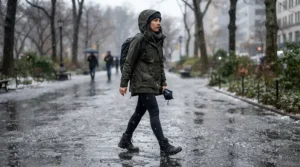
Choosing well comes down to seven checks, each worth a minute before you click “buy.”
- Match the rating to your activity. A listed -30°C comfort rating assumes movement. If you stand still, mentally subtract 10 to 15 degrees. This is a rule of thumb drawn from how reviewers describe optimistic ratings, not lab data.
- Check insulation thickness. Thicker neoprene (7 mm versus 5 mm) generally means more warmth but less flexibility and more weight.
- Confirm full waterproofing. Look for one-piece rubber or neoprene up to the ankle and beyond. Water getting in through a seam defeats every other feature.
- Prioritize traction. Slush hides ice. The City of Mississauga points out that slip-resistant soles or traction devices help prevent falls on icy paths, so check the outsole tread rather than just the lining.
- Size for socks. Order with room for a mid-weight wool sock plus a liner, not just a thin cotton one. Tight boots squeeze the foot and slow circulation, which defeats the insulation.
- Think about height. Taller shafts keep slush out and suit deep puddles. Short boots are lighter and better for mild days.
- Weigh drying and care. A removable liner dries overnight. A fixed neoprene bootie needs airing and rotation.
Follow those seven steps in order and most buying regret disappears.
Thermal Lining Materials Explained: What’s Actually Keeping You Warm
The lining is the engine of any insulated boot, yet product pages treat it like a footnote. Here’s what thermal lining materials actually do.
Neoprene is closed-cell foam that traps air and doesn’t absorb water. It’s the backbone of the Bogs Classic II, Kamik Timber Hi and Dryshod Arctic Storm. Its weakness is that it compresses under body weight, losing some loft where your heel and ball of foot press down.
Fleece adds a soft, wicking layer inside the shell. In the Muck Boot Arctic Sport II it improves comfort and adds a little warmth, though fleece alone won’t insulate much when wet.
Felt liners are the classic pac-boot material, often removable and sometimes wool-blend. They’re warm and replaceable, but they absorb moisture, so they need proper drying. Reviewers of the pac-style Sorel Caribou note its 9 mm felt liner as a key warmth source, along with reports of rubber cracking over time.
Reflective or foil layers sit in some insoles to bounce heat back toward the foot. They’re a nice extra but won’t rescue thin insulation.
Synthetic fill such as Thinsulate is lightweight and stays warm when damp, which is why it appears in many lace-up winter boots.
The takeaway: thicker isn’t automatically better. A 7 mm neoprene bootie with a good footbed beats a 5 mm one with a thin insole, and a removable liner you can dry will outperform a fixed one over a long season.
Warm Lined Rain Boots vs Traditional Winter Boots
So when should you pick warm lined rain boots over a classic winter boot? It depends on what falls from the sky and how long you’re out in it.
| Factor | Warm Lined Rain Boots | Traditional Winter Boots | Best For |
|---|---|---|---|
| Waterproofing | Fully sealed rubber or neoprene | Often leather/textile with membrane | Rain boots in slush |
| Warmth (stationary) | Moderate to good | Good to extreme | Winter boots in deep cold |
| Weight | Generally lighter | Often heavier | Rain boots for walking |
| Drying | Wipe-down, air dry | Removable liner helps | Winter boots with liners |
| Style range | Limited | Wide | Winter boots for dressier wear |
In the numbers above, the fully sealed construction of Bogs Classic II-type boots is the key advantage for slushy cities like Vancouver or Halifax. Traditional winter boots win when the temperature drops below about -20°C and you’re stationary. For mixed weather, the best answer for many Canadians is owning one of each.
Rain Boots for Freezing Rain: What Actually Works
Freezing rain is the nastiest thing winter throws at footwear. Rain falls onto surfaces below 0°C and freezes on contact, glazing sidewalks, steps and car doors. Environment Canada typically issues warnings when ice build-up is expected, and Global News explains how freezing rain forms and when those warnings are issued.
Rain boots for freezing rain face two separate challenges. The first is warmth: freezing-rain days hover near 0°C, so wet and cold combine to pull heat out fast. A fully waterproof boot with 5 to 7 mm of insulation, like the Kamik Timber Hi or Bogs Classic II, handles this well.
The second challenge is traction, and it’s where most buyers underestimate the risk. Rubber outsoles harden in the cold and can slide on glaze ice. A deep, widely spaced lug pattern helps with slush, but on true ice you’ll want strap-on traction cleats as a backup. Keep a pair near the door.
The practical rule: choose boots that stay flexible in the cold, avoid smooth soles, and treat any “ice-grip” marketing claim as unproven until reviewers confirm it. If you’re facing a real freezing rain warning, the safest footwear choice is sometimes simply a shorter walk.
Kids Rain Boots for Cold, Wet Weather
Children are the toughest customers in footwear. They stomp in every puddle, they outgrow boots mid-season, and they won’t tell you their feet are cold until they’re miserable. Choosing kids rain boots for cold weather is therefore about margin of safety.
Start with insulation. The Bogs Kids Classic II brings 7 mm of neoprene and a -34°C rating, while the Kamik Timber Hi youth version is rated to -30°C. The Dryshod Arctic Storm kids’ boot and the Muck Kids Hale are other insulated options worth comparing, though I couldn’t verify deep review pools for each.
Next, ease of use. Pull handles matter more than any spec. A child who can dress themselves needs fewer reminders and less cold time on the porch.
Fit is the third factor. Leave about 1 cm (roughly half an inch) of toe room, plus space for a thicker sock. One parent review of Kamik rain boots mentioned the boots ran small and needed a size up, so check the size chart and consider ordering a bit generous.
Finally, think about hand-me-downs. A durable boot passed from sibling to sibling cuts the cost per season dramatically, which makes the pricier kids rain boots better value than they look at first glance.
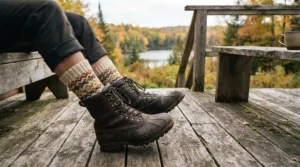
Rain-to-Snow Transition Footwear: Bridging Fall and Winter
October and November are Canada’s most confusing footwear months. Monday is 8°C and drizzly, Wednesday brings wet snow, and Friday is a skating rink. Rain-to-snow transition footwear needs to handle all of it without forcing a closet swap every morning.
The key is choosing by temperature band. As a rule of thumb based on the manufacturers’ ratings (not lab testing):
- Above 0°C, wet: a lighter option like the Hunter Play Insulated Short (rated to -5°C) keeps slush and chill at bay.
- 0°C to -15°C, mixed: the Kamik Timber Hi or Kamik Forester covers most wet commuting.
- Below -15°C, or standing still: step up to the Bogs Classic II, Muck Boot Arctic Sport II or Dryshod Arctic Storm.
Transition boots also need fast drying, since you’ll be in and out of heated spaces. Choose smooth interiors, wipe-clean exteriors and, ideally, a removable footbed.
One more tip: buy the transition boot you’ll wear most, not the one for the worst day of the year. Most people experience far more 3°C rainy mornings than -30°C blizzards, and a boot that’s too warm for the common case can overheat and leave sweat-damp feet, which then feel colder.
Layering Socks for Cold Boots: A Practical Guide
Here’s the secret most boot reviews skip: socks decide whether your boots work. The finest 7 mm neoprene won’t help if you wear it over damp cotton. Layering socks for cold boots is the cheapest upgrade you’ll ever make.
The Three-Layer Sock System
- Liner sock (thin, synthetic or merino): sits against skin and wicks sweat away. Think of it as a moisture highway.
- Insulating sock (mid-weight merino or wool blend): traps warm air. Go heavy only if you’ve sized up.
- Optional overlay: for extreme cold, a thicker outer sock, but only when the boot has room.
Rules That Prevent Cold Feet
- Avoid cotton. It holds moisture and sucks heat away once damp.
- Never cram it in. Tight boots squeeze the foot and reduce circulation, which cancels the insulation. If layered socks make the boot snug, size up or go lighter.
- Pack a spare pair. If your feet sweat on a long commute, change socks at your destination.
- Pre-warm your boots. Starting with warm, dry feet matters more than any lining.
The CCOHS also recommends insulating the legs and wearing thermal undergarments, since warm legs help keep blood flowing to the feet. A cold torso and legs mean cold toes, no matter how good the boot is.
✨ Don’t Miss These Exclusive Deals!
🔍 Take your cold-weather footwear to the next level with these carefully selected insulated rain boots. Click on any highlighted product name to check current pricing and availability. The right pair, plus the right socks, will keep your family comfortable all season!
Real-World Scenarios: Which Boot Fits Your Life?
Specs are abstract, so here are three user profiles with matched picks.
Scenario 1: The Vancouver commuter (budget C$150). Daily 15-minute walks to transit in 4°C rain, rare frost. The Kamik Timber Hi or Hunter Play Insulated Short fits. Anything beyond 5 mm of insulation is overkill, and a lighter boot is easier on a long commute.
Scenario 2: The Halifax dog walker (budget C$100). Wet, windy, around -5°C, long walks with plenty of puddle-standing. The Kamik Forester delivers knee-high protection at the lowest price. Add liner socks and a spare dry pair by the door.
Scenario 3: The Ontario hockey parent (budget C$250). Two hours rink-side in -15°C, mostly standing. This is where the Muck Boot Arctic Sport II earns its premium. Its fleece and foam footbed address stationary cold, and the Dryshod Arctic Storm is the alternate if you need extra water-shedding.
Scenario 4: Parents of a school-age child (budget C$120). Mixed wet and cold from October to March. The Bogs Kids Classic II pays off if it can be handed down.
Notice what each profile shares: the best boot isn’t the warmest, it’s the one matched to how you actually spend your day outside.
Long-Term Cost, Care and Mistakes to Avoid
A C$250 boot that lasts six winters costs less per year than a C$90 boot that cracks after two. Total cost of ownership matters.
| Boot | Price Range (CAD) | Cost Philosophy | Best For |
|---|---|---|---|
| Kamik Forester | C$80-C$110 | Low entry cost | Short-term budget |
| Kamik Timber Hi | C$110-C$130 | Balanced mid-range | Everyday value |
| Bogs Classic II | C$150-C$200 | Warmth per dollar | Regular wet-cold use |
| Muck Boot Arctic Sport II | C$200-C$270 | Premium comfort | Stationary cold |
| Dryshod Arctic Storm | C$250-C$280 | Premium durability bet | Extreme cold |
Looking at the spread, the Bogs Classic II offers the best warmth per dollar for most people, while the Kamik Forester wins when you need short-term value. Paying more only makes sense when your cold exposure is long and stationary.
Care Tips
- Rinse salt off rubber promptly, since road salt dries rubber over time.
- Air-dry linings after each wear and rotate pairs when possible.
- Store boots out of direct heat and sunlight.
Common Mistakes
- Trusting the headline rating. Reviewers of budget boots like the Kamik Tundra report comfort well above the claimed minimum.
- Skipping the sock plan. The wrong socks undo the best boot.
- Buying for the worst day. An overbuilt boot sweats and chills.
- Ignoring cracking reports. Reviewers of rubber-bottomed boots such as the Sorel Caribou mention long-term cracking, so check recent reviews.

FAQ
❓ Are insulated rain boots warm enough for -20°C?
❓ What size should I buy to fit thick socks?
❓ Which insulated rain boots are best value under C$150?
❓ How long do neoprene-lined rain boots usually last?
❓ Do kids need insulated rain boots or winter boots?
Conclusion: Warm, Dry and Done with Cold Toes
The best insulated rain boots for cold rainy weather aren’t the warmest ones on paper. They’re the ones matched to your climate, your activity and your socks. The Bogs Classic II is the best all-rounder for most adults, the Muck Boot Arctic Sport II earns its premium for stationary cold, and the Kamik Forester is the value pick. The Hunter Play Insulated Short suits mild shoulder seasons, the Bogs Kids Classic II keeps kids comfortable, and the Kamik Timber Hi and Dryshod Arctic Storm round out mid-range and extreme-cold options.
Remember the three habits that matter: size for layered socks, match the rating to your movement, and dry your boots between wears. And don’t underestimate the risk. The Canadian Red Cross notes that hypothermia is among the most serious yet preventable cold-weather health issues, caused by exposure to cold or water, so dry, insulated feet are genuine protection, not just comfort.
Whichever pair you choose, check current prices and availability, since both change often. Here’s to puddles, slush and flash freezes that no longer ruin your day.
✨ Ready to Stay Warm and Dry All Season?
🔍 Click on any highlighted boot name above to check current pricing and availability, pair it with the right socks, and step into every rainy, freezing, slushy day with confidence!
Recommended for You
- Chelsea Rain Boots Vs Rubber Rain Boots: 7 Ultimate Picks 2026
- Rubber Rain Boots: 7 Best Picks For Canadians In 2026
- Men’s Rain Boots Under $60 CAD: 7 Best Picks For 2026
Disclaimer: This article contains affiliate links. As an Amazon Associate, I earn from qualifying purchases. If you purchase products through these links, we may earn a small commission at no additional cost to you.
✨ Found this helpful? Share it with your friends! 💬🤗
