In This Article
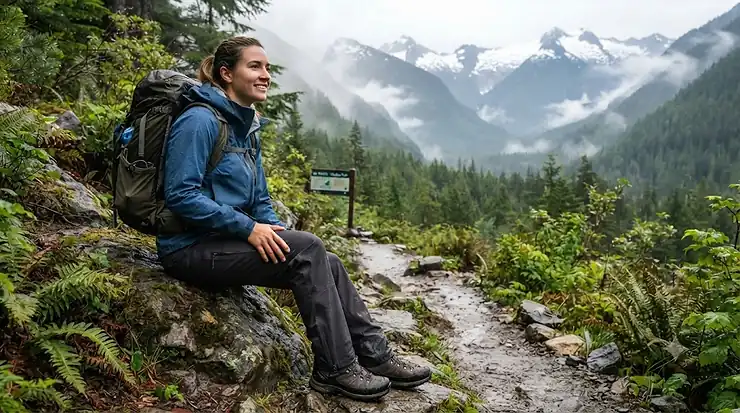
If you’ve ever hiked a Coast Mountains trail in a “light drizzle” that turned into a sideways downpour by the second kilometre, you already know why breathable waterproof pants matter more here than almost anywhere else. Canada doesn’t really have one rainy season — it has several, depending on which province you’re standing in, and a pair of rain pants that works for an Ontario spring thaw might be miserable in a Vancouver Island monsoon.
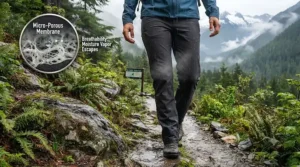
What are breathable waterproof pants? They’re outerwear bottoms built with a waterproof membrane — usually Gore-Tex, Pertex Shield, or a similar laminate — that blocks rain while letting body-heat vapour escape, so you don’t end up just as wet from sweat as you would have been from the storm.
This guide compares seven real, currently available models on Amazon.ca, from $30 emergency over-pants to $300+ alpine shells, with honest notes on where each one actually shines — and where it doesn’t.
Quick Comparison Table
| Pants | Best For | Breathability | Price Range (CAD) | Amazon.ca |
|---|---|---|---|---|
| Frogg Toggs Pro Action | Emergency budget pair | Low-moderate | $30–$45 | ✅ |
| Columbia Rebel Roamer II | Everyday casual hiking | Moderate | $60–$90 | ✅ |
| Marmot PreCip Eco | Lightweight day hikes | Good | $90–$130 | ✅ |
| The North Face Antora | Commuting & travel | Moderate-good | $90–$130 | ✅ |
| Helly Hansen Moss / Workwear | Wet-province durability | Good | $70–$140 | ✅ |
| Outdoor Research Helium | Ultralight backpacking | Very good | $150–$190 | ✅ |
| Arc’teryx Beta AR | Alpine / extreme conditions | Excellent | $320–$430 | ✅ |
The spread here tells its own story: breathability and durability climb together with price, but the jump isn’t linear. The Marmot and Helly Hansen pants sit in a genuine sweet spot for most Canadian hikers, while the Frogg Toggs pair earns its place purely as a “just in case” backup rather than a primary shell. If you’re commuting more than hiking, the North Face pants make more sense than anything alpine-rated — there’s no reason to pay Gore-Tex Pro prices for a bike ride to the office.
💬 Just one click — help others make better buying decisions too! 😊
✨ Don’t Miss These Exclusive Deals!
🔍 Take your rain gear shopping to the next level — check current pricing and availability on Amazon.ca for any pair below before your next trip out.
Top 7 Breathable Waterproof Pants: Expert Picks for Canada
1. Frogg Toggs Pro Action Pant
The cheapest real option on this list, and it’s honest about what it is: a non-woven polypropylene shell with a microporous middle layer, rated around 8,000mm waterproofness with roughly 3,000 g/m²/24hr breathability. In practice, that breathability number means it’s fine for standing around or light activity in the rain, but it gets clammy fast once you’re actually climbing a hill — the fabric just can’t move vapour as efficiently as a laminated membrane.
What most buyers overlook is the back rise: at four inches, it’s genuinely taller than most budget rain pants, which matters in Canada because it stops cold water channelling down from your jacket into your waistband — a small detail that makes a real difference on a wet Ontario portage.
Pros: Extremely affordable; oversized leg openings fit over boots; molded zippers won’t rust in salt or snow.
Cons: Breathability lags well behind every other pair here; durability is modest for bushwhacking.
Verdict: A smart $30–$45 CAD glovebox or daypack backup, not a primary shell for serious hiking.
2. Columbia Rebel Roamer II Pant
Several independent gear-testing outlets single out the Rebel Roamer line as the best value-for-protection pick in its price bracket, and the Amazon.ca listings back that up with consistently strong ratings. It uses Columbia’s Omni-Tech waterproof-breathable coating rather than a true laminate membrane, which is the main reason it costs less than the Marmot or Helly Hansen pairs.
In Canadian terms: the wide-leg cut is genuinely useful for layering over base layers on a cool Alberta foothills hike, and the adjustable waistband means it works over multiple pant sizes through the season as you add or shed layers.
Pros: Outstanding value; durable for the price; versatile cut works for skiing too.
Cons: Less breathable than membrane-based options; no ankle ventilation zips.
Verdict: The budget pick most reviewers actually recommend, around $60–$90 CAD.
3. Marmot PreCip Eco Pant
This is the pair most likely to show up at a Canadian trailhead, and for good reason. It uses Marmot’s NanoPro waterproof-breathable laminate with a PFC-free DWR finish, weighs under 9 ounces, and packs into its own pocket. The “Eco” in the name isn’t just marketing — it’s made with recycled face fabric, which matters if sustainability factors into your buying decision.
What the spec sheet won’t tell you: the ankle zips are long enough to get the pants on and off over winter boots, which sounds minor until you’re standing in slush at a trailhead in Banff trying to wrestle a pant leg over a hiking boot with frozen fingers.
Pros: Genuinely breathable for the price; packable; PFC-free DWR. Cons: Face fabric is thin — not built for heavy bushwhacking; sizing runs slightly long. Verdict: The best all-rounder for most Canadian day hikers, typically $90–$130 CAD.
4. The North Face Antora Rain Pant
The Antora is positioned as an everyday, multi-use pair rather than a technical hiking shell, and Amazon.ca reviews reflect that — several buyers mention using them for biking to work or daily commuting rather than backcountry trips. A recurring theme in the reviews is sizing: more than one reviewer found them tighter through the hip and seat than expected, so sizing up is a reasonable default if you’re between sizes.
For Canadian commuters in cities with unpredictable shoulder-season weather — Toronto, Ottawa, Montreal — this is realistically the right tier: enough waterproofing for a downpour on the way to the subway, without paying for alpine-grade venting you’ll never use.
Pros: Affordable for the brand name; good for daily/commuter use; hook-and-loop cuff adjustment.
Cons: Sizing runs inconsistent — read reviews for your specific size before buying; moderate breathability only.
Verdict: Solid for commuting and travel, around $90–$130 CAD, but not the first choice for a multi-day backcountry trip.
5. Helly Hansen Moss / Workwear Rain Pants
Helly Hansen earns its reputation in Canada’s wetter provinces — BC’s coast, Newfoundland, the Maritimes — partly because the brand’s roots are in Scandinavian fishing and marine wear, built for sustained, driving rain rather than the occasional summer shower. The Workwear-line pants (like the Voss) are heavier and more durable than the Moss lightweight pair, with reinforced seat and knee panels that suit anyone doing manual outdoor work, not just hiking.
This is the pair I’d point a Vancouver Island commuter or a Halifax dog-walker toward: it’s built for the kind of relentless, low-intensity rain that doesn’t care about your Gore-Tex marketing claims.
Pros: Genuinely built for sustained heavy rain; reinforced high-wear zones on the Workwear line; budget-friendly for the durability on offer.
Cons: The lightweight Moss pant trades some durability for packability; sizing runs slightly large per multiple reviews.
Verdict: Best value for anyone in a consistently wet Canadian region, roughly $70–$140 CAD depending on the model.
6. Outdoor Research Helium Rain Pant
Outdoor Research’s Helium line consistently tests as one of the lightest true rain pants on the market — under six ounces in independent lab testing — using Pertex Shield with “Diamond Fuse” reinforcement. It’s the pick for anyone counting grams on a multi-day backpacking trip where the rain pants are an “in case of emergency” item living at the bottom of the pack most of the time.
The trade-off is honest and worth knowing before you buy: a few Amazon.ca reviewers note that while the Helium shrugs off drizzle and mist comfortably, sustained heavy downpours can eventually work through the thin 30D ripstop face fabric — which tracks with what gear labs have found when comparing it to heavier 3-layer pants.
Pros: Class-leading packability and weight; rolls into its own back pocket; genuinely breathable.
Cons: Less durable and less waterproof in sustained downpours than 3-layer alternatives; no side pockets.
Verdict: The right call for ultralight backpacking and thru-hiking, around $150–$190 CAD — not for someone who needs all-day storm protection.
7. Arc’teryx Beta AR Pant
At the top of this list, the Beta AR uses Gore-Tex Pro 3-layer fabric with reinforced knee, seat, and instep panels, and it’s the pair serious mountaineers and ski-tourers reach for. Several Amazon.ca reviewers who’ve used it across multiple seasons describe it holding up to repeated crampon strikes and years of alpine abuse — which is the entire point of paying Gore-Tex Pro prices.
Worth flagging honestly: not every review is glowing. A handful of buyers using it for extended daily outdoor work in extreme cold reported wear-through at stress points faster than expected for the price point — a reminder that even premium gear isn’t bomb-proof, and that “alpine-rated” doesn’t always mean “indestructible under daily abuse.”
Pros: Best-in-class waterproof/breathable performance; built for genuinely harsh conditions; long track record with Rockies and Coast Mountains users. Cons: Expensive; arguably overbuilt for casual day hikes; a minority of reviews note durability issues under heavy daily wear. Verdict: Worth it if you’re regularly in genuinely alpine conditions, around $320–$430 CAD — overkill for a weekend trail walk.
How to Choose Breathable Waterproof Pants in Canada
- Match the fabric to your region’s rain, not the marketing copy. A 2.5-layer pant is fine for Ontario showers; coastal BC or Newfoundland’s sustained rain rewards a true 3-layer membrane.
- Check the breathability number, not just “waterproof.” Vapour permeability (often listed as MVTR in g/m²/24hr) tells you how clammy you’ll feel on a climb — higher is better for active use.
- Look for thigh vents or full-length side zips if you run hot. Ventilated rain pants with zippered thigh vents let you dump heat on a steep climb without removing the pants entirely.
- Confirm the pants will go on over your boots. Ankle or knee-length zips matter more in winter, when you’re not removing boots at the trailhead.
- Consider mesh-lined pockets for warm-weather hikes. Mesh-lined pockets double as extra ventilation and keep moisture-wicking airflow moving, a small but real comfort gain on humid Ontario or Quebec summer days.
- Factor in Canadian sizing quirks. Several models on this list (Antora, Helly Hansen Moss) run noticeably large or small — read recent Amazon.ca reviews for your exact size before buying.
- Budget for layering, not just the pants. A $90 CAD pair of rain pants over good base layers will outperform a $300 pair worn alone in genuinely cold, wet conditions.
For a deeper technical breakdown of waterproof-breathable layering choices, the Canadian outdoor co-op MEC’s rain gear guide is a solid independent reference, and Gore-Tex’s membrane technology is explained well on Wikipedia if you want to understand what’s actually happening inside the fabric.
Real-World Scenarios: Matching Pants to Canadian Hikers
The Vancouver Island day-hiker: Coastal BC rain is relentless rather than intense. The Helly Hansen Moss or Marmot PreCip Eco handle this better than an ultralight pair built for occasional storms — sustained moderate rain is exactly what they’re designed for.
The Banff weekend backpacker: Multi-day trips with real elevation gain reward low pack weight. The Outdoor Research Helium is the obvious choice here, accepting the trade-off of less protection in a true downpour in exchange for grams saved.
The Toronto or Montreal commuter: Daily transit weather, not backcountry storms. The North Face Antora or Columbia Rebel Roamer II cover this without paying for technical features that never get used.
The Rockies ski-tourer or alpinist: Genuinely extreme conditions, repeated abrasion from crampons or skis, multi-season use. This is the one scenario where the Arc’teryx Beta AR’s price actually makes sense.
Common Mistakes When Buying Rain Pants in Canada
- Buying based on waterproof rating alone. A 20,000mm hydrostatic head sounds impressive, but if breathability is poor, you’ll be just as wet from sweat on a climb. Both numbers matter together.
- Ignoring how Canadian winters affect performance. Cold air holds less moisture, so breathable fabrics that feel clammy in summer often perform better in winter — don’t judge a pair only on a warm-weather test.
- Skipping the sizing check. As seen with several models above, brand sizing varies enough between lines that “your usual size” isn’t a safe assumption — check recent buyer comments for the specific model.
- Forgetting bilingual labelling is normal, not a red flag. All textile products legally sold in Canada must carry fibre-content information in both English and French under the Textile Labelling Act, enforced by the Competition Bureau of Canada — seeing French on the tag doesn’t mean anything’s wrong with the product.
- Treating rain pants as a substitute for trip planning. Parks Canada’s own hiking preparation guidance is clear that mountain weather can change fast regardless of how good your gear is — pack layers and check the forecast even with the best rain pants in your bag.
Long-Term Cost & Care in Canada
Cheaper pants aren’t always cheaper over time. A $35 CAD Frogg Toggs pair replaced every season or two costs roughly the same over five years as a $150 CAD Outdoor Research pair that lasts the full stretch — but the mid-tier pair also performs better the whole time you own it. Re-applying a DWR (durable water repellent) treatment once a season, rather than replacing the whole garment, is usually the better economics regardless of which tier you buy into — and it’s far cheaper than a full replacement.
Salt residue from winter roads is a real factor for any Canadian who wears rain pants for commuting through icy, salted streets — rinse pants after exposure rather than letting salt sit on the DWR coating, since it degrades the water-repellent finish faster than rain alone would.
Features That Actually Matter (And Those That Don’t)
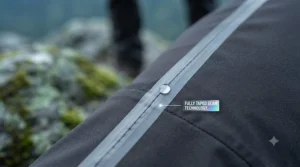
Matters: Seam-sealing (taped seams, not just a treated fabric), a genuine waterproof-breathable membrane rather than just a coating, and ankle zips long enough for your boots.
Matters less than marketing suggests: Exact hydrostatic head numbers above roughly 10,000mm — once you’re past that threshold, real-world rain rarely tests the difference, and breathability becomes the more relevant number for comfort.
FAQ
❓ What's the difference between waterproof and water-resistant rain pants?
❓ Can I wear breathable waterproof pants in a Canadian winter?
❓ Do Amazon.ca prices match Amazon.com for the same rain pants?
❓ How long should breathable rain pants for hiking last?
❓ Are thigh vents worth paying extra for?
Conclusion
There’s no single “best” pair of breathable waterproof pants for Canada — there’s a best pair for your climate, your activity level, and your budget. If you only take one thing from this guide: match the fabric’s breathability to how hard you’ll actually be working in the rain, not just to how waterproof the marketing claims it is. For most Canadian day hikers, the Marmot PreCip Eco or Helly Hansen Moss hit that balance well. For ultralight backpackers, the Outdoor Research Helium’s weight savings are hard to argue with. And if you’re regularly above the treeline in genuinely alpine conditions, the Arc’teryx Beta AR is one of the few pairs that won’t let you down when it matters most.
Recommended Further Reading
- 7 Best Waterproof Pants for Cycling in Canada (2026 Guide)
- Best Rain Pants with Full Side Zips in Canada: 7 Top Picks (2026)
- 7 Best Waterproof Rain Pants in Canada (2026): Top Picks
Disclaimer: This article contains affiliate links. As an Amazon Associate, I earn from qualifying purchases. If you purchase products through these links, we may earn a small commission at no additional cost to you. Pricing shown reflects approximate CAD ranges at the time of research and may vary — always check current pricing and availability on Amazon.ca.
✨ Found this helpful? Share it with your friends! 💬🤗
